
Open Access Publisher and Free Library
Fiction+Mediajpg.jpg

FICTION and MEDIA

CRIME AND MEDIA — TWO PEAS IN A POD

Posts in war
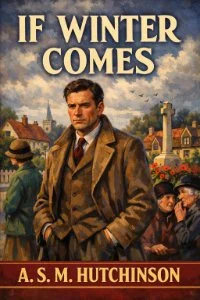
If Winter Comes

By A. S. M. Hutchinson. Introduction by Colin Heston.

When If Winter Comes appeared in 1921, it entered a literary moment marked by exhaustion, reassessment, and a profound unease about the moral and emotional consequences of the First World War. Written by A. S. M. Hutchinson, the novel achieved immediate popularity on both sides of the Atlantic, resonating with readers who recognized in its restrained drama a faithful portrait of postwar disillusionment. Today, the book stands as one of the most representative middle-class English novels of the early 1920s, combining psychological realism with a quietly devastating critique of social conformity.

At the center of If Winter Comes is Mark Sabre, a man neither heroic nor villainous, but painfully ordinary—an embodiment of the conscientious, educated Englishman caught between private integrity and public expectation. Sabre’s tragedy unfolds not through sensational events but through accumulated compromises: the erosion of affection within marriage, the pressures of respectability, and the moral cowardice of a community that prizes appearances above truth. Hutchinson’s great achievement is to dramatize these pressures with such precision that the reader comes to see how social cruelty can be enacted without overt malice, simply through silence, gossip, and moral indifference.

The novel reflects a society struggling to redefine itself after catastrophe. Although the war remains largely offstage, its psychological presence is unmistakable. Characters speak and act as if something fundamental has been broken: faith in institutions, confidence in moral authority, and trust in traditional roles. Hutchinson does not frame this as a generational revolt, as some of his modernist contemporaries did, but rather as a slow moral suffocation. The England of If Winter Comes is orderly, polite, and profoundly unforgiving—a place where deviation from accepted norms is punished less by law than by social annihilation.

Stylistically, Hutchinson occupies a middle ground between Edwardian realism and the emerging psychological novel. His prose is clear, controlled, and often deceptively simple. Sentiment is present, but carefully disciplined; emotional climaxes arise organically from character rather than authorial intrusion. This restraint partly explains the book’s enduring power. Hutchinson trusts the reader to perceive the cruelty embedded in everyday interactions and to grasp the cumulative weight of small injustices. The result is a novel that feels at once intimate and inexorable.

Equally important is Hutchinson’s treatment of marriage and masculinity. Mark Sabre is not undone by vice or ambition but by a moral rigidity that prevents him from acting decisively in his own defense. In this sense, If Winter Comes anticipates later twentieth-century explorations of male emotional paralysis. Sabre’s passivity—his belief that decency alone will protect him—proves to be a fatal misconception. Hutchinson exposes how a culture that rewards restraint and silence can become complicit in personal destruction.

Upon publication, the novel’s success was amplified by its adaptation into a widely seen stage play and later film versions, cementing its reputation as a defining postwar narrative. Yet its popularity should not obscure its seriousness. Beneath its accessible surface lies a sharp moral inquiry into responsibility, courage, and the cost of social obedience. Hutchinson does not offer easy consolation; the title itself suggests a stoic endurance rather than renewal, implying that survival may require a reckoning with loss rather than its denial.

Read today, If Winter Comes remains strikingly contemporary. Its depiction of reputational ruin, public shaming, and institutional indifference speaks to modern anxieties about social judgment and moral isolation. Hutchinson’s novel reminds us that cruelty need not be loud to be lethal, and that the gravest tragedies often occur not in moments of drama but in the long, quiet seasons of neglect. As such, this book endures not merely as a historical artifact of postwar Britain, but as a timeless study of how societies fail their most conscientious members when compassion yields to convention.

download free
Kindle $2.99 -- paperback $9.99
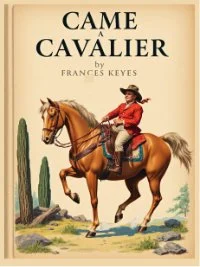
Came a Cavalier

By Frances Parkinson Keyes

Came a Cavalier by Frances Parkinson Keyes is a sweeping historical romance set against the backdrop of two world wars. The novel explores themes of resilience, identity, and the transformative power of love. At its heart is Constance “Connie” Galt, a young woman whose life is reshaped by personal betrayal and the chaos of global conflict. Her journey begins with heartbreak, which propels her into service with the American Red Cross in France during World War I. This experience becomes a crucible for her character, forcing her to confront suffering and loss while discovering inner strength and purpose.

The story delves deeply into the theme of personal growth through adversity. Connie’s evolution from a disillusioned college student to a confident, compassionate woman mirrors the broader societal shifts of the early twentieth century. Her relationships—first with Duncan Craig, an American doctor, and later with Tristan de Fremond, a French cavalry officer—highlight the tension between security and passion, as well as the cultural contrasts between America and Europe during wartime.

Historically, the novel captures the atmosphere of wartime France with vivid detail, from the scarcity and danger of the front lines to the elegance and traditions of the French aristocracy. It reflects the impact of war on both individuals and nations, portraying how global upheaval can dismantle old social orders while creating new opportunities for connection and renewal. The narrative also touches on themes of honor and duty, embodied in Tristan’s role within the prestigious Cadre Noir, and contrasts these ideals with the pragmatic realities of survival and love in times of uncertainty.

Ultimately, Came a Cavalier is not just a romance but a meditation on courage, endurance, and the human capacity for reinvention. It situates personal drama within the grand sweep of history, offering readers both an intimate love story and a rich portrait of a world in transition.

Julian Messner, Inc. NY. 1947. Read-Me.Org Inc. New York-Philadelphia-Australia. 2025. 437p.

read
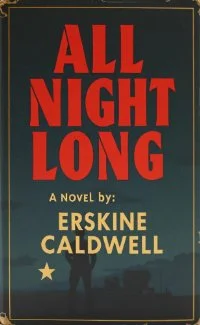
All Night Long: A Novel of Guerrilla Warfare in Russia

By Erskine Caldwell. Designed and Edited with an Introduction  by Colin Heston

When All Night Long appeared in 1942, Erskine Caldwell was already one of the most widely read—and most controversial—American novelists of his generation. Known primarily for his unsparing portrayals of poverty, violence, and moral stress in the American South, Caldwell here turned his attention outward, to a global conflict unfolding at unprecedented scale. Subtitled A Novel of Guerrilla Warfare in RussiaAll Night Long represents Caldwell’s direct literary engagement with the Second World War at the moment when its outcome remained deeply uncertain and when the Soviet Union, newly allied with the United States, had become a central symbol of resistance to fascist aggression.

Caldwell’s Russia is not a romanticized abstraction nor a detailed ethnographic portrait. Instead, it functions as a stark moral landscape shaped by occupation, deprivation, and constant threat. Villages, forests, and frozen terrain become arenas of endurance rather than scenery. The emphasis falls on night operations, secrecy, hunger, exhaustion, and the psychological toll of living in a perpetual state of danger. The title itself—All Night Long—signals this temporal and emotional register: war as an unbroken vigil, a continuous strain that erodes the boundary between action and survival.

For modern readers, the novel occupies an intriguing position in Caldwell’s body of work and in twentieth-century war literature more broadly. It stands apart from his Southern novels in geography but not in theme. As in Tobacco Road or God’s Little Acre, Caldwell examines how extreme conditions strip life down to its essentials and expose the structures—economic, political, or military—that govern human behavior. In All Night Long, the setting is international, but the underlying concerns remain consistent: power, exploitation, resilience, and the cost of endurance.

Read today, All Night Long also invites reflection on the evolving representation of guerrilla warfare itself. Long before such conflicts became a dominant feature of late-twentieth- and early-twenty-first-century military discourse, Caldwell recognized the strategic and moral complexity of irregular resistance. His novel anticipates later debates about asymmetrical warfare, civilian involvement, and the blurred lines between combatant and noncombatant—issues that continue to shape global conflicts.

Ultimately, All Night Long is less a novel about Russia per se than a novel about resistance under occupation. It captures a historical moment when global war demanded new forms of solidarity and new narrative frameworks to explain them. Caldwell’s achievement lies in his ability to translate that vast struggle into an intimate, unrelenting account of human persistence, sustained through darkness, danger, and the long hours of night.

NY.Book League of America. 1942. Read-Me.Org Inc. Australia, New York & Philadelphia. 2025. 161p.

Read
St. Ives: Being the Adventures of a French Prisoner in England: Vol. 20. The Works of R. L. Stevenson.

By R. L. Stevenson. Edited by Colin Heston.

“St. Ives: Being the Adventures of a French Prisoner in England” is an unfinished historical romance by Robert Louis Stevenson, posthumously Vol. XX published and included in Volume XX of the Swanston Edition of his collected works. Begun in 1893 during Stevenson’s final years in Samoa, the novel was left incomplete at his death in 1894 and later finished by Arthur Quiller-Couch, a respected British writer and editor.

Set during the Napoleonic Wars, St. Ives follows the escapades of Viscomte Anne de Keroual de St. Ives, a dashing and witty French officer who is captured and imprisoned in Scotland. The novel opens with his internment at Edinburgh Castle, from which he eventually escapes, embarking on a series of adventures across the British countryside. Along the way, he encounters a colorful cast of characters, including fellow prisoners, eccentric aristocrats, and a romantic interest, Flora Gilchrist, whose loyalty and courage become central to the story.

Thematically, St. Ives explores identity, honor, and the absurdities of war, all delivered with Stevenson’s characteristic blend of humor, irony, and narrative flair. The protagonist’s aristocratic pride and gallant demeanor are frequently tested by the unpredictable circumstances of exile and captivity, offering a light-hearted yet insightful commentary on the nature of heroism and national rivalry.

Although the novel remains incomplete in Stevenson’s hand—he wrote approximately thirty chapters before his death—Quiller-Couch’s continuation, based on Stevenson’s notes and stylistic cues, brings the story to a satisfying conclusion. The transition between authors is handled with care, though literary scholars often distinguish between the two parts in terms of tone and polish.

The Swanston Edition presents St. Ives with critical apparatus, including editorial notes and historical context, allowing readers to appreciate both the literary qualities of the work and the circumstances of its creation. As a late work, it reflects Stevenson’s enduring fascination with adventure, character, and the interplay between personal freedom and historical forces.

“St. Ives” stands as a testament to Stevenson’s narrative gifts and his ability to infuse even unfinished tales with charm, wit, and enduring appeal. It offers a unique glimpse into the author’s creative process and remains a valuable piece of his literary legacy.

This volume has been carefully edited and redesigned by Colin Heston, a renowned novelist and storyteller, to make the book more enjoyable and comprehensible to the modern reader.

Read-Me.Org Inc. Australia-New York-Philadelphia. 2025. 245p.

download free
Kindle $1.99 - Paperback $9.99
The Black Arrow: A Tale of the Two Roses

By R. L. Stevenson. Edited by Colin Heston

"The Black Arrow: A Tale of the Two Roses" is a historical adventure novel by Robert Louis Stevenson, first published in 1888. Set during the tumultuous period of the Wars of the Roses in 15th-century England, the story follows the young protagonist, Richard Shelton. Richard is caught in the conflict between the houses of York and Lancaster, and his journey is marked by themes of loyalty, betrayal, and revenge. The novel begins with Richard discovering that his guardian, Sir Daniel Brackley, is involved in treacherous activities. As Richard seeks justice for his father's murder, he joins forces with a band of outlaws known as the Black Arrow. The leader of the outlaws, John Amend-All, becomes a key ally in Richard's quest. Throughout the narrative, Richard faces numerous challenges, including battles, escapes, and romantic entanglements with Joanna Sedley, a young woman disguised as a boy. Stevenson's vivid descriptions and fast-paced plot make "The Black Arrow" a captivating read. The novel seamlessly combines elements of adventure, romance, and historical fiction, offering readers a thrilling portrayal of medieval England and its intricate political landscape.

Volume VIII of the Swanston Edition of "The Works of Robert Louis Stevenson" continues to showcase Stevenson's literary versatility. This volume typically includes a mix of his essays, short stories, and other writings, reflecting his wide-ranging interests and talents. The Swanston Edition is renowned for its comprehensive and authoritative compilation of Stevenson's works, providing readers with an in-depth exploration of his literary contributions. Each volume in this series highlights Stevenson's ability to engage readers with his storytelling prowess across various genres and styles. This volume has been carefully edited and redesigned by Colin Heston, a renowned novelist and storyteller, to make the book more enjoyable and comprehensible to the modern reader.

Read-Me.Org Inc. New York, Philadelphia, Australia. 2025. 178p.

download free
Kindle $1.99 - Paperback $9.99
Prince Otto

by Robert Louis Stevenson (Author), Colin Heston (Editor)

Volume VII of the Swanston Edition of "The Works of Robert Louis Stevenson" continues to present a diverse collection of Stevenson's literary output. This volume typically includes a mix of his essays, short stories, and other writings, reflecting his wide-ranging interests and talents. The lead piece, "Prince Otto", was first published in 1885. The story is set in the fictional Germanic principality of Grünewald and follows the titular character, Prince Otto Johann Friedrich. Otto is a well-meaning but somewhat ineffectual ruler, whose reign is marked by political intrigue and personal dilemmas. The novel explores themes of power, responsibility, and personal growth as Otto grapples with his duties as a prince and his relationships with those around him, including his wife, Princess Seraphina, and his scheming ministers. "Prince Otto" is notable for its blend of romance, adventure, and political satire, showcasing Stevenson's versatility as a writer.

This volume has been carefully edited and redesigned by Colin Heston, renowned novelist and story writer, to make the book more comprehensible to the present-day reader.

download free
Kindle $1.99 -- Paperback $9.99
China at War: An Encyclopedia

Edited by Xiaobing Li

Historical Scope: The encyclopedia covers 4,500 years of Chinese military history, from ancient times to modern-day conflicts.

Major Conflicts: It includes detailed entries on significant wars and battles, such as the Chinese Civil War, the Korean War, and the Anti-Japanese War.

Military Figures: Prominent military leaders and strategists like Mao Zedong, Sunzi, and Genghis Khan are featured.

Strategic Concepts: The document explores Chinese military strategies, including the emphasis on secrecy, surprise, and deception in warfare.

Bloomsbury Academic, Jan 10, 2012, 605 pages

READ
The Amazing Adventures of Kavalier & Clay

MAY CONTAIN MARKUP

MICHAEL CHABON

A “towering, swash-buckling thrill of a book” (Newsweek), hailed as Chabon’s “magnum opus” (The New York Review of Books), The Amazing Adventures of Kavalier & Clay is a triumph of originality, imagination, and storytelling, an exuberant, irresistible novel that begins in New York City in 1939.

A young escape artist and budding magician named Joe Kavalier arrives on the doorstep of his cousin, Sammy Clay. While the long shadow of Hitler falls across Europe, America is happily in thrall to the Golden Age of comic books, and in a distant corner of Brooklyn, Sammy is looking for a way to cash in on the craze. He finds the ideal partner in the aloof, artistically gifted Joe, and together they embark on an adventure that takes them deep into the heart of Manhattan, and the heart of old-fashioned American ambition. From the shared fears, dreams, and desires of two teenage boys, they spin comic book tales of the heroic, fascist-fighting Escapist and the beautiful, mysterious Luna Moth, otherworldly mistress of the night. Climbing from the streets of Brooklyn to the top of the Empire State Building, Joe and Sammy carve out lives, and careers, as vivid as cyan and magenta ink.
 
Spanning continents and eras, this superb book by one of America’s finest writers remains one of the defining novels of our modern American age.

4th ESTATE • London. Harper Collins.. 2010. 634p.

read
The Gun

MAY CONTAIN MARKUP

By C. S. Forester

From chapter 1: “A DEFEATED ARMY was falling back through the mountains from Espinosa. Such was its condition that an ignorant observer would find it easier to guess that it had, been defeated than that it had been an army. The twenty thousand men of whom it was composed were strung out along twenty miles of road; its sick and its dead littered the edges of the road for a hundred miles to the rear. At the head came such of the cavalry as were fortunate enough still to have horses to ride; they felt safer there than in their proper place covering the retreat. Next came the infantry, in groups, in herds, or in ones and twos.”

London. MICHAEL JOSEPH. ND. 207p.

read
Cross of St. George

MAY C ONTAIN MARKUP

ALEXANDER KENT

In "Cross of St. George," readers are transported back to the turbulent times of World War II, where espionage, sacrifice, and courage intertwine to shape the fate of nations. Set against the backdrop of Nazi-occupied France, the novel follows the journey of a brave young resistance fighter, Catherine Dubois, whose unwavering determination is put to the ultimate test when she is tasked with a dangerous mission that could change the course of the war. As Catherine navigates the treacherous landscape of wartime espionage, she must grapple with complex moral dilemmas, betrayal, and the ever-present threat of discovery. With meticulous historical detail and a gripping narrative, "Cross of St. George" is a compelling tale of heroism, love, and the enduring power of the human spirit in the face of overwhelming adversity.

London. Arrow Books. 1996. 340p.

read
The Brisbane - Line

By J.P. Powell

"The Brisbane Line" by J.P. Powell is a captivating historical fiction novel that delves into the untold story of the controversial defense strategy during World War II. Set in Australia, the novel follows the lives of ordinary individuals caught in extraordinary circumstances as they navigate loyalty, sacrifice, and the blurred lines between right and wrong. Powell masterfully weaves together personal narratives and political intrigue against the backdrop of war-torn landscapes, offering readers a thought-provoking insight into a lesser-known aspect of history. With meticulous research and vivid storytelling, "The Brisbane Line" is a compelling read that sheds light on the complexities of human nature in times of crisis.

Sydney. Brio. 2020. 293p.

read
Hitler's Niece

USED BOOK. MAY CONTAIN MARK-UP

By Ron Hansen

"Scrupulously researched. Hansen's informed interpretation of events makes convincing, if melancholy, reading." -Boston Sunday Globe

"A novel that reads like history." -Austin American-Statesman,

"A carefully crafted and distinctly macabre work of fiction." -Village Voice

"Hansen has written a convincing novel that is provocative, disturbing, and illuminating." -Raleigh News & Observer

"Hansen is a fearless storyteller. . .. [He] creates a savagely human portrait of Hitler. . .. [Hitler's Niece] reads, like all good books, as a vehicle for the writer's obsession--an intelligent, haunting, an‹ oddly devotional exploration of the unimaginable Hitler in love. -BookForum

NY. Perennial. 1999. 321p.

read
Claudius the god and his wife Messalina

USED BOOK. MAY CONTAIN MARK-IP

By Robert Graves

“The troublesome reign of Tiberius Claudius Caesar, emperor of the Romans (born 10 b.c., died a.d. 54), as described by himself; also his murder at the hands of the notorious agrippin a (mother of the emperor nero) and his subsequent deification, as described by others.”

NY. Vintage Random House. 1962. 584p.

READ
Jefferson: A Novel

USED BOOK. MAY CONTAIN MARK-UP

By Max Byrd

FROM THE COVER: “It is 1784, and Jefferson, the newly appointed American ambassador to the court of Louis XVI and Marie-Antoinette, has just arrived in Paris-a city adrift in intrigue, upheaval, and temptation that will challenge his principles, incite his passions, and change Thomas Jefferson forever.... Through the eyes of his impressionable young secretary, William Short, we watch as the future president builds his dream of an America with fellow patriots John Adams and Ben Franklin, and as he struggles between political ambition and an unexpected crisis of the heart with a woman who has the power to destroy him. And we discover-behind the face the complex Virginian shows the world -an enigmatic statesman who fights for individual liberty even as he keeps slaves, who champions free will even as he denies it to his daughters, and who holds men to the highest standards of honor-even as he embarks on a shadowy double life of his own.”

"A Novel To Be Admired And Enjoyed,The Best Fictionalized Life Of Jefferson Yet!' -Jack McLaughlin,

NY. Bantam. 1994. 470p.

READ
Wolf Hall: A Novel

USED BOOK. MAY CONTAIN MARK-UP

By Hilary Mantel

FROM CHAPTER 1:

“So now get up."

Felled, dazed, silent, he has fallen; knocked full length on the cobbles of the yard. His head turns sideways; his eyes are turned toward the gate, as if someone might arrive to help him out. One blow, properly placed, could i kill him now. Blood from the gash on his head--which was his father's first effort is trickling across his face. Add to this, his left eye is blinded; but if he squints sideways, with his right eye he can see that the stitching of his father's boot is unraveling. The twine has sprung clear of the leather, and a hard knot in it has caught his eyebrow and opened another cut.”

NY. Henry Holt and Company. 2009. 548p.

read
Spitfire Parade

USED BOOK. MAY CONTAIN MARK-UP

By Captain W. E. Johns

FROPM THE COVER: “While the Battle of Britain is still at its height Squadron Leader Bigglesworth, D.S.O., D.F.C., is appointed to Number 666 Fighter Squadron. He soon finds that his new Com- mand is likely to be something of a handful, for the Squadron has been formed for the special purpose of accommodating a collection of bril- liant but unstable types whose capacities as fighter pilots are in inverse ratio to their amenity to discipline and the normal routine of a station.”

Oxford University Press. 1951. 252p.

download
The Song Of Achilles

By Madeline Miller

FROM USA TODAY: “"It takes a truly gifted writer to make a song this old feel this beauti- fully new. What's startling about this sharply written, cleverly reimagined, enormously promising debut novel from Madeline Miller is how fresh and moving her take on the tale is--how she has managed to bring Achilles and his companion Patroclus to life in our time without removing them from their own."

NY. Harper Collins. 2012. 426p. USED BOOK. CONTAINS MARK-UP

READ
Biggles in the Jungle

By Captain W. E. Johns

FROM THE COVER: Wherever there is trouble brewing in this much-troubled world it is safe to predict that Biggles and his companions will sooner or later be on the spot. In this story they ar- rive, quite casually, in the capitalof British Honduras, to find Car- ruthers, the resident magistrate, in a very perturbed state on account of the activities of a so-called King of the Forest--a man who has established himself somewhere in the interior and is stirring up strife among the Indians; he is suspected, moreover, of collecting chickle-an important product of the colony-and smuggling it over the border and into the United States.

Melbourne. Geoffrey Cumberlege Oxford University Press. 1951. 196p. USED BOOK. CONTAINS MARK-UP.

DOWNLOAD
Biggles Foreign Legionnaire

By Cape. W. E. Johns

Another in the Biggles series glorifying war and vilifying enemies. . “In which Air Detective-Inspector Bigglesworth takes leave from the Special Air Section Scotland Yard to join the Foreign Legion, and has an adventure involving an old friend, an even older enemy and a near fatal trip to the desolate Valley of the Tartars in Kurdistan.”

London. Hodder and Stoughton. 1954. 198p. USED BOOOK

download