Open Access Publisher and Free Library
CRIMINAL JUSTICE.jpeg

CRIMINAL JUSTICE

CRIMINAL JUSTICE-CRIMINAL LAW-PROCDEDURE-SENTENCING-COURTS

Posts in social sciences
Criminal Procedure Reform in Mexico, 2008-2016: The Final Countdown for Implementation

By Octavio Rodríguez Ferreira and David A. Shirk

This is one of a series of special reports that have been published on a semi-annual basis by Justice in Mexico since 2010 on issues related to crime and violence, judicial sector reform, and human rights in Mexico. This report examines Mexico’s progress toward implementation of the country’s "new” criminal justice system, which introduces the use of oral, adversarial proceedings and other measures to improve the handling of criminal cases in terms of efficiency, transparency, and fairness to the parties involved. This report is based on several months of research and data analysis, field observation, and active participation by the authors in the process of training law professors, law students, and attorneys in preparation for implementation of the reforms. The report provides a general background on the 2008 judicial reform initiative, and examines Mexican government efforts to implement the reforms at the federal, state, and judicial district level, relying on a unique dataset and maps generated by the Justice in Mexico program based at the University of San Diego. As an additional resource, this report also contains a translation of the 2008 constitutional changes underlying the reforms. Ultimately, the authors find that there has been significant progress toward the implementation of the new criminal justice system, and offer recommendations to assist the Mexican government and international aid organizations to help Mexico sustain this progress in the years to come. This report does not represent the views or opinions of the University of San Diego or the sponsoring and supporting organizations, and the authors are solely responsible for any errors, omissions, and opinions in the report.

San Diego: Justice in Mexico, University of San Diego, 2015. 53p.

download
Justice Barometer 2016: Perspectives on Mexico’s Criminal Justice System: ¿What Do Its Operators Think?

By Nancy Cortes, Octavio Rodríguez Ferreira, and David A. Shirk

Survey of Judges, Prosecutors, and Public Defenders. The Justiciabarómetro (Justice Barometer) research initiative consists of a series of studies that evaluate the perceptions and professional development of Mexican-justice-sector personnel through large-scale surveys, focus groups and interviews, and the analysis of public policy to better understand the strength, challenges, and needs of the Mexican criminal justice system. Thus far, the Justiciabarómetro has surveyed over 8,000 municipal police in six municipalities in the Guadalajara Metropolitan Zone in 2009, in Ciudad Juárez in 2011, and Tijuana in 2014. Justice in Mexico has also surveyed nearly a thousand judges, prosecutors, and public defenders in 11 Mexican states through a 2010 study and in the 2016 follow up study summarized in this report.

San Diego: Justice in Mexico, University of San Diego, 2017. 54p.Survey of Judges, Prosecutors, and Public Defenders

download
Testing the State by the Courtroom or by the Gun? An overview of mobilisations against police deviances in Russia

By Anne Le Huérou

In April 2009, a police officer, D. Yevsyukov opened fire at people in a Moscow supermarket, killing two and wounding several others. In March 2012, a young man died in custody after being raped with a champagne bottle in a police station of the city of Kazan. Soon after, the police reform, passed in March 2011, was considered as a “failure” by the newly appointed Minister of Internal Affairs Vladimir Kolokoltsev. Those two cases of police violence, far from being exceptional, are almost a part of the routine – though not always with such deadly endings - in many police precincts in Russia and comprise a growing amount of the convictions against Russia at the ECHR. These two particular episodes can serve as landmarks for what I would like to develop in this contribution, for the first played a starting point for building-up police violence and deviance issues as a public matter that further helped and pushed the State to undertake a reform, under the presidency of D Medvedev, and the second led to a kind of acknowledgement that the task was too huge, at the very moment when the coming back of V Putin as the President was sending down the issue from the political agenda. In between, very diverse, vivid and sometimes at first glance paradoxical mobilizations against police violence, corruption and misbehavior have spread all over the country. Would they be NGOs helping victims of police violence to seek justice through court, provocative performances from art-groups or people taking arms against the police, these mobilizations

Paris: University of Paris, 2016. 20p.

download
Corporate prosecutions: American law enforcement in global markets

By Cornelia Woll

Large companies are increasingly on trial. Over the last decade, many of the world’s biggest firms have been embroiled in legal disputes over corruption charges, financial fraud, environmental damage, taxation issues or sanction violations, ending in convictions or settlements of record-breaking fines, well above the billion-dollar mark. For critics of globalization, this turn towards corporate accountability is a welcome sea-change showing that multinational companies are no longer above the law. For legal experts, the trend is noteworthy because of the extraterritorial dimensions of law enforcement, as companies are increasingly held accountable for activities independent of their nationality or the place of the activities. Indeed, the global trend required understanding the evolution of corporate criminal law enforcement in the United States in particular, where authorities have skillfully expanded its effective jurisdiction beyond its territory. This paper traces the evolution of corporate prosecutions in the United States. Analyzing federal prosecution data, it then shows that foreign firms are more likely to pay a fine, which is on average 6,6 times larger.

Frankfurt a. M: Goethe University, Center for Advanced Studies on the Foundations of Law and Finance (LawFin), 2022. 38p.

download
Criminal Sovereignty: Understanding North Korea's Illicit International Activities

By Paul Rexton Kan . Bruce E. Bechtol, Jr. and Robert M. Collins

North Koreas criminal conduct-smuggling, trafficking, and counterfeiting - is well known, but the organization directing it is understudied or overlooked. Policymakers, military leaders, and scholars may feel that they have a reasonable grasp on how and why North Korea is actively involved in criminal enterprises. However, unlike the other remaining communist states orphaned after the Cold War, or ordinary corrupt autocratic regimes, or criminally linked warlords and insurgent groups, North Korea practices a form of criminal sovereignty that is unique in the contemporary international security arena. North Korea uses state sovereignty to protect itself from external interference in its domestic affairs while dedicating a portion of its government to carrying out illicit international activities in defiance of international law and the domestic laws of numerous other nations. The proceeds of these activities are then used in a number of ways to sustain North Koreas existence and to enable other policies. For example, criminal proceeds are distributed to members of the North Korean elite including senior officers of the armed forces are used to support Kim Jong-ils personal life style and are invested in its military apparatus

Carlisle, PA: U.S. Army War College Press, 2010. 44p.

download
The Lammy Review An independent review into the treatment of, and outcomes for, Black, Asian and Minority Ethnic individuals in the Criminal Justice System

By David Lammy

Across England and Wales, people from minority ethnic backgrounds are breaking through barriers. More students from Black, Asian and Minority Ethnic (BAME) backgrounds are achieving in school and going to university.1 There is a growing BAME middle class.2 Powerful, high-profile institutions, like the House of Commons, are slowly becoming more diverse.3 Yet our justice system bucks the trend. Those who are charged, tried and punished are still disproportionately likely to come from minority communities. Despite making up just 14% of the population, BAME men and women make up 25% of prisoners,4 while over 40% of young people in custody are from BAME backgrounds. If our prison population reflected the make-up of England and Wales, we would have over 9,000 fewer people in prison5 – the equivalent of 12 average-sized prisons.6 There is greater disproportionality in the number of Black people in prisons here than in the United States.7 These disproportionate numbers represent wasted lives, a source of anger and mistrust and a significant cost to the taxpayer. The economic cost of BAME overrepresentation in our courts, prisons and Probation Service is estimated to be £309 million a year.8 This report is the product of an independent review, commissioned by two Prime Ministers.9 The review was established to ‘make recommendations for improvement with the ultimate aim of reducing the proportion of BAME offenders in the criminal justice system’.10 It reflects a growing sense of urgency, across party-political lines, to find solutions to this inequity

London: Ministry of Justice, 2017. 108p.

download
Miscarriages of justice : exception to the rule?

Michael Naughton.

This thesis explores the ways in which miscarriages of England and Wales' criminal justice system (CJS) are currently defined, quantified, constructed and deployed. Presented in two parts, the first identifies and argues against the pervasive but problematical tendency to conceive miscarriages of justice as exceptional occurrences, that are small in number, and that result from post-appeal procedures once existing appeal opportunities have been exhausted. In fact, the evidence is that a successful appeal against criminal conviction forms a routine and mundane procedure of criminal justice in England and Wales. This indicates a need both to re-orientate definitions and understandings of miscarriages of justice and to re-calculate the likely scale of the phenomenon, an attempt at which is then offered. The second part of the thesis involves a broader plane of analysis, examining a range of discourses which articulate challenges to, or reforms of, the CJS, with respect to miscarriages. In so doing, a critique is developed to show that counter-discourses against miscarriages of justice are hindered by their problematic definition and the consequential calculation of miscarriages as a small-scale statistical phenomenon. They also labour under a misconception of the relations of power in the sphere of criminal justice. This severely diminishes the potential force of critical counter-discourse in the existing terrain. As a possible way out of this malaise, a Foucauldian-inspired understanding of the inter-relations of power, knowledge and `governmentality' is brought into dialogue with the emerging zemiological perspective, which seeks a more holistic appraisal of the harmful consequences of social and political decisions in the interests of social justice. The critical and reconstructive moves that I recommend enable miscarriages of justice to be thought about in new ways and to help assess what is to count as effective counter-discourse. The thesis, then, represents a determined effort to re-orientate our understanding of miscarriages of justice by moving away from `exceptional ism'. This encourages new ways of defining and quantifying miscarriages of justice and new ways of developing theoretical resources. The ultimate point of the thesis is to contribute towards the production of more effective counter discourses that might achieve lasting practical change in this area of social regulation.

Brighton, UK: University of Bristol, 2003. 313p.

download
Fictions of Evidence: Witnessing, Literature, and Community in the Late Middle Ages

By Jamie K. Taylor.  

Throughout the Middle Ages, witnessing was a crucial way religious and legal “truths” were understood and produced. Religious and secular officials alike harnessed the power of testimony to assert doctrinal, political, or legal responsibilities. Swearing an oath, testifying in court, and signing a deposition were common ways to shape and discipline both devotional and legal communities. In Fictions of Evidence: Witnessing, Literature, and Community in the Late Middle Ages, Jamie K. Taylor traces depictions of witnessing in a wide range of late medieval texts and shows how witnessing practices formed and reformed, policed and challenged medieval communities. Through close study of texts like the Man of Law’s Tale and Piers Plowman alongside sermon exempla, common law statutes, and pastoral treatises, Fictions of Evidence argues that devotional and legal witnessing practices offered medieval writers a distinct vocabulary they could use to expose how the ethical and legal obligations to one’s community were constructed. And since vernacular writers often challenged the ways ecclesiastical or secular authorities asserted community bonds, they found they could use those same witnessing practices and language to imagine extra-legal or extra-ecclesiastical communities that followed different ethical codes.

Columbus, OH: Ohio State University Press, 2013. 232p

download
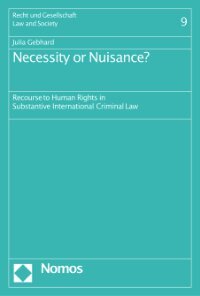
Necessity or Nuisance?

By Julia Gebhard.

Recourse to Human Rights in Substantive International Criminal Law. What are chances and challenges of referring to human rights law in defining crimes under international law? Under what circumstances is a reference to human rights law dogmatically appropriate and practically likely? The answers to these questions are explored through a look at the theoretical framework, practical application in jurisprudence as well as empirically through interviews with judges. By highlighting the common roots and the differences between both areas of law, the existing inconsistencies in the application of the law, as well as approaches which could contribute to their solution, the book presents a crucial contribution to the debate on legal certainty and innovation in international criminal law.

Baden-Baden, Germany Nomos Verlagsgesellschaft mbH & Co. KG, 2018. 296p.

download
Law, Privacy and Surveillance in Canada in the Post-Snowden Era

By Michael Geist.

Years of surveillance-related leaks from US whistleblower Edward Snowden have fuelled an international debate over privacy, spying, and Internet surveillance. Much of the focus has centered on the role of the US National Security Agency, yet there is an important Canadian side to the story. The Communications Security Establishment, the Canadian counterpart to the NSA, has played an active role in surveillance activities both at home and abroad, raising a host of challenging legal and policy questions. With contributions by leading experts in the field, Law, Privacy and Surveillance in Canada in the Post-Snowden Era is the right book at the right time: From the effectiveness of accountability and oversight programs to the legal issues raised by metadata collection to the privacy challenges surrounding new technologies, this book explores current issues torn from the headlines with a uniquely Canadian perspective.

Ottawa: University of Ottawa Press, 2015. 298p.

download
Criminal procedures and cross-border cooperation in the EU area of criminal justice: together but apart?

Edited by Élodie Sellier and Anne Weyembergh.

This book examines to what extent differences between national and procedural criminal laws hinder the negotiations and the operation of cross-border cooperation instruments. It is based on a comparative analysis of a representative sample of Member States.

Brussels: Editions de l'Université de Bruxelles, 2020. 463p.

download
On The Witness Stand

By Hugo Munsterberg.

A pioneering treatise of applied psychology that examines the mind of the witness on the witness stand, noting that the field was (at that time) “absurdly neglected.” Topics ranged from the memory of the witness, detection of crime, untrue confessions, hypnotism and prevention of crime.

Harrow and Heston Classic Reprint. (1908) 269 pages.

download part 1
download part 2
Public Justice and the Criminal Trial in Late Medieval Italy

By Joanna Carraway Vitiello.

Reggio Emilia in the Visconti Age. “Medieval public justice was characterized by its inherent tensions: tensions between a system designed for crime control and a society accustomed to self-help, and tensions between an ideal of public justice and a culture of private retribution. Criminal jurisdiction served as a primary marker of political authority, and the late medieval criminal court became a nexus of power at many levels—signorial, communal, and judicial. It was also a place where the lives of people from all walks of life came into direct contact with the results of the high medieval legal revolution, which yielded inquisition procedure. In the late middle ages, the dynamic created by these fundamental tensions would transform the history of criminal justice.”

Brill (2016) 232p.

download
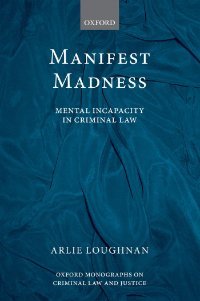
Manifest Madness

By Arlie Loughnan.

Mental Incapacity in Criminal Law. Whether it is a question of the age below which a child cannot be held liable for their actions, or the attribution of responsibility to defendants with mental illnesses, mental incapacity is a central concern for legal actors, policy makers, and legislators when it comes to crime and justice. Understanding mental incapacity in criminal law is notoriously difficult; it involves tracing overlapping and interlocking legal doctrines, current and past practices of evidence and proof, and also medical and social understandings of mental illness and incapacity. With its focus on the complex interaction of legal doctrines and practices relating to mental incapacity and knowledge - both expert and non-expert - of it, this book offers a fresh perspective on this topic.

Oxford (2012) 307 pages.

download
The Forgotten Army

By Charity Organization Society of the City.

Six Years' Work of the Committee on Criminal Courts of the Charity Organization Society of the City of New York, 1911-1917: A story of its work for the clean, intelligent and kindly administration of our Inferior Criminal Courts.

Harrow and Heston Classic Reprint. (1918) 58 pages.

download
Constitutional Challenges in the Algorithmic Society

Edited by Hans-W. Micklitz, Oreste Pollicino , Amnon Reichman, Andrea Simoncini , Giovanni Sartor, and Giovanni de Gregorio.

“ the rise of the bureaucratic state, the technologies for infringing liberty or equality were thought to be containable by the exercise of concrete judicial review… . In recent years, however, the rise of the algorithmic society has led to a paradigmatic change where the public power is no longer the only source of concern for the respect of fundamental rights and the protection of democracy, where jurisdictional boundaries are in flux, and where doctrines and procedures developed in the pre-cybernetic age do not necessarily capture rights violations in a relevant time frame.”

Cambridge University Press. (2021) 300 pages.

download
Justice and the Child

By Douglas Pepler.

“But these enactments are Of little value unless supported by public opinion and executed according to the spirit rather than the letter of the law. There are a few towns where it is determined that no effort Shall be spared to give a lad a new chance, where it is realised that the first Offence will not be the last unless there is skilled intervention by the right sort of person. Where the effort is made it can always be traced to the interest of one person in the fate of one child. The work cannot develop except on that foundation, it cannot exist except there be this personal desire among men to seek and save that which appears to be lost.”

London: Constable, 1915. 163p.

download
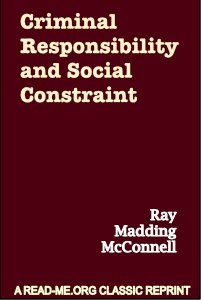
Criminal Responsibility and Social Constraint

By Ray Madding McConnell.

“Among the most expensive functions of government is that which is concerned with the detection, arrest, trial, and punishment of criminals. The expenditures in connection with police, courts, and prisons exceed in amount the outlay for the conservation and improvement of health, the necessities and conveniences of travel and intercourse, highways, parks, and playgrounds, and about equal the costs of education/ When any one begins to philosophize about the raison d^etre of this enormously expensive arrangement for dealing with crime and criminals, he naturally asks first for its purpose —What is the object of it all? What kind of return does this investment bring in? Society has schools for the ignorant. It has accident stations, ambulance corps, dispensaries, and hospitals for the injured and diseased. It has special educational institutions for the feebleminded, the blind, the deaf, and the dumb. It has homes for the aged, the infirm, and the incapacitated. It has asylums and hospitals for the epileptic and the insane. But for the criminals, society has detectives, bureaus of criminal identification, police, judges, jailers, and executioners —houses of correction, penal colonies, jails, penitentiaries^ the gallows, and the electric chair. What is the ground for the difference in treatment that is accorded to this last class? "

New York: Scribner, 1912. 356p.

download
Race and Criminal Justice

By Michael J. Lynch and E. Britt Patterson.

Collection of original and authoritative articles covering role and definition of race in criminal justice research, bias crimes, race and policing, juvenile justice, and much more. CONTENTS: 1. Law, Justice, and "Americans": An Historical Overview/Bailey. 2./Garofalo. 3.Minorities and the Police/Smith,Graham and Adams. 4.Bias in Formalized Bail Procedures/Patterson and Lynch. 5. Ethnic, Racial, and Minority Disparity in Felony Court Processing/ Farnworth,Teske and Thurmond. 6. Race and the Death Penalty in the United States/ Bohm. 7.The Over-representation of Blacks in Florida'sJuvenile Justice System/Tollett and Close. 8. American Indians and Criminal Justice/ Zatz, Chiago, Lujan and Snyder-Joy. 9. An Examination of Ethnic Bias in a Correctional Setting:The case of the Mariel Cubans/Clark .10. Racial Codes in Prison Culture/Thomas. RECOMMENDED: Adopted widely throughout the United States for courses on Race and Crime or Criminal Justice. The comprehensive coverage, avoidance of ideological jargon, and use of scientifically controlled studies makes this text is excellent for class use. Use with companion volume, "Justice with Prejudice," which examines the criminal justice management and personnel side of Race and Criminal Justice, and uses a more qualitative and theoretical approach.

Harrow and Heston Publishers. 1985. 205p.

download
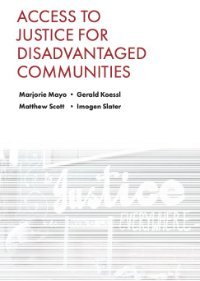
Access To Justice For Disadvantaged Communities

By Marjorie Mayo, Gerald Koessl, Matthew Scott and Imogen Slater.

This book explores the dilemmas being faced by professionals and volunteers who are aiming to provide access to justice for all and to promote social justice agendas in increasingly challenging contexts. Public service modernisation has been accompanied by increasing marketisation and massive public expenditure cuts, with escalating effects in terms of the growth of social inequalities. As the following chapters illustrate, Law Centres have provided a lens through which to examine the implications of these wider policies, as increasing marketisation has been impacting upon staff and volunteers working to promote social justice in disadvantaged communities.

Policy Press (2014) 174p.

download