
By Rene Reyes
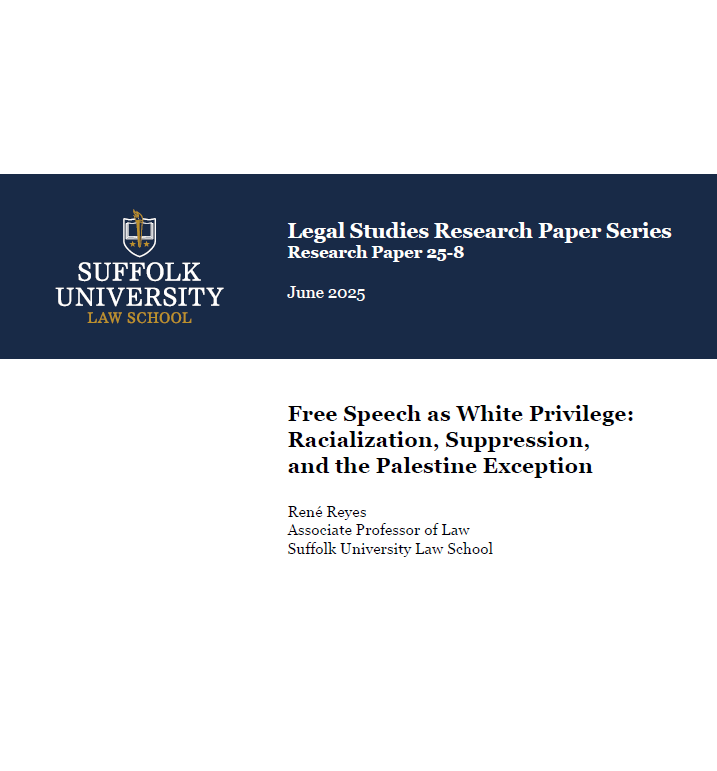
Free speech is under siege. This is not to say that all speakers and viewpoints are at equal risk—some voices receive support and protection, while others are subject to threats and suppression. Pro-Palestinian speech falls into the latter category. Critics argue that there has long been a “Palestine Exception” to free speech, but efforts to silence pro-Palestinian advocacy on university campuses and elsewhere have dramatically increased since Israel began its assault on Gaza in October of 2023 in response to incursions by Hamas militants. Many supporters of Israel contend that such restrictions on pro-Palestinian advocacy are justified, and have suggested that there is a double standard between racism and antisemitism at play when universities fail to condemn at least some forms of pro-Palestinian speech. The implication seems to be that anti-Black and Brown speech would never be tolerated on campuses, and that racialized minorities have been a special favorite of legal and institutional protections against hateful expression. The problem with this argument is that it is demonstrably false. Indeed, this Essay argues that free speech doctrines have consistently functioned to give white people the liberty to engage in hateful speech and to deny Black, Brown, and other racialized individuals the kinds of protections from fear and harm that supporters of Israel are now demanding. In other words, the Palestine Exception to free speech is real—and it is part of a deeper legal tradition that has enshrined free speech as an element of white privilege.
Virginia Law Review ,Vol 111, June 2025.
