Open Access Publisher and Free Library
HUMAN RIGHTS.jpeg

HUMAN RIGHTS

Human Rights-Migration-Trafficking-Slavery-History-Memoirs-Philosophy

Posts tagged diversity
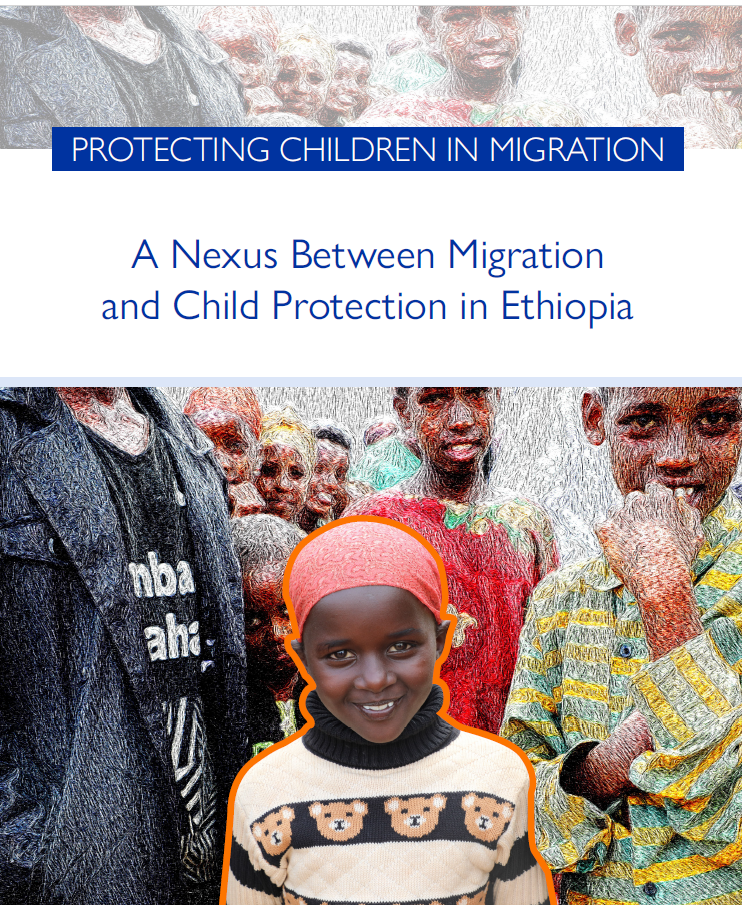
Protecting Children in Migration: A Nexus between Migration and Child Protection

By Anita Ramsak and  Eyueil Abate  

Ethiopia is a country of origin and transit, with migration primarily occurring around three main routes: (a) Eastern route through Djibouti towards Saudi Arabia; (b) Southern route through Kenya towards South Africa; and (c) Northern route through Libya towards Europe. In 2022, the number of unaccompanied children who migrated via the Eastern route doubled in comparison to 2021, and unaccompanied children made up 38 per cent of all children on the move from Ethiopia in 2022. En route, children may face protection risks including arbitrary arrest and detention, human trafficking for the purposes of labour or sexual exploitation, gender-based violence, extortion and denial of access to basic needs. Broad structural factors, such as conflict, drought and poverty are driving children and adults to migrate despite the protection risks. To understand the current knowledge gaps in the nexus between migration and child protection, as well as propose improvements, this study relies on primary and secondary data analysis. With a particular focus on exploring linkages between child migration and trafficking in children in Ethiopia, the report concludes with the institutional and legal landscape for children on the move and highlights key policy gaps in protecting children on the move across Ethiopia.Geneva, SWIT:  International Organization for Migration. 2023, 94p.

Fewer Movers, Bigger Problems: Migration Declines in Colorado & Its Biggest Cities

By Cole Anderson and Caitlin McKennie

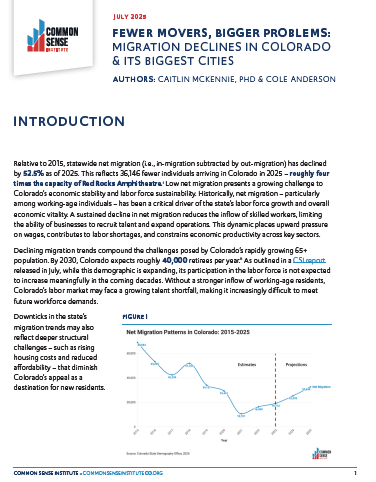
Relative to 2015, statewide net migration (i.e., in-migration subtracted by out-migration) has declined by 52.5% as of 2025. This reflects 36,146 fewer individuals arriving in Colorado in 2025 – roughly four times the capacity of Red Rocks Amphitheatre.i Low net migration presents a growing challenge to Colorado’s economic stability and labor force sustainability. Historically, net migration – particularly among working-age individuals – has been a critical driver of the state’s labor force growth and overall economic vitality. A sustained decline in net migration reduces the inflow of skilled workers, limiting the ability of businesses to recruit talent and expand operations. This dynamic places upward pressure on wages, contributes to labor shortages, and constrains economic productivity across key sectors. Declining migration trends compound the challenges posed by Colorado’s rapidly growing 65+ population. By 2030, Colorado expects roughly 40,000 retirees per year.ii As outlined in a CSI report released in July, while this demographic is expanding, its participation in the labor force is not expected to increase meaningfully in the coming decades. Without a stronger inflow of working-age residents, Colorado’s labor market may face a growing talent shortfall, making it increasingly difficult to meet future workforce demands.  According to a recent study by the Bureau of Economic Analysis (BEA), Colorado ranks 14th (not including the District of Columbia) in terms of regional price parities relative to all other states (a measurement that evaluates the differences in price levels across states for a given year).iii If these issues remain unaddressed, they could have long-term consequences for the state’s economic competitiveness and growth prospects. Evidence suggests this scenario is already emerging: Colorado’s economic growth is slowing, with job growth projected to increase by only 1.2% in 2025. During the first quarter of 2025, Colorado’s job growth ranked 26th in the nation. This deceleration is suggested to be linked to decreased net migration and an aging population, both of which pose risks to the state’s labor force capacity and overall economic dynamism.

Greenwood Village, CO: Common Sense Institute, 2025. 10p.   

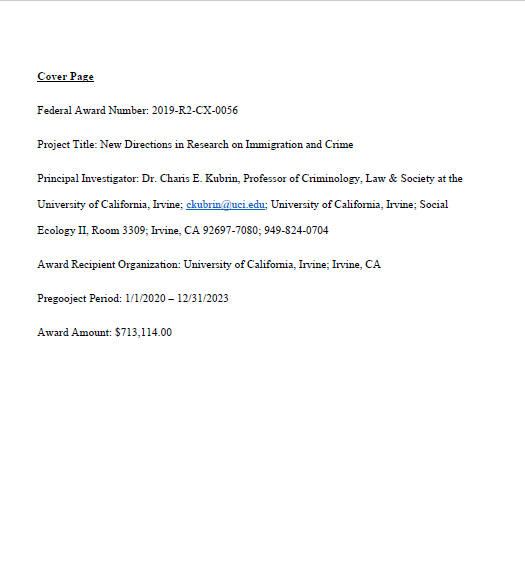
New Directions in Research on Immigration and Crime

By Charis E. Kubrin

The main objective of the project is to improve understanding of the immigration-crime relationship by addressing several important areas of inquiry. These areas of inquiry represent key omissions in the literature that merit attention. For example, next to no research has examined the robustness of the immigration-crime relationship across a substantially large and diverse range of neighborhoods across the U.S., which reflect different immigration contexts and histories. At the same time, with few exceptions, research largely lumps all immigrants together and neglects important differences across groups, whether by immigrant status or demographic or socio-economic background. Finally, little is known about how the immigration-crime relationship may be context dependent, and how immigration-related policies and practices may condition the immigration-crime relationship. Using data from a variety of sources over many years (2000-2016), we conduct a series of analyses that refine and advance our understanding of the immigration-crime relationship. These analyses address a variety of research questions including: How robust is the immigration-crime relationship? What are the appropriate ways to capture varied effects of immigrant groups on neighborhood crime rates? Does citizenship status matter? How do levels of assimilation impact how immigration and crime are associated? Which immigrant groups have crime reducing effects in neighborhoods? Which have crime enhancing effects? Another set of analyses consider the extent to which the broader city-context of reception as well as immigration-related policies and practices condition the immigration-crime relationship. These analyses address research questions including: Which city-level characteristics matter most for impacting the neighborhood immigration-crime relationship? How does immigration enforcement condition the relationship between immigration and crime? Do “sanctuary cities” attract crime-prone immigrants, reducing public safety overall? To achieve these goals and begin to answer these research questions, we collected, cleaned and merged data from many sources including crime data from police departments, public use Census and American Community Survey data, restricted data from the Census Data Center at UC Irvine, historical business data from Reference USA, and TRACFed data, among others. After considerable effort, we collected data for a sample of 415 cities in 2020 with at least 10,000 population, a sample of 480 cities in 2010, a sample of 168 cities in 2000, a subset of 310 cities with longitudinal data in 2010 and 2018, and a subset of 139 cities with longitudinal data in 2000 and 2010. No comparable neighborhood crime data set that covers such a large and diverse range of contexts currently exists.  (continued)    

Washington, DC: U.S. National Institute of Justice, Office of Justice Programs, 2025. 45p.

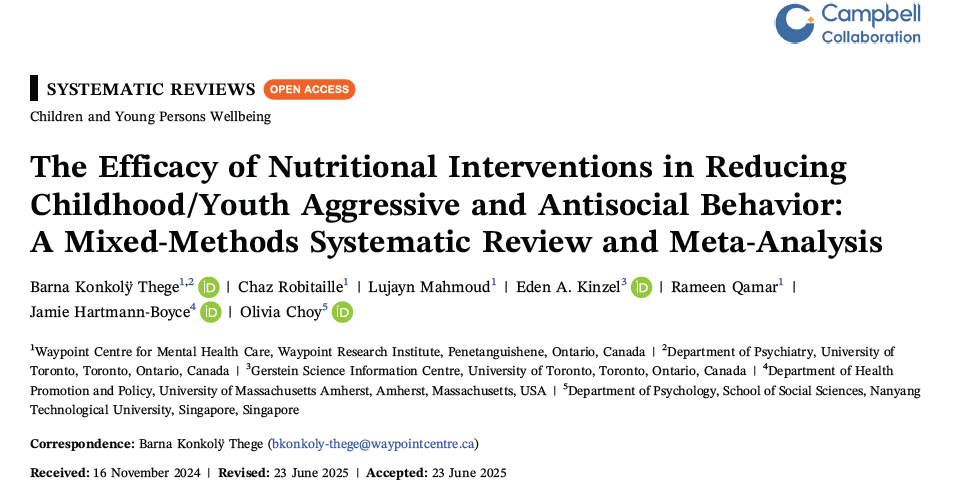
The Efficacy of Nutritional Interventions in Reducing Childhood/Youth Aggressive and Antisocial Behavior: A Mixed-Methods Systematic Review and Meta-Analysis

By Barna Konkolÿ Thege, Chaz Robitaille, Lujayn Mahmoud, Eden A. Kinzel, Rameen Qamar, Jamie Hartmann-Boyce, Olivia Choy

Aggressive/antisocial behaviors in children and youth may result in impairments in family, social, or academic functioning and lead to long‐term negative consequences for both the individual and society as a whole. The potential of healthy diet and nutritional supplements to reduce aggression and antisocial behavior is an active area of study in nutritional mental health sciences. The goal of this systematic review is to (1) investigate the effectiveness/efficacy of nutritional interventions(dietary manipulation, fortification or supplementation) in reducing excessive aggression, antisocial behaviors, and criminal offending in children/youth (systematic review and meta‐analysis); and (2) provide an overview of implementation barriers and facilitators regarding nutritional interventions in children/youth (qualitative/narrative synthesis). After consulting theCampbell Collaboration's methodological guidelines, a comprehensive search for published and unpublished papers on controlled intervention studies was performed (up to February 26, 2024) using both electronic databases (MEDLINE,Embase, Cochrane Library, APA PsycInfo, Scopus, and the Allied and Complementary Medicine Database) and other resources (e.g., Google Scholar, reference list of included studies and other reviews, websites of public health agencies). This study focuses on children and youth (up to the age of 24) presenting with an above‐average level of aggression/antisocial behavior. In terms of the intervention, we considered both dietary manipulation and nutritional supplementation with aduration long enough (minimum of 1 week) that a significant change in the individual's nutritional status could be expected.We included studies with a controlled design if, for outcomes, they reported on (1) behavioral‐level violence/aggression toward others in real‐life (non‐simulated) settings, (2) antisocial behaviors, or (3) criminal offending. Initial screening,checking for eligibility criteria, data extraction from, and risk of bias assessment for each eligible study were conducted independently by two reviewers. To perform the meta‐analysis, data from each original report were standardized(transformed into Hedges' g) so that results across studies could be meaningfully combined and interpreted. Data con-versions, computation of pooled effect sizes, and estimation of publication bias were conducted using the ComprehensiveMeta‐analysis software (Version 4). Altogether, 51 reports (describing 50 individual studies) met our inclusion criteria, and72 effect sizes were extracted from these reports. Nutritional interventions with a broad target (e.g., broad‐spectrummicronutrient supplementation or general improvement in diet quality) had the most consistent and largest intervention

Campbell Systematic ReviewsVolume 21, Issue 3Sep 2025

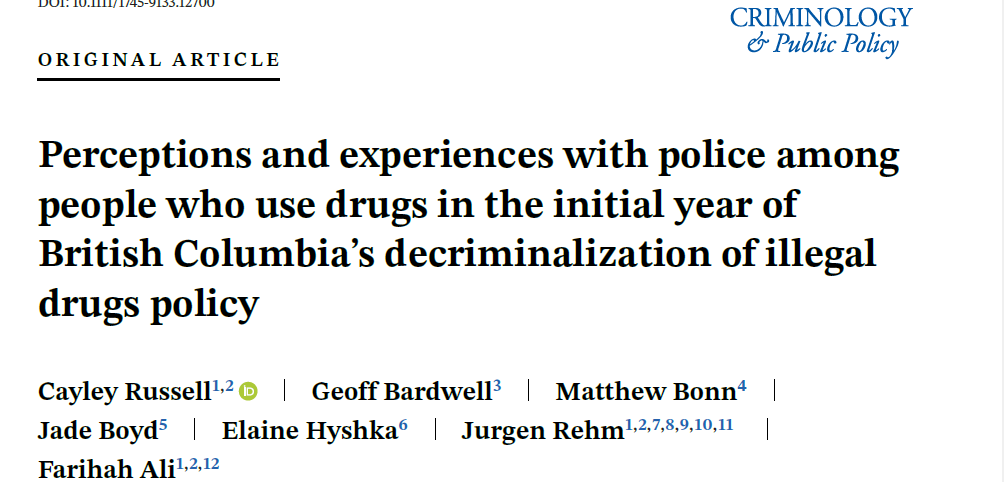
Perceptions and experiences with police among people who use drugs in the initial year of British Columbia's decriminalization of illegal drugs policy

By Cayley Russell, Geoff Bardwell, Matthew Bonn, Jade Boyd, Elaine Hyshka, Jurgen Rehm, Farihah Ali

 On January 31, 2023, BritishColumbia (BC) launched a 3-year pilot initiative decrim-inalizing the possession of up to 2.5 g of select illegal drugs. The policy aims to reduce stigma, address racial disparities in drug law enforcement, and improve police relations with people who use drugs (PWUD). As part of a national evaluation, we conducted qualitative inter-views with 100 PWUD who reported using drugs at least three times a week across BC between October 2023 and February 2024. Participants, diverse in sociodemograph-ics, drug use patterns, and police interaction histories,largely reported an adversarial relationship with police,marked by historical mistreatment and the targeting of individuals based on aspects of their social iden-tity, such as ethnicity, housing status, and other visible markers. Despite police generally adhering to the pol-icy, some participants reported unlawful drug seizures,reinforcing mistrust. Although some noted reduced fear of police, most felt their negative perceptions persisted post-decriminalization, highlighting a need for further police education and training to address stigma and inconsistent enforcement.Policy Implications: Our findings underscore the need for improved police education and training through bet-ter standardization, with an emphasis on promoting consistency and increased transparency, particularly in the use of discretion. Training should also address the impact of systemic racism and discriminatory policing practices to foster equitable interactions with PWUD.Further consideration of alternative nonpunitive legal approaches, alongside expanded harm reduction ser-vices, treatment options, social supports (such as hous-ing), and community-based initiatives, could be highly beneficial. Continued monitoring and evaluation of the policy's impact on PWUD is essential.


Criminology & Public Policy. Volume 24, Issue 3 Aug 2025

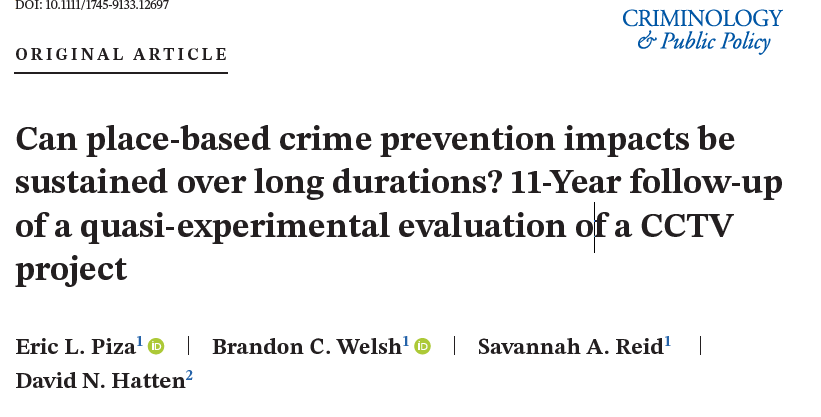
Can place‐based crime prevention impacts be sustained over long durations? 11‐Year follow‐up of a quasi‐experimental evaluation of a CCTV project

By Eric L. Piza, Brandon C. Welsh, Savannah A. Reid, David N. Hatten


A long-standing critique of place-based crime prevention interventions has been that any reductions in crime are often short-lived. If researchers do not carry out longer-duration follow-ups, we cannot know for sure if the effects of these interventions will persist, decay, or even strengthen. Using a rigorous micro synthetic control design, we evaluated the long-term impacts of a large-scale, public-area closed-circuit television (CCTV) surveillance project in Newark, New Jersey. Results show that the CCTV project was associated with a statistically significant reduction of auto theft in the intermediate term (3–4 years). The reduction of auto theft approached statistical significance (= 0.08) during the short term (1–2 years). The analysis also observed potential displacement effects, with displacement of robbery (= 0.09) in the short term (1–2 years) and theft from auto (= 0.06) in the long term (9–11 years) approaching statistical significance.

Policy implications

The results of this study may suggest the potential for a slightly modified view of deterrence decay. The CCTV project's effect on auto theft grew from approaching significant to statistically significant between the short-term and intermediate-term periods. Such “sleeper effects” suggest that an extended period was necessary for CCTV to generate deterrence. The deterrence decay during the long-term period did not occur until after these sleeper effects emerged, which may be understood as deterrence attenuation. Although only approaching statistical significance—and not as pronounced as the reduction of auto theft—the potential displacement of robbery and theft from auto indicates that static CCTV target areas may facilitate offenders taking advantage of nearby crime opportunities while appearing inconspicuous within CCTV viewsheds. In sum, policymakers should be mindful that research evidence limited to short-term impacts may fail to detect nuanced effects relevant for policy and public guidance.

Criminology & Public Policy, Volume 24, Issue 3, Aug 2025, Pages307-497

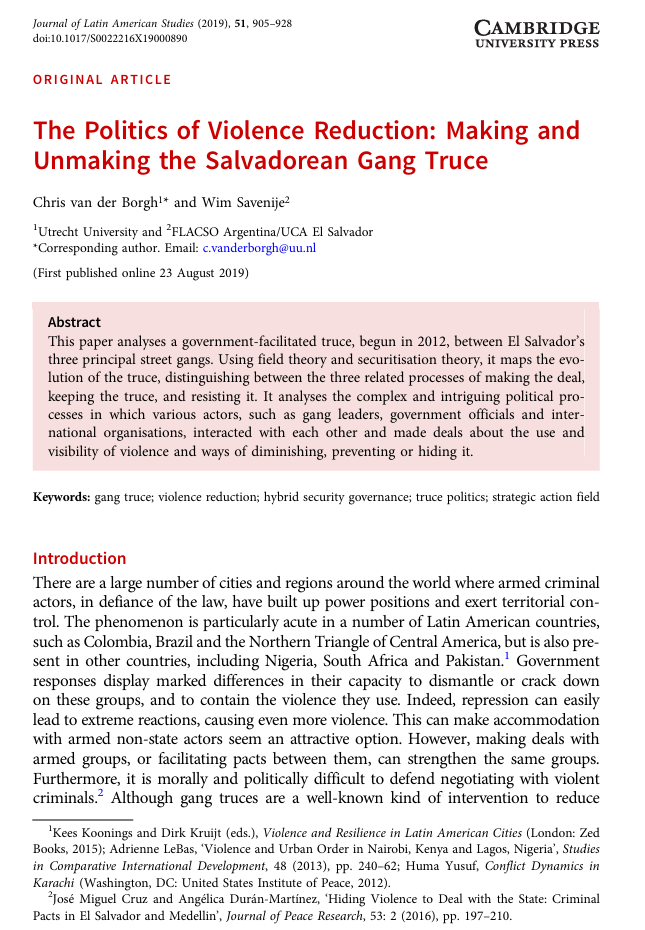
The Politics of Violence Reduction: Making and Unmaking the Salvadorean Gang Truce 

By Chris van der Borgh and Wim Savenije

This paper analyses a government-facilitated truce, begun in 2012, between El Salvador’s three principal street gangs. Using field theory and securitisation theory, it maps the evolution of the truce, distinguishing between the three related processes of making the deal, keeping the truce, and resisting it. It analyses the complex and intriguing political processes in which various actors, such as gang leaders, government officials and international organisations, interacted with each other and made deals about the use and visibility of violence and ways of diminishing, preventing or hiding it.  

  Journal of Latin American Studies (2019), 51, 905–928 doi:1

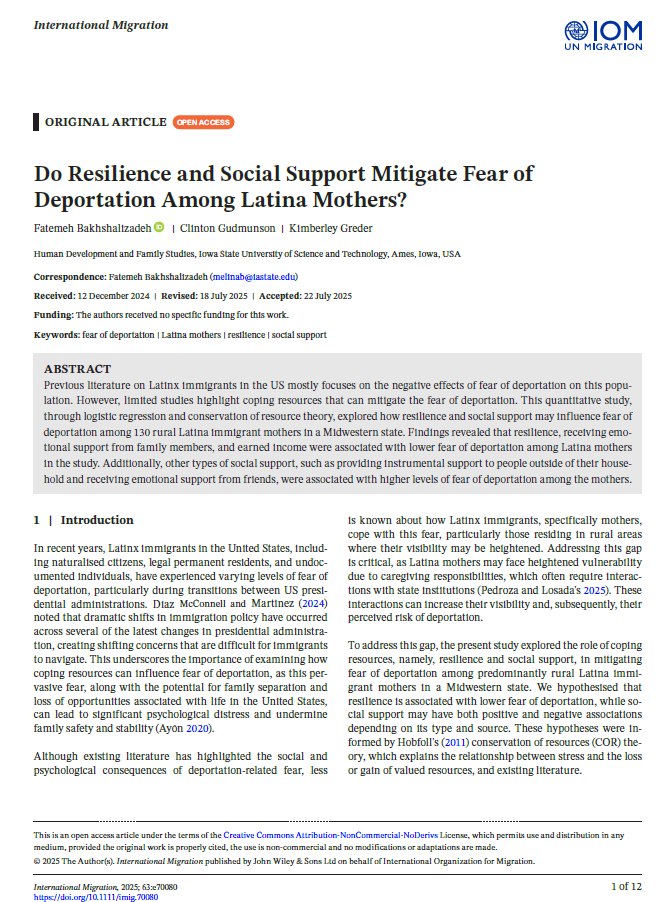
Do Resilience and Social Support Mitigate Fear of Deportation Among Latina Mothers?

By Fatemeh Bakhshalizadeh, Clinton Gudmunson, Kimberley Greder

Previous literature on Latinx immigrants in the US mostly focuses on the negative effects of fear of deportation on this population. However, limited studies highlight coping resources that can mitigate the fear of deportation. This quantitative study, through logistic regression and conservation of resource theory, explored how resilience and social support may influence fear of deportation among 130 rural Latina immigrant mothers in a Midwestern state. Findings revealed that resilience, receiving emotional support from family members, and earned income were associated with lower fear of deportation among Latina mothers in the study. Additionally, other types of social support, such as providing instrumental support to people outside of their household and receiving emotional support from friends, were associated with higher levels of fear of deportation among the mothers.


International Migration, Volume 63, Issue 5, Sep 2025

Why There is Still an Illicit Trade in Cultural Objects and What We Can Do About It

By Neil Brodie,Morag M. Kersel,Simon Mackenzie,Isber Sabrine,Emiline Smith &Donna Yates

Fifty years after the adoption of the 1970 UNESCO Convention, the illicit trade in cultural objects endures, with harmful consequences to local communities, knowledge acquisition, and archaeological landscapes and objects. In this article, we present a gap analysis to assess under-performing policy and practice. We argue that a poor understanding of how the trade is organized and operates and of how it might be regulated hinders effective policy formulation. Funding structures which encourage short-term ad hoc research and inhibit information sharing are in part responsible for some of the gaps. We conclude by suggesting how sustained theoretically informed, evidence-led collaborative analyses might help reduce or mitigate these problems, preventing another 50 years of illicit trade.

Journal of Field Archaeology 


Volume 47, 2022 - Issue 2

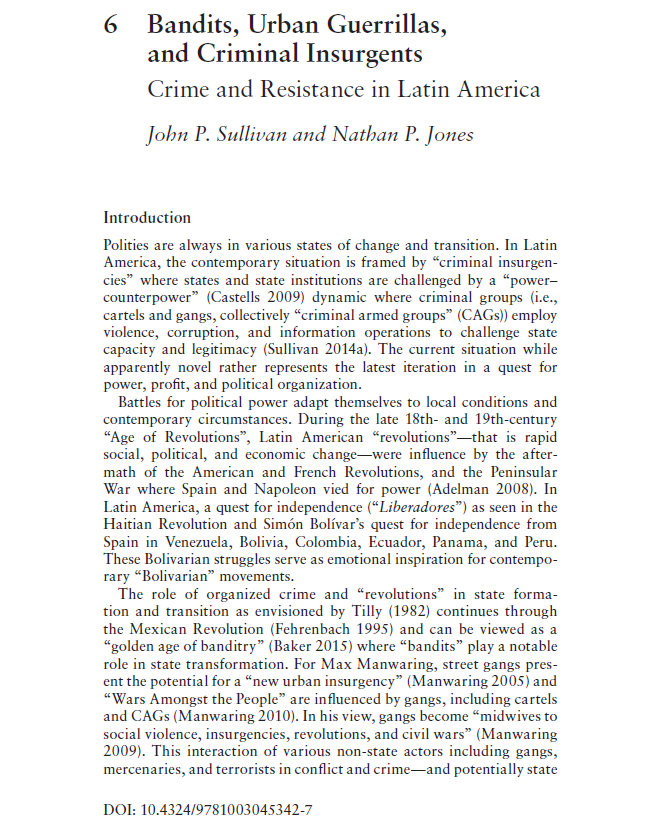
Bandits, Urban Guerrillas, and Criminal Insurgents Crime and Resistance in Latin America By John P. Sullivan and Nathan P. Jones

his chapter covers the early history of bandits including the role of bandits in revolution (e.g., Pancho Villa), the rise of urban guerrillas (e.g., Che Guevara and the Cuban Revolution, Carlos Marighella (the Minimanual of the Urban Guerrilla)) in Brazil and the Tupamaros in Uruguay, and the transition from ideological revolt to criminal insurgency. The later transition will focus on the transition to crime by the FARC and ELN in Colombia succeeded by Bacrim in Colombia, mega-gangs in Venezuela, and by Brazilian gangs (i.e., The Commando Vermelho and Primeiro Comando da Capital), followed by the rise of criminal insurgency waged by territorial (third-generation) gangs (including maras such as MS-13 and Barrio 18 in Central America) and criminal cartels. The nexus between prison gangs and criminal gangs and the emergence of criminal enclaves (such as the Triple Frontier and Ciudad del Este) will be explored. A common thread will be a discussion of crime and social banditry (Hobsbawm) as mechanisms of revolt. Urban crime and instability and the emergence of crime wars and criminal insurgency will be discussed in context of state transition, globalization, and the rise of transnational organized crime.  

Chapter
Problems and Alternatives in the Modern Americas,  Routledge,  2021.


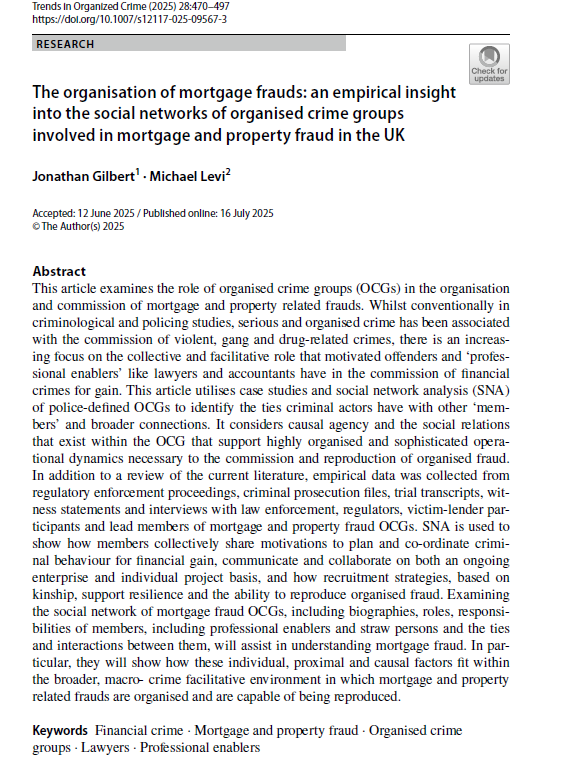
The organization of mortgage frauds

By Jonathan Gilbert  · Michael Levi

 This article examines the role of organised crime groups (OCGs) in the organisation and commission of mortgage and property related frauds. Whilst conventionally in criminological and policing studies, serious and organised crime has been associated with the commission of violent, gang and drug-related crimes, there is an increasing focus on the collective and facilitative role that motivated ofenders and ‘professional enablers’ like lawyers and accountants have in the commission of fnancial crimes for gain. This article utilises case studies and social network analysis (SNA) of police-defned OCGs to identify the ties criminal actors have with other ‘members’ and broader connections. It considers causal agency and the social relations that exist within the OCG that support highly organised and sophisticated operational dynamics necessary to the commission and reproduction of organised fraud. In addition to a review of the current literature, empirical data was collected from regulatory enforcement proceedings, criminal prosecution fles, trial transcripts, witness statements and interviews with law enforcement, regulators, victim-lender participants and lead members of mortgage and property fraud OCGs. SNA is used to show how members collectively share motivations to plan and co-ordinate criminal behaviour for fnancial gain, communicate and collaborate on both an ongoing enterprise and individual project basis, and how recruitment strategies, based on kinship, support resilience and the ability to reproduce organised fraud. Examining the social network of mortgage fraud OCGs, including biographies, roles, responsibilities of members, including professional enablers and straw persons and the ties and interactions between them, will assist in understanding mortgage fraud. In particular, they will show how these individual, proximal and causal factors ft within the broader, macro- crime facilitative environment in which mortgage and property related frauds are organised and are capable of being reproduced. 

Sex work and the beerhall: an autoethnography from Chiredzi, Zimbabwe

By Kundai Manamere

In Zimbabwe, sex work has long been associated with immorality. This became a primary justification for the criminalisation of young women’s presence in urban areas since the colonial period. However, the legislation failed to keep women out of towns. Instead, they slowly carved a niche in urban development, especially as sex workers. Literature on sex work has consistently reflected the need for change in public attitudes towards sex work, revealing long-standing irreconcilable feminist perspectives between those who view sex workers as either victims or agents in society.This article moves away from these single-thread narratives of sex work and potray sex workers as political agents who negotiate various social, political, legal and economic circumstances to challenge the various processes that have largely relegated their voices to the margins.This article also updates debates on public attitudes to sex work. Few studies have focused on public attitudes towards sex work and factors that shape, maintain, or transform this over time. I argue for the incorporation of voices from communities where sex workers work and live, where possible. This approach moves the focus from state-centric legislative sites and debates to quotidian micro-practices in communities shedding more light on public attitudes to sex work.


Third World Quarterly, 2025.

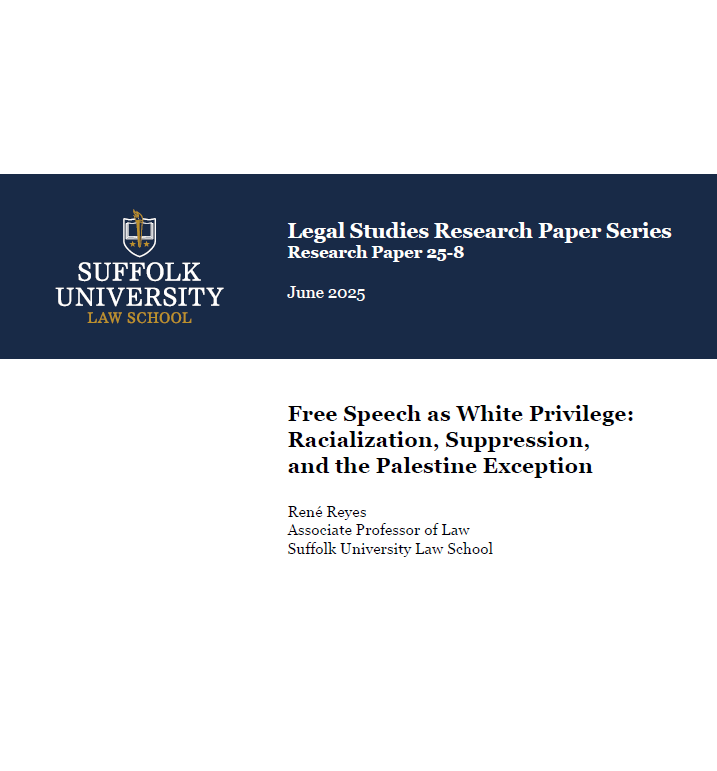
Free Speech as White Privilege: Racialization, Suppression, and the Palestine Exception

By Rene Reyes

Free speech is under siege. This is not to say that all speakers and viewpoints are at equal risk—some voices receive support and protection, while others are subject to threats and suppression.  Pro-Palestinian speech falls into the latter category.  Critics argue that there has long been a “Palestine Exception” to free speech, but efforts to silence pro-Palestinian advocacy on university campuses and elsewhere have dramatically increased since Israel began its assault on Gaza in October of 2023 in response to incursions by Hamas militants.  Many supporters of Israel contend that such restrictions on pro-Palestinian advocacy are justified, and have suggested that there is a double standard between racism and antisemitism at play when universities fail to condemn at least some forms of pro-Palestinian speech. The implication seems to be that anti-Black and Brown speech would never be tolerated on campuses, and that racialized minorities have been a special favorite of legal and institutional protections against hateful expression. The problem with this argument is that it is demonstrably false.  Indeed, this Essay argues that free speech doctrines have consistently functioned to give white people the liberty to engage in hateful speech and to deny Black, Brown, and other racialized individuals the kinds of protections from fear and harm that supporters of Israel are now demanding.  In other words, the Palestine Exception to free speech is real—and it is part of a deeper legal tradition that has enshrined free speech as an element of white privilege.

Virginia Law Review ,Vol 111, June 2025.

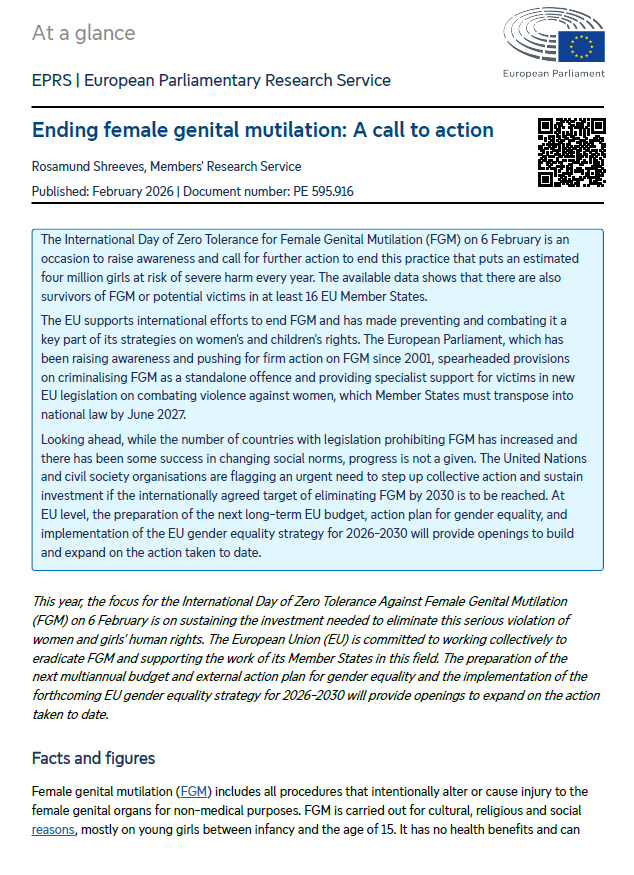
Ending female genital mutilation: A call to action

By  Rosamund SHREEVES 

The International Day of Zero Tolerance for Female Genital Mutilation (FGM) on 6 February is an occasion to raise awareness and call for further action to end this practice that puts an estimated four million girls at risk of severe harm every year. The available data shows that there are also survivors of FGM or potential victims in at least 16 EU Member States. The EU supports international efforts to end FGM and has made preventing and combating it a key part of its strategies on women's and children's rights. The European Parliament, which has been raising awareness and pushing for firm action on FGM since 2001, spearheaded provisions on criminalising FGM as a standalone offence and providing specialist support for victims in new EU legislation on combating violence against women, which Member States must transpose into national law by June 2027. Looking ahead, while the number of countries with legislation prohibiting FGM has increased and there has been some success in changing social norms, progress is not a given. The United Nations and civil society organisations are flagging an urgent need to step up collective action and sustain investment if the internationally agreed target of eliminating FGM by 2030 is to be reached. At EU level, the preparation of the next long-term EU budget, action plan for gender equality, and implementation of the EU gender equality strategy for 2026-2030 will provide openings to build and expand on the action taken to date.

EPRS | European Parliamentary Research Service, 2026. 4p.

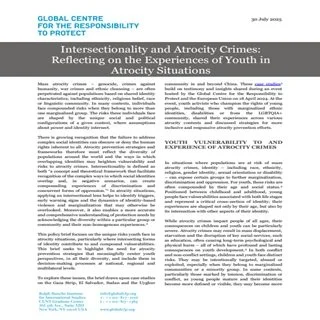
Intersectionality and Atrocity Crimes: Reflecting on the Experiences of Youth in Atrocity Situations

By The Global Centre for the Responsibility to Protect

Mass atrocity crimes are often perpetrated against populations based on shared identity characteristics, such as ethnicity, religion, race or language. In many contexts, individuals who belong to more than one marginalized group face heightened and compounded risks. These risks are shaped by the unique social and political dynamics of a given context, where assumptions about power and identity intersect.

There is growing recognition that failing to address complex and overlapping identities can obscure or deny the human rights inherent to all. Effective atrocity prevention must reflect the diversity of populations around the world and recognize how intersecting identities contribute to vulnerability and risk. Applying an intersectional lens is essential to identifying early warning signs, understanding the drivers of identity-based violence and ensuring no one is overlooked.

This new policy brief focuses on the specific risks faced by youth in atrocity situations, particularly when multiple forms of identity compound their vulnerability. This brief underscores the urgent need to meaningfully center youth perspectives, in all their diversity, within national, regional and multilateral atrocity prevention strategies and decision-making processes.

The brief draws on case studies from the Gaza Strip, El Salvador, Sudan and the Uyghur community in and beyond China. These examples are informed by testimony and insights shared by youth activists during an event hosted by the Global Centre for the Responsibility to Protect and the European Union on 18 April 2024. Participants included young advocates for marginalized ethnic groups, people with disabilities and LGBTQIA+ youth, who shared their lived experiences and strategies for more inclusive, effective prevention.

New York: Global Centre for the Responsibility to Protect 2025. 7p.

ONE THOUSAND HOMELESS MEN: A STUDY OF ORIGINAL RECORDS

By ALICE WILLARD SOLENBERGER

This book is a detailed study of 1,000 homeless men in Chicago, conducted by Alice Willard Solenberger. It examines their physical conditions, causes of homelessness, and social remedies early in the 20th century.. Solenberger applied charity organization methods to homeless men, similar to those used for families, to understand and address their needs more effectively.. The study highlights the inadequate treatment of homeless men and suggests that personalized, in-depth approaches can lead to better outcomes and contains extensive raw data and information. Finally, it emphasizes the need for better laws and facilities to support homeless individuals and reduce vagrancy.

NY. Russell Sage Foundation. 1911. 397p.

Making Race in the Courtroom: The Legal Construction of Three Races in Early New Orleans

By Kenneth R. Aslakson

 No American city’s history better illustrates both the possibilities for alternative racial models and the role of the law in shaping racial identity than New Orleans, Louisiana, which prior to the Civil War was home to America’s most privileged community of people of African descent. In the eyes of the law, New Orleans’s free people of color did not belong to the same race as enslaved Africans and African-Americans. While slaves were “negroes,” free people of color were gens de couleur libre, creoles of color, or simply creoles. New Orleans’s creoles of color remained legally and culturally distinct from “negroes” throughout most of the nineteenth century until state mandated segregation lumped together descendants of slaves with descendants of free people of color.

Much of the recent scholarship on New Orleans examines what race relations in the antebellum period looked as well as why antebellum Louisiana’s gens de couleur enjoyed rights and privileges denied to free blacks throughout most of the United States. This book, however, is less concerned with the what and why questions than with how people of color, acting within institutions of power, shaped those institutions in ways beyond their control. As its title suggests, Making Race in the Courtroom argues that race is best understood not as a category, but as a process. It seeks to demonstrate the role of free people of African-descent, interacting within the courts, in this process.

New York; London: New York University Press, 2014. 272p.

Women In History

USED BOOK. MAY CONTAIN MARK-UP

Compiled and edited by Don Shepherd with an Introduction by Eleanora de Vincent

FROM THE COVER: “This illustrated volume takes a close look at the famous and infamous women who have influenced history. Once buried under a blanket of indifference, their contributions emerge today as a fascinating study of women, of their search for identity, and of their striving over the limitations and constraints of the times in which they lived. An important addition to the literature of Women's Liberation is this collection of articles on the deeds and misdeeds of the assassin Charlotte Corday, the wondering queen Nefertiti, the eminent Mary, Queen of Scots, the imperial Chinese women, the tempestuous women in Hispanic history, the auto- cratic Catherine the Great, those women of fortune, Naksh and Josephine, America's First Lady of Art, Mary Cassatt, the valiant Dolley Madison and China's Dowager Empress Tzu Hsi.

Los Angeles. Mankind Publishing Company .

Joan Of Arc

USED BOOK. MAY CONTAIN MARK-UP

By Mary Gordon

FROM THE INTRODUCTION: “…March 14, 1999. The city of Rouen, the province of Normandy, the country of France, the continent of Europe. It is 5 p.M. on an unseasonably warm spring day. People have flung their jackets over their shoulders. They are sitting outside in cafés, reckless from the sunlight, which seems miraculous, unearned, suggestive of improvidence. We are in the marketplace, the place where Joan of Arc was burned at the stake. An attempt has been made to make this a viable city center; there is an open space for a market and, next to it, a cathedral. It is one of those good ideas that didn't work; it might have worked had there been a genius to design it, but it was not designed by a genius. The church is in the shape of an overturned boat, and the motif is meant to be nautical: Rouen is a seafaring city. But the idea fails; it provides us only with the always dispiriting spectacle of over- strained originality. The church has the sad, earnest quality of mediocre modern architecture, and we are left with a sense of betrayal, because we think that plainmaterials and an abundance of light ought to equal beauty, and when they don't, not only art, but nature as well, has let us down…”

London. Orion Books. Phoenix. 2000. 187p.