Open Access Publisher and Free Library
HUMAN RIGHTS.jpeg

HUMAN RIGHTS

Human Rights-Migration-Trafficking-Slavery-History-Memoirs-Philosophy

Posts in Human Rights
Labour exploitation and other work-related crime: a problem analysis and prevention framework.

By Stijn Aerts

Key takeaways 1. Work-related crime refers to all infractions of laws and regulations regarding salary and employment, benefits, taxes and duties. This includes labour exploitation, forced labour, and trafficking in human beings for labour exploitation, as well as all criminal activities that may be related to, or indicative of, these crimes: benefit fraud, tax evasion and money laundering, breaching workplace safety regulations, salary extortion, and so on. 2. Labour exploitation is a particularly harmful crime. First, there is the direct harm (physical, psychological and economic) to victims. Second, exploitation creates unfair competition, having a negative effect on the legal economy and labour market. Third, unfair competition in trade and labour markets, and illegally acquired wealth, may erode trust in institutions and European values. 3. Exploiters make profit through a series of cost-cutting and revenue-generating actions. They save on wages, a safe work environment, taxes and social benefit contributions. Revenue is generated by asking inflated prices for recruitment and housing, by committing different types of benefit fraud, and by out-competing competitors. 4. Offenders use (seemingly) legal business structures and labour mobility options (including posted labour) to create intricate, often international, subcontracting chains that serve to hide illegal activity from plain sight and hamper investigations. 5. There are different prevention strategies, each with their own benefits and disadvantages. Victim-oriented approaches include awareness programmes for potential victims, as well as victim identification and assistance. Buyer-oriented strategies target both personal and corporate buyers, and aim to shrink the market for services and goods produced by exploited labour. Offender-oriented approaches have the objective to create an environment that is risky and unrewarding for offenders to operate in. The latter may be achieved by a mix of criminal justice and administrative probes that benefits from increased information sharing between authorities and across borders.

Brussels: European Crime Prevention Network - EUCPN. 2023. 40p.

download
Slavery & Identity

By Mieko Nishida

●Thematic Focus: The book offers a new interpretation of urban slaveryin Salvador, Brazil, from 1808 to 1888, exploring the self-perceptions and identities of enslaved Africans and their descendants during theslavery regime, emphasizing factors like ethnicity, gender, and race.

●Structural Overview: It is divided into three parts, each examiningdifferent aspects of identity creation among African-born and Brazilian-born individuals, with chapters detailing the creation, representation,convergence, and re-creation of identities within the historical contextof New World slavery.

●Research Foundation: Nishida's work is grounded in primary sources and reflects her personal journey of identity search, paralleling the experiences of her subjects who navigated their identities amidst socio-political transitions in Brazil, such as the end of the transatlantic slave trade and the abolition of slavery.

Indiana University Press, 2003, 255 pages

read
Slavery in Dutch South Africa

By Nigel Worden

This book provides a comprehensive study of slavery in Dutch SouthAfrica, covering various aspects such as the historical context, the role of the Dutch East India Company (VOC), the economic impact of slavery, and the social dynamics between slaves and their masters. Here are some key insights.It details the establishment and growth of a slave society in South Africa under Dutch colonial rule from 1652 to 1795, and examines the economic aspects of slavery, including the profitability of slave labor and its integration into the colonial mercantilist system.It explores the relationships between slaves and their masters, the legal framework governing slavery, and the mechanisms of control and resistance within the slave society. The study places Cape slavery within a broader comparative framework, challenging traditional views and highlighting the complexities of the slave system at the Cape.These insights provide a nuanced understanding of the institution of slavery in Dutch South Africa and its implications for the region's history and development

Cambridge University Press, 1985 , 107 pages

read
Humanitarian Imperialism : The Politics of Anti-Slavery Activism 1880-1940

By Amalia Ribi Forclaz

Humanitarian Imperialism examines anti-slavery activism between 1880-1940 and its entanglement with religious and political powers, diplomatic affairs, and military actions. It highlights the emergence of Catholic anti-slavery organizations in Europe, their efforts to raise awareness about African slavery, and their collaboration with established British societies to influence public and political spheres. The book provides an in-depth analysis of the campaign against slavery in Ethiopia, illustrating the complex interactions between British and Italian activists, missionaries, colonial authorities, and the League of Nations.. Finally, it reveals a transition in anti-slavery activism, influenced by the rise of totalitarian regimes and the changing international context during the interwar years, leading to a critical assessment of the relationship between humanitarian internationalism and imperialism.

Oxford University Press, 2015, 243 pages

read
American Slaves in Victorian England

By Audrey Fisch

"American Slaves in Victorian England" by Audrey Fisch sheds light on the often overlooked history of American slaves who found themselves in England during the Victorian era. Through meticulous research and compelling narratives, Fisch explores the experiences, challenges, and triumphs of these individuals as they navigated a society far from home. This book provides a thought-provoking glimpse into a lesser-known aspect of both American and British history, offering a fresh perspective on the complexities of race, identity, and freedom in the 19th century.

Cambridge University Press, 2000, 139 pages

READ
African Slaves and African Masters

By Christine E. Sears

The book examines the impact of African-American abolitionists in England during the 1850s, highlighting their efforts to present the slave experience and stimulate opposition to American slavery.It explores how the campaign intersected with various English issues such as Victorian literary market changes, class and gender tensions, and national identity questions.Despite its popularity, the abolitionist campaign inadvertently reinforced English nationalism, becoming a point of interest for students of African-American studies and 19th-century literature and history[^2^][2].

Springer, 2012, 240 pagws

Read
Sheriffs, State Troopers, and the Spillover Effects of Immigration Policing

By Huyen Pham & Pham Hoang Van.

As the Biden Administration decides whether to continue the 287(g) program (the controversial program deputizing local law enforcement officers to enforce federal immigration laws), our research shows that the program has broader negative effects on policing behavior than previously identified. To date, debate about the 287(g) program has focused exclusively on the policing behavior of law enforcement agencies like sheriff’s offices that sign the agreements, and on concerns that these signatory local enforcement agencies (“LEAs”) engage in racial profiling. Our research shows that the agreements also negatively affect the behavior of nearby, non-signatory law enforcement agencies. Using 18 million traffic stops drawn from the Stanford Open Policing Project, we find that the agreements caused state troopers in North Carolina and South Carolina to stop Hispanic drivers more often than White drivers, in order to funnel them into the intensive immigration screening conducted by signatory LEAs at the shared jails. Because trooper agencies did not sign the agreements, statistical associations between the presence of agreements and the differential treatment of drivers by race are not contaminated by unobserved confounding factors. Our identification of these previously unnoticed spillover effects raises important policy questions about the program’s impact and the adequacy of existing legal and administrative controls.

Arizona Law Review, 2022. 41p.

download
Crimmigration and the Legitimacy Of Immigration Law

By JULIET P. STUMPF 

Crimmigration law—the intersection of immigration and criminal law—with its emphasis on immigration enforcement, has been central in discussions over political compromise on immigration reform. Yet crimmigration law’s singular approach to interior immigration and criminal law enforcement threatens to undermine public faith in the legitimacy of immigration law. This Article explores the significance of crimmigration for the procedural legitimacy of immigration law. Seminal scholars of psychological jurisprudence have concluded that perceptions about procedural justice—whether the law and legal authorities treat people fairly—are often more important than a favorable outcome, such as winning a case or avoiding arrest. Crimmigration introduces procedural deficiencies into immigration law that may undermine people’s perceptions of its legitimacy. These deficiencies, seen through the lens of psychological jurisprudence, mean that individuals and institutions are less likely to trust immigration law and cooperate with immigration authorities. This Article applies specific criteria that jurisprudential psychologists have shown influence perceptions about justice. It predicts that the core procedural deficiencies of crimmigration—which bar access to immigration benefits, undermine procedural safeguards for fair and accurate outcomes, and embed racialization into immigration enforcement—will undermine perceptions about the legitimacy of immigration law. This has important implications for immigration reform. If immigration enforcement lacks procedural justice, any compromise struck with crimmigration at its core will exacerbate public distrust of immigration law.

Arizona Law Review, 2023. 47p.

download
Immigration Detention is Never “Presumptively Reasonable”: Strengthening Protections for Immigrants with Final Removal Orders

By Elizabeth Hannah

Immigration detention is a central feature of the United States’ immigration system. Noncitizens facing removal are detained in staggering numbers throughout the removal process, from the initiation of legal proceedings to the issuance of a final removal order. Moreover, as the U.S. government’s reliance upon immigration detention has grown, the Supreme Court has systematically stripped noncitizens of important substantive and procedural protections. This is especially true in the post-removal-order context, where a series of recent decisions have placed more people than ever at risk of prolonged detention without a bond hearing. Three cases in particular—Johnson v. Guzman Chavez (2021), Johnson v. Arteaga-Martinez (2022), and Garland v. Aleman Gonzalez (2022)—have increased the likelihood that noncitizens subject to post-removal-order detention will remain incarcerated for months or years, even if they have pending claims for relief. This Note describes each of these three cases and explains how, together, they severely undermine the rights of noncitizens with final removal orders. This Note further argues that people facing post-removal-order detention should be entitled to rigorous due process protections. Even though detention constitutes a clear deprivation of liberty, the Supreme Court has held that six months of post-removal-order detention is “presumptively reasonable.” This Note criticizes that premise and asserts that no period of immigration detention is presumptively reasonable. In other words, even if the Court had decided Guzman Chavez, Arteaga-Martinez, and Aleman Gonzalez in favor of the noncitizen plaintiffs, the existing framework would still be insufficient to protect immigrants in post-removal-order detention from experiencing protracted and unnecessary trauma. This Note therefore posits that, at minimum, immigrants with final removal orders should receive a bond hearing before an immigration judge at the close of the 90-day mandatory detention period. While more radical solutions like detention abolition are ultimately in order, a 90-day bond hearing requirement would at least provide noncitizens facing post-removal-order detention a meaningful opportunity to secure release from custody.

Arizona Law Review, 2023. 36p.

download
INDECENT EXPOSURE and the Court as Custodian of Morals

By Bruce Davis

This is the first comprehensive study of the history and evolution of American indecent exposure laws. The study informs a critical analysis of the role of courts as custos morum, or custodian of the morals. It contains a detailed constitutional analysis of legal management of morality.

The laws are a cornerstone of government regulation of morals, with roots tracing back to seventeenth century English and American cases, laws, and regulations. The state interests protected by indecent exposure laws focus on deterring public behaviors contrary to prevailing moral order and protecting the public from offense or alarm. As moral authority has shifted away from Christianity, the moral authority supporting maintenance of moral order have diminished and fragmented, leaving nuisance as the main justification. Most state statutes now define indecent exposure in terms of audience reaction, reflecting this dependence on nuisance theory. Supreme Court trends have weakened even this justification, raising questions about the viability of current indecent exposure laws.

Despite their fundamental role in moral regulation, indecent exposure laws have received little academic, political, or legal scrutiny. This analysis elucidates their origins, history, and effects, informing development of more effective policies on managing sexuality and nudity. The history of indecent exposure laws also provides insights into managing morals and church-state relations in secular societies. Legal, social, and political trends have created multiple complex jurisprudential dilemmas, exposing the laws to potential constitutional challenges based on the Establishment Clause, free exercise of religion, free speech, privacy, autonomy, overbreadth and vagueness, viewpoint restrictions, content-based restrictions, prior restraints, and equal protection precedent and doctrines. Changes in indecent exposure laws are likely but their costs and benefits remain unclear.

The book chronicles the origins and evolution of courts as custodian of morals. Aspects of Dobbs v. Jackson Women's Health abortion case decided in 2023 suggest that this regime may be nearing an end. Competing moral authorities are contributing to a worsening crisis in moral jurisprudence. The book proposes a public policy framework more aligned with our maturing Constitution that may be better suited to current conditions, based on an empirical approach to legal management of morals in a pluralistic liberal democracy.

New York. Read-Me.Org Inc. 2024. 313p.

download
Navigating through your supply chain. Toolkit for prevention of labour exploitation and trafficking

By Anni Lietonen, Anniina Jokinen, Natalia Ollus 

In recent years, the issue of labour trafficking and exploitation in global supply chains has gained more and more attention. Businesses are under increasing scrutiny from consumers, media, civil society, investors and governments to behave in an ethical manner. However, there has been less focus on local and national structures. It is a common practice for businesses to rely on subcontractors/suppliers, or to use contractual partners who use subcontractors for specialised, project-related or short-term work. In recent years, cases of labour exploitation in supply/subcontracting chains have been uncovered around the world, as well as in Europe. With increased mobility of workers and increasingly complex supply chains, there is a growing need to ensure that all involved parties know their rights and obligations. This can prevent the exploitation of migrant workers and the risk of businesses becoming involved in such scenarios. This risk management toolkit has been developed in the context of the EU-funded FLOW-project. Its purpose is to give companies a brief overview of what labour exploitation and trafficking are, as well as to demonstrate the risks for businesses, and how involvement in such scenarios can be effectively avoided. These tools focus on the practical implementation of due diligence procedures, such as gathering information through worker-led monitoring and grievance mechanisms. The aim is to provide “hands-on” measures for businesses that can be used to navigate and control complex supply chain networks, especially in a local, national and intra-European context with the focus on preventing exploitation and trafficking. The measures include conducting a risk assessment, drafting an anti-trafficking strategy, screening contractual partners, incorporating specific contractual clauses and organising workplace assessments/inspections concerning the activities of subcontractors or other contractual partners. To supplement this toolkit, a Normative Framework Guide (HEUNI Publication Series No. 94) has also been developed as part of the FLOW-project, which provides a summarised overview of existing legal frameworks outlining businesses' responsibilities with regard to human rights, with a focus on labour exploitation and human trafficking. Outsourcing of work through subcontracting and the use of temporary workers in overly flexible employment relationships makes it more difficult for companies to assess the working conditions under which goods and services are produced (FRA 2015; Jokinen & Ollus 2019). The more layers in the supply chain, the more difficult it is to survey how the subcontractors carry out their business. In the worst-case scenario, legitimate business structures and lengthy supply chains may reveal serious forms of exploitation or even human trafficking. Concern over workers’ rights at all levels of the supply chain, in particular at the lower end of a subcontracting chain, should be included in responsible business policies. Committing to respecting Business and Human Rights (BHR) agreements alone cannot guarantee that a company is not unknowingly involved in labour exploitation or trafficking. Proactive businesses can mitigate such risks more efficiently by engaging in risk management, inspections and monitoring of working conditions. Who should use this tool? Managers, experts, and representatives of: ○ Businesses, NGOs and/or organisations that use low-skilled migrant workers through outsourcing, subcontracting, and recruitment companies and labour intermediaries in, e.g., construction, cleaning or catering services ○ Businesses working in risk sectors where labour exploitation or human trafficking have been identified ○ Public procurement units working for states, municipalities and/or state enterprises ○ Corporate Social Responsibility experts and networks Businesses should take steps to strengthen their role in regulating the labour supply and in recognising the signs of labour exploitation. Effective and proactive measures to tackle labour exploitation deters criminal enterprises from entering labour supply chains and promotes fair competition and decent work.     

Helsinki: HEUNI, 2020. 60p.

download
Disrupting Labor Trafficking in the Agricultural Sector: Looking at Opportunities beyond Law Enforcement Interventions

By Chase Childress, Amy Farrella, Shawn Bhimani, and Kayse Lee Maass

Law enforcement interventions continue to be the primary mechanism used to identify offenders and illicit businesses involved in human trafficking, yet trafficking continues to be a thriving international operation. We explore alternative mechanisms to disrupt illicit operations and reduce victimization through labor trafficking supply chains using supply chain disruption theory. Using a case study approach to examine one federally prosecuted labor trafficking case in the agricultural sector, we (1) extend criminological concepts of disruption by identifying sources and methods of disruption and (2) inform criminal justice system responses by presenting novel methods of assessing effectiveness of anti-human trafficking policies and programs.

Victims & Offenders, 2022. 39p.

download
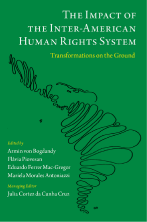
The Impact of the Inter-American Human Rights System: Transformations on the Ground

 by Armin von Bogdandy, Flávia Piovesan, Eduardo Ferrer Mac-Gregor, Mariela Morales Antoniazzi

The Inter-American Human Rights System (IAHRS) fosters structural transformations throughout the Americas. This collection of analyses builds upon the studies on Ius Constitutionale Commune en América Latina and Latin American transformative constitutionalism to map out both the ground-level human rights impact of the IAHRS and the institutional characteristics that have enabled such fundamental changes in social reality. The volume starts with essays framing the concept and context of IAHRS impact. Then it navigates thematic analyses on specific rights and types of violations that are front and center to the protection of human rights in Latin America. The concluding essays explore whether and how it is possible to optimize the actions of the Inter-American System, indicating possible paths to increase positive human rights impact. The editors contend that the IAHRS victim-centric approach, community of practice, and openness to institutional reinvention have enabled it to create a virtuous cycle that catalyzes human rights in the Americas, furthering democracy and the Rule of Law throughout the continent.

Oxford, UK; New York: Oxford University Press, 2024. 705p.

download
The Ethics and Politics of Asylum: Liberal Democracy and the Response to Refugees

MAY CONTAIN MARKUP

By Matthew J. Gibney

"The Ethics and Politics of Asylum: Liberal Democracy and the Response to Refugees" delves deep into the complex intersection of principles, policies, and practices surrounding asylum in liberal democracies. This thought-provoking book meticulously examines the ethical considerations and political dynamics that shape how these nations respond to the plight of refugees. Through a rigorous analysis, the author navigates the intricate terrain of asylum discourse, shedding light on the challenges, contradictions, and possibilities within contemporary asylum systems. A must-read for scholars, policymakers, and anyone seeking a comprehensive understanding of the intricate moral and political dilemmas inherent in the asylum process.

NY. CAMBRIDGE UNIVERSITY PRESS. 2004. 299p.

read
SLAVERY AT THE CAPE OF GOOD HOPE.

MAY CONTAIN MARKUP

by Rev. William Wright.

The text discusses the state of slavery at the Cape of Good Hope, detailing the author's observations and experiences during his ten-year residence there. It mentions various laws and ordinances related to slavery at the Cape, including Lord Charles Somerset's Proclamation of 1823 and the Consolidated Order in Council for the Crown Colonies, dated February 2, 1830. The author also references efforts towards ameliorating enactments and the potential for a scheme for the extinction of slavery by the colonists themselves.

John Rodwell, London. 1831. Reprinted in 1969 by Negro Universities Press,., New York. 116p.

download
GREAT BRITAIN AND THE SLAVE TRADE 1839-1865

MAY CONTAIN MARKUP

BY WILLIAM LAW MATHIESON

This book provides an overview of the historical context and the measures taken to end the slave trade, emphasizing Great Britain's pivotal role and the international efforts to suppress this inhumane practice. It highlights the efforts to abolish the slave trade and the challenges faced, with reference to treaties with Spain and Portugal and describes Sierra Leone's significance as a base for anti-slavery operations and its challenges.

New York. OCTAGON BOOKS. INC.1967.

download
THE BRITISH ANTI-SLAVERY MOVEMENT

MAY CONTAIN MARKUP

Sir REGINALD COUPLAND

The book begins with a reference to James Stephen, a significant figure in the British anti-slavery movement.  Authored by Sir Reginald Coupland, the book provides a historical account of the British anti-slavery movement, with a new introduction by J. D. Fage.  The text delves into the origins and development of slavery, its practice in ancient civilizations, and the eventual involvement of Europe and America in the African slave trade. It discusses the moral implications of slavery and the economic factors that led to the rise of the slave trade, particularly in relation to the colonization of the Americas, thus setting the stage for a detailed exploration of the British efforts to abolish slavery and the slave trade.

FRANK CASS & CO LTD LONDON. 1933. 273p.

download
Raiding the Genome: How the United States Government is Abusing Its Immigration Powers to Amass DNA for Future Policing

GLABERSON, STEVIE; TSE, EMERALD; TUCKER, EMILY

From the document: "[W]hat if the government had access to a copy of your DNA and could track you based on this involuntary, unstoppable trail without your consent? [...] This dystopia is fast becoming reality for millions of people, many of them already vulnerable because of over-policing, excessive surveillance, or economic insecurity. The federal government is amassing a huge trove of DNA, starting with a racialized, often traumatized, and politically powerless group: noncitizens. And it is using the federal agency that operates with the fewest practical constraints and least oversight -- the Department of Homeland Security (DHS) -- to do it. That's what this report is about. [...] The 2005 DNA Fingerprint Act -- which passed with little public scrutiny as an amendment to the reauthorization bill for the popular Violence Against Women Act -- for the first time extended compulsory DNA collection to people outside of the criminal legal context: detained noncitizens. But because of the exceptions in the implementing regulations, and because previous administrations thought it was a good idea to use those exceptions to avoid escalating DNA collection from noncitizens, DHS never mounted a large-scale DNA collection program. That is, until 2020. This report, which is based on publicly available records, as well as interviews with people who have had their DNA taken by immigration authorities and legal service providers working with them, is the first attempt to examine in-depth what happened after the 2020 rule change, and to explain the legal and political implications of these developments."

GEORGETOWN UNIVERSITY. LAW CENTER. CENTER ON PRIVACY & TECHNOLOGY. 21 MAY, 2024.

download
WHITE SLAVERY IN THE BARBARY. STATES

MAY CONTAIN MARKUP

BY CHARLES SUMNER.

“HISTORY has been sometimes called a gallery, where, in living forms, are preserved the scenes, the incidents, and the characters of the past. It may also be called the world's great charnel house, where are gathered coffins, dead men's bones, and all the uncleanness of the years that have fled.”

Massachusetts. JOHN P. JEWETT AND COMPANY, 1853. 134p.

DOWNLOAD
Mali: Human smuggling resilient amid major political and security upheaval

By Flore Berger

Mali has long been an important origin and transit country for West African migrants travelling to North Africa. Its role has expanded in recent years as preferred migration routes have shifted westwards from Libya into Algeria. In 2023, however, the political and security situation in northern Mali changed significantly. MINUSMA (the United Nations Multidimensional Integrated Stabilization Mission in Mali) withdrew from Mali after nearly a decade on the ground. This in turn contributed to the outbreak of hostilities between the Cadre Stratégique Permanent (Permanent Strategic Framework – CSP) and the Forces Armées Maliennes (Malian Armed Forces – FAMa), operating with the support of Russia’s Wagner Group, marking the de facto end of the 2015 Algiers Peace Agreement. The Malian transitional military government officially terminated this accord on 25 January 2024. Taking advantage of Mali’s international isolation and internal turmoil, violent extremist groups – including the al-Qaeda-affiliated Jama’at Nasr al-Islam wal Muslimin (Group to Support Islam and Muslims – JNIM) and Islamic State Sahel Province (IS Sahel) – stepped up their activities, notably by imposing blockades on major northern towns, most notably Timbuktu by JNIM and Ménaka by IS Sahel. These events altered the security equilibrium that, in recent years, had allowed migrants to travel through large parts of northern Mali, particularly Timbuktu, with little difficulty. While none of the developments, individually or collectively, drastically disrupted the movement of migrants and the functioning of human smuggling networks, they did have localized and short- to medium-term effects on flows, route safety, methods and means of transport, and prices. Timbuktu was by far the most significantly affected hub. A blockade was imposed by JNIM at the beginning of August, bringing movement to an immediate halt. Later, however, even as the blockade continued, flows resumed, with migrants using the river to get to Timbuktu rather than overland travel. The safety of movement in and around the city, including on the route to Algeria, deteriorated sharply, and the cost of the journey for migrants almost doubled. Gao was similarly affected by the resumption of hostilities between the CSP and FAMa. This region has always been much more volatile, however, with migratory flows through the city fluctuating greatly depending on the season and the security situation.

Mali’s third major migration route, through the western Kayes region and into Mauritania and Senegal, is a key area to watch. Movements through the south-west have not been directly affected by the upheaval in the north, and a growing number of Malians and West Africans are using this option. This is the latest Global Initiative Against Transnational Organized Crime (GI-TOC) monitoring report on human smuggling in Mali. It builds on the series of annual reports that has been issued by the GI-TOC since 2019, tracking the evolution of human smuggling in Mali, as well as the political, security and economic dynamics that influence it.

Geneva, SWIT: Global Initiative Against Transnational Organized Crime (GI-TOC)’s Observatory of Illicit Economies in North Africa and the Sahel. 2024. 30p.

download