Open Access Publisher and Free Library
TERRORISM.jpeg

TERRORISM

Terrorism-Domestic-International-Radicalization-War-Weapons-Trafficking-Crime-Mass Shootings

Posts in Terrorism
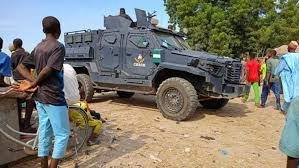
Continuity and Change: Extremist-used Arms in Mali

By Holger Anders

  This Briefing Paper looks at sources and pathways through which al-Qaeda- and Islamic State-linked extremists in Mali obtain their arms, ammunition, and explosives. This review includes an analysis of the materiel’s origins, types, and ages. The Briefing Paper presents the author’s assessment of some 800 arms and 12,000 ammunition casings that national and international authorities recovered and granted access to following extremist attacks in Mali from 2015 to 2022. Introduction -  By 2022, Mali had faced more than a decade of armed violence perpetrated by violent extremists. Since 2015, this violence has also spread from northern to central and southern parts of Mali, resulting in thousands of victims among national and international armed forces, UN peacekeepers, and civilians. This Briefing Paper investigates the arms, ammunition, explosives, and other material used by al-Qaeda- and IslamicState linked extremists (‘extremists’) as ‘tools of violence’ used in their attacks from 2015 to 2022. It provides an update on findings previously published by the Small Arms Survey concerning the proliferation and trafficking of illicit materiel in northern Mali prior to 2015. Specifically, this Briefing Paper focuses on military materiel legally produced and transferred by state actors before being diverted to extremist use in Mali.2 In so doing, the Briefing Paper examines three topics: 1. continuity in extremist procurement of their ‘tools of violence’; 2. changes in illicitly trafficked materiel and their sources; and 3. extremist network connections identified by the monitoring of this material. A confidential database maintained by the author provides the basis for the technical information concerning extremist-used arms and other material in this Briefing Paper.3 That database contains information about some 400 extremist attacks occurring across Mali between 2015 and 2022 from sites in which national and international authorities recovered extremist-used materiel that was made available for inspection by the author. The database also contains some 200 entries of extremist propaganda claims—documented in videos and texts on social media—relating to extremist attacks in Mali from 2012 to 2022. Interviewees included in this Briefing Paper are not uniformly identified for reasons of security and confidentiality. All information presented in graphs, illustrative maps, and tables is based on the author’s work and information contained within the database. The Briefing Paper first looks at security developments in Mali since 2015.5 It then looks at extremist-held armaments in Mali prior to 2015 and at continuity and change in these armaments after that. The discussion is supplemented with insights into network connections between extremist groups in Mali.6 Key findings Extremists continue to have access to arms and other materiel—including material of recent production— through capture from armed forces and illicit trafficking from the subregion. Libya remains a prominent source for illicitly trafficking military materiel to Mali; however, other sub-regional sources exist. These sources include components for commercial explosives used in improvised explosive devices (IEDs) in Mali. Established extremist groups use materiel to support the creation of new cells, which is a key mechanism in the spread of violent extremism in Mali.

Geneva, SWIT: Small Arms Survey. 2024, 16pg

download
Anti-Government Threats and their Transnational Connections

By Bàrbara Molas, Anne Craanen, Sabrina Tripodi, Kacper Rękawek, andThomas Renard

Anti-Government Extremism (AGE) presents a complex and evolving security challenge, particularly in the transatlantic space. AGE is characterised by anti-system sentiments, and adherents propagate notions of an evil elite controlling societal mechanisms, adapting global conspiracy theories to local grievances. While predominantly non-violent, it harbours the potential for violence, posing a significant policy challenge. This report contributes a comprehensive exploration of AGE by utilising original data, including interviews with security officials and an exploration of AGE spaces online, focusing on Austria, Germany, the Netherlands, Sweden, and the United States. Through thematic comparative analysis, it unveils the nature of anti-government groups and individuals, elucidating their transnational linkages both online and offline. By shedding new light on AGE’s manifestations, severity, and responses across jurisdictions, this research illuminates whether AGE constitutes a standalone security concern. Furthermore, it offers insights into practical strategies for addressing AGE, especially in the context of existing policies for preventing and countering violent extremism (P/CVE). The recommendations provided are tailored to the differing characteristics of AGE groups, individuals, and networks, ensuring a nuanced and effective response to this emerging threat, both online and offline.

The Hague: International Centre for Counter-Terrorism (ICCT). 2024, 48pg

download
Why People Enter and Embrace Violent Groups

By Ángel Gómez , Mercedes Martínez , Francois Alexi Martel , Lucía López-Rodríguez , Alexandra Vázquez , Juana Chinchilla , Borja Paredes , Mal Hettiarachchi , Nafees Hamid , and William B Swann 

We distinguish two pathways people may follow when they join violent groups: compliance and internalization. Compliance occurs when individuals are coerced to join by powerful influence agents. Internalization occurs when individuals join due to a perceived convergence between the self and the group. We searched for evidence of each of these pathways in field investigations of former members of two renowned terrorist organizations: the Liberation Tigers of Tamil Eelam (LTTE) (Study 1) and Islamist radical groups (Study 2). Results indicated that ex-fighters joined LTTE for reasons associated with both compliance and internalization but that ex-fighters joined Islamist radical groups primarily for reasons associated with internalization. When compliance occurred, it often took the form of coercion within LTTE but involved charismatic persuasion agents within Islamist groups. This evidence of systematic differences in the reasons why fighters enter violent groups suggests that strategies for preventing radicalization and fostering de-radicalization should be tailored to particular groups.

Front Psychol. 2021 Jan 7

DOWNLOAD
JAS vs. ISWAP: The War of the Boko Haram Splinters Crisis Group

By International Crisis Group

What’s new? Jama’tu Ahlis Sunna Lidda’awati wal-Jihad (JAS) has gained ground in the intra-jihadist fighting in north-eastern Nigeria, halting the previous momentum of the Islamic State West Africa Province (ISWAP). In the course of 2023, JAS took most of the islands in Lake Chad, which ISWAP had controlled. 

Why did it happen? Conflict between these Boko Haram splinters stems from differences in governance and treatment of civilians. JAS kills and steals from everyone; the more bureaucratic ISWAP generally spares Muslim non-combatants. Many JAS members surrendered to authorities or continued fighting instead of joining ISWAP after the death of JAS’s

leader in 2021. 

  Why does it matter? In the last two years, JAS and ISWAP may have visited more damage upon each other than the Lake Chad states have inflicted on the jihadists. Still, the splinters pose a significant threat. ISWAP is regrouping, while the revamped JAS is set to target civilians around the lake. What should be done? The Lake Chad governments will need to do more to prevail over the jihadists. They should mitigate risks to civilians by maintaining humanitarian assistance; expanding efforts to support defectors; improving airstrike precision; and reinvigorating regional security cooperation.    

DOWNload
Pursuing terrorists in US civil courts: the Encyclopedia of ATA cases

Edited by Jeff Breinholt

Initially enacted in 1992, the Antiterrorism Act (ATA), 18 U.S.C. §2333, provides a legal remedy for American victims killed or injured by reason of international terrorism by creating a private cause of action, with treble damages and attorneys’ fees. Since then, some 150 lawsuits have been brought under the statute against such terrorist organizations as Hamas, Hizballah, and FARC, as well as the banks and companies alleged to have assisted them. These lawsuits have generated some 600 opinions.

Washington, DC: George Washington University Program on Extremism. 2024, 91pg

download