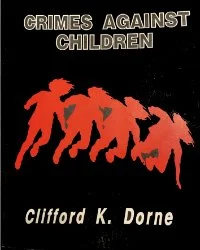
by Clifford K. Dorne, with a Foreword by Graeme R. Newman
Why has American society so often treated child abuse as a family problem to be managed rather than a crime to be punished? In this pioneering study, first published in 1989 by Harrow and Heston, Clifford Dorne traces how the nation's response to child maltreatment was shaped by competing professions: social workers, physicians, psychiatrists, legislators, police, and the courts.
Dorne begins by untangling the overlapping definitions of abuse, neglect, molestation, incest, and institutional abuse. He then follows the history of child protection from the houses of refuge and child labor campaigns of the nineteenth century, through the founding of the Societies for the Prevention of Cruelty to Children and the invention of the juvenile court, to the "medicalization" of abuse after the discovery of the battered child syndrome. Later chapters examine reporting laws, child protective services, the criminal prosecution of abusers, and what criminology has learned about the causes and lasting effects of maltreatment.
Written as a blueprint for university courses, the book is notable for bringing the neglected criminal justice perspective into a field long dominated by social welfare and medicine. Graeme Newman's foreword praises it as thorough, clear, and concise. It remains a valuable record of how the modern child protection system came to be.
Read-Me.Org Inc. New York-Philadelphia-Australia. 2026. p. 267.