

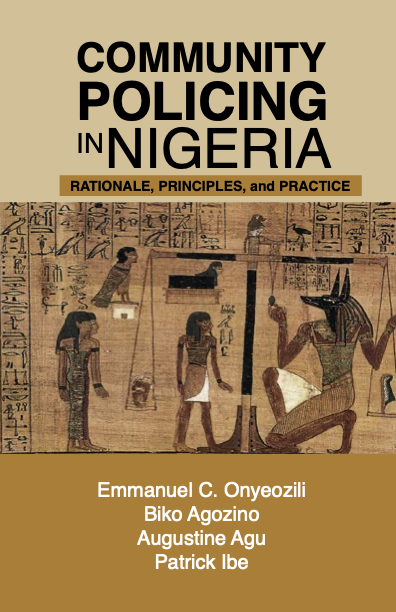
By Emmanuel C. Onyeozili, Biko Agozino, Augustine Agu, Patrick Ibe
In locating policing firmly within the Afrikan tradition, from earliest antiquity to the present, this book returns policing to the people in Afrikan communities. While its focus is on policing within Nigeria, theoretical insights and practical examples, these latter both positive and negative, from around the world are also deployed to illuminate a firm grasp of the evolution of police and policing from colonial times in what is now Nigeria.
The resulting text therefore makes a necessary and radical break with colonial and neocolonial policing in which the police are usually little more—if anything more—than an occupying force organized by Europeans who oppresses the mass of the people on behalf of these foreign masters and their local accomplices, who are junior partners in the exploitation of Afrika.
Edited by Georgios Leventakis and M. R. Haberfeld
Despite broad and often varied underlying definitions, a common theme throughout community and neighbourhood policing strategies establishes the need to target improvements in the relationship and level of engagement between the police and the communities they serve. Community policing approaches have long underpinned a desire to move away from reactive policing models towards those which establish a
more proactive philosophy, responsive to the wants and needs of the community. The near ubiquitous proliferation of smartphones and other ICTs (Information and Communication Technologies) means they are often seen as a vector through which initiatives of all kinds can instil a culture of proactive engagement with their respective stakeholder communities. This paper builds upon existing research which suggests that technologies for crime prevention should be designed to support communications and problem-solving rather than used simply as a means to disseminate information, unpacking a number of the core concepts that are considered central to participation and effective engagement; social capital, public participation and social and digital inclusion. Moreover, examples of wider initiatives are comparatively discussed, not just those associated with community policing, which target the engagement of communities through the use of technology, and more specifically mobile applications, before reflecting on the empirical evidence and experiences gleaned through the EU H2020 funded ‘UNITY’ project, a project that sought to establish effective strategies for engagement between police and citizen communities.
OR:
Examines the societal implications of community-oriented policing. Explores possibility for improving police-community relations using technology. Presents innovative solutions for policing challenges

By Lorraine Mazerolle,
Kevin Petersen,
Michelle Sydes and
Janet Ransley
Partnerships in policing are used worldwide to reduce crime and disorder problems. Police forge partnerships with businesses, government agencies, and communities to co-produce public safety. Third-party policing (TPP) is a particular type of partnership that involves the police addressing crime and disorder by working through (and with) third-party partners. This Element focuses on the nature and effectiveness of TPP partnerships. Using systematic review and meta-analytic techniques, it shows that TPP interventions are effective in efforts to reduce crime and disorder, without displacement of these problems. Cooperative partnerships are associated with considerably larger crime control effects than interventions relying on coercive engagement styles. Dyad partnerships – twosome partnerships between police and one third party – are likely to offer the “sweet spot” in TPP. The Element concludes that partnership policing using non criminal justice legal levers is a promising approach to crime control.