Open Access Free Library
CRIME+CRIMINOLOGY.jpeg

CRIME

Violent-Non-Violent-Cyber-Global-Organized-Environmental-Policing-Crime Prevention-Victimization

Posts in Crime Control
Drug Dealers, Robbery and Retaliation. Vulnerability, Deterrence and the Contagion of Violence

VOLKAN TOPALLI , RICHARD WRIGHT and ROBERT FORNANGO

Because of their illicit status, drug dealers robbed in the course of doing business cannot go to the police. Thus, the deterrent, compensatory and retributive benefits of formal justice are unavailable to them. Informal avenues of redress represent their only means of obtaining justice. This article, based on interviews with 20 recently robbed, active drug dealers in St Louis, Missouri, explores how such victims perceive and respond to the assault. Results indicate that direct retaliation is the preferred response because it serves three important aims: reputation maintenance, loss recovery and vengeance. When dealer/victims are unable or unwilling to retaliate they resort to less satisfactory alternatives such as robbery displacement and the resumption of selling. The implications of these findings for the spread of drug market violence are discussed.

BRIT. J. CRIMINOL.. (2002) 42, 337–351

"Another case of Ruthless Robbery…" Violence, Crime and the Local Press in a provincial City of Greece

Dr. Stratos Georgoulas

This paper͛s hypothesis is that the press, through the presentation of criminal incidents, transmits an evaluative knowledge determining this way, desirable objectives and propagating for canonistic types of behaviour. The daily knowledge as a constitutive element of the daily reality is a condition of interaction between the members of a society. In that sense, the local press that transmits this daily knowledge constitutes a dominant structuring factor of this reality.

The research which is based on content analysis of newspaper articles of the whole local press of Mytilene (the capital of the prefecture of Lesbos in Greece) published between January March 2004 and additional interviews from journalists aims to illustrate the following:

a. The concept of criminality is being constructed both qualitatively and quantitatively through local press and not vice versa.

b. The local press evaluates negatively illegal behaviours, positively the austerisation of social control, while in most cases it cancels any relevance with the social frame of criminality.

c. The local press with the dramatic narrations that uses it causes fear of victimisation.

d. The journalists transmit evaluative knowledge in an attempt to cover the lack of knowledge of real criminological data.

International Journal of Academic Research in Business and Social Sciences November 2013, Vol. 3, No. 11 ISSN: 2222-6990.

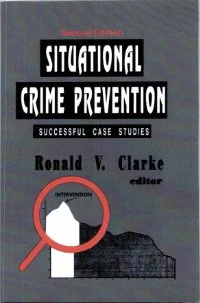
Situational Crime Prevention : Successful Case Studies. Second Edition

Ronald V.Clarke

Situational Crime Prevention: Successful Case Studies is a landmark collection that demonstrates how crime can be reduced by changing environments, opportunities, and systems rather than attempting to change offenders themselves. Edited by criminologist Ronald V. Clarke, this influential second edition presents 23 real-world case studies from around the world that show how practical, evidence-based interventions have successfully prevented crimes ranging from burglary and vehicle theft to fraud, robbery, vandalism, and public disorder.

The book introduces the theory of situational crime prevention, explaining how crime opportunities arise and how they can be systematically reduced through environmental design, management practices, surveillance, access control, target hardening, and other preventive strategies. Clarke outlines sixteen opportunity-reducing techniques and illustrates them through detailed case studies involving improved street lighting, CCTV systems, steering-column locks, property marking, public transport security, retail theft prevention, fraud reduction, and community safety initiatives.

Drawing on rigorous evaluations from the United States, the United Kingdom, the Netherlands, Sweden, Australia, and Canada, the volume challenges traditional assumptions about crime control, including the belief that offenders inevitably displace their activities elsewhere. Many of the featured projects demonstrate significant and measurable reductions in crime, often producing wider community benefits beyond their original targets.

Widely regarded as a foundational text in criminology, policing, security management, and crime prevention, this book remains essential reading for scholars, practitioners, law enforcement professionals, policymakers, and students interested in understanding how carefully designed environments and strategic interventions can make crime more difficult, risky, and unrewarding.

Ciminal Justice Press. 1997. 367p.

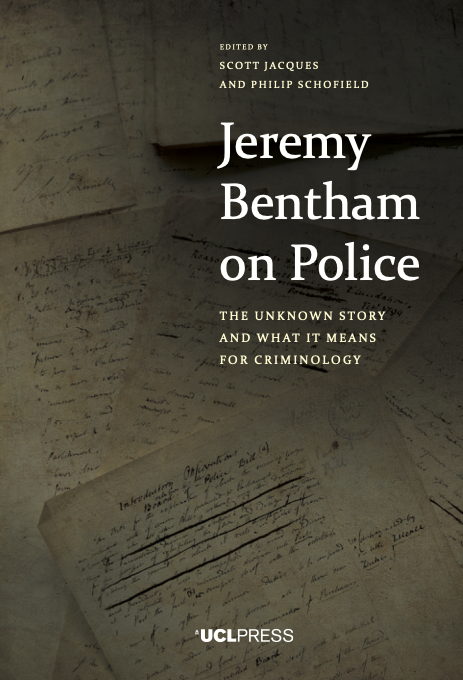
Jeremy Bentham on Police:  The Unknown Story and What it Means for Criminology

Edited by Scott Jacques and Philip Schofield

Jeremy Bentham’s ideas on punishment are famous. Every criminology student learns about Bentham, and every criminologist contends with him, as advocate or opponent. This discourse concerns his ideas about punishment, namely with respect to legislation and the panopticon. Yet, scholars and students are generally ignorant of Bentham’s ideas on police. Hitherto, these ideas have been largely unknowable. Now, thanks to UCL’s Bentham Project, these ideas are public. Jeremy Bentham on Police celebrates this achievement by exploring the story of Bentham’s writings on police and considering their relevance to the past, present and future of criminology. After Scott Jacques introduces the book, the Director of the Bentham Project, Philip Schofield, describes and explains how it works. Then Michael Quinn, who brought together Bentham’s writings on police, delves into the personal and socio-historical background in which they were created. An extract follows, representing the most (criminologically-)relevant passages from Bentham’s police writings. Finally, a rich variety of scholars offer their thoughts on what those writings mean for criminology. These contributions come from Anthony A. Braga, Ronald Clarke, David J. Cox, Stephen Douglas, Stephen Engelmann, G. Geltner, Joel F. Harrington, Jonathan Jacobs, Paul Knepper, Gloria Laycock, Gary T. Marx, Daniel S. Nagin, Graeme R. Newman, Pat O’Malley, Eric L. Piza, Kim Rossmo, Lucia Summers and Dean Wilson.

Partnerships in Policing: How Third Parties Help Police to Reduce Crime and Disorder

By Lorraine Mazerolle,
Kevin Petersen,
Michelle Sydes and
Janet Ransley

Partnerships in policing are used worldwide to reduce crime and disorder problems. Police forge partnerships with businesses, government agencies, and communities to co-produce public safety. Third-party policing (TPP) is a particular type of partnership that involves the police addressing crime and disorder by working through (and with) third-party partners. This Element focuses on the nature and effectiveness of TPP partnerships. Using systematic review and meta-analytic techniques, it shows that TPP interventions are effective in efforts to reduce crime and disorder, without displacement of these problems. Cooperative partnerships are associated with considerably larger crime control effects than interventions relying on coercive engagement styles. Dyad partnerships – twosome partnerships between police and one third party – are likely to offer the “sweet spot” in TPP. The Element concludes that partnership policing using non criminal justice legal levers is a promising approach to crime control.

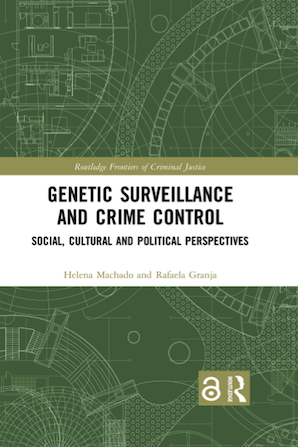
Genetic Surveillance and Crime Control: Social, Cultural and Political Perspectives

By Helena Machado and Rafaela Granja

Genetic Surveillance and Crime Control presents a new empirical and conceptual framework for understanding trends of genetic surveillance in different countries in Europe and in other jurisdictions around the world. The use of DNA or genome for state-level surveillance for crime governance is becoming the norm in democratic societies. In the post-DNA, contemporary modes of criminal identification are gradually changing through the increasing expansion of transnational sharing of DNA data, along with the development of highly controversial genetic technologies that pose acute challenges to privacy and generate fears of discrimination, racism and stigmatization. Some questions that guide this book are: How is genetic surveillance in the governance of crime intertwined with society, ethics, culture, and politics? What are the views and expectations of diverse stakeholders –scientists, police agencies, and non-governmental organizations? How can social sciences research about genetic surveillance accommodate socio-cultural and historical differences, and be sensitive to specificities of post-authoritarian societies in Europe?  Taking an interdisciplinary approach focused on challenges to genetic privacy, human rights and citizenship in contemporary societies , this book will be of interest to students and scholars of social studies of science and technology, sociology, criminology, law and policing, international relations and forensic sciences.