


By The American Immigration Council
In the spring and summer of 2018, the first Trump administration sought to deter migrants from coming to the United States through the cruel practice of separating children from their parents. To do this, they implemented the zero-tolerance policy, which aimed to prosecute all adults who crossed the southern border without inspection. If a family was apprehended, the parents were taken into custody by the Department of Homeland Security, while their children were taken into custody by the U.S. Department of Health and Human Services.
In many cases, these kids were sent to shelters thousands of miles away from their parents, without a way to contact them. Later, the government struggled to reunite families, in part because there was no centralized database of where the children had been sent or who their parents were. Years later, some of the nearly 3,000 children taken by the government during the zero-tolerance period had still not been reunited with their parents.
The American Immigration Council and partners filed a request under the Freedom of Information Act for records to better understand how the government implemented these separations. After the Council sued to obtain these records, the government began producing them on a monthly basis. In 2020, the Council published a tranche of documents highlighting the harms and trauma to children caused by the separations. After years of continuing litigation, the Council received tens of thousands of additional pages from government documents about this policy.
This site showcases a new subset of the records obtained. It reveals how journalists, attorneys and members of Congress fought to expose this horrific policy and hold the government accountable for the pain and havoc it created. Visitors to this site can review never-before-published government records, read analysis by the Council, and hear celebrated actors read first-person accounts by the journalists, attorneys and Congressmen who fought family separations on the front lines.
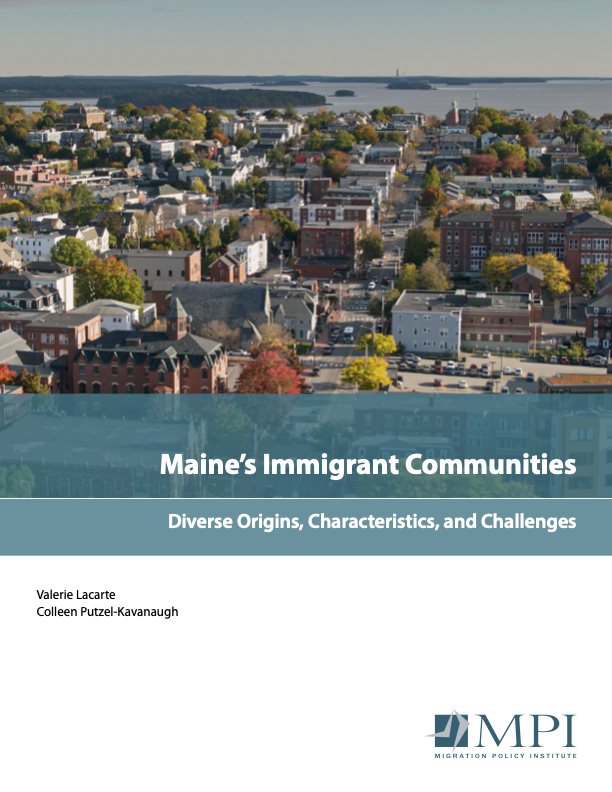
By Valerie Lacarte and Colleen Putzel-Kavanaugh
Maine’s immigrant population, though small, is distinct in its origins and characteristics compared to immigrants in other states and the nation at large. Due to a long history of movement across a shared border, Canadians have a notable presence in the state. At the same time, immigrants in Maine come from many parts of the world, and nearly half have lived in the United States for 20 years or more.
With the state working-age population projected to shrink in the coming years, immigrants are poised to play an increasingly important role in the state workforce. And in fact, foreign-born workers already contribute to many key industries in Maine—from health care and manufacturing to agriculture and aquaculture.
This report presents a profile of the demographic and socioeconomic characteristics of Maine’s immigrants, based primarily on MPI analysis of U.S. Census Bureau data. MPI researchers also interviewed staff of nine immigrant-serving organizations in Maine to better understand the types of services some immigrants need some related to challenges shared with U.S.-born Mainers, while others are more specific to this population.
By Alessandro Cigno, Alessandro Gioffré, Annalisa Luporini
We derive the immigration policy that maximizes the residents' expected welfare, taking into account the cost of keeping immigrants out, and the expected benefits of letting immigrants in, under different hypotheses concerning the risk that some of the immigrants' children will become radicalized. We find that a certain amount of immigration is generally optimal. If education directly or indirectly reduces the risk of radicalization, the optimal policy may include also an educational subsidy for the immigrants' children.
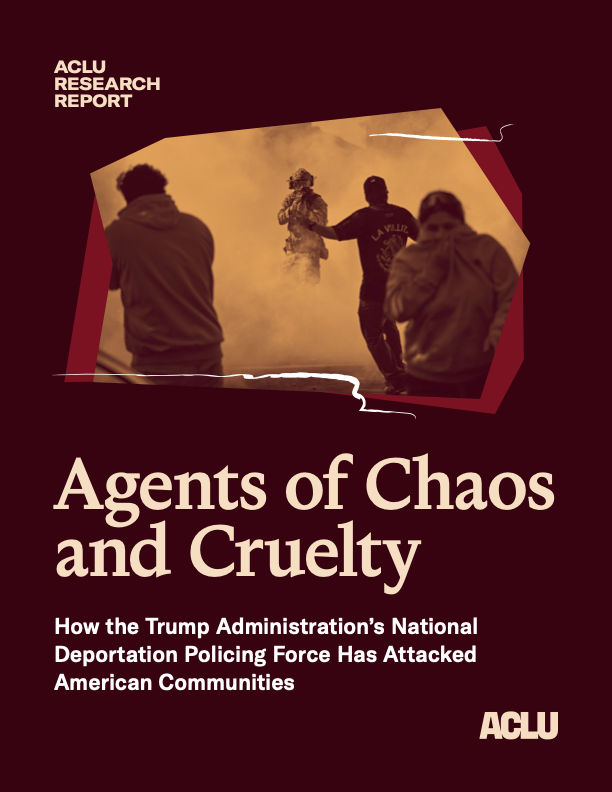
By American Civil Liberties Union
This ACLU research report, Agents of Chaos and Cruelty, documents widespread civil rights violations carried out by immigration agents during the first year of President Trump’s second term. The report examines immigration enforcement incidents in eight states – representing a cross-section of the country and reflecting varying degrees of federal law enforcement presence and personnel surges – and found that over 400 of the more than 1,200 immigration enforcement incidents examined involved misconduct by immigration agents. The report ends with detailed recommendations urging policymakers to call for transformative change to our immigration system, in recognition that it is broken and dangerous to human rights.