

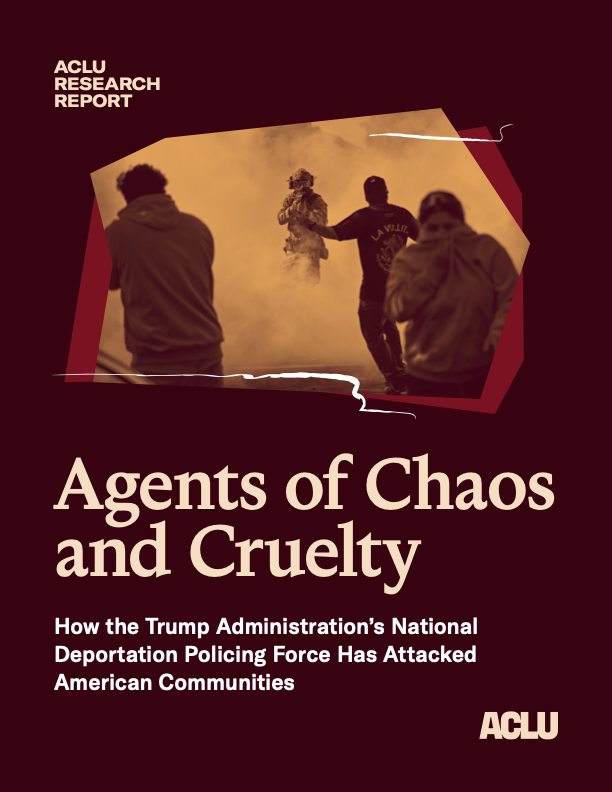
By American Civil Liberties Union
This ACLU research report, Agents of Chaos and Cruelty, documents widespread civil rights violations carried out by immigration agents during the first year of President Trump’s second term. The report examines immigration enforcement incidents in eight states – representing a cross-section of the country and reflecting varying degrees of federal law enforcement presence and personnel surges – and found that over 400 of the more than 1,200 immigration enforcement incidents examined involved misconduct by immigration agents. The report ends with detailed recommendations urging policymakers to call for transformative change to our immigration system, in recognition that it is broken and dangerous to human rights.
BY JASON JOHNSON AND SEAN KENNEDY
LELDF RESEARCH BRIEF | AUGUST 2023
Consent decrees are a blunt instrument for enacting police reform. The approach has proven ill-suited at enacting effective change in law enforcement agencies. These coercive reforms face institutional resistance from departments and their personnel and fall victim to mission creep from the unaccountable lawyers, judges, and bureaucrats who oversee the design and later the implementation of the reforms. The situation worsened significantly as the Obama Administration increased the use of consent decrees, a policy resumed under the Biden Department of Justice. Often built on limited and flimsy evidence, the Justice Department’s allegations against police agencies put local jurisdictions in a near impossible position to contest civil rights violations findings. Additionally, the Justice Department frequently injects its policy preferences into the required remedies that do not reflect urgent or even necessary changes, but policy agenda of the Civil Rights Division and the White House. Subject jurisdictions are often compelled to accept settlements with unachievable compliance goals and required to spend vast sums to remedy problems outside the scope of the statutory requirements.
Consent decrees are not a quick, easy, or inexpensive fix. And this type of settlement can have consequences – higher crime, lower police morale, ballooning costs, drifting timelines, and dissatisfied residents. In many cases, consent decrees prove to be damaging boondoggles rather than bolstering effective and constitutional policing. Federal intervention for some agencies may still be necessary but less onerous and more effective tools exist for enacting necessary reforms. Those alternatives should be preferred where possible. The Justice Department’s interventions in law enforcement agencies should be precise in their
methods and practicable in their goals.
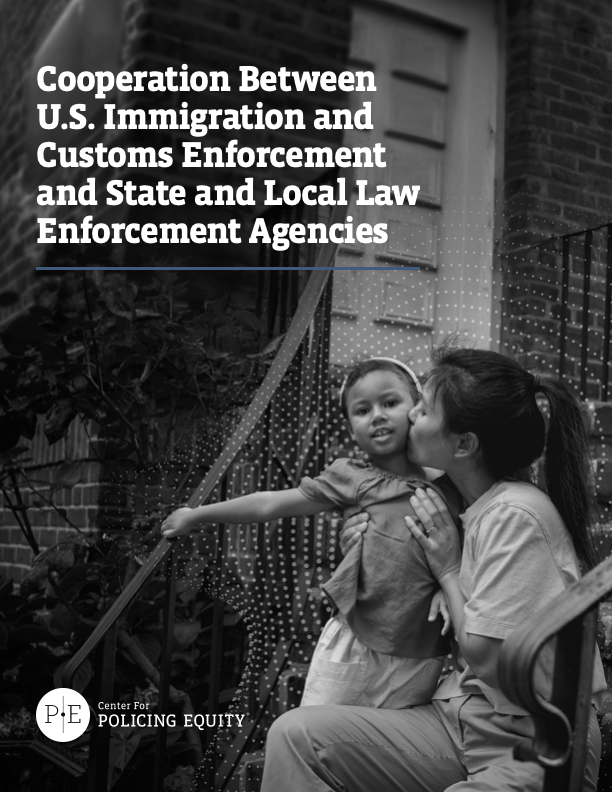
By Rashad James
For community advocates, policymakers, and law enforcement agencies (LEAs) interested in exploring alternatives, this document outlines how federal immigration authorities can—and cannot—compel state and local LEAs to cooperate. It also proposes four strategies that state and local jurisdictions can adopt to resist the growing push for a uniform law enforcement system under executive authority. Specifically, jurisdictions can 1) name the actions currently underway; 2) claim their moral vision through proactive legislation; 3) restrain the use of local funding for immigration enforcement; and 4) reframe these initiatives as measures that strengthen public safety. Community members and elected leaders are encouraged to share this document as a pathway toward a more just and equitable future.