
Open Access Publisher and Free Library
CRIME+CRIMINOLOGY.jpeg

CRIME

Violent-Non-Violent-Cyber-Global-Organized-Environmental-Policing-Crime Prevention-Victimization

Posts tagged government strategy
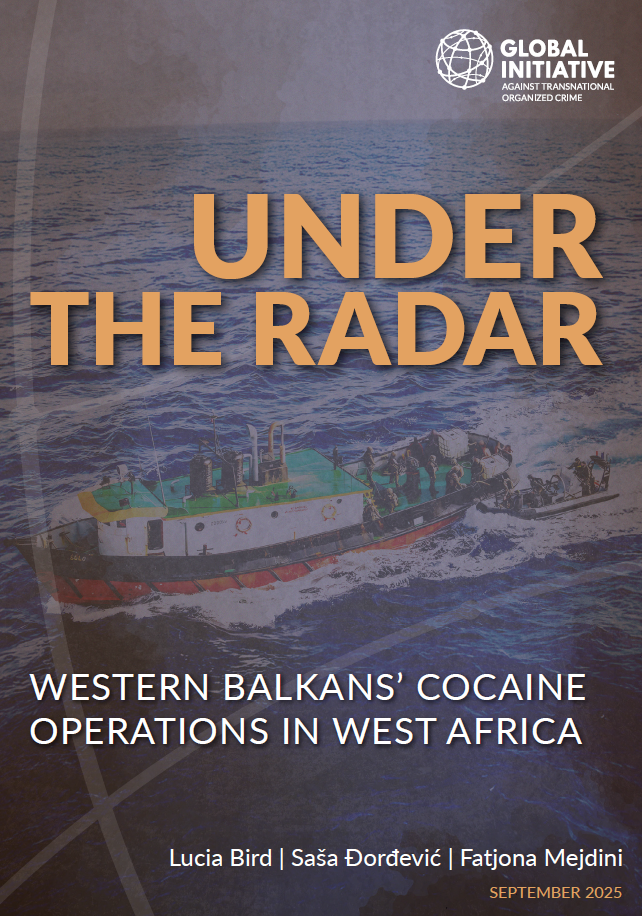
  UNDER THE RADAR.  WESTERN BALKANS’ COCAINE OPERATIONS IN WEST AFRICA 


By  Lucia Bird | Saša Đorđević | Fatjona Mejdini 

Western Balkans criminal groups, comprising both Albanian- and Slavic-speaking networks, have become dominant players in the global cocaine trade. While their influence in Europe and Latin America has been well documented, their growing role in West Africa has largely flown under the radar. Since 2019, these groups have expanded their operations in West Africa, using the region as a critical logistical, storage and redistribution hub for cocaine shipments en route to European consumption markets and beyond. This expansion has been shaped by their effective leverage of geography, governance weaknesses and infrastructure, both hard and digital. Initially limited to occasional trafficking links, the Western Balkan groups have deepened their presence across West Africa’s coastal states, including Senegal, Sierra Leone, Gambia, Guinea-Bissau and Cabo Verde. This growing focus on West Africa was driven by rising demand for cocaine in Europe, increased enforcement on direct routes to Europe and strengthened partnerships with Latin American cartels, especially Brazil’s Primeiro Comando da Capital (PCC). Western Balkan groups now operate through multiple trafficking methods in West Africa, exploiting fully containerized routes, non-containerized shipments (i.e. shipments not stored in containers, but hidden elsewhere on vessels) by other types of vessels, trans-shipments at sea and in-region containerization to conceal the cocaine’s origin. They have embedded brokers in West African countries who organize logistics, establish infrastructure and liaise with local actors. In Sierra Leone, for example, they have reportedly established companies to launder funds and warehouses to store and repackage cocaine, coordinating onward shipments through formal seaports using legitimate cargo. These brokers are key to operations and are often shared among the different groups. The groups’ structures are flexible and typically consist of small, trusted units supported by collaborators. Groups leverage local vulnerabilities to build relationships with corrupt law enforcement, port operators and security services. Particularly significant Western Balkan groups in West Africa include the Montenegrin Kavač clan and its rival, the Škaljari clan. The Kavač clan’s operations have been linked to ports in Brazil and Sierra Leone, with brokers overseeing logistics from Freetown. As we explain in this report, in some cases a single broker will work with more than one group from the Western Balkans. In parallel, Albanian-speaking groups, which have a strong presence in Spain and Brazil, have been operating through countries including Senegal and Gambia, sometimes collaborating with the Italian ‘Ndrangheta or the PCC. The example of an Albanian national who, according to Brazilian law enforcement investigations, is a major European supplier coordinating shipments through West Africa from Brazil, exemplifies the growing use of multi-tonne cocaine operations routed through the Gulf of Guinea. Looking ahead, Western Balkan groups are likely to further entrench themselves in West Africa, gradually relying less on their alliances with the ‘Ndrangheta, the PCC and other Western Balkan groups and instead investing directly in infrastructure and protection mechanisms. As in Latin America, their growing presence is likely to be accompanied by deeper corruption, potential violence and fragmentation into more autonomous cells. To address the growing role of Western Balkan criminal groups in West Africa, a coordinated response should focus on three key pillars. First, strategic cross-continental partnerships should be built with law enforcement, port authorities and international actors, underpinned by a political-economy analysis, to strengthen cooperation and to identify aligned priorities. Second, an enhanced data picture, drawing on a wider range of formal and informal sources, is needed to map trafficking routes and financial flows more effectively and to empower regional and international actors to tailor their risk assessments of specific routes, to profile criminal actors and to develop viable strategies for detection and disruption. Third, smart targeting strategies that prioritize brokers should be adopted, supported by parallel financial and criminal investigations. 

Geneva:  Global Initiative Against Transnational Organized Crime   2025. 61p.

Tackling violence against women and girls

By Greg Hannah, Caroline Harper, Heather James and Grace Whitehead, under the direction of Oliver Lodge.

 Definitions of the term ‘violence against women and girls’ (VAWG) vary, but the government defines it as “acts of violence or abuse that we know disproportionately affect women and girls”. It covers crimes including rape and other sexual offences, stalking, domestic abuse, ‘honour’-based abuse (including female genital mutilation, forced marriage and ‘honour’ killings), ‘revenge porn’ and ‘upskirting’.  Over one in four women are estimated to be victims of sexual assault or attempted assault in their lifetime, and one in 12 women are victims of VAWG each year, although the actual number is likely to be much higher. The National Police Chiefs’ Council reported that, in 2022-23, 20% of all police-recorded crime was related to violence against women and girls. The victim was female in 86% of all police-recorded sexual offences in the year to March 2022. In the year ending December 2023, over 97% (23,723) of people convicted of sexual offences were male, and crimes are often committed by someone known to the victim. 3 Violence against women and girls can have long-term impacts on victims, affecting them physically, mentally, socially and financially. It is estimated that the economic and social cost of domestic abuse could be as high as £84 billion. The Home Office last estimated the societal cost of rape cases in 2018, based on 2015-16 data, when it estimated that the 122,000 rape cases reported that year could have a societal cost of around £4.8 billion.  In 2021, the then government introduced its strategy, “Tackling Violence Against Women and Girls” (the VAWG Strategy), which outlined a series of commitments focused on: • prevention – to deliver long-term cultural and societal change; • supporting victims – to increase support for victims and survivors including providing support services that are run by and for the communities they serve; • pursuing perpetrators – to transform the criminal justice response to ensure all perpetrators of offences against women are brought to justice; and • building a stronger system – working with multiple government departments to develop a joined-up system across health, justice, law enforcement, housing, social care and education. In 2021, the Domestic Abuse Act received Royal Assent, and in 2022 the Home Office published a separate “Tackling Domestic Abuse” Plan (the Domestic Abuse Plan)   The Home Office leads on the government’s response to tackling VAWG, including domestic abuse. However, achieving progress requires the commitment of multiple government departments. There are important roles for the Ministry of Housing, Communities and Local Government, the Ministry of Justice and other parts of the criminal justice system, the Department for Education and NHS England in, for example, identifying victims and supporting them to feel safe, educating young people in safe relationships and ensuring justice through the courts and prison systems.  The new government has committed to halve the prevalence of VAWG within a decade as part of its ‘mission’ to make streets safer. The Home Office will lead this mission and is developing a new VAWG strategy. In this report, we have examined the Home Office’s leadership of the 2021 “Tackling Violence Against Women and Girls” Strategy (the VAWG Strategy) and the 2022 “Tackling Domestic Abuse Plan” (the Domestic Abuse Plan), to identify lessons to support the delivery of the government’s ambition to halve violence against women and girls. Key Findings Progress against the 2021 strategy  Violence against women and girls is a serious and growing problem. In 2023-24 the prevalence of sexual assault against women aged 16 to 59 in England and Wales (the percentage of the population estimated to have suffered a sexual assault each year) was higher than in 2009-10 (4.3% and 3.4% respectively). Conversely, the prevalence of domestic abuse against women was lower (9.2% and 7.4% respectively). Over the same period incidents of rape and sexual assault against women and girls recorded by police have increased almost fourfold, from 34,000 to 123,000, although this can in part be explained by improved recording of these crimes. The societal landscape against which these crimes are committed has also become increasingly complex and in recent years online harms (such as revenge porn) have been recognised as crimes in themselves (paragraphs 1.2, 1.4, 1.7 to 1.9 and Figures 1 and 2). 8 To date, the Home Office has not led an effective whole-system response. Successfully addressing the harms caused by VAWG requires the coordinated effort and commitment of many government departments. But the cross-departmental governance in place did not ensure all departments were prioritising the VAWG Strategy’s aims and were pulling in the same direction. The Home Office created a dedicated team to lead the VAWG Strategy, but it has found it challenging to get buy-in from other government departments. The Home Office’s Officials’ oversight group, established to progress the Strategy, did not meet until a year after the VAWG Strategy’s launch. The Home Office has since revised its governance, which has been welcomed by some departments. While strong ministerial support can encourage cross-government working, the Ministerial oversight group for the VAWG Strategy only met four times in three years (paragraphs 1.10, 3.4 to 3.8). 9 The Home Office has not had a full understanding of the scale of resources committed to tackling VAWG across government, limiting its ability to prioritise efforts. As the lead department for tackling VAWG, the Home Office needs to understand the capacity and resources other bodies are committing to the VAWG Strategy so it can effectively coordinate and oversee their work. The Home Office has not centrally coordinated funding for VAWG across government and, in contrast with the 2021 illegal drugs strategy, the relevant departments did not prepare a joint spending review bid during the period of implementing the VAWG Strategy. Our analysis suggests other government departments spent at least £979 million between 2021-22 and 2023-24. The Home Office has historically underspent its own budget allocated to the VAWG Strategy, by an average of 15% between 2021-22 and 2023-24 (paragraphs 2.5 to 2.9 and Figure 7).  The lack of a consistent definition for VAWG across public bodies and their approaches to measuring the scale of VAWG crimes has made it difficult to measure progress in a consistent way. The Home Office’s definition of VAWG includes all victims, across all ages and genders, whereas police forces only include women and girls. The Home Office told us it uses estimates from the Crime Survey for England and Wales to measure prevalence, which does not include children under the age of 16, even though they are included in the Strategy. The Home Office does not consider police-recorded crime an accurate indicator of the prevalence of VAWG, since it is likely to under-report crimes: the police only record one crime per victim/perpetrator relationship, even where multiple VAWG crimes are committed. This, in addition to gaps in data for some VAWG crime types such as ‘honour’-based abuse, limits the data available to measure progress. A consistent definition and approach to measuring the scale of VAWG crimes across all of government and policing would help to create a better shared understanding of the scale of the challenge the government is trying to address (paragraphs 3.16 to 3.21 and Figure 12).  

London: National Audit Office, 2025. 69p.