


By Haris Mohammad
This thesis examines the origins, activities, and societal impacts of Mexican drug cartels, while assessing the effectiveness of governmental and international responses to their development and influence. This thesis examines the evolution of the cartels, starting with their collaboration with traffickers in Colombia and concluding with their supremacy in the global drug trade. The investigation elucidates the social and
political factors that have facilitated their growth. These factors include pervasive corruption, economic
disparities, and inadequate governance, all of which have fostered an environment conducive to the emergence of cartels. This thesis examines the detrimental effects of cartel involvement on Mexican
communities. These impacts include pervasive violence, societal disintegration, public health challenges stemming from substance addiction, and economic exploitation. Furthermore, it critiques the limitations of military anti-narcotics approaches, emphasizing the unintended consequences of these measures, including heightened violence and the emergence of power vacuums within the system. The research elucidates
the recruitment methods, operational tactics, and the cartels' integration into Mexican society via the use of
sociological and criminological ideas. The thesis advocates for the implementation of a comprehensive plan to counteract cartel influence. This plan must include socioeconomic transformations, government transparency, and international collaboration. This thesis aims to enhance understanding of cartel dynamics to contribute to the global battle against organized crime and to provide sustainable solutions that foster stability and justice in Mexico.
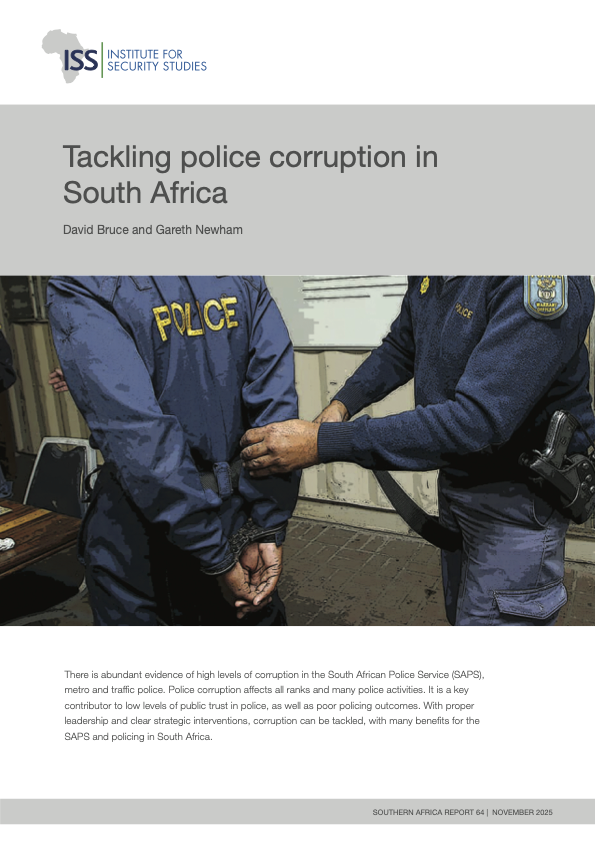
By David Bruce and Gareth Newham
Key findings There is strong evidence of ongoing widespread corruption in the South African Police Service (SAPS), including among its senior leaders. Corruption levels in the metro and traffic police are also high, although they receive less scrutiny than the SAPS. Perceptions of high levels of police corruption contribute to low levels of public trust in the police. TrA range of agencies and mechanisms are tasked with investigating police corruption, but no agency has overall responsibility. Coordination between agencies is limited. SAPS has introduced multiple anti-corruption strategies, but has not implemented intelligencedriven measures to ensure that corruption is tackled effectively. The SAPS Anti-Corruption Investigation Unit (ACIU) is substantially under-resourced. Despite evidence of misconduct, a majority (77%) of SAPS disciplinary hearings result in no meaningful accountability.ust is vital for the police to effectively address crime. SAPS members are often unwilling to report crime or corruption by colleagues because they fear negative consequences for themselves. The willingness of many members of the public to pay bribes is an important contributor to high levels of police corruption.
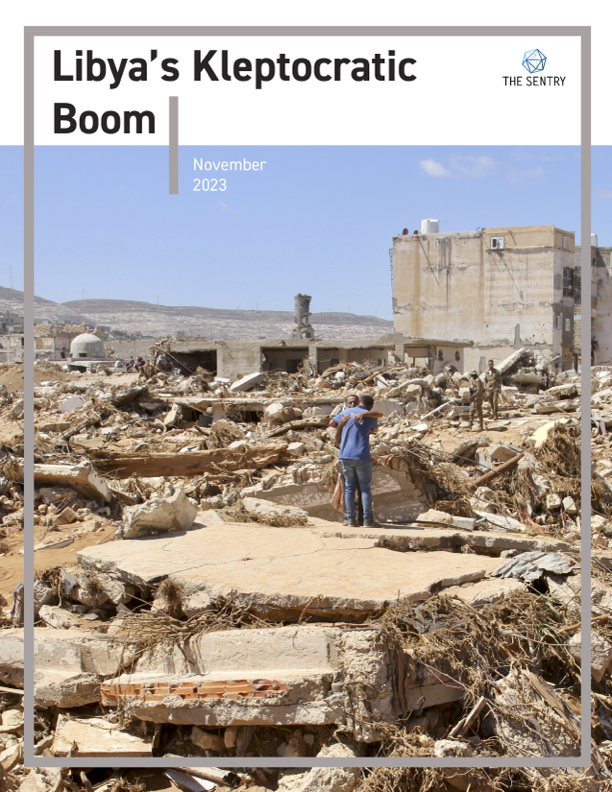
By the Sentry
Despite channelling Libyan public funds into the 2019 assault on Tripoli, flooding the economy with unauthorized dinar banknotes, and orchestrating arms shipments that appear to defy international law, Gadalla has faced no consequences. He lives lavishly in Canada and continues to expand his influence in Libya.
This is not just about one individual. Gadalla’s influence reflects deeper systemic weaknesses in Libya’s governance and financial systems that enable corruption, economic instability, and the continued diversion of national wealth away from ordinary Libyans.
The report calls for:
Targeted sanctions on Gadalla, his companies, and associates
Investigations into financial institutions linked to his activities
Coordinated international action to address these networks and restore accountability
By Ee Pin Chang, Hannah McGlade, Pat Dudgeon, Jocelyn Jones
This article provides an overview of the nature and adequacy of culturally appropriate health services within Western Australian (WA) prisons based on coroner findings on Aboriginal deaths in custody between 2019 to 2023. It provides a brief overview of the policies and current issues of the health services in WA prisons.
Three of eight coronial inquests into Aboriginal suicide deaths in custody reviewed reported the sub-standard and unacceptable quality of supervision, treatment and care. The lack of access to culturally safe health services in prisons contravenes the recommendations of the Royal Commission into Aboriginal Deaths in Custody (RCIADIC).
The article calls for implementation of recommendations from Australian government inquiries – RCIADIC, Pathways to justice report – and the government to uphold international human rights obligations especially the Optional Protocol to the Convention Against Torture.
Key findings
Overrepresentation of Aboriginal peoples in the justice system is a human rights violation.
Coroner’s findings of Aboriginal suicide deaths in custody were reviewed.
These findings reported substandard quality of supervision, care and treatment.
The lack of culturally safe health services in prisons contravenes the recommendations of the RCIADIC.
Call for implementation of recommendations from Australian government inquiries.
By Ashton Kingdon
Based on the combination of online observation, content analysis, as well as comparative and statistical analysis, this paper discusses the scale and structure of al-Qaeda’s and Islamic State’s propaganda output on the surface web. It explores qualitative and quantitative trends detectable in their propaganda between July and December 2023. This paper shows that during this period, the Islamic State released almost twice as many propaganda items on the surface web compared to al-Qaeda. Collected data indicates that the IS’s media production capability improved compared to its online crisis experienced around 2018. The recovery is, however, limited and caused primarily by efforts of the pro-IS media operatives, who are engaged in mass translation and reproduction of official releases of this violent extremist organization (VEO). Among al-Qaeda branches active on the surface web in the second half of 2023, Harakat al-Shabaab al-Mujahidin and media offices that support al-Qaeda in the Indian Subcontinent demonstrated the most remarkable capabilities in strategic communication. This paper also proves that both al-Qaeda and the Islamic State manifested significant interest in the events taking place in Africa, Central Asia, and Palestine. However, they frequently adopted opposing ways of framing them.
Studies in Conflict & Terrorism 2025.
By MARIANA OLAIZOLA ROSENBLAT AND LUKE BARNES
Political violence in the United States has increased in recent years and shows no signs of declining.1 This trend was underscored in September 2025 by the assassination of conservative activist Charlie Kirk at Utah Valley University. In the two weeks before and after Kirk’s killing, shooting incidents in Colorado, Minneapolis, and Dallas seized public attention.2 Executive Summary Amid growing concern about the relationship between online rhetoric and real-world violence, this report examines how violent extremist actors across the ideological spectrum use digital platforms to respond to, amplify, and exploit acts of political violence in the United States. Drawing on opensource intelligence (OSINT) gathered initially from March 24 to June 6, 2025, and then extended to include a period following Kirk’s assassination, this analysis reveals sophisticated cross-platform strategies employed by far-right, far-left, violent Islamist, and nihilistic violent extremist (NVE) actors. This report uses “violent extremist” to refer to individuals who support or commit ideologically motivated violence to further political goals, as well as those who commit violence driven by generalized hatred rather than a coherent ideology. Key Findings • Violent extremist groups systematically exploit trigger events—high-profile incidents of violence—to recruit supporters, justify their ideologies, and call for retaliatory action. • These groups employ multi-platform strategies, using mainstream sites like X for visibility and recruitment while maintaining a presence on private or semi-private platforms for coordination and more extreme content. • Far-right groups capitalized on cases like the Austin Metcalf stabbing and the Iryna Zarutska killing to advance narratives of White victimhood and justify threats against perceived enemies. • Activities of both far-left and far-right networks revealed a troubling convergence around antisemitic targeting. • Violent Islamic groups are more aggressively monitored than domestic groups espousing similar levels of violence. • Violent Islamist groups, facing stricter moderation than domestic extremists, have migrated to decentralized platforms like Rocket.Chat while disseminating symbolic propaganda elsewhere. • Nihilistic Violent Extremist (NVE) communities glorify violence across ideological lines for shock value and digital notoriety, making their threats harder to predict based on political triggers. This report aims to bring clarity to a conversation clouded by vagueness and partisanship. It first maps the domestic threat landscape, offering timely examples of online violent discourse from across the ideological spectrum targeting US individuals or institutions, and sets out a clear definitional framework for types of speech that carry legal significance under US constitutional doctrine. It closes with practical recommendations for online service providers and policymakers.
New York: NYU Stern Center for Businsss, 2025. 36p.
By Katarzyna Jaskoa, Gary LaFree, James Piazzac , and Michael H. Beckerd
Although political violence has been perpetrated on behalf of a wide range of political ideologies, it is unclear whether there are systematic differences between ideologies in the use of violence to pursue a political cause. Prior research on this topic is scarce and mostly restricted to self-reported measures or less extreme forms of political aggression. Moreover, it has generally focused on respondents in Western countries and has been limited to either comparisons of the supporters of left-wing and right-wing causes or examinations of only Islamist extremism. In this research we address these gaps by comparing the use of political violence by left-wing, right-wing, and Islamist extremists in the United States and worldwide using two unique datasets that cover real-world examples of politically motivated, violent behaviors. Across both datasets, we find that radical acts perpetrated by individuals associated with left-wing causes are less likely to be violent. In the United States, we find no difference between the level of violence perpetrated by right-wing and Islamist extremists. However, differences in violence emerge on the global level, with Islamist extremists being more likely than right-wing extremists to engage in more violent acts.
Political violence in the United States has increased in recent years and shows no signs of declining.1 This trend was underscored in September 2025 by the assassination of conservative activist Charlie Kirk at Utah Valley University. In the two weeks before and after Kirk’s killing, shooting incidents in Colorado, Minneapolis, and Dallas seized public attention.2 Executive Summary Amid growing concern about the relationship between online rhetoric and real-world violence, this report examines how violent extremist actors across the ideological spectrum use digital platforms to respond to, amplify, and exploit acts of political violence in the United States. Drawing on opensource intelligence (OSINT) gathered initially from March 24 to June 6, 2025, and then extended to include a period following Kirk’s assassination, this analysis reveals sophisticated cross-platform strategies employed by far-right, far-left, violent Islamist, and nihilistic violent extremist (NVE) actors. This report uses “violent extremist” to refer to individuals who support or commit ideologically motivated violence to further political goals, as well as those who commit violence driven by generalized hatred rather than a coherent ideology. Key Findings • Violent extremist groups systematically exploit trigger events—high-profile incidents of violence—to recruit supporters, justify their ideologies, and call for retaliatory action. • These groups employ multi-platform strategies, using mainstream sites like X for visibility and recruitment while maintaining a presence on private or semi-private platforms for coordination and more extreme content. • Far-right groups capitalized on cases like the Austin Metcalf stabbing and the Iryna Zarutska killing to advance narratives of White victimhood and justify threats against perceived enemies. • Activities of both far-left and far-right networks revealed a troubling convergence around antisemitic targeting. • Violent Islamic groups are more aggressively monitored than domestic groups espousing similar levels of violence. • Violent Islamist groups, facing stricter moderation than domestic extremists, have migrated to decentralized platforms like Rocket.Chat while disseminating symbolic propaganda elsewhere. • Nihilistic Violent Extremist (NVE) communities glorify violence across ideological lines for shock value and digital notoriety, making their threats harder to predict based on political triggers. This report aims to bring clarity to a conversation clouded by vagueness and partisanship. It first maps the domestic threat landscape, offering timely examples of online violent discourse from across the ideological spectrum targeting US individuals or institutions, and sets out a clear definitional framework for types of speech that carry legal significance under US constitutional doctrine. It closes with practical recommendations for online service providers and policymakers.
PNAS 2022 Vol. 119 No. 30 e2122593119
By Noor Huda Ismail
SYNOPSIS
The increasing susceptibility of minors to recruitment by violent extremist groups via online platforms poses a clear and present danger. Cases in Singapore and Indonesia illustrate how radicalisation exploits factors such as identity crises, wounded masculinity, and digital isolation. Emphasis on rehabilitation as opposed to punishment is critical, necessitating the involvement of families, schools, and communities to safeguard children through fostering trust and empathy.
COMMENTARY
As a father of two teenage boys, aged 16 and 14, I cannot read the news of radicalised minors without feeling alarmed and deeply concerned. The recent case in Singapore, involving a 14-year-old student, is particularly striking.
Security officials reported that the boy was influenced by a “salad bar” of extremist beliefs, including ISIS propaganda, incel subculture and those on the far-right and far-left. He is not much older than my youngest child, who, like millions of teenagers, spends hours on gaming, social media, and online communities that quietly shape their identity, sense of belonging, and moral compass.
For the unfamiliar, incel stands for “involuntary celibate”. These are mostly young men, expressing deep resentment toward women and society for their sexual frustrations. From a gender perspective, incel ideology feeds on what scholars call wounded masculinity.
Many boys today struggle with identity in a world where traditional markers of male success – financial stability, social recognition, romantic relationships – are increasingly uncertain. Online platforms amplify these feelings, creating spaces where humiliation and anger are validated, sometimes evolving into misogyny or even violence.
The 2025 Africa Organised Crime Index, published on 17 November by the ENACT project, provides an overview and analysis of the past, present and future of organised crime across the continent. In its fourth and final iteration, the 2025 Index draws on the knowledge of over 160 experts. It combines eight years of qualitative and quantitative data to provide an assessment of how organized crime and resilience have evolved in Africa. It also examines ongoing challenges, including the impact of technology and geopolitical dynamics on organized crime. The ENACT project is implemented by a consortium of the Institute for Security Studies (ISS), INTERPOL and the Global Initiative Against Transnational Organized Crime (GI-TOC).
“Eight years of data and four issues of the Africa Organised Crime Index provide a rich pool of information that gives us an unprecedented overview of illicit economies across the continent”, says Mark Shaw, Executive Director of GI-TOC. “Thanks to the ENACT research programme and our cooperation with the ISS, we have pioneered a methodology for measuring organized crime first in Africa, which has now been scaled up to a Global Organized Crime Index produced every two years”.
"This has been an innovative flagship project," says Eric Pelser, ENACT Programme Head at the ISS. "Our partnership with GI-TOC has produced in-depth analysis that goes beyond research – we've taken the recommendations emanating from the Africa Index to the highest levels of policy-making, ensuring that evidence drives action across the continent."
Key findings:
There has been a steady growth in criminal markets and criminal actors in Africa since 2019.
In 2025, the most pervasive criminal markets in Africa are financial crimes, human trafficking, non-renewable resource crimes, the trade in counterfeit goods and arms trafficking. Since 2023, the two fastest-growing markets have been financial crimes and the trade in counterfeit goods, reflecting broader global patterns.
Criminal markets in Africa today show considerable diversity across the continent. East Africa stands out for its high human trafficking, arms trafficking, and human smuggling scores, which drive the continental averages. In North Africa, financial crimes and cannabis trade are the most pervasive criminal markets, placing the region second and first (respectively) in the world for these illicit economies. Non-renewable resource crimes were found to exert significant influence in Central Africa, while the cocaine trade dominates West Africa’s illicit economy. In Southern Africa, wildlife trade was found to be among the most prevalent criminal markets.
State-embedded actors are the most prevalent type of criminal actor across the continent, with their influence in nearly half of African countries (48%) classified as “severe”.
Foreign criminal groups pose an increasingly significant threat to the continent. Their influence in West Africa was found to be “significant to severe” in all but one country in the region. This reflects the impact of transnational cocaine trafficking as well as private military companies engaged in illicit activities.
Africa’s digital boom has provided new opportunities for criminal actors, both to expand and diversify traditionally non-digital markets and to grow new criminal markets, such as online financial fraud and ransomware. As in other regions of the world, cyber-dependent crime is increasing in many parts of Africa – particularly Kenya, South Africa and Nigeria, with four out of the five subregions witnessing a rise in this crime type.
Criminality thrives in volatile environments. States and regions where conflicts, insurgency and violent extremism persist are magnets for organized crime. Many countries in Africa that have the highest criminality scores are wracked by conflict and instability: there is a relatively high (0.59) correlation between the Fragile States Index and criminality. This phenomenon needs to be factored into peacemaking and peacebuilding.
Governance was found to have a strong impact on resilience to organized crime, with the data showing a strong (0.81) correlation between Africa’s resilience and the Democracy Index. While democratic countries are vulnerable to organized crime, they are also more resilient in their response to it. In contrast, authoritarian states tend to either embrace organized crime or suppress it with violent crackdowns.
Geopolitics has a negative impact on illicit economies, drawing on the continent’s resources and role in the global landscape. For example, the withdrawal or expulsion of some foreign powers has created a vacuum for both licit and illicit actors to fill, generating instability and the growth of illicit activity in some cases.
There has been a steady decline in resilience to organized crime in most African countries since 2019. Almost all countries in Africa (92.5%) are characterized as having low resilience to organized crime. Of these, 23 countries are affected by high criminality, creating a particularly vulnerable combination of high criminality and low resilience.
Africa’s resilience ranks among the lowest in the world, indicating insufficient capacity to respond to the criminal threats the continent faces. One key resilience measure is that ‘non-state actors’ play a vital role by supporting vulnerable communities and holding authorities to account. Civil society organizations are often at the forefront of leading social protection efforts. However, since the 2021 Index, the ‘nonstate actors’ resilience indicator has declined the most
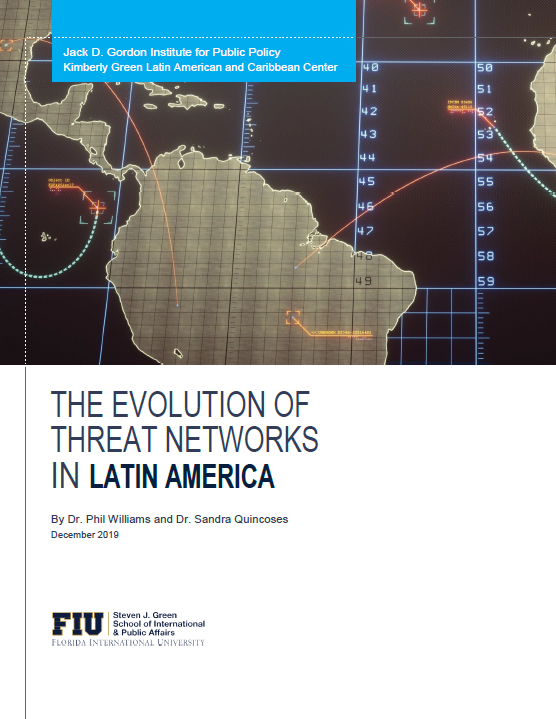
By Phil Williams and Sandra Quincoses
The economic and political environments in Latin America have been advantageous for local, regional, and transnational threat networks. Specifically, technology, increased international trade and economic interdependence, heightened interest in natural resources for profit, synthetic drug production, economic disparities, corruption, impunity, and unstable political conditions have led to a complex web of opportunities that requires new, progressive ways to address criminal activities. The creativity of threat networks along with their entrepreneurial strategies have resulted in increasing power and influence. Despite efforts by the United States and some governments in Latin America to combat these networks, the everchanging global environment has worked in their favor. Indeed, some countries in Central and South America are in danger of transforming into what Jorge Chabat described as “criminally possessed states.” Furthermore, gangs in Central America, especially in Honduras where MS-13 has become more closely linked to drug trafficking, have reduced local extortion, become more aware of their nascent political power and have even engaged in rudimentary social welfare provision.
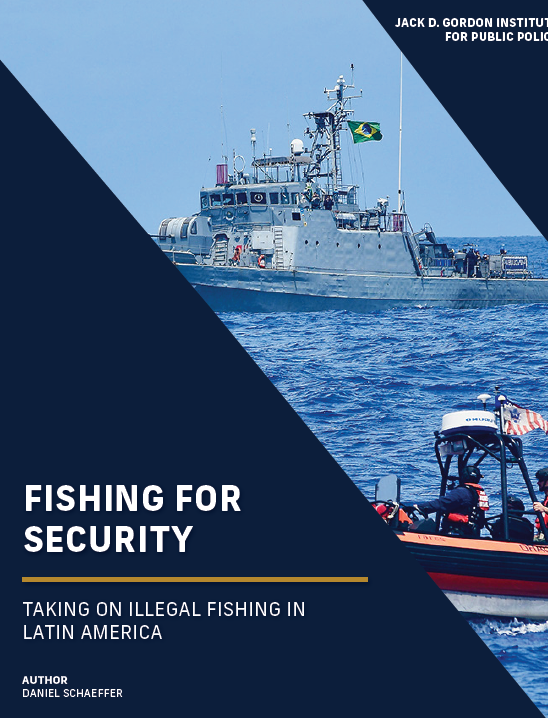
By Daniel Schaeffer
Often viewed through a myopic lens as an environmental issue or one relegated to fisheries authorities, illegal, unreported, and unregulated (IUU) fishing affects all coastal nations in the Western Hemisphere and has national security implications on the United States. A regional problem requires a regional solution and greater cooperation across agencies, private industry, and governments. Actions to address IUU fishing in Latin America have the potential to achieve greater aims of maritime security in the region. The report will frame the problem of IUU fishing by first highlighting its overall impacts globally and regionally. Food security, employment, national revenue, and other illicit activities are discussed. The report concludes with recommendations for interagency and regional coordination.
Miami:2021.
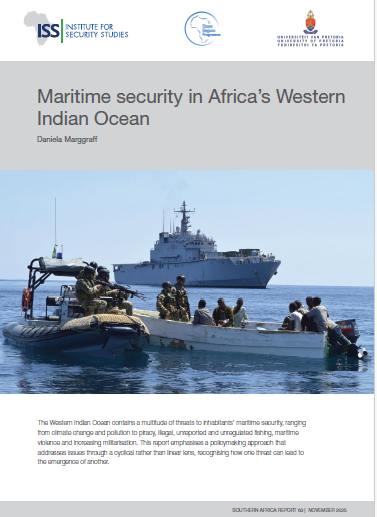
By Daniela Marggraff
From piracy to illegal fishing, maritime threats in the region demand urgent, coordinated policy action.
The Western Indian Ocean contains a multitude of threats to inhabitants’ maritime security, ranging from climate change and pollution to piracy, illegal, unreported and unregulated fishing, maritime violence and increasing militarisation. This report emphasises a policymaking approach that addresses issues through a cyclical rather than linear lens, recognising how one threat can lead to the emergence of another.
Pretoria, South Africa: Institute for Security Studies, 2025. 24p.
By Noor Huda Ismail
Indonesia is witnessing a disturbing rise in the online radicalisation of minors, with police confirming that 110 children aged 10-18 have been influenced or recruited by extremist networks in twenty-three provinces. The challenge in countering this trend lies in understanding why the phenomenon is intensifying and what it would demand from policymakers, particularly in involving the youth themselves in co-creating prevention strategies.
COMMENTARY
Recent disclosures from the Indonesian National Police underscore an unsettling shift in the country’s counter-terrorism landscape. Brigjen Polisi Trunoyudo Wisnu Andiko reported that 110 minors aged 10 to 18 have been exposed to radical ideology and recruited into terrorist networks, with the highest concentrations in Banten, DKI Jakarta, West Java, Central Java, and East Java.
The recruitment of these minors is a subtle, highly digitalised process, beginning on social media platforms such as Facebook and Instagram, and through online games, before moving to private channels like WhatsApp and Telegram. Extremists employ short videos, animations, memes, and music that resonate with adolescent culture, embedding ideology within content designed for entertainment and identity formation. This approach allows gradual indoctrination, exploiting both the cognitive vulnerabilities of youth and the emotional allure of belonging to a community.
S. Rajaratnam School of International Studies, NTU Singapore, 2025.
By Anthony A. Braga, Cory Schnell Brandon C. Welsh
Broken windows theory suggests that police can prevent serious crime by addressing social and physical disorder in neighborhoods. In many U.S. cities, recent increases in disorder, fear, and crime have initiated calls for an intensification of disorder policing efforts. Disorder policing programs can be controversial, with evaluations yielding conflicting results. Further, a growing number of descriptive analyses of aggressive order maintenance programs raise concerns over varied negative consequences, such as increased racial disparities in arrests of citizens. Systematic review and meta-analytic techniques were used to conduct an updated analysis of the effects of disorder policing on crime. Fifty-six eligible studies including 59 independent tests of disorder policing interventions were identified, representing almost twice the number included in the previous review. As part of the meta-analysis, new effect size metrics were used. The updated meta-analysis suggests that policing disorder strategies are associated with overall statistically significant crime reduction effects that spill over into surrounding areas. The strongest program effect sizes were generated by community and problem-solving interventions designed to change social and physical disorder conditions at crime hot spots. Conversely, aggressive order maintenance strategies did not generate significant crime reductions. Policy Implications: The types of strategies used by police departments to address disorder seem to matter in controlling crime, and this holds important implications for police–community relations, justice, and crime prevention. Further research is needed to understand the key programmatic elements that maximize the capacity of these strategies to prevent crime
Criminology & Public Policy. 2024;23:745–775
By The International Crisis Group
What’s new? Since October 2019, Lebanon’s economic crisis has gutted funding for the country’s security forces, including the army and national police. Overstretched, these agencies have resorted to makeshift solutions for keeping the peace, including initiatives that allow communities to help police themselves.
Why does it matter? With the country’s security institutions struggling for resources, public safety in Lebanon is maintained by a patchwork of ad hoc solutions and quick fixes that cannot hold forever. As formal institutions continue to weaken, security will fray. Violence could follow, particularly in neglected and impoverished areas.
What should be done? Donors should keep pressing Lebanon’s leaders to better address the economic crisis so that the government can reinvest in the security forces’ long-term viability, especially after the latest destabilising Israel-Hizbollah war. In parallel, targeted interventions by donors can help bolster the security forces’ performance and professional integrity.
Brussels, Belgium : International Crisis Group, 2025. 49p.
By Abby Córdova and Helen Kras
With a focus on the implementation of women’s police stations (WPS), we posit that local policies that address violence against women can result in positive feedback effects on institutional legitimacy. We theorize that WPS increase police legitimacy among women by improving perceptions of personal safety and government responsiveness. To test our hypotheses, we rely on municipal and public opinion data from more than 100 municipalities in Brazil. The results of our multilevel analysis indicate that WPS produce positive feedback effects among women, resulting in higher trust in the police among women than men and closing the gender gap in perceptions of police effectiveness. Incorporating an instrumental variable in the analyses yields similar results, suggesting that these effects are not endogenous. Moreover, the results of our mediation models show that WPS’ positive effects on women’s views of police legitimacy are driven by improved perceptions of personal safety, and not perceptions of government responsiveness.
Comparative Political Studies 2020, Vol. 53(5) 775–808
By Michael A Yonas ,, Patricia O’Campo , Jessica G Burke , Geri Peak , Andrea C Gielen
This study explored how young boys and girls living in low income urban neighborhoods defined and described reasons associated with youth violence. Five focus groups were conducted with 29 youth between the ages of 8 and 12 recruited from four selected study neighborhoods. Participants were asked to describe youth violence. Appropriate probes were used to explore similarities and differences by gender with regard to the reasons for violence. Definitions of youth violence were consistent across participants and included verbal threats, physical contact, and often the use of a weapon. Several common reasons for violence were found among both boys and girls; romantic relationships, respect, idle time, gangs.cliques, and witnessing violence. Reasons for violence unique to boys include fighting about issues related to money and illicit drugs. Gossip was identified as a reason specific to why girls engage in violence. Youth violence was perceived as a common problem impacting the lives of the boys and girls in this study. Although many of the reasons identified for violence are similar among boys and girls, select gender differences do exist. Future research and prevention efforts to address youth violence should engage young people in efforts to understand and address this important public health topic.
J Urban Health
. 2005 Dec;82(4):543–551.
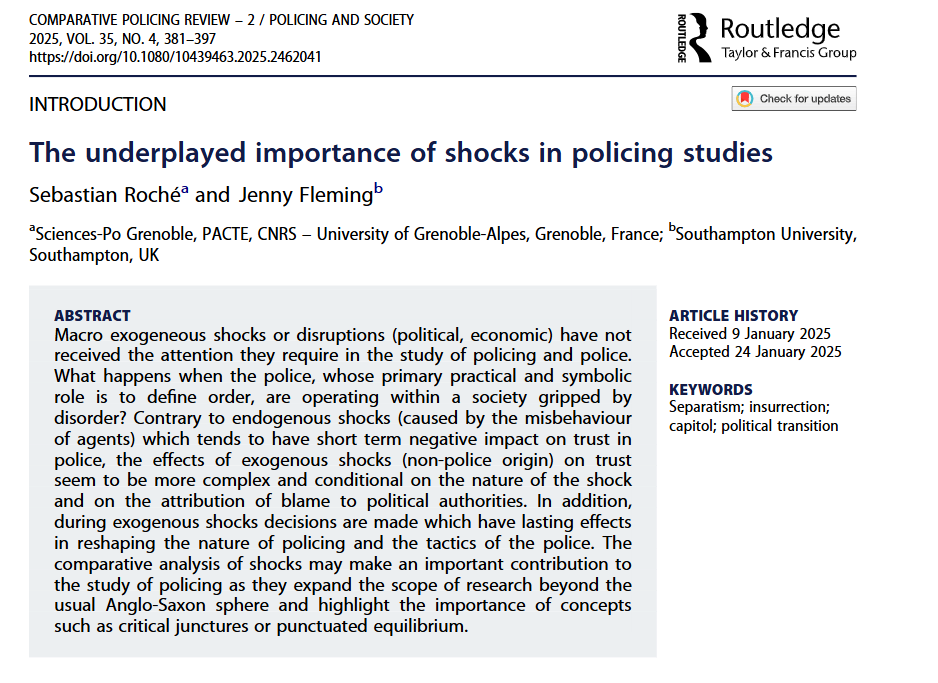
By Sebastian Rochéa and Jenny Fleming
Macro exogeneous shocks or disruptions (political, economic) have not received the attention they require in the study of policing and police.What happens when the police, whose primary practical and symbolic role is to define order, are operating within a society gripped by disorder? Contrary to endogenous shocks (caused by the misbehaviour of agents) which tends to have short term negative impact on trust in police, the effects of exogenous shocks (non-police origin) on trust seem to be more complex and conditional on the nature of the shock and on the attribution of blame to political authorities. In addition, during exogenous shocks decisions are made which have lasting effects in reshaping the nature of policing and the tactics of the police. The comparative analysis of shocks may make an important contribution tothe study of policing as they expand the scope of research beyond the usual Anglo-Saxon sphere and highlight the importance of concepts such as critical junctures or punctuated equilibrium
COMPARATIVE POLICING REVIEW – 2 / POLICING AND SOCIETY2025, VOL. 35, NO. 4, 381–397
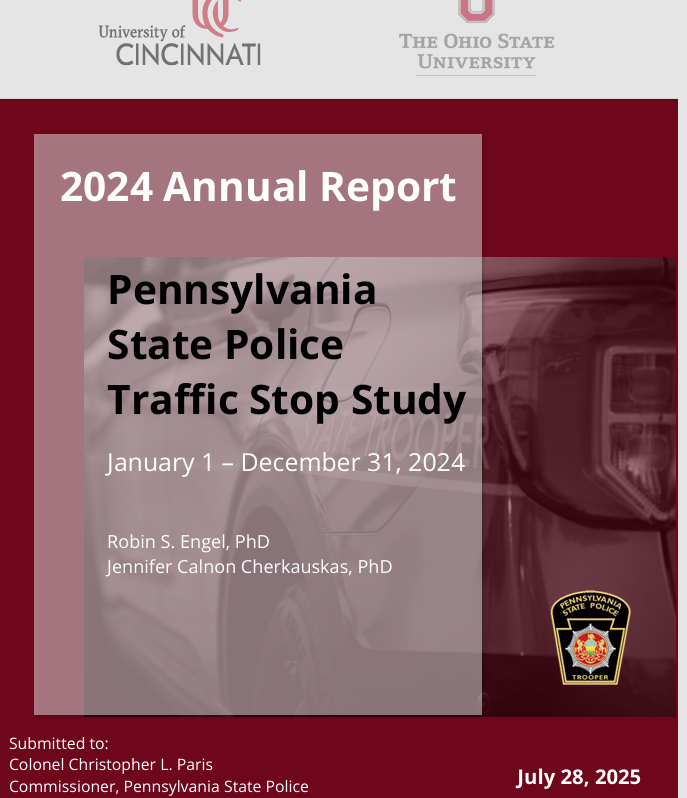
By Robin S. Engel, Jennifer Calnon Cherkauskas
The 2024 Annual Report of the Pennsylvania State Police (PSP) Traffic Stop Study presents a comprehensive analysis of member-initiated traffic stops conducted between January 1 and December 31, 2024. It continues a multi-year initiative to collect, audit, and analyze traffic stop data. In 2021, the Pennsylvania State Police (PSP) revitalized its effort to collect traffic stop data This initiative builds on a voluntary traffic stop data collection system created by the PSP twenty-five years ago in partnership with the current research team, which was operational from 2001 to 2010 and served as a national model for traffic stop data collection (Engel & Cherkauskas, 2022). The report provides a detailed breakdown of traffic stop characteristics and outcomes at the department level, as well as across PSP’s four Areas, 16 Troops, and 89 Stations. PSP’s voluntary data collection and analysis align with best practices, showcasing its commitment to transparency and accountability to its communities and reinforcing its dedication to evidence-based policing practices. The objectives of the traffic stop data collection and analysis are to: (1) identify patterns and trends in traffic stops and their outcomes, specifically documenting any racial/ethnic disparities; (2) utilize data analysis to promote effective and fair law enforcement practices that enhance public and traffic safety; (3) foster public trust through transparent documentation of traffic stop data and findings; (4) identify opportunities for improvement in PSP policies, training, and supervisory oversight concerning traffic stops.
Harrisburg: Pennsylvania State Police, 2025. 139p.
By The New York State Division of Criminal Justice Services
The Body-Worn Camera Model Policy is intended to allow for the individual needs of each of the police departments in New York State regardless of size or resource limitations. Law Enforcement are encouraged to customize these protocols to meet their regional needs, while being mindful of the intent of the policy. As with all model policies adopted by the Municipal Police Training Council (MPTC), this policy is non-binding upon agencies within New York State and is meant to serve as a guide to be used in developing a department’s individual policy. The Municipal Police Training Council (MPTC) approved an updated version of the model policy in June 2025.
Albany: NYSCJS, 2025. 15p.