Open Access Publisher and Free Library
CRIME+CRIMINOLOGY.jpeg

CRIME

Violent-Non-Violent-Cyber-Global-Organized-Environmental-Policing-Crime Prevention-Victimization

Posts in Social Sciences
lllicit Trade in South Africa: Challenges and Solutions

By Transnational Alliance to Combat Illicit Trade (TRACIT)

South Africa is one of the largest and most diversified economies in Africa. The country has a well-established manufacturing base, is a major supplier of goods and services to the continent, has a large consumer base, serves as a regional transport hub, has a strong tourism and financial sector, as well as robust traditional sectors such as agriculture and mining. This diversification, however, means that South Africa also faces challenges from illicit trade on multiple fronts. This publication explores the situation in South Africa and highlights a number of regulatory and legal mechanisms that the government can implement to better control and combat illicit trade.

NY: TRACIT. October 2019. 11p.
download
Examining the negative impacts of illicit trade on SDG 16

By The Transnational Alliance to Combat Illicit Trade (TRACIT).

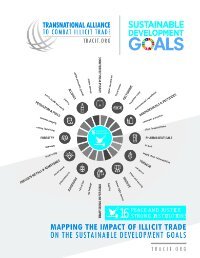
The TRACIT report, "Examining the negative impacts of illicit trade on SDG 16", is part of TRACIT’s contribution to the partnership approach embodied in SDG 17 and a means by which business, the public sector and civil society can more effectively achieve the SDGs. The report updates key findings from the 2019 Mapping the Impact of Illicit Trade on the Sustainable Development Goals to focus on the criminal elements underpinning illicit trade and their relationship to SDG 16. Additionally, it incorporates observations during the COVID-19 pandemic, which show that criminal groups have swiftly exploited the situation and entrenched their positions in illicit trade.

TRACIT.ORG. 2021. 37p.

download
Understanding the Demand for Illegal Drugs

National Research Council.

Despite efforts to reduce drug consumption in the United States over the past 35 years, drugs are just as cheap and available as they have ever been. Cocaine, heroin, and methamphetamines continue to cause great harm in the country, particularly in minority communities in the major cities. Marijuana use remains a part of adolescent development for about half of the country's young people, although there is controversy about the extent of its harm.

Given the persistence of drug demand in the face of lengthy and expensive efforts to control the markets, the National Institute of Justice asked the National Research Council to undertake a study of current research on the demand for drugs in order to help better focus national efforts to reduce that demand.

This study complements the 2003 book, Informing America's Policy on Illegal Drugs by giving more attention to the sources of demand and assessing the potential of demand-side interventions to make a substantial difference to the nation's drug problems. Understanding the Demand for Illegal Drugs therefore focuses tightly on demand models in the field of economics and evaluates the data needs for advancing this relatively undeveloped area of investigation.

Washington, DC: The National Academies Press. 2010. 124p.

download
Securing Protected Areas The Decision-making of Poachers and Rangers

By Nick van Doormaal

Wildlife crime is not a single event, but rather a chain of crime events, as depicted in Figure 1.1 and adapted from Moreto and Lemieux (2015) and ‘t Sas-Rolfes et al. (2019). Poaching, the illegal taking of wild flora and fauna, is the first event in a series of crimes that supply the demand for illicit wildlife products. After a poaching event, wildlife will typically be processed, transported to markets, traded, and consumed by the end user. Depending on the context, a number of different people or groups of people can be involved at various stages of the wildlife crime chain. The first stage of the wildlife crime chain will almost always start with a motivated poacher trying to illegally obtain a wildlife product inside a protected area. To prevent this product from entering the market, robust security of protected areas is essential. The studies in this dissertation focus on the poaching stage

Amsterdam: Netherlands Institute for the Study of Crime and Law Enforcement (NSCR), 2020. 168p.

download
Problem-Oriented Wildlife Protection

By A.M. Lemieux & R.S.A. Pickles

As an officer for a national wildlife authority, you may experience déjà vu. You arrest poacher after poacher but the poaching threat in your park is not decreasing. You get called out to deal with crop raiding animals, but despite culling and translocation, each year there are more callouts. You are probably not alone in thinking ‘if we had more patrol teams…or faster response vehicles…or more money for operations, we could solve our problems’. Instead you have a restricted budget and the public expect you to deal with a broad range of wildlife problems, some of which use a lot of time and resources but do not seem to change. What’s more, you’re probably aware many wildlife protection problems are getting worse. Poaching and trafficking of wildlife for pets, food, ornaments or medicine is increasing across the world. There’s also more conflict between wildlife and people as they compete with one another for land and resources. Many of the problems you’ll be asked to solve are complex and you might find your organization’s traditional approaches need updating. It’s time to try something new. Problem-oriented policing was developed to help police officers find ways of reducing crime without substantial additional resources. A problem-oriented approach (a) supports ground-up initiatives addressing the context of a specific problem, (b) encourages innovative solutions beyond the criminal justice system, and (c) promotes collaboration within and beyond your agency. We think this approach has a lot to offer wildlife authorities and can be integrated with ongoing conservation strategies

Phoenix, AZ: Center for Problem-Oriented Policing, Arizona State University, 2020. 31p.

download
Illegal and Unsustainable Hunting of Wildlife for Bushmeat in Sub-Saharan Africa

By M. Sosnowski; K. Everatt; R. Pickles; G. Whittington-Jones; A. Lemieux.

Unsustainable and illegal bushmeat hunting constitute the most serious threat to many wildlife populations across Africa. Bushmeat hunting is responsible for the significant depletion of ungulate populations across more than half of African protected areas, and the decline of overall wildlife populations across almost all West and Central African protected areas. Targeted bushmeat hunting is also driving populations of lowland gorillas, drills, Press red colobus and other threatened primates towards local extinction. Bushmeat hunting is nevertheless likely to be widely under-reported.

Indirect harms. Depletion of ungulate prey caused by bushmeat hunting is the greatest threat to the conservation of lions across much of Africa and is an important threat to other large carnivores, such as leopards, cheetahs, Africa wild dogs, and spotted hyena. Overhunting of ecosystem engineers such as elephants, gorillas and hippos, can reduce tree recruitment, causing altered forest structure and reduced carbon sequestration.

Phoenix, AZ: Center for Problem-Oriented Policing, Arizona State University, 2021. 47p.

download
Brexit and the Control of Tobacco Illicit Trade

By Marina Foltea. This book assesses the consequences of Brexit for the control of illicit trade in tobacco products in the UK and EU. Based on the currently applicable legal framework, it examines the significance of a possible non-application of the acquis communautaire in the UK in matters relating to anti-illicit trade in tobacco legislation. It also analyses the modes of future cooperation between the UK and the EU in this area, as well as possible regulatory scenarios and their consequences. The book comprises six main sections. After the introduction (Section 1), Section 2 discusses the state of play of Brexit and possible outcomes of Article 50 of the Treaty of European Union procedure. Section 3 illustrates the data and trends of illicit tobacco trade in the UK. Section 4 describes the relevant legal (e.g. trade and fiscal measures) and enforcement frameworks in the UK and suggests possible post-Brexit scenarios in control of tobacco illicit trade. Section 5 focuses on the relevance of arrangements between governments and the tobacco industry in the control of illicit trade. Section 6 then analyses the relevance of key EU and global anti-illicit trade initiatives. Lastly, Section 7 the book offers some recommendations and conclusions on how the UK could control illicit trade in tobacco after Brexit Cham: Springer, 2020. 89p.

download
Forensic Genetics in the Governance of Crime

By Helena Machado and Rafaela Granja. The introductory chapter offers a detailed description of the themes that the reader can expect to find in this book, and a discussion of the social and academic relevance of the role and use of forensic genetic technologies in the criminal justice system. This introductory chapter provides the key concepts for the discussion of how developments in the application of forensic genetics can be understood as part of wider shifts in how the governance of criminality is enacted and made visible through the symbolic power invested in science and technology. Palgrave (2020) 120p.p.

download
Combatting Illicit Trade on the EU Border

A Comparative Perspective. Edited by Celina Nowak. This chapter outlines the framework of the research presented in this volume. It starts with a notion that national criminal policies on illicit tobacco trade are a part of the national tobacco control policy, and at the same time a part of a general national criminal policy and points to the need for an in-depth research of national criminal laws in this regard. It presents the scope of the research, which consists in a comparative analysis about the illicit tobacco trade and about efforts to counteract that trade in six EU Member States—four post-communist states (Lithuania, Poland, Slovakia and Romania), on the Eastern border of the Union and two “old” EU Member States (Germany, Italy). Springer. (2021) 283p.

download
RETALIATORY VIOLENT DISPUTES

By John Klofas Irshan Altheimer Nicholas Petitti

This guide begins by describing the problem of retaliatory violent disputes and reviewing factors that increase the risks of such disputes. It then identifies a series of questions to help you analyze your local retaliatory violent disputes problem. Finally, it reviews responses to the problem and what is known about them from evaluative research and police practice. This guide addresses the particular problem of retaliatory violent disputes which includes retaliatory gang violence, retaliatory family feuds, and retaliatory interpersonal violence.

Problem-Oriented Guides for Police. Problem-Specific Guide Series, 2019. No. 74. 45p

download