Open Access Publisher and Free Library
CRIME+CRIMINOLOGY.jpeg

CRIME

Violent-Non-Violent-Cyber-Global-Organized-Environmental-Policing-Crime Prevention-Victimization

Posts in Social Sciences
Trends and Patterns in Firearm Violence, 1993–2018

By Grace Kena and Jennifer L. Truman 

This report describes trends and patterns in fatal and nonfatal firearm violence from 1993 to 2018 and for the more recent period of 2014 to 2018. The report includes data on the type of firearm; location of the incident; victim and offender demographic characteristics and relationship; type of violence, injury, and treatment; police notification; and victims’ self-protective behaviors.

Washington, DC: U.S. Bureau of Crime Statistics, 2022. 26p.

Life Against Death: The Psychoanalytical Meaning of History

By Norman O. Brown

Life Against Death: The Psychoanalytical Meaning of History (1959; second edition 1985) is a book by the American classicist Norman O. Brown, in which the author offers a radical analysis and critique of the work of Sigmund Freud, tries to provide a theoretical rationale for a nonrepressive civilization, explores parallels between psychoanalysis and Martin Luther's theology, and draws on revolutionary themes in western religious thought, especially the body mysticism of Jakob Böhme and William Blake. It was the result of an interest in psychoanalysis that began when the philosopher Herbert Marcuse suggested to Brown that he should read Freud.

Connecticut. Wesleyan University Press. 1959. 364p.

Global Risks Report 2023: 18th Edition

By World Economic Forum

From the Preface: "The 2023 edition of the 'Global Risks Report' highlights the multiple areas where the world is at a critical inflection point. It is a call to action, to collectively prepare for the next crisis the world may face and, in doing so, shape a pathway to a more stable, resilient world."

World Economic Forum: www.weforum.org/. 2023. 98p.

Pandemic, Social Unrest, and Crime in U.S. Cities: Year-End 2022 Update

By Rosenfeld, Richard; Boxerman, Bobby; Lopez, Ernesto, Jr.

From the Introduction: "This report updates CCJ's [Council on Criminal Justice's] previous studies [hyperlink] of crime changes during the coronavirus pandemic, extending the analyses with data through December of 2022. The current study finds a drop in homicide, aggravated assaults, and gun assaults and a rise in robbery and most property crimes. The authors' conclusions have not changed: to achieve substantial and sustainable reductions in violence and crime, cities should adopt evidence-based crime-control strategies and long-needed reforms to policing. The 35 cities included in this study were selected based on data availability [...] and range from Richmond, VA, the smallest, with 227,000 residents, to New York, the largest, with more than 8.4 million residents. The mean population of the cities for which crime data were available is approximately 1.1 million, while the median population is roughly 652,000. This report assesses monthly changes between January of 2018 and December of 2022 for the following 10 crimes: homicide, aggravated assault, gun assault, domestic violence, robbery, residential burglary, nonresidential burglary, larceny, motor vehicle theft, and drug offenses. As in the previous reports, this analysis focuses special attention on the trend in homicides. It also examines in greater detail than in prior reports the substantial increase in motor vehicle thefts and carjacking since the beginning of the pandemic in early 2020."

Council On Criminal Justice. 2023. 29p.

International And Transnational Crime And Justice. 2nd ed.

Edited by Mangai Natarajan

International crime and justice is an emerging field that covers crime and justice from a global perspective. 'This book introduces the nature of internationaland transnational crimes; theoretical foundations to understanding the relationship between social change and the waxing and waning of the crime opportunity structure; globalization; migration; culture conflicts and the emerging legal frameworks for their prevention and control. tI presents the challenges involved in delivering justice and international cooperative efforts to deter, detect, and respond to international and transnational crimes, and the need for international research and data resources to go beyond anecdote and impres- sionistic accounts to testing and developing theories to build the discipline that bring tangible improvements to the peace, security, and well-being of the globalizing world. 'This books is a timely analysis of the complex subject ofinternational crime and justice for students, scholars, policy makers, and advocates who strive for the pursuit of justice for millions of victims.

Cambridge England and NY.. Cambridge University Press. 2019. 560p.

The Triumphs of Gods revenge

By Reynolds, John, active 1621-1650

The triumphs of Gods revenge against the crying and execrable sinne of (wilful and premeditated) murther : with his miraculous discoveries, and severe punishment thereof : in thirty several tragical histories, (digested into six books) committed in divers countreys beyond the seas : never published or imprinted in any other language.

London : Printed by A.M. for William Lee, and are to be sold by George Sawbridg, Francis Tyton, John Martin ... [and 9 others]. 1670. 508p.

Crime and Justice in America 1776-1976

Edited by Graeme R. Newman

“To celebrate our 200th year of crime, I have tried to bring together a number of papers which (1) trace some historical origins of crime and justice in America; (2) examine some cultural expressions of crime through fact, fiction, and policy; and (3) are themselves representative of the cultural context of crime. Some of the papers attempt to destroy myths; others to comprehend them. Still others try to break out of the visionary mold and plead for rationality. We have on our hands, Wilkins says, a “mad, bad, sick” confusion. The colossal complexity of the concept of crime cannot be doubted, and its role in the mythical foundations of national culture has yet to be apprehended. Perhaps if we can rid ourselves of this confusing moralism about crime, we will be able to go forward with clear heads and protect ourselves.”

Philadelphia. Tha Annals of the American Academy of Political and Social Sciences. 1976. 240p.

Security and Privacy: Global Standards for Ethical Identity Management in Contemporary Liberal Democratic States

By John Kleinig, Peter Mameli, Seumas Miller, Douglas Salane and Adina Schwartz

This study is principally concerned with the ethical dimensions of identity management technology – electronic surveillance, the mining of personal data, and profiling – in the context of transnational crime and global terrorism. The ethical challenge at the heart of this study is to establish an acceptable and sustainable equilibrium between two central moral values in contemporary liberal democracies, namely, security and privacy. Both values are essential to individual liberty, but they come into conflict in times when civil order is threatened, as has been the case from late in the twentieth century, with the advent of global terrorism and trans-national crime. We seek to articulate legally sustainable, politically possible, and technologically feasible, global ethical standards for identity management technology and policies in liberal democracies in the contemporary global security context. Although the standards in question are to be understood as global ethical standards potentially to be adopted not only by the United States, but also by the European Union, India, Australasia, and other contemporary liberal democratic states, we take as our primary focus the tensions that have arisen between the United States and the European Union.

Canberra: ANU Press, 2011. 304p.

The Nineteenth-Century Anglo-Indian Opium Trade to China and its Lasting Legacy

By Elisa-Sofía García-Marcano

In recent years, two apparently different and unconnected problems have received repeated attention from global news outlets, namely the opioid crisis and the pro-democracy movement in Hong Kong. The opioid crisis, which is especially catastrophic in the United States, involves the over-prescription and abuse of synthetic opioid painkillers such as oxycontin and fentanyl (Felter, 2020). The pro-democracy movement in Hong Kong involves legions of protesters, many of them university students, taking to the streets against what they see as the erosion of their civil liberties at the hands of the mainland Chinese government (Perper, 2019). How can these two issues possibly be connected? This paper tells the story of how the world's first great opioid crisis occurred in nineteenth-century China, and how the drug trafficking British thwarted the Chinese government's attempts to stop drug imports, fighting two wars in the process. Upon conclusion of the first of these wars, China was forced to cede the territory of Hong Kong. This British colonial outpost became the principal entrepôt for British opium entering the Chinese market. Over the next century and a half, Hong Kong grew into one of the world's most dynamic commercial cities, and its citizens enjoyed liberties under British rule that were not available to the mainland Chinese population. Thus, the legacy of the opium wars and the British opium trade to China is still very much with us today.

 Online Journal Mundo Asia Pacifico10(19), 98–109. 

The Opium Wars: The Addiction of One Empire and the Corruption of Another

By W. Travis Hanes III and Frank Sanello

In this tragic and powerful story, the two Opium Wars of 1839–1842 and 1856–1860 between Britain and China are recounted for the first time through the eyes of the Chinese as well as the Imperial West. Opium entered China during the Middle Ages when Arab traders brought it into China for medicinal purposes. As it took hold as a recreational drug, opium wrought havoc on Chinese society. By the early nineteenth century, 90 percent of the Emperor’s court and the majority of the army were opium addicts.Britain was also a nation addicted-to tea, grown in China, and paid for with profits made from the opium trade. When China tried to ban the use of the drug and bar its Western smugglers from its gates, England decided to fight to keep open China’s ports for its importation. England, the superpower of its time, managed to do so in two wars, resulting in a drug-induced devastation of the Chinese people that would last 150 years.In this page-turning, dramatic and colorful history, The Opium Wars responds to past, biased Western accounts by representing the neglected Chinese version of the story and showing how the wars stand as one of the monumental clashes between the cultures of East and West.

Naperville, IL: Sourcebooks, 2004.  352p.

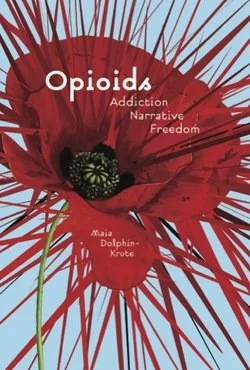
Opioids: Addiction, Narrative, Freedom

By Maia Dolphin-Krute

An epidemic is a feeling set within time as much as it is a matter of statistics and epidemiology: it is the feeling of many of us in the same desperate place at the same desperate time. Opioid epidemic thus names a present moment — at once historic and historical — centered on the substance of opioids as much as it names the urgency of all of us who are currently in proximity to these substances. What is the relationship between these historic and historical moments, the present moment, the history of pharmacological capitalism, and a set of repeated neurological activities, as well as human loss and desire, that has fueled the exponential rise in the rates of opioid use and abuse between 2000-2018? Opioids: Addiction, Narrative, Freedom is an auto-ethnography written from deep within—biologically within—this opioid epidemic. Tracing opioids around and through the bodies, governmental, and medical structures they are moving and being moved through, Opioids is an examination of what it means to live within an environment saturated with a substance of deep economic, political, neuroscientific, and pharmacological implications. From exploring media coverage of the epidemic and emerging medical narratives of addiction to detailing the legal inscription of differences between “pain patients” and people addicted to drugs, Opioids consistently asks: what is it like to live within an epidemic? What forms of freedom become possible when continually modulated by our physical experiences of the material proximities of an epidemic? How do you live with something for a long time?

Brooklyn, NY: Punctum Books, 2018. 192p.

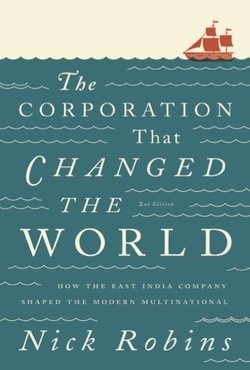
The Corporation That Changed the World: How the East India Company Shaped the Modern Multinational. Second Edition

By Nick Robins

The English East India Company was the mother of the modern multinational. Its trading empire encircled the globe, importing Asian luxuries such as spices, textiles and teas. But the Company’s takeover of much of India was achieved by force and fraud; in China, the battering ram was opium. The East India Company’s corruption and violence shocked its contemporaries and still reverberates today. The Corporation That Changed the World is the first book to examine the Company’s enduring legacy as a corporation. It uncovers the factors that drove it to excess and eventual collapse. This expanded edition looks at recent activist and cultural responses to the Company in China and India, and the corporate reform agenda in light of the economic crisis. In his account of the Company's story Robins highlights enduring lessons on how to make global business accountable. This will be vital reading for students and academics in economics and history.

London: Pluto Press, 2012. 281p.

History of the Opium Problem: The Assault on the East, ca. 1600-1950

By Hans Derks

This is the first scholarly study in which the production, trade and political effects of opium and its derivatives are shown over many centuries, and in many countries (China, India, Indonesia, Japan, all Southeast Asian countries and some in Europe and the Americas). Starting in the 16th century, slavery and opium became the two means with which the bodies and souls of men and women in the tropics were exploited in western imperialism and colonialism. The first waned with the abolition movement in the 19th century, but opium production and trade continued to spread, with the associated serious social and political effects. Around 1670 the Dutch introduced opium as a cash crop for mass production and distribution in India and Indonesia. China became the main target in the 19th century, and only succeeded in getting rid of the opium problem around 1950. Then it had already been transformed from an “Eastern” into a “Western” problem.

Leiden; Boston: Brill, 2012. 850p.

To Make Negro Literature: Writing, Literary Practice, and African American Authorship

By Elizabeth McHenry

Elizabeth McHenry locates a hidden chapter in the history of Black literature at the turn of the twentieth century, revising concepts of Black authorship and offering a fresh account of the development of “Negro literature” focused on the never published, the barely read, and the unconventional.

Durham, NC: Duke University Press, 2021. 313p.

The Crime of All Crimes: Toward a Criminology of Genocide

By Nicole Rafter

Cambodia. Rwanda. Armenia. Nazi Germany. History remembers these places as the sites of unspeakable crimes against humanity, and indisputably, of genocide. Yet, throughout the twentieth century, the world has seen many instances of violence committed by states against certain groups within their borders—from the colonial ethnic cleansing the Germans committed against the Herero tribe in Africa, to the Katyn Forest Massacre, in which the Soviets shot over 20,000 Poles, to anti-communist mass murders in 1960s Indonesia. Are mass crimes against humanity like these still genocide? And how can an understanding of crime and criminals shed new light on how genocide—the “crime of all crimes”—transpires? In The Crime of All Crimes, criminologist Nicole Rafter takes an innovative approach to the study of genocide by comparing eight diverse genocides--large-scale and small; well-known and obscure—through the lens of criminal behavior. Rafter explores different models of genocidal activity, reflecting on the popular use of the Holocaust as a model for genocide and ways in which other genocides conform to different patterns. For instance, Rafter questions the assumption that only ethnic groups are targeted for genocidal “cleansing," and she also urges that actions such as genocidal rape be considered alongside traditional instances of genocidal violence. Further, by examining the causes of genocide on different levels, Rafter is able to construct profiles of typical victims and perpetrators and discuss means of preventing genocide, in addition to delving into the social psychology of

  • genocidal behavior and the ways in which genocides are brought to an end. A sweeping and innovative investigation into the most tragic of events in the modern world, The Crime of All Crimes will fundamentally change how we think about genocide in the present day.

New York: New York University Press, 2016. 320p.

Popular Culture, Crime and Social Control

Edited by Mathieu Deflem

This volume contains contributions on the theme of popular culture, crime, and social control. The chapters in this volume tease out various criminologically relevant issues, pertaining to crime/deviance and/or the control thereof, on the basis of an analysis of various aspects and manifestations of popular culture, including music, movies, television, paintings, sculptures, photographs, cartoons, and the internet-based audio-visual materials that are presently available. Thematically diverse within the province of criminology, the chapters in this book are not restricted in terms of theoretical approach and methodological orientation. Using a variety of methodological and theoretical perspectives, the volume is diverse in addressing dimensions of popular culture in relation to important criminological questions.

Bingley, UK: Emerald Publishing, 2010. 308p.

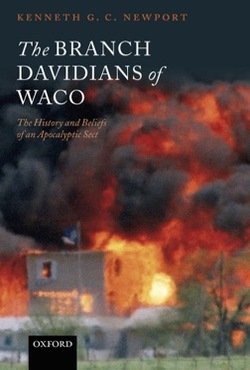
The Branch Davidians of Waco The History and Beliefs of an Apocalyptic Sect

By Kenneth G. C. Newport

What were the beliefs of the Branch Davidians? This is the first full scholarly account of their history. Kenneth G. C. Newport argues that, far from being an act of unfathomable religious insanity, the calamitous fire at Waco in 1993 was the culmination of a long theological and historical tradition that goes back many decades. The Branch Davidians under David Koresh were an eschatologically confident community that had long expected that the American government, whom they identified as the Lamb-like Beast of the book of Revelation, would one day arrive to seek to destroy God's remnant people. The end result, the fire, must be seen in this context.

Oxford, UK; New York: Oxford University Press, 2006.

Crime, Cultural Conflict, and Justice in Rural Russia, 1856-1914

By Stephen P. Frank

This book is the first to explore the largely unknown world of rural crime and justice in post-emancipation Imperial Russia. Drawing upon previously untapped provincial archives and a wealth of other neglected primary material, Stephen P. Frank offers a major reassessment of the interactions between peasantry and the state in the decades leading up to World War I. Viewing crime and punishment as contested metaphors about social order, his revisionist study documents the varied understandings of criminality and justice that underlay deep conflicts in Russian society, and it contrasts official and elite representations of rural criminality—and of peasants—with the realities of everyday crime at the village level.

Berkeley, CA: London: University of California Press, 1999.

Crime and Punishment in Russia: A Comparative History from Peter the Great to Vladimir Putin

By Jonathan Daly; Jonathan Smele; Michael Melancon

Crime and Punishment in Russiasurveys the evolution of criminal justice in Russia during a span of more than 300 years, from the early modern era to the present day. Maps, organizational charts, a list of important dates, and a glossary help the reader to navigate key institutional, legal, political, and cultural developments in this evolution. The book approaches Russia both on its own terms and in light of changes in Europe and the wider West, to which Russia's rulers and educated elites continuously looked for legal models and inspiration. It examines the weak advancement of the rule of the law over the period and analyzes the contrasts and seeming contradictions of a society in which capital punishment was sharply restricted in the mid-1700s, while penal and administrative exile remained heavily applied until 1917 and even beyond. Daly also provides concise political, social, and economic contextual detail, showing how the story of crime and punishment fits into the broader narrative of modern Russian history. This is an important and useful book for all students of modern Russian history as well as of the history of crime and punishment in modern Europe.

London: Bloomsbury Academic, 2018. 258p.

House of Trump, House of Putin: How Vladimir Putin and the Russian Mafia Helped Put Donald Trump in the White House

By Craig Unger

'A bombshell.' Daily Mail 'Damning, terrifying and enraging.' The Spectator House of Trump, House of Putin offers the first comprehensive investigation into the decades-long relationship among Donald Trump, Vladimir Putin, and the Russian Mafia that ultimately helped win Trump the White House. It is a chilling story that begins in the 1970s, when Trump made his first splash in the booming, money-drenched world of New York real estate, and ends with Trump's inauguration as president of the United States. That moment was the culmination of Vladimir Putin's long mission to undermine Western democracy, a mission that he and his hand-selected group of oligarchs and associates had ensnared Trump in, starting more than twenty years ago with the massive bailout of a string of sensational Trump hotel and casino failures in Atlantic City. This book confirms the most incredible American paranoias about Russian malevolence. To most, it will be a hair-raising revelation that the Cold War did not end in 1991--that it merely evolved, with Trump's apartments offering the perfect vehicle for billions of dollars to leave the collapsing Soviet Union. In House of Trump, House of Putin, Craig Unger methodically traces the deep-rooted alliance between the highest echelons of American political operatives and the biggest players in the frightening underworld of the Russian Mafia. He traces Donald Trump's sordid ascent from foundering real estate tycoon to leader of the free world. He traces Russia's phoenix-like rise from the ashes of the post-Cold War Soviet Union as well as its ceaseless covert efforts to retaliate against the West and reclaim its status as a global superpower. Without Trump, Russia would have lacked a key component in its attempts to return to imperial greatness. Without Russia, Trump would not be president. 

New York: Dutton, 2018. 384p.