Open Access Free Library
CRIME+CRIMINOLOGY.jpeg

CRIME

Violent-Non-Violent-Cyber-Global-Organized-Environmental-Policing-Crime Prevention-Victimization

Posts in social sciences
The Minnesota Sexual Assault Kit Research Project

By Tara N. Richards; Justin Nix; Bradley A. Campbell; Emily Wright; Caralin C. Branscum; Sheena L. Gilbert; Michaela Benson-Goldsmith; Emily K. Meinert

This final report for the National Institute of Justice (NIJ) Award 2019-MU-MU-0095 describes a research project that used a variety of methods to evaluate the activities undertaken by stakeholders in the Minnesota Sexual Assault Initiative (MN SAKI) project, including the following four goals: eliminating untested sexual assault kits (SAKs); building capacity for criminal justice agencies to test SAKs, pursuing all investigatory leads, providing victim referrals, and prosecuting cases resulting from testing; and strengthening victim services. The authors also completed a cost-benefit analysis of MN SAKI Project’s SAK testing efforts. The report provides details and outcomes regarding each of the project goals; it discusses SAK outcomes, costs, and benefits, and discusses the project findings and implications. The document's appendixes provide the following documents: Bureau of Criminal Apprehension Report on the MN Law Enforcement Agency Survey of Untested Rape Kits as Required by SF0878; MDT Interview Questions; Stakeholder Informed Consent Form; Victim Reaction Form; Victim-Survivor Experiences Interview Guide; Victim-Survivor Informed Consent Form; ViCAP Interview Guide; Minnesota Track-Kit Patient Guide; and Minnesota SAKI Victim-Survivor Notification Guide. 
Final report to the U.S. National Institute of Justice, 2023. 218p.

social sciencesRead-Me.Org
Implementing and Enforcing EU Criminal Law: Theory and Practice

Edited by Ivan Sammut, Jelena Agranovska

This book is the result of an academic project, funded by the Hercules Programme of the European Commission to study legislation dealing with crimes against the Financial Interest of the EU awarded to the Department of  European and Comparative Law within the Faculty of Laws of the University of Malta. The study deals with the notion of criminal law at the European Union level as well as the relationship between the EU legal order and the national legal order. The focus of the study is on the development of EU criminal legislation aimed at protecting the financial interests of the EU, with a focus on cybercrime, fraud and public spending. It starts with the current legal basis in the TFEU, followed by the development of EU legislation in the area as well as the legislation of relevant bodies, such as EPO, OLAF and EUROPOL. The study tackles how this legislation is being received by the national legal orders, whereby eleven EU Member States are selected based on size, geography and legal systems. These Member States are France, Ireland, Croatia, Estonia, Germany, Italy, Malta, Spain, Latvia, Greece and Poland. A comparative study is made between those sections of EU criminal law dealing with the financial interests of the EU in these Member States to analyse the current legislation and propose future developments. The study, which is led by the editors based at the University of Malta, examines the subject from a European perspective. Besides the European perspective, the  study focuses on national case-studies, followed by a comparative analysis.

The Hague: Eleven International Publishing, 2020. 340p.

Overdose mortality incidence and supervised consumption services in Toronto, Canada: an ecological study and spatial analysis

By Indhu Rammohan, Tommi Gaines, Ayden Scheim, Ahmed Bayoumi, Dan Werb

Supervised consumption services (SCS) prevent overdose deaths onsite; however, less is known about their effect on population-level overdose mortality. We aimed to characterise overdose mortality in Toronto, ON, Canada, and to establish the spatial association between SCS locations and overdose mortality events.

Canada, Lancet Public Health. 2024, 9pg

Systematic Review: The Consequences of Childhood Maltreatment on Intimate Relationships in Adulthood

By Gillian Isabelle Foster

Childhood maltreatment (CM) is known to affect an individual’s intimate relationships during adulthood. While previous reviews have focused on providing insight regarding the association between CM and various factors, there are still components that need to be updated in the literature. This systematic review provided young adults and researchers with accumulative, empirical evidence and updated the information in the existing literature regarding how childhood maltreatment consequently has an influence on IPV, depression, and intimacy problems in intimate relationships during adulthood. Platforms were systematically searched between the years 2019 and 2022. An initial search revealed a total number of 106 studies and thirty-one articles were included in the current systematic review. A mixed-methods approach was used for the analysis of the study. Results show that CM has a positive association with IPV, depression and intimacy problems. More studies need to focus on the following factors: neglect, narrower dynamics, and potential mediators.

Canada, University of Manitoba. 2024, 34pg

Spaceless violence: Women’s experiences of technology-facilitated domestic violence in regional, rural and remote areas

By Bridget Harris & Delaine Woodlock

This project explored the impact of technology on victim–survivors of intimate partner violence in regional, rural or remote areas who are socially or geographically isolated. Specifically, it considered the ways that perpetrators use technology to abuse and stalk women, and how technology is used by victim–survivors to seek information, support and safety. Interviews and focus groups with 13 women were conducted in regional, rural and remote Victoria, New South Wales and Queensland. The findings showed that perpetrators used technology to control and intimidate women and their children. While this impacted women and children’s lives in significant ways, causing fear and isolation, the use of technology was often not viewed as a serious form of abuse by justice agents. 

Australia, Institute of Criminology. 2022, 81pg

Older Offenders in the Federal System

By Kristin M. Tennyson, Lindsey Jeralds, Julie Zibulsky

Congress requires courts to consider several factors when determining the appropriate sentence to be imposed in federal cases, among them the “history and characteristics of the defendant.” The sentencing guidelines also specifically authorize judges to consider an offender’s age when determining whether to depart from the federal sentencing guidelines. In this report, the Commission presents information on a relatively small number of offenders who were aged 50 or older at the time they were sentenced in the federal system. In particular, the report examines older federal offenders who were sentenced in fiscal year 2021 and the crimes they committed, then assesses whether age was given a special consideration at sentencing. This report specifically focuses on three issues that could impact the sentencing of older offenders: age and infirmity, life expectancy, and the risk of recidivism.

Washington, DC: United States Sentencing Commission, 2022. 68p.

The Criminal History of Federal Economic Crime Offenders

By Courtney Semisch

For the first time, this report provides in-depth criminal history information about federal economic crime offenders, combining the most recently available data from two United States Sentencing Commission projects. Key findings are that the application of guideline criminal history provisions differed among the different types of economic crime offenders. Also, The extent of prior convictions differed among the different types of economic crime offenders. Federal economic crime offenders did not “specialize” in economic crime. The severity of criminal history differed for offenders in the specific types of economic crime. Only about one-quarter of federal economic crime offenders with prior convictions were not assigned criminal history points under the guidelines.

Washington, DC: United States Sentencing Commission, 2020. 56p.

The Future of Fentanyl and Other Synthetic Opioids

By Bryce Pardo, Jirka Taylor, Jonathan P. Caulkins, Beau Kilmer, Peter Reuter, Bradley D. Stein 

  The U.S. opioid crisis worsened dramatically with the arrival of synthetic opioids, such as fentanyl, which are now responsible for tens of thousands of deaths annually. This crisis is far-reaching and even with prompt, targeted responses, many of the problems will persist for decades to come. RAND Corporation researchers have completed numerous opioid-related projects and have more underway for such clients and grantors as the Agency for Healthcare Research and Quality, the Assistant Secretary of Health and Human Services for Planning and Evaluation, the National Institute on Drug Abuse, the White House Office of National Drug Control Policy, and Pew Charitable Trusts. Researchers have advanced an understanding of the dimensions of the problem, some of the causes and consequences, and the effectiveness of different responses. However, no one has yet addressed the full scope of the problems associated with opioid use disorder and overdose deaths. Beginning in late 2018, the RAND Corporation initiated a comprehensive effort to understand the problem and responses to help reverse the tide of the opioid crisis. The project involves dozens of RAND experts in a variety of areas, including drug policy, substance use treatment, health care, public health, criminal justice, child welfare and other social services, education, and employment. In this work, we intend to describe the entire opioid ecosystem, identifying the components of the system and how they interact; establish concepts of success and metrics to gauge progress; and construct a simulation model of large parts of the ecosystem to permit an evaluation of the full effects  of policy responses. We dedicated project resources and communications expertise to ensure that our products and dissemination activities are optimized for reaching our primary intended audiences: policymakers and other critical decision-makers and influencers, including those in the public, private, and nonprofit sectors. The project is ambitious in scope and will not be the last word on the subject, but by tackling the crisis in a comprehensive fashion, it promises to offer a unique and broad perspective in terms of the way the nation understands and responds to this urgent national problem. Ten years ago, few would have predicted that illicitly manufactured synthetic opioids from overseas would sweep through parts of Appalachia, New England, and the Midwest. As drug markets are flooded by fentanyl and other synthetic opioids, policymakers, researchers, and the public are trying to understand what to make of it and how to respond. The synthesis of heroin in the late 19th century displaced morphine and forever changed the opiate landscape, and we might again be standing at the precipice of a new era. Cheap, accessible, and mass-produced synthetic opioids could very well displace heroin, generating important and hard-to-predict consequences. As part of RAND’s project to stem the tide of the opioid crisis, this mixed-methods report offers a systematic assessment of the past, present, and possible futures of fentanyl and other synthetic opioids found in illicit drug markets in the United States. This research is rooted in secondary data analysis, literature and document reviews, international case studies, and key informant interviews. Our goal is to provide local, state, and national decision-makers who are concerned about rising overdose trends with insights that might improve their understanding of and responses to this problem. We also hope to provide new information to other researchers, media sources, and the public, who are contributing to these critical policy discussions  

Santa Monica, CA: RAND, 2019. 265p.

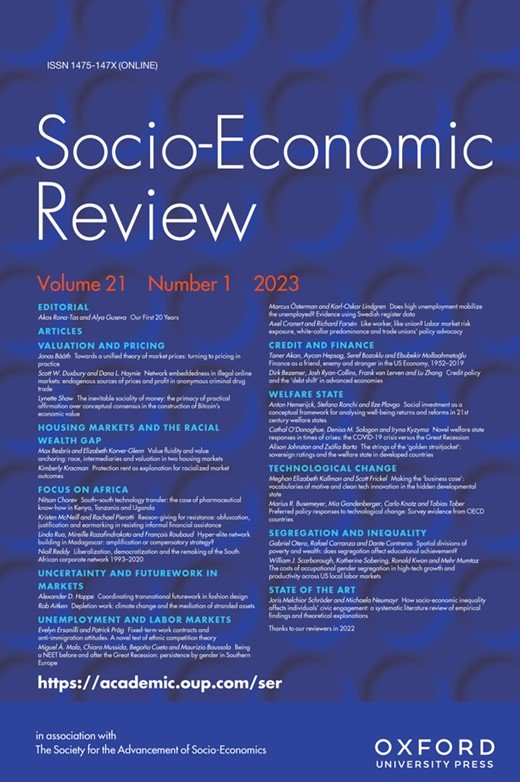
Network embeddedness in illegal online markets: endogenous sources of prices and profit in anonymous criminal drug trade

By Scott W. Duxbury and Dana L. Haynie

Although economic sociology emphasizes the role of social networks for shaping economic action, little research has examined how network governance structures affect prices in the unregulated and high-risk social context of online criminal trade. We consider how over-embeddedness—a state of excessive interconnectedness among market actors—arises from endogenous trade relations to shape prices in illegal online markets with aggregate consequences for short-term gross illegal revenue. Drawing on transaction-level data on 16 847 illegal drug transactions over 14months of trade in a ‘darknet’ drug market, we assess how repeated exchanges and closure in buyer– vendor trade networks nonlinearly influence prices and short-term gross revenue from illegal drug trade. Using a series of panel models, we find that increases in closure and repeated exchange raise prices until a threshold is reached upon which prices and gross monthly revenue begin to decline as networks become over-embedded. Findings provide insight into the network determinants of prices and gross monthly revenue in illegal online drug trade and illustrate how network structure shapes prices in criminal markets, even in anonymous trade environments.

Socio-Economic Review, 2023, Vol. 21, No. 1, 25–50

How police body-worn cameras can facilitate misidentification of domestic and family violence victims as offenders

By  Iliadis Mary, Harris Bridget, Vakhitova Zarina, Woodlock Delanie, Flynn Asher, Tyson Danielle

Police body-worn camera (BWC) technologies—affixed to a vest, sunglasses or cap—are deployed by all Australian police agencies, including in frontline responses to domestic and family violence (DFV). This paper presents the findings from the first Australian study focused on how women DFV victim-survivors view and experience BWCs in police call-outs and legal proceedings. Informed by a national survey of 119 victim-survivors, it explores two key concerns relating to the potential consequences of BWC footage: (1) it may facilitate misidentification of the primary aggressor, and (2) perpetrators may use the BWC to present (false) evidence of themselves as blameless. 

Australia, Australian Institute of Criminology. 2024, 15pg

Online Fraud: What does the public think?

By Amber Evans, Strategy & Insight Manager | Fernanda Reynoso-Serna, Analyst | Freya Smith, Analyst | Dr Ellie Brown, Head of Strategy | Sophie Davis

Most people are more worried about being affected by online fraud than other crimes, such as knife crime, burglary and sexual offences, according to a new large-scale survey – which also highlights the emotional impact of being an online fraud victim. The research, funded by the Dawes Trust, was based on a nationally representative sample of over 3,313 adults across England and Wales as part of a survey conducted by data organisation WALR. The vast majority of those polled, 92%, said online fraud was a very big or quite big problem in the UK. When asked what crimes they were most worried about being affected by, 55% said online fraud, 44% burglary and 47% knife crime. The poll also found that younger people (aged 18-34) were most likely to be affected by online fraud, with 32% reporting having been a victim in the last twelve months compared to 16% of over-35s. However, half of those questioned believed the elderly were most at risk. Of those who had been victims of online fraud: 20% said their physical health had suffered, 32% reported a psychological impact, 42% were affected financially, 47% experienced an emotional impact, including feeling embarrassed, angry or ashamed. 23% of all victims said they had experienced anxiety, 12% experienced disturbed sleep and 11% experienced depression as a result of the online fraud. The survey also shows that just over half of victims reported the fraud to either the police or Action Fraud. Victims were more likely to contact their bank (41%) than to go to the police (32%) or Action Fraud (28%), the UK’s national fraud reporting centre.

London: Crest Advisory, 2023. 32p.

Potential impact of eliminating illicit trade in cigarettes: a demand-side perspective 

By Mark Goodchild , Jeremias Paul, Roberto Iglesias, Annerie Bouw, Anne-Marie Perucic

Background The Protocol to Eliminate Illicit Trade in Tobacco Products (the Protocol) entered into force in September 2018, and commits Parties to implement a package of measures to combat this global problem. The aim of this study is to assess the potential impact of eliminating illicit cigarettes on consumption, use and tax revenues. Methods We identified 36 countries where an independent (non-industry sponsored) study of the illicit cigarette market was available. We developed a conceptual framework for describing how the elimination of illicit cigarettes might impact on demand (consumption and use) and applied this framework to our sample of countries to assess the impact of eliminating illicit cigarettes across different settings. Findings Illicit cigarettes account on average for 11.2% of the market in these 36 countries. The elimination of illicit cigarettes would reduce total cigarette consumption by 1.9% across these countries. The decrease in ’group A’ countries—where illicit cigarettes are >15% of the market—would average 4.1%. The smoking rate would decrease by 1.0% in relative terms including by 2.2% in group A countries. Tax revenues from the legal sale of cigarettes would increase by 11.2% including by 25.1% in group A countries. Conclusions The illicit cigarette market reflects a complex interplay between supply and demand, with an array of different country conditions. Regardless of the situation, our study highlights the contribution that the elimination of illicit trade can make to tobacco control through demand reduction while at the same time generating significant tax revenues. 

Switzerland: World Health Organization, 2020, 8p.

De-Linking Tobacco Taxation and Illicit Trade in Africa

By Max Gallien

Africa has become a growth market for the tobacco industry, as people in the global North have started to smoke much less. The prevalence of smoking in Europe since the 1990s has dropped by one-third, and even further in the Americas (44%). Over the same period, smoking levels in Africa have increased by over 50% (Reitsma et al. 2017).1 Africa’s youth, in particular, is overrepresented among new smokers (N. Ramanandraibe and A.E. Ouma 2011; Blecher and Ross 2013). This is part of a wider shift in tobacco consumption from richer to poorer countries – it has been projected that 6.8 million of a global total of 8.3 million tobacco-related deaths will occur in low- and middle-income countries by 2030 (Mathers and Loncar 2006). Africa is not only facing rising health care costs connected to tobacco consumption, but also the loss of lives, particularly men, as a consequence of smoking-related diseases.

Brighton, UK: Institute of Development Studies, Summary Brief Number 22, 2020. 8p.

No Smoking Gun: Tobacco Taxation and Smuggling in Sierra Leone

By Max Gallien , Giovanni Occhiali

Objective: To evaluate the common industry claim that higher tobacco taxation leads to higher levels of smuggling, particularly in a limited state capacity setting. Design:This paper evaluates the effects of a tobacco tax increase in Sierra Leone on smuggling by using gap analyses. Its models are based on multiple rounds of the Demographic and Health Survey and customs data as well as newly collected data on cigarette prices. Results: The paper shows that despite a substantial increase in cigarette taxation, and despite the absence of other formal tobacco control policies, smuggling has not increased in Sierra Leone. Its primary model shows a decrease in cigarette smuggling by 16.74% following the tax increase, alongside a decrease in cigarette consumption more widely and an increase in tax revenue. Conclusions: By presenting a low income and lower enforcement capacity case study, this paper provides novel and critical evidence to the debate on the tax smuggling link. Furthermore, it points to new questions on how states in these contexts can limit cigarette smuggling.

Published Online First: Tobacco Control, 02 June 2022, DOI:10.1136/tobaccocontrol-2021-057163

Channeling Contraband: How States Shape International Smuggling Routes

By Max Gallien and Florian Weigand

Although  smuggling is  commonly  assumed to happen  in remote and difficult-to-access borderlands, in reality, smuggling is most prevalent in areas that states tightly control, including formal border crossings. To understand this puzzle, this article explores the relationship between states and smugglers at international borders. Based on extensive empirical research in various borderlands in North Africa and Southeast Asia, it argues that different kinds of smugglers prefer different types of relationships with the state. The article outlines six ideal types of such relationships. It contends that these types of relationships are the dominant factor in how different smuggling networks choose routes along a border. The findings have implications for our understanding of smuggling and policies that aim at addressing smuggling, especially regarding the effects of border fortifications and corruption prevention. bordFor over 400 kilometers, the border between Tunisia and Libya stretches across deserts, lakes, and mountains. The border provides a source of income for one of the largest smuggling economies in North Africa, with trading in everything from gasoline, fabrics, and electronics to cigarettes and narcotics. Its length and terrain make the border difficult to control for both Tunisian and Libyan security forces, and offer plenty of opportunities for the thousands of smugglers who cross the border everyday to stay undetected or leverage their superior knowledge of the terrain in high-speed car chases with soldiers and customs officers. And yet, most of these smugglers have chosen two particular points in the border to conduct their business: the formal border crossings as Ras Jedir and Dhiba. In fact, differ-ent smuggling networks prefer different routes: while those trading in mobile phones, bananas, or alcohol have typically preferred to play cat and Mouse.

SECURITY STUDIES, 2021, VOL. 30, NO. 1, 79–106

Patterns of Symbolic Violence: The Motif of ‘Gypsy’ Child-theft across Visual Media

By Mladenova, Radmila

Drawing on a number of paradigmatic works of art, the book explores the motif of ‘gypsy’ child-theft and its visualisations. The analytical focus is on the colour coding of bodies in texts and images and their racialised/anti-gypsy uses. Offering a comprehensive survey of the motif’s adaptations to different visual media, the author elaborates on its multiple layers of meaning and functions. The analysis starts with a critical review of Cervantes’ tale “La gitanilla”, moving through seventeenth-century Dutch history painting to take a cursory look at nineteenth-century printed images, and end up with an annotated filmography of 49 cinematic works.

Heidelberg: Heidelberg University Publishing (heiUP), 2019. 122p.

Economic Crime and Illicit Finance in Russia’s Occupation Regime in Ukraine

By David Lewis

Despite Ukraine's ongoing counter-offensive, in September 2023 Russia still controlled around 17% of Ukrainian territory, an area roughly the size of Denmark. Russia's occupation of these Ukrainian territories relied primarily on repression and violence, but economic levers also played an important role in consolidating Russian rule. This paper details Russia's illicit economic activity in the occupied territories and calls for more international attention to this aspect of Russia's invasion. Since Russia occupied large parts of south-eastern Ukraine in March 2022, it has worked rapidly to incorporate these regions into Russia's economic and financial system. Key elements in this 'economic occupation' include: • The seizure of many Ukrainian businesses and assets. The occupation authorities 'nationalised' many companies and re-registered them as Russian businesses with new management. • The imposition of the Russian currency, financial and tax system, and the forced closure of Ukrainian banks. • The forcible takeover of farms or pressure on farmers to cooperate with the occupation authorities. Russian officials oversaw the illegal export of Ukrainian grain from the occupied territories. • The reconstruction of cities such as Mariupol, the city destroyed by Russian forces in spring 2022, in a multi-billion-dollar government programme that is profiting well-connected Russian companies. These acts were all illegal under Ukrainian law and some may constitute potential war crimes under international law. There should be more attention paid to these economic crimes internationally – with clear warnings for Russian business about the consequences under international law of seizing Ukrainian businesses and assets. Although international sanctions have targeted many officials in the Russian occupation structures, the approach should be more coordinated and systematic to raise the costs of Russian occupation. More international attention now would also assist in eventual reintegration and reconstruction of these regions. For example, a database of business seizures and economic crimes in the occupied territories would help to resolve legal issues and ensure business restitution in the aftermath of the war, while also serving as a potential basis for sanctions and eventual prosecutions. The economic aspects of occupation also raise complex questions of transitional justice for those who lived under Russian occupation. Ukrainian society is discussing how to define and respond to acts of collaboration in the occupied territories. International experience could help to inform legal and political solutions that meet the needs of justice but also seek to unite post-war Ukrainian society  

SOC ACE Research Paper No 20. 

Birmingham, UK: University of Birmingham , 2023. 43p.

Online Fraud Schemes: A Web of Deceit

By Europol

Europol's spotlight report on online fraud highlights that online fraud schemes represent a major crime threat in the EU and beyond as online fraudsters generate multiple billions in illicit profits every year to the detriment of individuals, companies and public institutions.
Fraud schemes are perpetrated with the intention of defrauding victims of their assets using false and deceitful pretexts, or with the use of cyberattack techniques. This results in the voluntary or involuntary transfer of personal or business information, money or goods to criminals.

From ATM attacks and account takeovers to skimming and shimming, the wide availability of crime-as-a-service has made this criminal activity more accessible. Criminals show great versatility and adaptability in adjusting their modi operandi and modelling their narratives around socio-economic trends as well as current crises, taking advantage of emergency situations to create charity scams.

This report is an accompanying module to Europol’s IOCTA, which aims at providing and understanding of modern cybercrime to equip law enforcement with the knowledge to tackle it and keep people safe. It delves into the complexities of online fraud schemes and sheds light on how different schemes overlap and victimise targets multiple times.

Key findings:

Relay attacks targeting payment card chips (shimming) are increasingly detected.

Charity scams leveraging emergency situations have increased. This was visible during the COVID-19 pandemic, the Russian invasion of Ukraine and the earthquake in Türkiye and Syria.

Logical attacks on ATMs still occur in the EU, with criminal networks testing ways to exploit new vulnerabilities at the ATMs they target.

Fraudsters display sophisticated modi operandi, which are usually a combination of different types of fraud. Victims of fraud are often re-victimised within the same criminal scheme.

Social engineering techniques that fraudsters use have been growing in complexity. Criminals adapt their techniques according to the profile of the victim and the typology of fraud.

Spotlight Series Report.

The Hague: EUROPOL, 2023. 20p.

social sciencesRead-Me.Org
Sexual victimisation, peer victimisation, and mental health outcomes among adolescents in Burkina Faso: a prospective cohort study

By Kirsty S Lee, Dieter Wolke, Till Bärnighausen, Lucienne Ouermi, Mamadou Bountogo, Guy Harling

Background Sexual victimisation and peer victimisation are pervasive and increase risk for mental illness. Longitudinal studies that compare their unique and cumulative effects are scarce and have been done predominantly in highincome countries. The aims of this study were to examine the prevalence, prospective associations, and gender differences in sexual and peer victimisation and mental health in a low-income, African setting. Methods In this prospective cohort study, data were obtained from the 2017 ARISE Adolescent Health Study, a population-representative, two-wave, prospective study of adolescents (aged 12–20 years) from Burkina Faso. A random sample of adolescents was drawn from ten villages, selected to capture the five main ethnic groups, and from one of the seven sectors of Nouna town, Burkina Faso, at two timepoints: Nov 12 to Dec 27, 2017, and Nov 15 to Dec 20, 2018. Standardised interviews were conducted in French or a local language by trained researchers. We measured victimisation exposure as sexual victimisation, peer victimisation, and polyvictimisation, using lifetime frequency of exposure, and we measured mental health symptoms and disorders using the Kutcher Adolescent Depression Scale, the Primary Care Post-Traumatic Stress Disorder screen IV and 5, and a question on lifetime selfharm and number of incidents in the past year. We calculated prevalence of victimisation and mental health symptoms and disorders at the two timepoints, and we used lifetime victimisation at the first timepoint to predict mental health at the second timepoint using logistic and negative binomial regressions. Gender differences were examined using interaction terms. Findings Of 2544 eligible adolescents, 1644 participated at time 1 and 1291 participated at time 2. The final sample with data at both timepoints included 1160 adolescents aged 12–20 years (mean 15·1, SE 0·2), of whom 469 (40·4%) were girls and 691 (59·6%) were boys. The majority ethnic group was Dafin (626 [39·1%]), followed by Bwaba (327 [20·5%]), Mossi (289 [16·0%]), Samo (206 [13·0%]), Peulh (166 [9·7%]), and other (30 [1·6%]). After survey weight adjustment, sexual victimisation (weighted percentages, time 1, 256 [13·8%] of 1620; time 2, 93 [7·2%] of 1264) and peer victimisation (weighted percentages, time 1, 453 [29·9%] of 1620; time 2, 272 [21·9%] of 1264) were common, whereas polyvictimisation was more rare (weighted percentages, time 1, 116 [6·6%] of 1620; time 2, 76 [5·7%] of 1264). Longitudinally, sexual victimisation was associated with probable clinical disorder (adjusted odds ratio 2·59, 95% CI 1·15–5·84), depressive symptoms (adjusted incidence rate ratio [aIRR] 1·39, 95% CI 1·12–1·72), and symptoms of post-traumatic stress disorder (aIRR 2·34, 1·31–4·16). Peer victimisation was associated with symptoms of posttraumatic stress disorder (aIRR 1·89, 1·13–3·17) and polyvictimisation was associated with depressive symptoms (aIRR 1·34, 1·01–1·77). Girls reported more sexual victimisation (weighted percentages, 130 [17·3%] of 681 vs 126 [11·4%] of 939), boys reported more peer victimisation (weighted percentages, 290 [33·1%] of 939 vs 163 [25·2%] of 681), and there was a significant interaction between lifetime victimisation and gender for probable clinical disorder (F [degrees of freedom 7, sample 376] 2·16; p=0·030). Interpretation Sexual and peer victimisation were common in the study setting and increased risk for mental health problems. Adolescent girls who have been sexually victimised are especially at risk of mental health problems. Interventions targeting sexual and peer violence in low-income settings are needed.  

Lancet Psychiatry 2024; 11: 134–42

Killer Fandom: Fan Studies and the Celebrity Serial Killer

By Judith May Fathallah

Killer Fandom is the first long-form treatment of serial killer fandom. Fan studies have mostly ignored this most moralized form of fandom, as a stigmatized Bad Other in implicit tension with the field’s successful campaign to recuperate the broader fan category. Yet serial killer fandom, as Judith May Fathallah shows in the book, can be usefully studied with many of the field’s leading analytic frameworks. After tracing the pre-digital history of fans, mediated celebrity, and killers, Fathallah examines contemporary fandom through the lens of textual poaching, affective community, subcultural capital, and play. With close readings of fan posts, comments, and mashups on Tumblr, TikTok, and YouTube, alongside documentaries, podcasts, and a thriving “murderabilia” industry, Killer Fandom argues that this fan culture is, in many ways, hard to distinguish from more “mainstream” fandoms. Fan creations around Aileen Wuornos, Jeffrey Dahmer, Ted Bundy, and Richard Ramirez, among others, demonstrate a complex and shifting stance toward their objects—marked by parodic humor and irony in many cases. Killer Fandom ultimately questions—given our crime-and violence-saturated media culture—whether it makes sense to set Dahmer and Wuornos “fans” apart from the rest of us.

Bethlehem, PA: Media Studies Press, 2023. 259p.