Open Access Free Library
Fiction+Mediajpg.jpg

FICTION and MEDIA

CRIME AND MEDIA — TWO PEAS IN A POD

Posts in social sciences
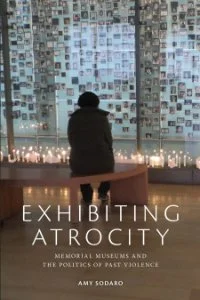
Exhibiting Atrocity: Memorial Museums and the Politics of Past Violence

By Amy Sodaro 

Through a global comparative approach, Amy Sodaro uses in-depth case studies of five exemplary memorial museums that commemorate a range of violent pasts and allow for a chronological and global examination of the form: the US Holocaust Memorial Museum in Washington, DC; the House of Terror in Budapest; the Kigali Genocide Memorial Centre in Rwanda; the Museum of Memory and Human Rights in Santiago, Chile; and the National September 11 Memorial Museum in New York. Together, these case studies illustrate the historical emergence and global spread of the memorial museum and show how this new cultural form of commemoration is intended to be used in contemporary societies around the world emerging from widely divergent forms of political violence.

New Brunswick, NJ: Rutgers University Press, 2018. 227p.

Making the White Man's West: Whiteness and the Creation of the American West

By Jason E. Pierce

In the early nineteenth century, critics like Zebulon Pike and Washington Irving viewed the West as a “dumping ground” for free blacks and Native Americans, a place where they could be segregated from the white communities east of the Mississippi River. But as immigrant populations and industrialization took hold in the East, white Americans began to view the West as a “refuge for real whites.” The West had the most diverse population in the nation with substantial numbers of American Indians, Hispanics, and Asians, but Anglo-Americans could control these mostly disenfranchised peoples and enjoy the privileges of power while celebrating their presence as providing a unique regional character. The first comprehensive study to examine the construction of white racial identity in the West, Making the White Man’s West shows how these two visions of the West shaped the history of the region and influenced a variety of contemporary social issues in the West today. 

Boulder: University Press of Colorado, 2016. 323p.

Performing Interpersonal Violence Court, Curse, and Comedy in Fourth-Century BCE Athens

By  Werner Riess

This book offers the first attempt at understanding interpersonal violence in ancient Athens. While the archaic desire for revenge persisted into the classical period, it was channeled by the civil discourse of the democracy. Forensic speeches, curse tablets, and comedy display a remarkable openness regarding the definition of violence. But in daily life, Athenians had to draw the line between acceptable and unacceptable behavior. They did so by enacting a discourse on violence in the performance of these genres, during which complex negotiations about the legitimacy of violence took place. Since discourse and reality were intertwined and the discourse was ritualized, actual violence might also have been partly ritualized. By still respecting the on-going desire to harm one’s enemy, this partial ritualization of violence helped restrain violence and thus contributed to Athens’ relative stability.

Berlin; Boston: Walter de Gruyter GmbH & Co,  2012.  492p.

Homicide in American Fiction, 1798–1860: A Study in Social Values

By David Brion Davis

Homicide has many social and psychological implications that vary from culture to culture and which change as people accept new ideas concerning guilt, responsibility, and the causes of crime. A study of attitudes toward homicide is therefore a method of examining social values in a specific setting. Homicide in American Fiction, 1798–1860 is the first book to contrast psychological assumptions of imaginative writers with certain social and intellectual currents in an attempt to integrate social attitudes toward such diverse subjects as human evil, moral responsibility, criminal insanity, social causes of crime, dueling, lynching, the "unwritten law" of a husband's revenge, and capital punishment. In addition to works of literary distinction by Cooper, Hawthorne, Irving, and Poe, among others, Davis considers a large body of cheap popular fiction generally ignored in previous studies of the literature of this period. This is an engrossing study of fiction as a reflection of and a commentary on social problems and as an influence shaping general beliefs and opinions.

Ithaca, NY: Cornell University Press, 196f 367p.

Durkheim and the Internet: On Sociolinguistics and the Sociological Imagination

By Jan Blommaert

Sociolinguistic evidence is an undervalued resource for social theory. In this book, Jan Blommaert uses contemporary sociolinguistic insights to develop a new sociological imagination, exploring how we construct and operate in online spaces, and what the implications of this are for offline social practice. Taking Émile Durkheim’s concept of the ‘social fact’ (social behaviours that we all undertake under the influence of the society we live in) as the point of departure, he first demonstrates how the facts of language and social interaction can be used as conclusive refutations of individualistic theories of society such as 'Rational Choice'. Next, he engages with theorizing the post-Durkheimian social world in which we currently live. This new social world operates 'offline' as well as 'online' and is characterized by 'vernacular globalization', Arjun Appadurai’s term to summarise the ways that larger processes of modernity are locally performed through new electronic media. Blommaert extrapolates from this rich concept to consider how our communication practices might offer a template for thinking about how we operate socially. Above all, he explores the relationship between sociolinguistics and social practice In Durkheim and the Internet, Blommaert proposes new theories of social norms, social action, identity, social groups, integration, social structure and power, all of them animated by a deep understanding of language and social interaction. In drawing on Durkheim and other classical sociologists including Simmel and Goffman, this book is relevant to students and researchers working in sociolinguistics as well as offering a wealth of new insights to scholars in the fields of digital and online communications, social media, sociology, and digital anthropology.

London; New York: Bloomsbury Academic, 2018. 136p.

Sex Scene:Media and the Sexual Revolution

Edited by Eric Schaefer

Sex Scene suggests that what we have come to understand as the sexual revolution of the late 1960s and early 1970s was actually a media revolution. In lively essays, the contributors examine a range of mass media—film and television, recorded sound, and publishing—that provide evidence of the circulation of sex in the public sphere, from the mainstream to the fringe. They discuss art films such as I am Curious (Yellow), mainstream movies including Midnight Cowboy, sexploitation films such as ;Mantis in Lace, the emergence of erotic film festivals and of gay pornography, the use of multimedia in sex education, and the sexual innuendo of The Love Boat. Scholars of cultural studies, history, and media studies, the contributors bring shared concerns to their diverse topics. They highlight the increasingly fluid divide between public and private, the rise of consumer and therapeutic cultures, and the relationship between identity politics and individual rights. The provocative surveys and case studies in this nuanced cultural history reframe the "sexual revolution" as the mass sexualization of our mediated world.

Durham, NC: Duke University Press, 2014. 481p.

The Propagation of Misinformation in Social Media: A Cross-platform Analysis

Edited by Richard Rogers

There is growing awareness about how social media circulate extreme viewpoints and turn up the temperature of public debate. Posts that exhibit agitation garner disproportionate engagement. Within this clamour, fringe sources and viewpoints are mainstreaming, and mainstream media are marginalized. This book takes up the mainstreaming of the fringe and the marginalization of the mainstream. In a cross-platform analysis of Google Web Search, Facebook, YouTube, Reddit, Twitter, Instagram, 4chan and TikTok, we found that hyperpartisan web operators, alternative influencers and ambivalent commentators are in ascendency. The book can be read as a form of platform criticism. It puts on display the current state of information online, noting how social media platforms have taken on the mantle of accidental authorities, privileging their own on-platform performers and at the same time adjudicating between claims of what is considered acceptable discourse.

Amsterdam: Amsterdam University Press, 2023. 246p.

The Message is Murder: Substrates of Computational Capital

By Jonathan Beller

The Message is Murder analyses the violence bound up in the everyday functions of digital media. At its core is the concept of 'computational capital' - the idea that capitalism itself is a computer, turning qualities into quantities, and that the rise of digital culture and technologies under capitalism should be seen as an extension of capitalism's bloody logic. Engaging with Borges, Turing, Claude Shannon, Hitchcock and Marx, this book tracks computational capital to reveal the lineages of capitalised power as it has restructured representation, consciousness and survival in the twentieth and twenty-first centuries. Ultimately The Message is Murder makes the case for recognising media communications across all platforms - books, films, videos, photographs and even language itself - as technologies of political economy, entangled with the social contexts of a capitalism that is inherently racial, 

London: Pluto Press, 2017. 225p.

Women and Crime in Post-Transitional South African Crime Fiction: A Study of Female Victims, Perpetrators and Detectives

By Sabine Binder

In this ground-breaking study, Sabine Binder analyses the complex ways in which female crime fictional victims, detectives and perpetrators in South African crime fiction resonate with widespread and persistent real crimes against women in post-apartheid South Africa. Drawing on a wide range of crime novels written over the last decade, Binder emphasises the genre’s feminist potential and critically maps its political work at the intersection of gender and race. Her study challenges the perception of crime fiction as a trivial genre and shows how, in South Africa at least, it provides a vibrant platform for social, cultural and ethical debates, exposing violence, misogyny and racism and shedding light on the problematics of law and justice for women faced with crime. Readership: All interested in crime fiction and its gender/racial political potential, its cultural relevance, its ethics and aesthetics, in South Africa and beyond.

Leiden, NETH: Brill. 2020. 252p.

Theatres Of Human Sacrifice: From Ancient Ritual to Screen Violence

By Mark Pizzato

From the Preface: Why do humans perform acts of violence for a watching audience? This book

explores the performance of violence in various cultures, from ancient human and animal sacrifices to modern sports and cinema, through psychoanalytic theories and theatrical paradigms. How is the sublimation of human sacrifice today, on sports fields and movie screens, like and unlike actual bloodshed in prior cultures? Does it create a current community of ritual belief in the divine powers of mythic heroes and demons? What effects might melodramatic violence have on a mass audience--with purely good and evil forces battling apocalyptically onscreen especially after September 11, 2001, and the subsequent "war on terrorism" in our new millennium? Is a fundamental catharsis of fear and desire, of terrorist paranoia and capitalist greed, still pos- sible today, through complex characters and tragic violence, involving our mass-media warriors and godlike stars?

NY. SUNY Press. 2005. 260p. CONTAINS MARK-UP

Entertaining Crime: Television Reality Programs

Edited By Mark Fishman and Gray Cavender

From the cover: In eleven original studies by social scientists, this is the first volume to focus on television reality crime programming as a genre. Contributors address such questions as: why do these programs exist; what larger cultural meaning do they have; what effect do they have on audiences; and what do they indicate about crime and justice in the late twentieth century? Adaptable at both undergraduate and graduate levels, Entertaining Crime wil contribute to discussions of crime and the media, as well as crime in relation to other issues, such as gender, race/ethnicity, and fear of crime.

NY. Aldine De Gruyter. 1998. 208p. CONTAINS MARK-UP

Murder Ballads: Exhuming the Body Buried beneath Wordsworth's Lyrical Ballads

By David John Brennan

In 1798, William Wordsworth and Samuel Taylor Coleridge were engaged in a top secret experiment. This was not, as many assume, the creation of a book of poetry. A book emerged, to be sure—the landmark Lyrical Ballads. But in Murder Ballads, David John Brennan posits that the two poets were in fact pursuing far different ends: to birth from their poems a singular, idealized Poet. Despite their success, such Frankensteinian pursuits proved rife with consequence for the men. Doubts and questions plagued them: What does it mean to be a poet if your work is not your own? Who is best fit to lay claim to a parcel of poetic property that was collaboratively crafted and bequeathed to a fictitious Poet? How does one kill a Poet born of one’s own hand? Blending critical examination with jocular playlets-in-verse featuring the authors of the two books in baffled conversation.

Brooklyn, NY: Punctum Books, 2016. 160p.

Psychology in Edgar Allan Poe

Edited by Gerardo Del Guercio

This collection offers six critical essays on the topic of psychology in Edgar Allan Poe. It came together as a response to a visible absence of this subject in recent scholarship. The volume presents Edgar Allan Poe as one of the pioneers in psychology, who often anticipated major theoretical trends and ideas in psychology in his incessant explorations of the relationship between behavior and the psyche. Scrutinizing serial killer narratives, obsessive narratives through Jungian unconscious, Lacanian Das Ding, doppelg angers, intersubjectivity, and the interrelationship between the material world and imaginative faculties, the essays reveal the richness and the complexity of Poe's work and its pertinence to contemporary culture.

 Berlin: Logos Verlag Berlin,  2019. 168p.

Gangsters and G-Men on Screen

By Gene. D. Phillips

From the Introduction: “….In sum, this book presents an in-depth discussion of several gangster films, some of which are familiar members of the gangster genre, like John: Huston’s The Asphalt Jungle, and some that deserve to be better known, for example, Stephen Frears’s The Grifters. That a few meaningful books on the gangster film have appeared throughout the years demonstrates the continued interest in the genre….in this volume, I include some overlooked crime movies that deserve more attention than they have received. In addition, I have interviewed film directors, as well as other artists and technicians, associated with the films I treat. I also focus on some more recent movies, along with some from the classic period. These later movies are reminders that the gangster genre is still with us and is not going away.

NY. Rowman & Littlefield. 2014. 204p. CONTAINS MARK-UP

American Gangster Cinema: From Little Caesar to Pulp Fiction

By Fran Mason

From the preface: “The film gangster, therefore, represents a seminal figure in the history of twentieth-century culture, forming the focus for a range of tensions that have dominated the discourses of industrialised society. These range from the role of the individual within an increasingly rationalised society, the impact of urban space (and its association with the fracturing discourses of modernity and postmodernity), the tension between tradition and the modern, the opposition between labour and pleasure, and particularly the relationship between ideology and freedom.

NY. Palgrave Macmillan. 2002. 203p. CONTAINS MARK-UP.

The Elements of Style

By William Strunk Jr.

"The Elements of Style" is a classic style guide for writing in the English language, originally written by William Strunk Jr. in 1918. The book has since been revised and expanded by E.B. White, and has become a standard reference book for writers, editors, and publishers.

"The Elements of Style" is divided into sections that cover different aspects of writing, including grammar, style, usage, and composition. The book emphasizes the importance of clarity, concision, and simplicity in writing, and provides practical advice on how to achieve these qualities.

The book is notable for its concise and accessible writing style, as well as its practical examples and exercises. It has been widely adopted as a textbook in English composition courses, and has been recommended by numerous writers and editors as a valuable resource for anyone interested in improving their writing skills.

Despite being over 100 years old, "The Elements of Style" remains relevant and influential today, and is considered a must-read for anyone interested in improving their writing.

NY. Longman. 2000.

The King's English: A Guide to Modern Usage

By Kingsley Amis

From the cover: Throughout his notable career as a novelist, poet and literary critic, Kingsley Amis was often concerned — the less understanding some might say obsessed--with the use and abuse of the English language. Do we know what the words we employ really mean? Do we have the right to use them fi we don't? Should an "exciting" new program be allowed to "hit” your television screen? When is it acceptable to split an infinitive? And just when is one allowed to begin a sentence with "and"? The enemies of fine prose may dismiss such issues as tiresome and pedantic, but Kingsley Amis, like all great novelists, depended upon these very questions to separate the truth from the lie, both in literature and in life. A Parthian shot from one of the most important figures in postwar British fiction, this volume represents Amis's last word on the state of the language. More frolicsome than Fowler's Modern Usage, lighter than the Oxford English Dictionary, and replete with the strong opinions that have made Amis so popular- and so controversial….”

NY. St. Martin’s Press. 1997. 272p.

Chicago Manual of Style 13th Edition

Prepared by the Editorial Staff of the University of Chicago Press.

For over seventy-live years the University of Chicago Press Manual of Style has been the standard reference tool for authors, editors, copywriters, and proofreaders. Updated many times since 1906, it now goes into its thirteenth edition—the first revision since 1969, and the first to introduce a change in title. Bowing to what has become nearly universal usage, we now call the Manual what everybody else calls it. The Chicago Manual of Style—or, for short, The Chicago Manual.

Two pervasive features characterize the present edition: it reflects the impact of the new technology on the entire editing and publishing process, and it spells out, in greater detail and with many more examples, the procedures with which it deals. It is, in short, much more a “how-to” book for authors and editors than was its predecessor. In chapter 2, on manuscript preparation and copyediting, for example, new sections have been added on how to mark a manuscript and how to mark type specifications on a script. Chapter 12 (“Tables”), completely rewritten, begins with advice on how to make a table from raw data. Chapters 15 through 17, on documentation, have been reorganized and greatly expanded, offering many more alternative methods of citation and a wealth of examples. In chapter 18 (“Indexes”), clear step-by-step
procedures for the mechanics of index making are set forth. The terminology and methodology of technological advances (in word processing, computerized electronic typesetting, and the like) are reflected most prominently in chapter 20, “Composition, Printing, and Binding” (new to this edition), and in the Glossary. Other notable features of the present edition are chapter 4 (“Rights and Permissions”), rewritten in light of the new copyright law, and chapter 9 (“Foreign Languages”), which includes a new table of diacritics, a pinyin (Chinese) conversion chart, and data on several more languages.

Throughout, The Chicago Manual aims to give clear and straightforward guidelines for preparing and editing copy—with the emphasis on the sensible, the practical, and the economical. As did its predecessors, the thirteenth edition of the Manual states the style preferences of the University of Chicago Press and reflects the current practices and requirements of the great majority of American publishers.

Chicago. University of Chicago Press. 1982. 718p.

Hard-Boiled Crime Fiction and the Decline of Moral Authority

By Susanna Lee.

The cynical but kind-hearted detective is the soul of the classic hard-boiled story, that chronicle of world-weary urban pessimism. In Hard-Boiled Crime Fiction and the Decline of Moral Authority, Susanna Lee argues that this fiction functions as a measure for individual responsibility in the modern world and that it demonstrates the enduring status of individual conscience across a variety of cultural crises. In this major rethinking of the hard-boiled genre, Lee suggests that, whether in Los Angeles, New York, or Paris, the hard-boiled detective is the guardian of individual moral authority and the embodiment of ideals in a corrupt environment. Lee traces the history of the hard-boiled detective through the twentieth century and on both sides of the Atlantic (France and the United States), tying the idea of morality to the character model in nuanced, multifaceted ways. When the heroic model devolves, the very conceptual validity of individual moral authority can seem to devolve as well. Hard-Boiled Crime Fiction and the Decline of Moral Authority charts the evolution of that character model of the hard-boiled hero, the mid-century deterioration of his exemplarity, and twenty-first-century endeavors to resuscitate the accountable hero. The history of hard-boiled crime fiction tells nothing less than the story of individual autonomy and accountability in modern Western culture.

Columbus, OH: Ohio State University Press, 2016. 248p.

Fictions of the Bad Life: The Naturalist Prostitute and Her Avatars in Latin American Literature, 1880–2010

By Claire Solomon.

The first comprehensive and interdisciplinary study of the prostitute in Latin American literature, Claire Thora Solomon’s book The Naturalist Prostitute and Her Avatars in Latin American Literature, 1880–2010 shows the gender, ethnic, and racial identities that emerge in the literary figure of the prostitute during the consolidation of modern Latin American states in the late nineteenth century in the literary genre of Naturalism. Solomon first examines how legal, medical, and philosophical thought converged in Naturalist literature of prostitution. She then traces the persistence of these styles, themes, and stereotypes about women, sex, ethnicity, and race in the twentieth and twenty-first century literature with a particular emphasis on the historical fiction of prostitution and its selective reconstruction of the past.

Columbus, OH: Ohio State University Press, 2014. 223p.