
Open Access Publisher and Free Library
Fiction+Mediajpg.jpg

FICTION and MEDIA

CRIME AND MEDIA — TWO PEAS IN A POD

Posts in diversity
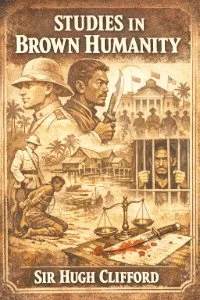
Studies in Brown Humanity: :Being Scrawls and Smudges in Sepia, White, and Yellow

By Hugh Clifford (Author), Graeme Newman (Introduction)

Studies in Brown Humanity by Sir Hugh Clifford is a striking collection of literary sketches drawn from the author’s experiences as a British colonial administrator in the Malay Peninsula during the late nineteenth century. Blending storytelling with observation, Clifford presents a series of vivid portraits of village life, local customs, personal conflicts, and dramatic encounters shaped by the social structures of colonial Southeast Asia. The narratives explore themes of honor, betrayal, justice, and authority, often focusing on moments when traditional Malay codes of conduct collide with the legal and moral framework imposed by the British colonial state.

Although written as literary sketches rather than formal social analysis, the book provides revealing insights into the ways communities understand wrongdoing and punishment. Clifford’s stories depict acts of violence, disputes over reputation, and conflicts between individuals and authority, illustrating how social norms, kinship ties, and communal expectations shape both criminal behavior and responses to it. In this sense, the work can be read not only as colonial literature but also as an early, informal contribution to the sociological study of crime and social control.

At the same time, Studies in Brown Humanity reflects the attitudes and assumptions of its imperial context. Clifford’s interpretations are filtered through the perspective of a European observer, and the book reveals much about the intellectual climate of the British Empire at the turn of the twentieth century. For modern readers, the volume is therefore both a vivid narrative of colonial life and a historical document that illuminates how crime, justice, and cultural difference were understood within the framework of empire.

Rich in atmosphere and dramatic detail, Clifford’s work remains valuable today as a window into the complex social worlds of colonial Southeast Asia and as a reminder of how early narratives about crime and punishment were shaped by the cultural and political conditions of their time.

Read-Me.Org Inc. New York-Philadelphia-Australia. 2026. 291p.

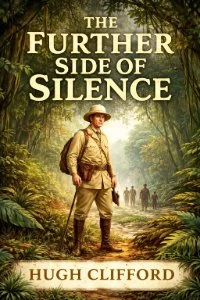
The Further Side of Silence

Sir Hugh Clifford, K. C. M. G.

The Further Side of Silence by Hugh Clifford is a collection of interrelated stories set in the Malay Peninsula during the late nineteenth century, a period when traditional Malay societies were increasingly encountering the expanding authority of the British Empire. Drawing heavily on Clifford’s own experiences as a colonial administrator in the region, the book portrays the lives, customs, conflicts, and moral dilemmas of the people who inhabited the jungles, villages, and royal courts of Malaya.

Through dramatic narratives and vivid descriptions of the tropical landscape, Clifford explores themes of loyalty, honor, justice, and power within a society shaped by ancient traditions and emerging colonial rule. His stories depict Malay chiefs, warriors, villagers, and forest peoples whose lives are entangled in political intrigue, personal rivalries, and the pressures of a changing world.

Part adventure literature and part social observation, the book offers modern readers a window into the cultural and political realities of Southeast Asia during a transformative historical moment. At the same time, it stands as an example of early twentieth-century colonial literature, reflecting both the fascination and the assumptions with which Western writers interpreted the societies they governed.

Read-Me.Org Inc. New York-Philadelphia-Australia. 2026. 198p.

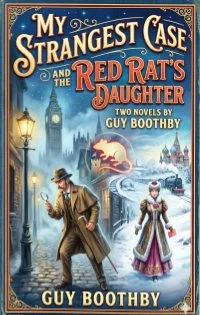
My Strangest Case & The Red Rat's Daughter


by Guy Boothby (Author), Colin Heston (Introduction)

To step into the world of Guy Boothby is to step into a whirlwind. At the turn of the 20th century, few authors could match Boothby's sheer velocity. A man who famously dictated his novels into a phonograph to keep pace with his imagination, Boothby was the architect of the "sensation novel," bridging the gap between the gothic mysteries of the past and the fast-paced thrillers of the future. This volume brings together two of his most gripping works: My Strangest Case and The Red Rat's Daughter. While different in setting, they share the quintessential Boothby hallmarks—exotic locales, high-stakes intrigue, and the relentless pursuit of justice (or survival).

The George Fairfax Mystery: My Strangest Case
In My Strangest Case, we are introduced to George Fairfax, a detective who stands in the long shadow of Sherlock Holmes but operates with a flair all his own. Originally published at the dawn of the 1900s, this story takes the reader from the high society of London to the rugged landscapes of the East. It is more than a simple whodunit; it is a globe-trotting adventure that explores the consequences of a long-hidden secret. Boothby’s talent for atmosphere ensures that the mystery feels as much a part of the environment as the characters themselves.

Intrigue in the East: The Red Rat's Daughter
The Red Rat's Daughter showcases Boothby’s obsession with the "Far East" and the political tensions of the era. Set against the backdrop of imperial Russia and the vast Siberian frontier, it is a tale of romance entangled with international conspiracy. The title itself—alluding to the mysterious "Red Rat"—promises a level of melodrama that Boothby delivers in spades. It captures a specific moment in literary history when the world felt both dangerously large and increasingly interconnected.
Why Boothby Matters Today
Reading Guy Boothby in the 21st century offers more than just nostalgia. It provides a window into the Victorian psyche:

  • The Pace: Boothby’s narrative drive is modern; he rarely lets a chapter end without a hook.

  • The Scope: He was an early pioneer of the "international thriller," refusing to keep his protagonists tethered to English soil.

  • The Style: His prose is unapologetically bold, designed to entertain the masses of the Edwardian era.

Whether you are a devotee of classic detective fiction or a newcomer to the "sensation" genre, these two novels represent a master storyteller at the height of his powers. Turn the page and prepare for a journey that spans continents and decades.

Read-Me.Org Inc. New York-Philadelphia-Australia. 2026. 350p.

The Beautiful White Devil

By Guy Boothby

The Beautiful White Devil (1896) by Guy Boothby stands as one of the most vivid artifacts of the fin-de-siècle adventure boom, a moment when popular fiction fused imperial restlessness, criminal romance, and the growing public appetite for charismatic anti-heroes. Boothby, already known for his flair for exotic atmospheres and high-velocity plotting, crafted in this novel a figure who upends the moral architecture of late-Victorian adventure: a brilliant, elusive woman outlaw who commands the seas with a mixture of theatrical bravado, disciplined intelligence, and a distinctly modern sensibility about power.

The novel’s pacing is unmistakably Boothby’s—rapid, cinematic, and unembarrassed in its desire to enthrall—but what gives The Beautiful White Devil enduring interest is its central inversion. Instead of the conventional male pirate-captain or gentleman-adventurer, Boothby builds his drama around a woman whose audacity challenges the gender codes of the 1890s. She is both a product of her age and a challenge to it, exploiting the cracks in a world structured by empire, commerce, and male authority. Her crimes unsettle not simply because they are daring, but because they are executed with a level of strategic clarity usually reserved, in Victorian fiction, for men. Even today, she reads less like a stock villain and more like the prototype of the morally ambiguous mastermind—an ancestor of the elegant thief, the tactical vigilante, and the charismatic rogue.

For modern readers, this fusion of high adventure and gender subversion gives the novel a surprisingly contemporary resonance. Boothby captures the anxieties and fascinations of an empire confronting its own vulnerabilities: the fragility of control over distant seas, the shifting status of women within public life, and the ambiguity of heroism in a world where law, power, and personal justice do not always align. The tension between official authority and individual agency—especially when wielded by someone who is not expected, in the Victorian imagination, to possess it—feels strikingly current in an age that still debates the ethics of resistance, the allure of transgression, and the politics of criminality.

As a narrative artifact for a modern edition, The Beautiful White Devil is more than an adventure story; it is a window into the performative spectacle of crime at the turn of the century and a reminder of how popular fiction often anticipates social transformation before “serious” literature acknowledges it. Boothby’s tale, with its blend of romance, danger, and social provocation, remains a compelling example of how the adventure novel can reveal the shadows and ambitions of the culture that produced it.

Read-Me.Org Inc. New York-Philadelphia-Australia. 2026. 216p.

The Grandissimes: A Story of Creole Life

By George W. Cable

The Grandissimes: A Story of Creole Life stands among the most vivid and penetrating literary portraits of early New Orleans—its tangled ancestries, its hierarchies of caste and color, and its rich cultural complexity at the turn of the nineteenth century. First published in 1880, George W. Cable’s novel announced the arrival of a distinctive Southern voice: one capable of blending romance, social critique, historical reconstruction, and an almost anthropological attention to the manners and moral contradictions of Creole society.

Cable, himself native to New Orleans, wrote at a moment when the American public was only beginning to recognize the significance of Louisiana’s unique heritage. The city had passed from French to Spanish control, then back to France, then suddenly into the hands of the United States through the Louisiana Purchase. In Cable’s imagination, this swirl of sovereignties—compounded by the interwoven legacies of France, Spain, Africa, the Caribbean, and Indigenous peoples—created a society unlike any other on the continent. The Grand–issimes dramatizes this world at a moment of profound transition, when old loyalties struggled against the pressures of Americanization, and when the boundaries of race, class, and honor were both fiercely guarded and constantly transgressed.

At its center stands the old Creole family of the Grandissimes, whose branches include both the proud white aristocracy and a free man of color who bears the same name—a blood relationship that must not, in respectable society, be spoken aloud. Through this intricate family history, Cable exposes the contradictions of slavery, the moral compromises of privilege, and the tragic limitations imposed on people of mixed heritage. Yet the novel is anything but a simple moral allegory. Its pages teem with humor, local color, memorable characters, and a richly textured atmosphere that evokes the city’s architecture, dialects, festivals, and customs with unmatched fidelity.

Cable’s realism—rare among Southern writers of his generation—caused both admiration and controversy. His depictions of racial injustice were received with anger in parts of the post-Reconstruction South, and his advocacy for Black civil rights would eventually drive him to relocate to the North. Today, his work is recognized as foundational: a precursor to later explorations of New Orleans identity by Kate Chopin, Lafcadio Hearn, Lyle Saxon, and many others.

This edition of The Grandissimes invites readers to rediscover Cable’s great novel not merely as an historical document but as a living work of art. Its themes of belonging, cultural collision, and the moral weight of inherited systems remain deeply resonant. In tracing the fate of a family—and of a city—at a crossroads, Cable offers a vision both critical and compassionate, illuminating a world whose complexities still echo through the streets of New Orleans today.

Read-Me.Org Inc. New York-Philadelphia-Australia. 2025. p.248.

The Inner Beams

By Afshin rad

The document The Inner Beams by Afshin Rad is a historical novel set in East Berlin during the final years of the Cold War, focusing on the brutal atmosphere created by the East German Ministry of State Security, the Stasi. The narrative combines political history with a deeply personal story, illustrating how authoritarianism corrodes ordinary lives. It opens with a preface explaining the power and reach of the Stasi, an organization that employed nearly a hundred thousand agents and twice as many informants under the chilling slogan that anyone who “thinks differently” is an enemy.

The story follows Nadia, a young, marginalized woman surviving on the fringes of society through prostitution while raising her daughter Maya. Despite her poverty, stigmatization, and abuse at the hands of neighbors and strangers, she displays resilience and a rebellious spirit. Her life becomes entangled with the violence and hypocrisy of both the state and the church. She is alternately vilified and desired, caught between accusations of being a spy and exploitation by priests who hide their own corruption.

As events unfold, Nadia becomes a victim of the Stasi’s cruelty. She is imprisoned, tortured, and left for dead, only to be saved by a compassionate old man who hides her and helps her plan to reclaim her daughter, who has been taken by Party officials. Their efforts culminate in a daring but tragic attempt to rescue the child from a powerful regime family. The old man sacrifices his life to protect Nadia, while she herself endures near-death encounters in the collapsing state.

Against the backdrop of the Berlin Wall’s fall and the chaos of 1989, Nadia’s fate is sealed in both tragedy and symbolic triumph. Though she dies violently, her memory and sacrifice become a posthumous inspiration. Her grave, once marked with disdain, is later reclaimed as a shrine to freedom, with an epitaph honoring her rebellious spirit.

The work blends history, fiction, and allegory to show how individuals—especially the marginalized and forgotten—resist oppression and become unwilling martyrs of liberty. Through Nadia’s story, the book captures the human cost of totalitarianism while leaving readers with a sense of dignity, defiance, and the enduring value of freedom.

Read-Me.Org Inc. New York-Philadelphia-Australia. 2025. 77p.

Round Up: The Stories Of Ring W. Lardner

By Ring W. Gardner (Author), Colin Heston (Preface) Format: Kindle Edition

Round Up gathers together the taut, muscular stories of Ring W. Lardner, a writer whose work bridges the divide between the mythologized West and its harsher, less forgiving realities. In these pages, Lardner is neither sentimental nor nostalgic. He strips the Western narrative to its barest elements, presenting us with a landscape that is both expansive and claustrophobic, and characters who are caught between the lure of freedom and the inevitability of fate.
Lardner’s contribution to the American short story lies in his ability to invest the familiar tropes of frontier life with psychological depth and moral ambiguity. His cowboys and ranchers are not mere archetypes; they are restless souls negotiating loyalty, isolation, and survival in a world where law and justice are provisional at best. The violence in these stories is never gratuitous—it is sudden, often senseless, and always carries a human cost. Lardner understands that the West was not only a place but also an idea, one that promised reinvention yet often delivered ruin.
What sets Lardner apart from many of his contemporaries is his prose: terse, unsentimental, yet charged with a quiet lyricism. His narratives move with the inevitability of a gathering storm, his dialogue as spare as the plains he describes. The result is a body of work that feels astonishingly modern in its refusal of easy resolutions.
In an era when the Western genre risks being dismissed as an artifact of popular culture, Round Up demands reconsideration. These are not mere adventure tales or moral fables. They are stories of a liminal world, where the boundaries between civilization and wilderness, justice and vengeance, myth and memory, blur and collapse. Lardner’s West is not simply the West that was; it is also the West as it continues to haunt the American imagination.

The Shaving Of Shagpat

By George Meredith (Author)

Set in an imaginary Oriental landscape, The Shaving of Shagpat follows the humble barber Shibli Bagarag, who embarks on an epic quest to perform the symbolic and dangerous act of shaving Shagpat—a powerful figure whose enchanted, unshorn hair represents the tyranny of falsehood and delusion over the minds of men. The narrative is populated with genies, enchantresses, magical cities, and perilous tasks, weaving a tapestry of adventure that operates on both the literal and allegorical planes. At first glance, The Shaving of Shagpat appears to be a whimsical fantasy—an exotic romance filled with the familiar trappings of Eastern fable. Yet beneath the surface lies a sophisticated commentary on the nature of truth, illusion, and the moral evolution of the individual. Meredith uses the framework of fantasy not merely to entertain but to craft a parable about the necessity of intellectual courage and the struggle for personal enlightenment.

For contemporary readers, the book remains a fascinating artifact of literary daring—a playful yet profound reminder that the struggle against illusion, whether in the form of personal vanity or societal falsehood, is both eternal and essential. In The Shaving of Shagpat, Meredith offers not only an enchanting fable but also an enduring meditation on the human condition.

Read-Me.Org Inc. New York-Philadelphia-Australia. 2025. 242p.

Transnational Black Dialogues: Re-Imagining Slavery in the Twenty-First Century

By Markus Nehl

Markus Nehl focuses on black authors who, from a 21st-century perspective, revisit slavery in the U.S., Ghana, South Africa, Canada and Jamaica. Nehl’s provocative readings of Toni Morrison’s »A Mercy«, Saidiya Hartman’s »Lose Your Mother«, Yvette Christiansë’s »Unconfessed«, Lawrence Hill’s »The Book of Negroes« and Marlon James’ »The Book of Night Women« delineate how these texts engage in a fruitful dialogue with African diaspora theory about the complex relation between the local and transnational and the enduring effects of slavery. Reflecting on the ethics of narration, this study is particularly attentive to the risks of representing anti-black violence and to the intricacies involved in (re-)appropriating slavery's archive.

Bielefeld, Germany: transcript Verlag, 2016. 213p.

5 Grams: Crack Cocaine, Rap Music, and the War on Drugs

By Dimitri A. Bogazianos

In 2010, President Barack Obama signed a law repealing one of the most controversial policies in American criminal justice history: the one hundred to one sentencing disparity between crack cocaine and powder whereby someone convicted of “simply” possessing five grams of crack—the equivalent of a few sugar packets—had been required by law to serve no less than five years in prison. In this highly original work, Dimitri A. Bogazianos draws on various sources to examine the profound symbolic consequences of America’s reliance on this punishment structure, tracing the rich cultural linkages between America’s War on Drugs, and the creative contributions of those directly affected by its destructive effects.

Focusing primarily on lyrics that emerged in 1990s New York rap, which critiqued the music industry for being corrupt, unjust, and criminal, Bogazianos shows how many rappers began drawing parallels between the “rap game” and the “crack game." He argues that the symbolism of crack in rap’s stance towards its own commercialization represents a moral debate that is far bigger than hip hop culture, highlighting the degree to which crack cocaine—although a drug long in decline—has come to represent the entire paradoxical predicament of punishment in the U.S. today.

UA Open. New York; London: NYU Press, 2011. 216p.

Murdering Masculinities: Fantasies of Gender and Violence in the American Crime Novel

by Gregory Forter

Though American crime novels are often derided for containing misogynistic attitudes and limiting ideas of masculinity, Greg Forter maintains that they are instead psychologically complex and sophisticated works that demand closer attention. Eschewing the synthetic methodologies of earlier work on crime fiction, Murdering Masculinities argues that the crime novel does not provide a consolidated and stable notion of masculinity. Rather, it demands that male readers take responsibility for the desires they project on to these novels.
Forter examines the narrative strategies of five novels--Hammett's The Glass Key, Cain's Serenade, Faulkner's Sanctuary, Thompson's Pop. 1280, and Himes's Blind Man with a Pistol--in conjunction with their treatment of bodily metaphors of smell, vision, and voice. In the process, Forter unearths a "generic unconscious" that reveals things Freud both discovered and sought to repress.

UA. Open. New York; London: NYU Press, 2000. 278p.

Romantic Outlaws, Beloved Prisons: The Unconscious Meanings of Crime and Punishment

By Martha Grace Duncan

An ex-convict struggles with his addictive yearning for prison. A law-abiding citizen broods over his pleasure in violent, illegal acts. A prison warden loses his job because he is so successful in rehabilitating criminals. These are but a few of the intriguing stories Martha Grace Duncan examines in her bold, interdisciplinary book Romantic Outlaws, Beloved Prisons.
Duncan writes: "This is a book about paradoxes and mingled yarns - about the bright sides of dark events, the silver linings of sable clouds." She portrays upright citizens who harbor a strange liking for criminal deeds, and criminals who conceive of prison in positive terms: as a nurturing mother, an academy, a matrix of spiritual rebirth, or a refuge from life's trivia. In developing her unique vision, Duncan draws on literature, history, psychoanalysis, and law. Her work reveals a nonutopian world in which criminals and non-criminals--while injuring each other in obvious ways--nonetheless live together in a symbiotic as well as an adversarial relationship, needing each other, serving each other, enriching each other's lives in profound and surprising fashion.

UA. Open. New York; London: NYU Press, 1996. 284p.

Making #BlackLivesMatter in the Shadow of Selma: Collective Memory and Racial Justice Activism in U.S. News

Sarah J. Jackson

“It is clear in news coverage of recent uprisings for Black life that journalists and media organizations struggle to reconcile the fact of ongoing racism with narratives of U.S. progress. Bound up in this struggle is how collective memory—or rather whose collective memory—shapes the practices of news-making. Here I interrogate how television news shapes collective memory of Black activism through analysis of a unique moment when protests over police abuse of Black people became newsworthy simultaneous with widespread commemorations of the civil rights movement. I detail the complex terrain of nostalgia and misremembering that provides cover for moderate and conservative delegitimization of contemporary Black activism. At the same time, counter-memories, introduced most often by members of the Black public sphere, o ff er alternative, actionable, and comprehensive interpretations of Black protest.”

Communication, Culture and Critique 00 (2021) 1–20.

Taking Offense: Religion, Art, and Visual Culture in Plural Configurations

Editors: Christiane Kruse, Birgit Meyer, and Anne-Marie Korte

What makes an image offensive? — This question is addressed in this volume. It explores tensions and debates about offensive images and performative practices in various settings in and beyond Europe. Its basic premise is that a deeper understanding of what is at stake in these tensions and debates calls for a multidisciplinary conversation. The authors focus on images that appear to trigger strongly negative reactions; images that are perceived as insulting or offensive; those subject to taboos and restrictions; or those that are condemned as blasphemous. In light of recurrent acts of violence leveled against images and symbols in the contemporary, globally entangled world, addressing instances of “icono-clash” (Bruno Latour) from a new post-secular, global perspective has become a matter of urgency.

UA. Open. Leiden: Brill - Schöningh and Fink Social Sciences, 2018. 383p.

Creative and Mental Growth 3ed.

By Viktor Lowenfeld

This book is written for art teachers- teachers who teach art, teachers and kindergarten teachers, and all who want not only to appreciate the creative production of children merely from an aesthetic viewpoint but would like to look behind the doors to see the sources from which their creative activity springs. It is written for those who want to understand the mental and emotional development of children. The idealistic concept of the child as an innate artist who has simply to get material and nothing else in order to create has done as much harm to art education as the neglect of the child's creative impulse. Books that are written from an idealistic view discourage teachers who are unable to produce the same easy and "beautiful" responses described by the writers of such books. Much of the literature in art education deals with results achieved under ideal conditions rather than with the outcomes which may be reasonably expected in the average classroom.

Macmillan. 1957. 572p.

You're Dead -- So What: Media, Police, and the Invisibility of Black Women as Victims of Homicide

By Cherly L. Neely

Though numerous studies have been conducted regarding perceived racial bias in newspaper reporting of violent crimes, few studies have focused on the intersections of race and gender in determining the extent and prominence of this coverage, and more specifically how the lack of attention to violence against women of color reinforces their invisibility in the social structure. This book provides an empirical study of media and law enforcement bias in reporting and investigating homicides of African American women compared with their white counterparts. The author discusses the symbiotic relationship between media coverage and the response from law enforcement to victims of color, particularly when these victims are reported missing and presumed to be in danger by their loved ones. Just as the media are effective in helping to increase police response, law enforcement officials reach out to news outlets to solicit help from the public in locating a missing person or solving a murder. However, a deeply troubling disparity in reporting the disappearance and homicides of female victims reflects racial inequality and institutionalized racism in the social structure that need to be addressed. It is this disparity this important study seeks to solve.

East Lansing, MI: Michigan State University Press, 2015. 125p.

Optimising Emotions, Incubating Falsehoods: How to Protect the Global Civic Body from Disinformation and Misinformation

By Vian Bakir • Andrew McStay

This open access book deconstructs the core features of online misinformation and disinformation. It finds that the optimisation of emotions for commercial and political gain is a primary cause of false information online. The chapters distil societal harms, evaluate solutions, and consider what must be done to strengthen societies as new biometric forms of emotion profiling emerge. Based on a rich, empirical, and interdisciplinary literature that examines multiple countries, the book will be of interest to scholars and students of Communications, Journalism, Politics, Sociology, Science and Technology Studies, and Information Science, as well as global and local policymakers and ordinary citizens interested in how to prevent the spread of false information worldwide, both now and in the future.

Cham: Palgrave Macmillan, 2022. 286p..

Murder Most Queer: The Homicidal Homosexual in the American Theater

By Jordan Schildcrout

The “villainous homosexual” has long stalked America’s cultural imagination, most explicitly in the figure of the queer murderer, a character in dozens of plays. But as society’s understanding of homosexuality has changed, so has the significance of these controversial characters, especially when employed by LGBT theater artists themselves to explore darker fears and desires. Murder Most Queer examines the shifting meanings of murderous LGBT characters in American theater over a century, showing how these representations wrestle with and ultimately subvert notions of gay villainy.

Ann Arbor, MI: University of Michigan Press, 2014. 247p.

The Mediatization of the O.J. Simpson /case: From Reality to Filmic Adaptation

By Tatjana Neubauer

F. Scott Fitzgerald once said: »Show me a hero, and I'll write you a tragedy.« In the 1990s, nobody fell deeper than O.J. Simpson. Once considered a national treasure, the athlete was accused of brutally slaying his ex-wife Nicole Brown and her friend Ronald Goldman on June 12, 1994. Within days, the media and public developed an unprecedented obsession with the story, turning a murder investigation and trial into a sensationalized reality show. Tatjana Neubauer examines the mediatization, deliberate manipulation, and the simplification of popular criminal trials for profit on television. She demonstrates that TV conflated legal proceedings into entertainment programming by commodifying events, people, and places.

Bielefeld, Germany: transcript Verlag, Bielefeld, 2023. 271p.

Ethics, Politics and Justice in Dante

Edited by Giulia Gaimari and Catherine Keen

Ethics, Politics and Justice in Dante presents new research by international scholars on the themes of ethics, politics and justice in the works of Dante Alighieri, including chapters on Dante’s modern ‘afterlife’.

Together the chapters explore how Dante’s writings engage with the contemporary culture of medieval Florence and Italy, and how and why his political and moral thought still speaks compellingly to modern readers. The collection’s contributors range across different disciplines and scholarly traditions – history, philology, classical reception, philosophy, theology – to scrutinise Dante’s Divine Comedy and his other works in Italian and Latin, offering a multi-faceted approach to the evolution of Dante’s political, ethical and legal thought throughout his writing career.

Certain chapters focus on his early philosophical Convivio and on the accomplished Latin Eclogues of his final years, while others tackle knotty themes relating to judgement, justice, rhetoric and literary ethics in his Divine Comedy, from hell to paradise. The closing chapters discuss different modalities of the public reception and use of Dante’s work in both Italy and Britain, bringing the volume’s emphasis on morality, political philosophy, and social justice into the modern age of the nineteenth, twentieth, and twenty-first centuries.

London: UCL Press, 2019. 192p.