
Open Access Publisher and Free Library
Fiction+Mediajpg.jpg

FICTION and MEDIA

CRIME AND MEDIA — TWO PEAS IN A POD

Posts in violence and oppression
Grey Riders: The Story of The New York State Troopers

By Frederic F. Van de Water. Introduction by Graeme R. Newman

When Grey Riders appeared in 1922, Frederic F. Van de Water was already emerging as one of the most capable interpreters of American frontier mythology. A journalist, historian, and novelist, he had spent years documenting the enduring tensions between law, order, memory, and violence in the development of the Atlantic seaboard. Grey Riders stands as one of his most vivid contributions to that project: a narrative history and interpretive reconstruction of the Border Riders—Vermont and New York militiamen, irregulars, and informal vigilante bands who policed, contested, and sometimes exploited the wilderness regions between the American colonies and British Canada during the late eighteenth and early nineteenth centuries

Van de Water had a journalist’s fascination with complexity, and Grey Riders is at its strongest when it illuminates the contradictions inherent in a frontier culture that simultaneously demanded firmness of justice and tolerated the improvisational violence of irregular policing. In his account, the riders are men shaped by hardship—farmers, Loyalists, deserters, Yankee patriots, trappers, smugglers, and opportunists—who alternately defended and defied the emerging legal structures of the early United States. Their world was one where the line between protector and predator was always negotiable.

The book’s historical frame—stretching most visibly from the late Revolutionary era through the War of 1812—allows Van de Water to explore how unresolved grievances, economic scarcity, and geopolitical rivalry produced a frontier culture that did not neatly conform to the nation-state boundaries we take for granted today. The riders themselves were products of this ambiguity. While some acted as scouts and auxiliaries for the Continental Army or state militias, others drifted into banditry, smuggling, or private vengeance. Van de Water refuses to simplify this ambiguity; instead, he constructs a narrative that emphasizes how the frontier’s conditions forged men who were, by necessity, adaptable to both moral clarity and moral shade.

For the modern reader, Grey Riders also holds value as part of the broader early-twentieth-century reconsideration of American origins. The 1920s were a period of heightened nostalgia, cultural nationalism, and renewed interest in the country’s formative conflicts. Van de Water, however, avoids sentimentalism. His frontier is not a place of heroic inevitability but a zone of tension where identity, loyalty, and legitimacy are constantly renegotiated. In this respect, the book anticipates the more critical frontier historiography that would emerge later in the century.

Contemporary scholars may also find in Grey Riders an instructive account of how local communities develop security practices when state institutions are weak, distant, or contested—an issue that remains resonant in discussions of borderlands worldwide. The riders, as Van de Water portrays them, are precursors to many modern forms of irregular security actors: militias, local auxiliaries, self-appointed protectors, and armed community defense groups. Their actions demonstrate both the necessity and danger of such formations, especially when scarcity and political friction define daily life.

This new edition returns readers to a moment when questions of national boundaries, informal justice, and community resilience are central to global debate. Van de Water’s riders, moving through a grey zone of legality and identity, offer a powerful reminder that the frontier has never been a simple place—and that the forces shaping it never truly disappeared.

Read-Me.Org Inc. New York-Philadelphia-Australia. 2025. p.188.

download
kindle $2.99 -- Paperback $9.99
Came a Cavalier

By Frances Parkinson Keyes

Came a Cavalier by Frances Parkinson Keyes is a sweeping historical romance set against the backdrop of two world wars. The novel explores themes of resilience, identity, and the transformative power of love. At its heart is Constance “Connie” Galt, a young woman whose life is reshaped by personal betrayal and the chaos of global conflict. Her journey begins with heartbreak, which propels her into service with the American Red Cross in France during World War I. This experience becomes a crucible for her character, forcing her to confront suffering and loss while discovering inner strength and purpose.

The story delves deeply into the theme of personal growth through adversity. Connie’s evolution from a disillusioned college student to a confident, compassionate woman mirrors the broader societal shifts of the early twentieth century. Her relationships—first with Duncan Craig, an American doctor, and later with Tristan de Fremond, a French cavalry officer—highlight the tension between security and passion, as well as the cultural contrasts between America and Europe during wartime.

Historically, the novel captures the atmosphere of wartime France with vivid detail, from the scarcity and danger of the front lines to the elegance and traditions of the French aristocracy. It reflects the impact of war on both individuals and nations, portraying how global upheaval can dismantle old social orders while creating new opportunities for connection and renewal. The narrative also touches on themes of honor and duty, embodied in Tristan’s role within the prestigious Cadre Noir, and contrasts these ideals with the pragmatic realities of survival and love in times of uncertainty.

Ultimately, Came a Cavalier is not just a romance but a meditation on courage, endurance, and the human capacity for reinvention. It situates personal drama within the grand sweep of history, offering readers both an intimate love story and a rich portrait of a world in transition.

Julian Messner, Inc. NY. 1947. Read-Me.Org Inc. New York-Philadelphia-Australia. 2025. 437p.

read
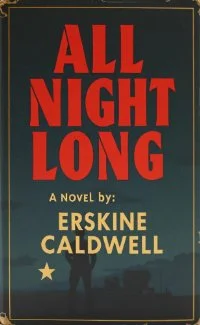
All Night Long: A Novel of Guerrilla Warfare in Russia

By Erskine Caldwell. Designed and Edited with an Introduction  by Colin Heston

When All Night Long appeared in 1942, Erskine Caldwell was already one of the most widely read—and most controversial—American novelists of his generation. Known primarily for his unsparing portrayals of poverty, violence, and moral stress in the American South, Caldwell here turned his attention outward, to a global conflict unfolding at unprecedented scale. Subtitled A Novel of Guerrilla Warfare in RussiaAll Night Long represents Caldwell’s direct literary engagement with the Second World War at the moment when its outcome remained deeply uncertain and when the Soviet Union, newly allied with the United States, had become a central symbol of resistance to fascist aggression.

Caldwell’s Russia is not a romanticized abstraction nor a detailed ethnographic portrait. Instead, it functions as a stark moral landscape shaped by occupation, deprivation, and constant threat. Villages, forests, and frozen terrain become arenas of endurance rather than scenery. The emphasis falls on night operations, secrecy, hunger, exhaustion, and the psychological toll of living in a perpetual state of danger. The title itself—All Night Long—signals this temporal and emotional register: war as an unbroken vigil, a continuous strain that erodes the boundary between action and survival.

For modern readers, the novel occupies an intriguing position in Caldwell’s body of work and in twentieth-century war literature more broadly. It stands apart from his Southern novels in geography but not in theme. As in Tobacco Road or God’s Little Acre, Caldwell examines how extreme conditions strip life down to its essentials and expose the structures—economic, political, or military—that govern human behavior. In All Night Long, the setting is international, but the underlying concerns remain consistent: power, exploitation, resilience, and the cost of endurance.

Read today, All Night Long also invites reflection on the evolving representation of guerrilla warfare itself. Long before such conflicts became a dominant feature of late-twentieth- and early-twenty-first-century military discourse, Caldwell recognized the strategic and moral complexity of irregular resistance. His novel anticipates later debates about asymmetrical warfare, civilian involvement, and the blurred lines between combatant and noncombatant—issues that continue to shape global conflicts.

Ultimately, All Night Long is less a novel about Russia per se than a novel about resistance under occupation. It captures a historical moment when global war demanded new forms of solidarity and new narrative frameworks to explain them. Caldwell’s achievement lies in his ability to translate that vast struggle into an intimate, unrelenting account of human persistence, sustained through darkness, danger, and the long hours of night.

NY.Book League of America. 1942. Read-Me.Org Inc. Australia, New York & Philadelphia. 2025. 161p.

Read
The Inner Beams

By Afshin rad

The document The Inner Beams by Afshin Rad is a historical novel set in East Berlin during the final years of the Cold War, focusing on the brutal atmosphere created by the East German Ministry of State Security, the Stasi. The narrative combines political history with a deeply personal story, illustrating how authoritarianism corrodes ordinary lives. It opens with a preface explaining the power and reach of the Stasi, an organization that employed nearly a hundred thousand agents and twice as many informants under the chilling slogan that anyone who “thinks differently” is an enemy.

The story follows Nadia, a young, marginalized woman surviving on the fringes of society through prostitution while raising her daughter Maya. Despite her poverty, stigmatization, and abuse at the hands of neighbors and strangers, she displays resilience and a rebellious spirit. Her life becomes entangled with the violence and hypocrisy of both the state and the church. She is alternately vilified and desired, caught between accusations of being a spy and exploitation by priests who hide their own corruption.

As events unfold, Nadia becomes a victim of the Stasi’s cruelty. She is imprisoned, tortured, and left for dead, only to be saved by a compassionate old man who hides her and helps her plan to reclaim her daughter, who has been taken by Party officials. Their efforts culminate in a daring but tragic attempt to rescue the child from a powerful regime family. The old man sacrifices his life to protect Nadia, while she herself endures near-death encounters in the collapsing state.

Against the backdrop of the Berlin Wall’s fall and the chaos of 1989, Nadia’s fate is sealed in both tragedy and symbolic triumph. Though she dies violently, her memory and sacrifice become a posthumous inspiration. Her grave, once marked with disdain, is later reclaimed as a shrine to freedom, with an epitaph honoring her rebellious spirit.

The work blends history, fiction, and allegory to show how individuals—especially the marginalized and forgotten—resist oppression and become unwilling martyrs of liberty. Through Nadia’s story, the book captures the human cost of totalitarianism while leaving readers with a sense of dignity, defiance, and the enduring value of freedom.

Read-Me.Org Inc. New York-Philadelphia-Australia. 2025. 77p.

download free
Round Up: The Stories Of Ring W. Lardner

By Ring W. Gardner (Author), Colin Heston (Preface) Format: Kindle Edition

Round Up gathers together the taut, muscular stories of Ring W. Lardner, a writer whose work bridges the divide between the mythologized West and its harsher, less forgiving realities. In these pages, Lardner is neither sentimental nor nostalgic. He strips the Western narrative to its barest elements, presenting us with a landscape that is both expansive and claustrophobic, and characters who are caught between the lure of freedom and the inevitability of fate.
Lardner’s contribution to the American short story lies in his ability to invest the familiar tropes of frontier life with psychological depth and moral ambiguity. His cowboys and ranchers are not mere archetypes; they are restless souls negotiating loyalty, isolation, and survival in a world where law and justice are provisional at best. The violence in these stories is never gratuitous—it is sudden, often senseless, and always carries a human cost. Lardner understands that the West was not only a place but also an idea, one that promised reinvention yet often delivered ruin.
What sets Lardner apart from many of his contemporaries is his prose: terse, unsentimental, yet charged with a quiet lyricism. His narratives move with the inevitability of a gathering storm, his dialogue as spare as the plains he describes. The result is a body of work that feels astonishingly modern in its refusal of easy resolutions.
In an era when the Western genre risks being dismissed as an artifact of popular culture, Round Up demands reconsideration. These are not mere adventure tales or moral fables. They are stories of a liminal world, where the boundaries between civilization and wilderness, justice and vengeance, myth and memory, blur and collapse. Lardner’s West is not simply the West that was; it is also the West as it continues to haunt the American imagination.

download
kindle $1.99 -- paperback $11.99
The Ebb-Tide: A Trio and Quartette: The Works of R.L.S. Volume XIX

By  Robert Louis Stevenson and Lloyd Osbourne, Edited by Colin Heston.

“The Ebb-Tide: A Trio and Quartette” is a dark, psychologically complex novella co-written by Robert Louis Stevenson and his stepson Lloyd Osbourne, first published in 1894. Included in Volume XIX of the Swanston Edition of Stevenson’s collected works, this tale marks one of the final literary efforts of Stevenson’s life and reflects his mature style—gritty, morally ambiguous, and deeply engaged with the human condition.

Set in the South Pacific, a region Stevenson had come to know intimately during his later years, The Ebb-Tide follows three disgraced and destitute Europeans—Herrick, Davis, and Huish—who find themselves stranded in Tahiti. When they are offered the chance to captain a cargo schooner, the Farallone, they seize the opportunity, only to discover that the ship is carrying a mysterious and morally troubling cargo. Their journey soon spirals into a tale of greed, betrayal, and existential crisis, culminating in a confrontation with Attwater, a charismatic and enigmatic missionary who lives alone on a remote island.

The novella is notable for its psychological depth and moral complexity. Each character represents a different facet of human weakness—cowardice, cruelty, and self-deception—and Stevenson explores how these traits play out under the pressures of isolation and lawlessness. The tropical setting, far from being idyllic, becomes a backdrop for moral decay and spiritual reckoning. The story’s title, The Ebb-Tide, metaphorically suggests the retreat of moral certainty and the erosion of personal integrity.

Stylistically, the work is lean and intense, with Stevenson’s prose sharpened by his collaboration with Osbourne. The narrative is driven by suspense and philosophical inquiry, raising questions about redemption, colonialism, and the nature of evil. It is often seen as a companion piece to Stevenson’s earlier South Seas fiction, such as The Beach of Falesá, but it is darker and more introspective in tone.

The Swanston Edition provides this novella with critical annotations and historical context, situating it within Stevenson’s broader literary and biographical trajectory. As one of his final works, The Ebb-Tide offers a powerful and unsettling vision of the human soul adrift—both literally and morally—on the margins of empire and civilization.

Read-Me.Org Inc. Australia-New York-Philadelphia. 2025. 216p.

download free
Kindle $1.99 - Paperback $9.99
The Early Modern Dutch Press in an Age of Religious Persecution: The Making of Humanitarianism

By David de Boer

For victims of persecution, attracting international awareness of their plight is often a matter of life and death. This book uncovers how in seventeenth-century Europe, persecuted minorities first learned how to use the press as a weapon to combat religious persecution. To mobilize foreign audiences, they faced an acute dilemma: how to make people care about distant suffering? This study argues that by answering this question, they laid the foundations of a humanitarian culture in Europe. The book reveals how, as consuming news became an everyday practice for many Europeans, the Dutch Republic emerged as an international hub of printed protest against religious violence. It traces how a diverse group of people, including Waldensian refugees, Huguenot ministers, Savoyard officeholders, and many others, all sought access to the Dutch printing presses to raise transnational solidarity for their cause. By examining their publicity strategies, this study deepens our understanding of how people tried to confront the specter of religious violence that had haunted them for generations.

UA Open. Oxford, UK: Oxford University Press, 2023. 225p.

download
Romantic Outlaws, Beloved Prisons: The Unconscious Meanings of Crime and Punishment

By Martha Grace Duncan

An ex-convict struggles with his addictive yearning for prison. A law-abiding citizen broods over his pleasure in violent, illegal acts. A prison warden loses his job because he is so successful in rehabilitating criminals. These are but a few of the intriguing stories Martha Grace Duncan examines in her bold, interdisciplinary book Romantic Outlaws, Beloved Prisons.
Duncan writes: "This is a book about paradoxes and mingled yarns - about the bright sides of dark events, the silver linings of sable clouds." She portrays upright citizens who harbor a strange liking for criminal deeds, and criminals who conceive of prison in positive terms: as a nurturing mother, an academy, a matrix of spiritual rebirth, or a refuge from life's trivia. In developing her unique vision, Duncan draws on literature, history, psychoanalysis, and law. Her work reveals a nonutopian world in which criminals and non-criminals--while injuring each other in obvious ways--nonetheless live together in a symbiotic as well as an adversarial relationship, needing each other, serving each other, enriching each other's lives in profound and surprising fashion.

UA. Open. New York; London: NYU Press, 1996. 284p.

download
Making #BlackLivesMatter in the Shadow of Selma: Collective Memory and Racial Justice Activism in U.S. News

Sarah J. Jackson

“It is clear in news coverage of recent uprisings for Black life that journalists and media organizations struggle to reconcile the fact of ongoing racism with narratives of U.S. progress. Bound up in this struggle is how collective memory—or rather whose collective memory—shapes the practices of news-making. Here I interrogate how television news shapes collective memory of Black activism through analysis of a unique moment when protests over police abuse of Black people became newsworthy simultaneous with widespread commemorations of the civil rights movement. I detail the complex terrain of nostalgia and misremembering that provides cover for moderate and conservative delegitimization of contemporary Black activism. At the same time, counter-memories, introduced most often by members of the Black public sphere, o ff er alternative, actionable, and comprehensive interpretations of Black protest.”

Communication, Culture and Critique 00 (2021) 1–20.

download
Losing Our Heads: Beheadings in Literature and Culture

MAY CONTAIN MARKUP

Regina Janes

FROM THE PREFACE: Why should anyone, especially sophisticated people like you and me, regard so widespread a cultural practice as beheadings as repellent? About 160,000 years ago, homo sapiens idaltu separated heads from bodies.' Homo sapiens sapiens still does. Disagreeable, fascinating, horrific, laughable, headless bodies and bodiless heads are all around us. Tim Burton, whose Sleepy Hollow (1999) sent heads flying, claims severed heads create unease that one cannot put one's finger on.? Garrison Keillor begins the millennium with a snowboarding beheading in Lake Wobegon where "we don't have many beheadings."3 Snoopy horrifies himself by accidentally beheading a snowman. Decapitating murderers horrify the rest of us, populating our prisons, our films, and our fictions. Horror or comedy: decapitation owes its current characteristic shudder to the placement of violence within the modern ideology of the body. Decapitation, like other mutilations, makes visible a violence that the west has been campaigning to make invisible since the seventeenth century, when our body-based ideology begins to emerge.

NEW YORK UNIVERSITY PRESS. New York and London. 2005. 266p.

read
Consumption and Violence: Radical Protest in Cold-War West Germany

By Alexander Sedlmaier

Combining the tools of political, social, cultural, and intellectual history, Consumption and Violence: Radical Protest in Cold-War West Germany explores strategies of legitimization developed by advocates of militant resistance to certain manifestations of consumer capitalism. The book contributes to a more sober evaluation of West German protest movements, not just terrorism, as it refrains from emotional and moral judgments, but takes the protesters’ approaches seriously, which, regarding consumer society, had a rational core. Political violence is not presented as the result of individual shortcomings, but emerges in relation to major societal changes, i.e., the unprecedented growth of consumption. This new perspective sheds important light on violence and radical protest in post-war Germany, as previous books have failed to examine to what extent these forms of resistance should be regarded as reactions to changing regimes of provision. Continuing the recently growing interest in the interdependence of countercultures and consumer society, the focus on violence gives the argument a unique twist, making the book thought-provoking and engaging.

 Ann Arbor: University of Michigan Press, 2014. 344p

download
The Drawing of the Mark of Cain: A Socio-historical Analysis of the Growth of Anti-Jewish Stereotypes

By Dik van Arkel

Antisemitism is an exceptional historical phenomenon. Its history goes back at least 2000 years and has manifested itself in many countries and in a wide range of societies. However, it is not a universal phenomenon. Many countries have no tradition of anti-Semitism and even in those where anti-Semitism periodically raises its head, there have been long periods where it appears to have lain dormant. But it has never altogether disappeared, and all the large-scale social changes of the past two millennia have given it extra impetus. This definitive study tackles the complex roots and manifestations of anti-Semitism over the centuries, tracing the rise of anti-Jewish stereotypes and the circumstances in which racial prejudice may have tragic consequences. This book will quickly become a classic text for students and researchers in this persistent and worldwide prejudice.

Amsterdam: Amsterdam University Press, 2009. 593p.

download
Antisemitism and the Left: On the return of the Jewish question

by Robert Fine, Philip Spencer

Universalism shows two faces to the world: an emancipatory face that looks to the inclusion of the other, and a repressive face that sees in the other a failure to pass some fundamental test of humanity. Universalism can be used to demand that we treat all persons as human beings regardless of their differences, but it can also be used to represent whole categories of people as inhuman, not yet human or even enemies of humanity.

The Jewish experience offers an equivocal test case. Universalism has stimulated the struggle for Jewish emancipation, but it has also helped to develop the idea that there is something peculiarly harmful to humanity about Jews – that there is a 'Jewish question' that needs to be 'solved'. This original and stimulating book traces struggles within the Enlightenment, Marxism, critical theory and the contemporary left, seeking to rescue universalism from its repressive, antisemitic undertones.

Manchester, UK: Manchester University Press, 2018. 144p

download
Improving Frontline Responses to Domestic Violence in Europe

Edited by Branko Lobnikar , Catharina Vogt , Joachim Kersten

The monograph on improving the response of first responders to domestic violence in Europe aims to identify gaps in the cooperation of first-line responders and deliver recommendations, toolkits and collaborative training for European police organizations and medical and social work professionals. The goal is to improve integrate institutional response to domestic violence. Shared training and adequate risk assessment tools will create a positive feedback loop, increasing reporting rates of domestic violence to police, the medical profession, and community and social work practitioners.

Malibor: University of Maribor, University Press, 2021. 363 p

download
Material Perspectives on Religion, Conflict, and Violence: Things of Conflict

Edited by Lucien van Liere and Erik Meinema

How do objects become contested in settings characterized by (violent) conflict? Why are some things contested by religious actors? How do religious actors mobilize things in conflict situations and how are conflict and violence experienced by religious groups? This volume explores relations between materiality, religion, and violence by drawing upon two fields of scholarship that have rarely engaged with one another: research on religion and (violent) conflict and the material turn within religious studies. This way, this volume sets the stage for the development of new conceptual and methodological directions in the study of religion-related violent conflict that takes materiality seriously. Contributors are Christoph Baumgartner, Margaretha van Es, Lucien van Liere, Erik Meinema, Birgit Meyer, Daan F. Oostveen, Younes Saramifar, Joram Tarusarira, Tammy Wilks.

Leiden; Boston: Brill, 2022, p 237

download
The Postcolonial African Genocide Novel: Quests for Meaningfulness

By Chigbo Arthur Anyaduba

In The Postcolonial African Genocide Novel, Chigbo Anyaduba examines fictional responses to mass atrocities occurring in postcolonial Africa. Through a comparative reading of novels responding to the genocides of the Igbo in Nigeria (1966-1970) and the Tutsi in Rwanda (1990-1994), the book underscores the ways that literary encounters with genocides in Africa’s postcolonies have attempted to reimagine the conditions giving rise to exterminatory forms of mass violence. The book concretizes and troubles one of the apparent truisms of genocide studies, especially in the context of imaginative literature: that the reality of genocide more often than not resists meaningfulness. Particularly given the centrality of this truism to artistic responses to the Holocaust and to genocides more generally, Anyaduba tracks the astonishing range of meanings drawn by writers at a series of (temporal, spatial, historical, cultural and other) removes from the realities of genocide in Africa’s postcolonies, a set of meanings that are often highly‐specific and irreducible to maxims or foundational cases. The book shows that in the artistic projects to construct meanings against genocide’s nihilism writers of African genocides deploy tropes that while significantly oriented to African concerns are equally shaped by the representational conventions and practices associated with the legacies of the Holocaust.

Liverpool: Liverpool University Press, 2021. 280p.

download
Watership Down: Perspectives On and Beyond Animated Violence

By Catherine Lester

Watership Down (Martin Rosen, 1978) is as controversial as it is beloved. Whether due to the tear-jerking hit song 'Bright Eyes' or its notorious representation of violence inflicted by and upon animated rabbits, the film retains the ability to move and shock audiences of all ages, remaining an important cultural touchstone decades after its original release. This open access collection unites scholars and practitioners from a diversity of perspectives to consider the ongoing legacy of this landmark of British cinema and animation history. The authors provide nuanced discussions of Watership Down’s infamous animated depictions of violence, death and its contentious relationship with child audiences, as well as examinations of understudied aspects of the film including its musical score, use of language, its increasingly relevant political and environmental themes and its difficult journey to the screen, complete with behind-the-scenes photographs, documents and production artwork. As the first substantial work on Watership Down, this book is a valuable companion on the film for scholars, students and fans alike.

I couldn't download this on OAPEN. You can give it a try...if you want.

download
Representations of Child Sexual Abuse in Jamaica: A Corpus-Assisted Discourse Study of Popular News Media

By Tatyana Karpenko-Seccombe , Kenisha Nelson , Christine Fray , Roxanne Harvey , Karyl Powell-Booth; Adele Jones , Nadia Wager and Xiaomin Sheng

News media shape public opinion on social issues such as child sexual abuse (CSA), using particular language to foreground, marginalize or legitimize certain viewpoints. Given the prevalence of CSA and the impact of violence against children in Jamaica, there is a need to examine the representation of children and their experience of violence in the news media, which remain the main source of information about such abuse for much of the population. The study aims to analyze accounts of CSA in Jamaican newspapers in order to show how different representations impact public understanding of CSA. This study offers a new perspective around child abuse by using an eight-million word corpus from articles over a three-year period (2018- 2020).

The study argues that media reports often fail to conceptualise and represent accurately children who have experienced abuse. Representations of children are generic, their experiences often reduced to statistical summaries. Corpus analysis uncovered the use of terms which normalize sexual abuse. From the reader’s perspective, there was little emotional connection to the child or the child’s experience. The newspapers rarely report first-hand survivors’ experience of abuse, depriving these children of a voice. Instead, a marked preference is given to institutional voices. An issue of concern is a tendency to sensationalism with disproportionate attention given to cases involving celebrities.

By exposing these problems, the authors hope that news media in Jamaica can play a more positive role in heightening awareness around child abuse and allowing the voices of victims/ survivors to be heard.

Basel, SWIT: MDPI Books, 2022. 98p.

Ethics, Politics and Justice in Dante

Edited by Giulia Gaimari and Catherine Keen

Ethics, Politics and Justice in Dante presents new research by international scholars on the themes of ethics, politics and justice in the works of Dante Alighieri, including chapters on Dante’s modern ‘afterlife’.

Together the chapters explore how Dante’s writings engage with the contemporary culture of medieval Florence and Italy, and how and why his political and moral thought still speaks compellingly to modern readers. The collection’s contributors range across different disciplines and scholarly traditions – history, philology, classical reception, philosophy, theology – to scrutinise Dante’s Divine Comedy and his other works in Italian and Latin, offering a multi-faceted approach to the evolution of Dante’s political, ethical and legal thought throughout his writing career.

Certain chapters focus on his early philosophical Convivio and on the accomplished Latin Eclogues of his final years, while others tackle knotty themes relating to judgement, justice, rhetoric and literary ethics in his Divine Comedy, from hell to paradise. The closing chapters discuss different modalities of the public reception and use of Dante’s work in both Italy and Britain, bringing the volume’s emphasis on morality, political philosophy, and social justice into the modern age of the nineteenth, twentieth, and twenty-first centuries.

London: UCL Press, 2019. 192p.

download
Tainted Souls and Painted Faces: The Rhetoric of Fallenness in Victorian Culture

By Amanda Anderson

Prostitute, adulteress, unmarried woman who engages in sexual relations, victim of seduction—the Victorian "fallen woman" represents a complex array of stigmatized conditions. Amanda Anderson here reconsiders the familiar figure of the fallen woman within the context of mid-Victorian debates over the nature of selfhood, gender, and agency. In richly textured readings of works by Charles Dickens, Elizabeth Gaskell, Dante Gabriel Rossetti, and Elizabeth Barrett Browning, among others, she argues that depictions of fallen women express profound cultural anxieties about the very possibility of self-control and traditional moral responsibility.

Ithaca, NY: Cornell University Press, 1993. 264p.

download