Open Access Publisher and Free Library
Fiction+Mediajpg.jpg

FICTION and MEDIA

CRIME AND MEDIA — TWO PEAS IN A POD

Posts in thriller
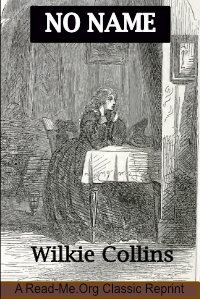
No Name

By Wilkie Collins.

This book is a 19th-century novel by the master of sensation fiction, Wilkie Collins. A country gentleman is killed in an accident and his wife dies shortly after him. The blow is double for their daughters, who discover that they were born before their parents were married. Their sudden illegitimacy robs them of their inheritance and their accustomed place in society.

New York: Harper and Brothers, 1873. 622p.

The Man Who was Thursday: A Nightmare

By G.K. Chesterton.

It is very difficult to classify The Man Who Was Thursday. It is possible to say that it is a gripping adventure story of murderous criminals and brilliant policemen; but it was to be expected that the author of the Father Brown stories should tell a detective story like no-one else. On this level, therefore, The Man Who Was Thursday succeeds superbly; if nothing else, it is a magnificent tour-de-force of suspense-writing. However, the reader will soon discover that it is much more than that. Carried along on the boisterous rush of the narrative by Chesterton’s wonderful high-spirited style, he will soon see that he is being carried into much deeper waters than he had planned on; and the totally unforeseeable denouement will prove for the modern reader, as it has for thousands of others since 1908 when the book was first published, an inevitable and moving experience, as the investigators finally discover who Sunday is.

Bristol: J.W. Arrowsmith, 1908. 329p.

The Dark Road

By Gaston Leroux.

Excerpt: “Excerpt: "The Nut lay on the scorching beach facing the terrible sea in which the hungry sharks, the warders of his prison, were disporting. The convict was like a weary animal at rest. In truth, he had availed himself of the "relaxation" at ten o'clock to seek out a little fresh air and seclusion between two precipitous crags which cut him off from the rest of the convict settlement. If only he could live alone! No longer to hear anything. No longer to see anything! No longer to think of anything. But how could he help thinking of what he had seen, of what he had been compelled to see, that morning?"

NY. Harrow and Heston Classic Reprint. (1924) 191 pages.

Phantom of the Opera

By Gaston Leroux..

The Phantom of the Opera is the most famous novel by Gaston Leroux. It is believed to be based in George du Maurier's Trilby. The novel is partly inspired by historical events at the Paris Opera during the nineteenth century and an apocryphal tale concerning the use of a former ballet pupil's skeleton in Carl Maria von Weber's 1841 production of Der Freischütz. It has been successfully adapted into various stage and film adaptations, most notable of which are the 1925 film depiction featuring Lon Chaney, and Andrew Lloyd Webber's 1986 musical — Wikipedia.

NY. Harrow and Heston Classic Reprint. (1911) 270 pages.