
Open Access Publisher and Free Library
Fiction+Mediajpg.jpg

FICTION and MEDIA

CRIME AND MEDIA — TWO PEAS IN A POD

Posts in violence
If Winter Comes

By A. S. M. Hutchinson. Introduction by Colin Heston.

When If Winter Comes appeared in 1921, it entered a literary moment marked by exhaustion, reassessment, and a profound unease about the moral and emotional consequences of the First World War. Written by A. S. M. Hutchinson, the novel achieved immediate popularity on both sides of the Atlantic, resonating with readers who recognized in its restrained drama a faithful portrait of postwar disillusionment. Today, the book stands as one of the most representative middle-class English novels of the early 1920s, combining psychological realism with a quietly devastating critique of social conformity.

At the center of If Winter Comes is Mark Sabre, a man neither heroic nor villainous, but painfully ordinary—an embodiment of the conscientious, educated Englishman caught between private integrity and public expectation. Sabre’s tragedy unfolds not through sensational events but through accumulated compromises: the erosion of affection within marriage, the pressures of respectability, and the moral cowardice of a community that prizes appearances above truth. Hutchinson’s great achievement is to dramatize these pressures with such precision that the reader comes to see how social cruelty can be enacted without overt malice, simply through silence, gossip, and moral indifference.

The novel reflects a society struggling to redefine itself after catastrophe. Although the war remains largely offstage, its psychological presence is unmistakable. Characters speak and act as if something fundamental has been broken: faith in institutions, confidence in moral authority, and trust in traditional roles. Hutchinson does not frame this as a generational revolt, as some of his modernist contemporaries did, but rather as a slow moral suffocation. The England of If Winter Comes is orderly, polite, and profoundly unforgiving—a place where deviation from accepted norms is punished less by law than by social annihilation.

Stylistically, Hutchinson occupies a middle ground between Edwardian realism and the emerging psychological novel. His prose is clear, controlled, and often deceptively simple. Sentiment is present, but carefully disciplined; emotional climaxes arise organically from character rather than authorial intrusion. This restraint partly explains the book’s enduring power. Hutchinson trusts the reader to perceive the cruelty embedded in everyday interactions and to grasp the cumulative weight of small injustices. The result is a novel that feels at once intimate and inexorable.

Equally important is Hutchinson’s treatment of marriage and masculinity. Mark Sabre is not undone by vice or ambition but by a moral rigidity that prevents him from acting decisively in his own defense. In this sense, If Winter Comes anticipates later twentieth-century explorations of male emotional paralysis. Sabre’s passivity—his belief that decency alone will protect him—proves to be a fatal misconception. Hutchinson exposes how a culture that rewards restraint and silence can become complicit in personal destruction.

Upon publication, the novel’s success was amplified by its adaptation into a widely seen stage play and later film versions, cementing its reputation as a defining postwar narrative. Yet its popularity should not obscure its seriousness. Beneath its accessible surface lies a sharp moral inquiry into responsibility, courage, and the cost of social obedience. Hutchinson does not offer easy consolation; the title itself suggests a stoic endurance rather than renewal, implying that survival may require a reckoning with loss rather than its denial.

Read today, If Winter Comes remains strikingly contemporary. Its depiction of reputational ruin, public shaming, and institutional indifference speaks to modern anxieties about social judgment and moral isolation. Hutchinson’s novel reminds us that cruelty need not be loud to be lethal, and that the gravest tragedies often occur not in moments of drama but in the long, quiet seasons of neglect. As such, this book endures not merely as a historical artifact of postwar Britain, but as a timeless study of how societies fail their most conscientious members when compassion yields to convention.

download free
Kindle $2.99 -- paperback $9.99
Grey Riders: The Story of The New York State Troopers

By Frederic F. Van de Water. Introduction by Graeme R. Newman

When Grey Riders appeared in 1922, Frederic F. Van de Water was already emerging as one of the most capable interpreters of American frontier mythology. A journalist, historian, and novelist, he had spent years documenting the enduring tensions between law, order, memory, and violence in the development of the Atlantic seaboard. Grey Riders stands as one of his most vivid contributions to that project: a narrative history and interpretive reconstruction of the Border Riders—Vermont and New York militiamen, irregulars, and informal vigilante bands who policed, contested, and sometimes exploited the wilderness regions between the American colonies and British Canada during the late eighteenth and early nineteenth centuries

Van de Water had a journalist’s fascination with complexity, and Grey Riders is at its strongest when it illuminates the contradictions inherent in a frontier culture that simultaneously demanded firmness of justice and tolerated the improvisational violence of irregular policing. In his account, the riders are men shaped by hardship—farmers, Loyalists, deserters, Yankee patriots, trappers, smugglers, and opportunists—who alternately defended and defied the emerging legal structures of the early United States. Their world was one where the line between protector and predator was always negotiable.

The book’s historical frame—stretching most visibly from the late Revolutionary era through the War of 1812—allows Van de Water to explore how unresolved grievances, economic scarcity, and geopolitical rivalry produced a frontier culture that did not neatly conform to the nation-state boundaries we take for granted today. The riders themselves were products of this ambiguity. While some acted as scouts and auxiliaries for the Continental Army or state militias, others drifted into banditry, smuggling, or private vengeance. Van de Water refuses to simplify this ambiguity; instead, he constructs a narrative that emphasizes how the frontier’s conditions forged men who were, by necessity, adaptable to both moral clarity and moral shade.

For the modern reader, Grey Riders also holds value as part of the broader early-twentieth-century reconsideration of American origins. The 1920s were a period of heightened nostalgia, cultural nationalism, and renewed interest in the country’s formative conflicts. Van de Water, however, avoids sentimentalism. His frontier is not a place of heroic inevitability but a zone of tension where identity, loyalty, and legitimacy are constantly renegotiated. In this respect, the book anticipates the more critical frontier historiography that would emerge later in the century.

Contemporary scholars may also find in Grey Riders an instructive account of how local communities develop security practices when state institutions are weak, distant, or contested—an issue that remains resonant in discussions of borderlands worldwide. The riders, as Van de Water portrays them, are precursors to many modern forms of irregular security actors: militias, local auxiliaries, self-appointed protectors, and armed community defense groups. Their actions demonstrate both the necessity and danger of such formations, especially when scarcity and political friction define daily life.

This new edition returns readers to a moment when questions of national boundaries, informal justice, and community resilience are central to global debate. Van de Water’s riders, moving through a grey zone of legality and identity, offer a powerful reminder that the frontier has never been a simple place—and that the forces shaping it never truly disappeared.

Read-Me.Org Inc. New York-Philadelphia-Australia. 2025. p.188.

download
kindle $2.99 -- Paperback $9.99
Came a Cavalier

By Frances Parkinson Keyes

Came a Cavalier by Frances Parkinson Keyes is a sweeping historical romance set against the backdrop of two world wars. The novel explores themes of resilience, identity, and the transformative power of love. At its heart is Constance “Connie” Galt, a young woman whose life is reshaped by personal betrayal and the chaos of global conflict. Her journey begins with heartbreak, which propels her into service with the American Red Cross in France during World War I. This experience becomes a crucible for her character, forcing her to confront suffering and loss while discovering inner strength and purpose.

The story delves deeply into the theme of personal growth through adversity. Connie’s evolution from a disillusioned college student to a confident, compassionate woman mirrors the broader societal shifts of the early twentieth century. Her relationships—first with Duncan Craig, an American doctor, and later with Tristan de Fremond, a French cavalry officer—highlight the tension between security and passion, as well as the cultural contrasts between America and Europe during wartime.

Historically, the novel captures the atmosphere of wartime France with vivid detail, from the scarcity and danger of the front lines to the elegance and traditions of the French aristocracy. It reflects the impact of war on both individuals and nations, portraying how global upheaval can dismantle old social orders while creating new opportunities for connection and renewal. The narrative also touches on themes of honor and duty, embodied in Tristan’s role within the prestigious Cadre Noir, and contrasts these ideals with the pragmatic realities of survival and love in times of uncertainty.

Ultimately, Came a Cavalier is not just a romance but a meditation on courage, endurance, and the human capacity for reinvention. It situates personal drama within the grand sweep of history, offering readers both an intimate love story and a rich portrait of a world in transition.

Julian Messner, Inc. NY. 1947. Read-Me.Org Inc. New York-Philadelphia-Australia. 2025. 437p.

read
All Night Long: A Novel of Guerrilla Warfare in Russia

By Erskine Caldwell. Designed and Edited with an Introduction  by Colin Heston

When All Night Long appeared in 1942, Erskine Caldwell was already one of the most widely read—and most controversial—American novelists of his generation. Known primarily for his unsparing portrayals of poverty, violence, and moral stress in the American South, Caldwell here turned his attention outward, to a global conflict unfolding at unprecedented scale. Subtitled A Novel of Guerrilla Warfare in RussiaAll Night Long represents Caldwell’s direct literary engagement with the Second World War at the moment when its outcome remained deeply uncertain and when the Soviet Union, newly allied with the United States, had become a central symbol of resistance to fascist aggression.

Caldwell’s Russia is not a romanticized abstraction nor a detailed ethnographic portrait. Instead, it functions as a stark moral landscape shaped by occupation, deprivation, and constant threat. Villages, forests, and frozen terrain become arenas of endurance rather than scenery. The emphasis falls on night operations, secrecy, hunger, exhaustion, and the psychological toll of living in a perpetual state of danger. The title itself—All Night Long—signals this temporal and emotional register: war as an unbroken vigil, a continuous strain that erodes the boundary between action and survival.

For modern readers, the novel occupies an intriguing position in Caldwell’s body of work and in twentieth-century war literature more broadly. It stands apart from his Southern novels in geography but not in theme. As in Tobacco Road or God’s Little Acre, Caldwell examines how extreme conditions strip life down to its essentials and expose the structures—economic, political, or military—that govern human behavior. In All Night Long, the setting is international, but the underlying concerns remain consistent: power, exploitation, resilience, and the cost of endurance.

Read today, All Night Long also invites reflection on the evolving representation of guerrilla warfare itself. Long before such conflicts became a dominant feature of late-twentieth- and early-twenty-first-century military discourse, Caldwell recognized the strategic and moral complexity of irregular resistance. His novel anticipates later debates about asymmetrical warfare, civilian involvement, and the blurred lines between combatant and noncombatant—issues that continue to shape global conflicts.

Ultimately, All Night Long is less a novel about Russia per se than a novel about resistance under occupation. It captures a historical moment when global war demanded new forms of solidarity and new narrative frameworks to explain them. Caldwell’s achievement lies in his ability to translate that vast struggle into an intimate, unrelenting account of human persistence, sustained through darkness, danger, and the long hours of night.

NY.Book League of America. 1942. Read-Me.Org Inc. Australia, New York & Philadelphia. 2025. 161p.

Read
Dracula

By Bram Stoker

Bram Stoker's Dracula, first published in 1897, remains one of the most iconic and influential novels in the Gothic literary tradition. More than a simple horror story, Dracula is a rich tapestry of Victorian anxieties, cultural tensions, and symbolic complexity. Through its epistolary structure and vivid characters, the novel explores themes of modernity versus antiquity, sexuality and repression, imperialism, and the supernatural. It is a work that not only defined the vampire genre but also reflected the fears and fascinations of its time.

The late 19th century was a period of profound transformation in Britain. The Industrial Revolution had ushered in an age of technological innovation and scientific progress, while the British Empire stood at the height of its global influence. Yet beneath this veneer of confidence lay deep-seated anxieties about degeneration, foreign invasion, and the erosion of traditional values. Dracula captures these tensions through its central antagonist, Count Dracula, a foreign aristocrat who threatens the sanctity of British society. His arrival in England symbolizes a reverse colonization, where the East invades the West, challenging notions of cultural superiority and national security.

Stoker’s use of the epistolary format—comprising diaries, letters, newspaper articles, and ship logs—serves to ground the supernatural elements of the story in a framework of realism and documentation. This narrative technique reflects the Victorian obsession with empirical evidence and rationality, even as the characters confront a force that defies scientific explanation. The juxtaposition of modern tools such as typewriters and phonographs with ancient folklore and religious symbols underscores the novel’s central conflict between progress and the past.

One of the most compelling aspects of Dracula is its exploration of sexuality and repression. Victorian society was marked by strict moral codes, particularly regarding gender roles and sexual behavior. The novel subverts these norms through the seductive and transgressive nature of vampirism. Characters like Lucy Westenra and Mina Harker become battlegrounds for these tensions, as their encounters with Dracula blur the lines between victimhood and desire. The act of bloodsucking, laden with erotic undertones, becomes a metaphor for the loss of innocence and the threat of moral corruption.

Religion plays a crucial role in the narrative, often positioned as the ultimate defense against the vampire’s evil. Crucifixes, holy water, and sacred rites are employed alongside scientific reasoning, suggesting a synthesis of faith and logic in the fight against darkness. This duality reflects the Victorian struggle to reconcile religious belief with the rise of secularism and scientific thought.

Dracula also engages with the theme of identity and duality. Count Dracula himself embodies contradictions: he is both man and monster, aristocrat and predator, host and parasite. His ability to transform into animals and control the elements adds to his mystique and reinforces his role as a symbol of the uncanny. The characters who oppose him—Jonathan Harker, Van Helsing, Dr. Seward, and others—represent various facets of Victorian society, from legal and medical professions to religious authority, united in their mission to restore order.

The legacy of Dracula is vast and enduring. It established many of the conventions of vampire fiction and inspired countless adaptations across literature, film, and popular culture. Count Dracula has become a cultural archetype, embodying both fear and fascination. The novel’s rich symbolism and thematic depth continue to invite critical analysis, from psychoanalytic and feminist readings to postcolonial and queer interpretations.

In conclusion, Bram Stoker’s Dracula is far more than a tale of terror. It is a mirror reflecting the complexities of its time, a narrative that intertwines the rational and the irrational, the modern and the ancient, the sacred and the profane. Its enduring power lies in its ability to evoke fear while provoking thought, making it a masterpiece of Gothic literature and a cornerstone of cultural history.

Read-Me.Org Inc. New York-Philadelphia-Australia. 2025. 284p.

download free
Kindle $2.99 -- Paperback $9.99
The Inner Beams

By Afshin rad

The document The Inner Beams by Afshin Rad is a historical novel set in East Berlin during the final years of the Cold War, focusing on the brutal atmosphere created by the East German Ministry of State Security, the Stasi. The narrative combines political history with a deeply personal story, illustrating how authoritarianism corrodes ordinary lives. It opens with a preface explaining the power and reach of the Stasi, an organization that employed nearly a hundred thousand agents and twice as many informants under the chilling slogan that anyone who “thinks differently” is an enemy.

The story follows Nadia, a young, marginalized woman surviving on the fringes of society through prostitution while raising her daughter Maya. Despite her poverty, stigmatization, and abuse at the hands of neighbors and strangers, she displays resilience and a rebellious spirit. Her life becomes entangled with the violence and hypocrisy of both the state and the church. She is alternately vilified and desired, caught between accusations of being a spy and exploitation by priests who hide their own corruption.

As events unfold, Nadia becomes a victim of the Stasi’s cruelty. She is imprisoned, tortured, and left for dead, only to be saved by a compassionate old man who hides her and helps her plan to reclaim her daughter, who has been taken by Party officials. Their efforts culminate in a daring but tragic attempt to rescue the child from a powerful regime family. The old man sacrifices his life to protect Nadia, while she herself endures near-death encounters in the collapsing state.

Against the backdrop of the Berlin Wall’s fall and the chaos of 1989, Nadia’s fate is sealed in both tragedy and symbolic triumph. Though she dies violently, her memory and sacrifice become a posthumous inspiration. Her grave, once marked with disdain, is later reclaimed as a shrine to freedom, with an epitaph honoring her rebellious spirit.

The work blends history, fiction, and allegory to show how individuals—especially the marginalized and forgotten—resist oppression and become unwilling martyrs of liberty. Through Nadia’s story, the book captures the human cost of totalitarianism while leaving readers with a sense of dignity, defiance, and the enduring value of freedom.

Read-Me.Org Inc. New York-Philadelphia-Australia. 2025. 77p.

download free
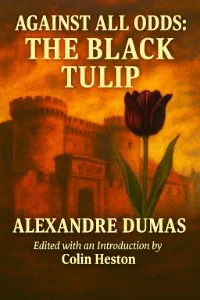
The Count Of Monte-Cristo: Volume Two


By Alexandre Dumas (Author), G. Staal (Illustrator), J.A. Beauce (Illustrator), & 2more Format: Kindle Edition

Few novels have captured the imagination of readers across generations as powerfully as The Count of Monte Cristo. First published in 1844, this sweeping tale of betrayal, revenge, and redemption is the work of Alexandre Dumas, one of France’s most celebrated literary figures. Set against the backdrop of post-Napoleonic France, the novel follows the transformation of Edmond Dantès, a young sailor whose promising future is shattered by the treachery of those he trusted. Wrongfully imprisoned in the Château d’If, Dantès emerges years later not as the man he once was, but as the enigmatic and wealthy Count of Monte Cristo—determined to exact justice on those who wronged him. At once a thrilling adventure and a profound exploration of human nature, The Count of Monte Cristodelves into themes of vengeance, justice, mercy, and the enduring power of hope. Dumas weaves a rich tapestry of characters and subplots, each contributing to the novel’s intricate moral landscape. His storytelling is both grand in scope and intimate in detail, offering readers a journey that is as emotionally resonant as it is exhilarating.
This two volume edition is based on the five volume 1888 English edition. It retains all text as in the original and includes most of the illustrations preserving the spirit and elegance of Dumas’s original edition, while making the novel accessible to contemporary readers. This version is most likely that of an anonymous translator who translated the work from the French for the publisher Chapman and Hall in 1846. There have been many translations in dozens of languages, and some in the 20th century basically rewriting the novel in modern prose and almost always considerably abridged.

Read-Me.Org Inc. New York-Philadelphia-Australia. 2025. 501 p.

download
kindle $2.99 -- paperback $12.99
The Count Of Monte-Cristo: Volume One


By Alexandre Dumas (Author), G. Staal (Illustrator), J.A. Beauce (Illustrator), & 2more Format: Kindle Edition

Few novels have captured the imagination of readers across generations as powerfully as The Count of Monte Cristo. First published in 1844, this sweeping tale of betrayal, revenge, and redemption is the work of Alexandre Dumas, one of France’s most celebrated literary figures. Set against the backdrop of post-Napoleonic France, the novel follows the transformation of Edmond Dantès, a young sailor whose promising future is shattered by the treachery of those he trusted. Wrongfully imprisoned in the Château d’If, Dantès emerges years later not as the man he once was, but as the enigmatic and wealthy Count of Monte Cristo—determined to exact justice on those who wronged him. At once a thrilling adventure and a profound exploration of human nature, The Count of Monte Cristodelves into themes of vengeance, justice, mercy, and the enduring power of hope. Dumas weaves a rich tapestry of characters and subplots, each contributing to the novel’s intricate moral landscape. His storytelling is both grand in scope and intimate in detail, offering readers a journey that is as emotionally resonant as it is exhilarating.
This two volume edition is based on the five volume 1888 English edition. It retains all text as in the original and includes most of the illustrations preserving the spirit and elegance of Dumas’s original edition, while making the novel accessible to contemporary readers. This version is most likely that of an anonymous translator who translated the work from the French for the publisher Chapman and Hall in 1846. There have been many translations in dozens of languages, and some in the 20th century basically rewriting the novel in modern prose and almost always considerably abridged.

Read-Me.Org Inc. New York-Philadelphia-Australia. 2025. 456 p.

download
kindle $2.99 -- paperback $12.99
Round Up: The Stories Of Ring W. Lardner

By Ring W. Gardner (Author), Colin Heston (Preface) Format: Kindle Edition

Round Up gathers together the taut, muscular stories of Ring W. Lardner, a writer whose work bridges the divide between the mythologized West and its harsher, less forgiving realities. In these pages, Lardner is neither sentimental nor nostalgic. He strips the Western narrative to its barest elements, presenting us with a landscape that is both expansive and claustrophobic, and characters who are caught between the lure of freedom and the inevitability of fate.
Lardner’s contribution to the American short story lies in his ability to invest the familiar tropes of frontier life with psychological depth and moral ambiguity. His cowboys and ranchers are not mere archetypes; they are restless souls negotiating loyalty, isolation, and survival in a world where law and justice are provisional at best. The violence in these stories is never gratuitous—it is sudden, often senseless, and always carries a human cost. Lardner understands that the West was not only a place but also an idea, one that promised reinvention yet often delivered ruin.
What sets Lardner apart from many of his contemporaries is his prose: terse, unsentimental, yet charged with a quiet lyricism. His narratives move with the inevitability of a gathering storm, his dialogue as spare as the plains he describes. The result is a body of work that feels astonishingly modern in its refusal of easy resolutions.
In an era when the Western genre risks being dismissed as an artifact of popular culture, Round Up demands reconsideration. These are not mere adventure tales or moral fables. They are stories of a liminal world, where the boundaries between civilization and wilderness, justice and vengeance, myth and memory, blur and collapse. Lardner’s West is not simply the West that was; it is also the West as it continues to haunt the American imagination.

download
kindle $1.99 -- paperback $11.99
Deacon Brodie And The Double Life

By R.L. STEVENSON and W.E. HENLEY

“Deacon Brodie, or The Double Life” is a compelling historical drama co-written by Robert Louis Stevensonand William Ernest Henley, included in the Swanston Edition, Volume XV, which collects their collaborative dramatic works. This play dramatizes the real-life story of William Brodie, a respected Edinburgh cabinetmaker and city councillor by day, and a cunning burglar by night—whose double life ultimately led to his downfall and execution in 1788.

Set in 18th-century Edinburgh, the play explores themes of duality, deception, morality, and social hypocrisy, echoing many of the psychological and philosophical concerns that would later appear in Stevenson’s more famous work, Dr. Jekyll and Mr. Hyde. Brodie is portrayed as a man torn between his public persona and private vices, embodying the tension between outward respectability and inner corruption.

The drama unfolds with a rich cast of characters, including Brodie’s criminal associates, his family, and the lawmen who pursue him. The dialogue, shaped by Henley’s theatrical sensibilities and Stevenson’s narrative flair, is sharp and evocative, blending suspense with moments of dark humor and emotional intensity. The structure of the play builds steadily toward Brodie’s exposure and tragic end, offering a powerful commentary on the dangers of living a life divided by conflicting identities.

The Swanston Edition presents this work with scholarly attention to detail, including editorial notes and historical context that illuminate the real events behind the drama and the creative collaboration between Stevenson and Henley. As part of their broader dramatic output, Deacon Brodie stands out for its psychological depth and historical resonance, making it a significant contribution to late Victorian theatre and a fascinating study in character and consequence..

Read-Me.Org Inc. New York-Philadelphia-Australia. 2025. 176p.

download free
Kindle $1.99 - Paperback $9.99
The Master of Ballantrae

By Robert Louis Stevenson:. Edited by Colin Heston

The Master of Ballantrae is a dark historical novel by Robert Louis Stevenson, set during the Jacobite rising of 1745. It tells the story of two brothers—noble and dutiful Henry Durie and his charming but treacherous elder brother James, the Master of Ballantrae—whose rivalry leads to betrayal, vengeance, and tragedy. Narrated by the loyal steward Ephraim Mackellar, the novel explores themes of family loyalty, pride, and the destructive power of ambition, set against a backdrop that spans Scotland, America, and India. With its psychological depth and moral complexity, the book stands as one of Stevenson’s most powerful works.

Read-Me.Org. Inc. Australia, New York, Philadelphia. 2025. 171p.

download free
Kindle $1.99 - Paperback $9.99
Kidnapped

By R.L. Stevenson. Edited by Colin Heston.

The Works of Robert Louis Stevenson: Volume X presents two of Stevenson’s most engaging narratives in one timeless edition. In Kidnapped, follow young David Balfour on a perilous journey through betrayal, abduction, and rebellion in 18th-century Scotland—a gripping tale of adventure, identity, and justice. Paired with The Misadventures of John Nicholson, a sharply witty story of folly and redemption, this volume showcases Stevenson’s unmatched storytelling range. A must-have for lovers of classic literature, this Swanston Edition reprint brings together drama, danger, and Stevenson’s signature charm..

Read-Me.Org Inc. 2025. 214p.

download free
Kindle $1.99 - Paperback $9.99
The Black Arrow: A Tale of the Two Roses

By R. L. Stevenson. Edited by Colin Heston

"The Black Arrow: A Tale of the Two Roses" is a historical adventure novel by Robert Louis Stevenson, first published in 1888. Set during the tumultuous period of the Wars of the Roses in 15th-century England, the story follows the young protagonist, Richard Shelton. Richard is caught in the conflict between the houses of York and Lancaster, and his journey is marked by themes of loyalty, betrayal, and revenge. The novel begins with Richard discovering that his guardian, Sir Daniel Brackley, is involved in treacherous activities. As Richard seeks justice for his father's murder, he joins forces with a band of outlaws known as the Black Arrow. The leader of the outlaws, John Amend-All, becomes a key ally in Richard's quest. Throughout the narrative, Richard faces numerous challenges, including battles, escapes, and romantic entanglements with Joanna Sedley, a young woman disguised as a boy. Stevenson's vivid descriptions and fast-paced plot make "The Black Arrow" a captivating read. The novel seamlessly combines elements of adventure, romance, and historical fiction, offering readers a thrilling portrayal of medieval England and its intricate political landscape.

Volume VIII of the Swanston Edition of "The Works of Robert Louis Stevenson" continues to showcase Stevenson's literary versatility. This volume typically includes a mix of his essays, short stories, and other writings, reflecting his wide-ranging interests and talents. The Swanston Edition is renowned for its comprehensive and authoritative compilation of Stevenson's works, providing readers with an in-depth exploration of his literary contributions. Each volume in this series highlights Stevenson's ability to engage readers with his storytelling prowess across various genres and styles. This volume has been carefully edited and redesigned by Colin Heston, a renowned novelist and storyteller, to make the book more enjoyable and comprehensible to the modern reader.

Read-Me.Org Inc. New York, Philadelphia, Australia. 2025. 178p.

download free
Kindle $1.99 - Paperback $9.99
Treasure Island: Works of R.L.Stevenson Vol.6

By R. L. Stevenson. Edited by Colin Heston

"Treasure Island" is a classic adventure novel by Robert Louis Stevenson, first published in 1883. The story follows young Jim Hawkins, who discovers a treasure map in the chest of a deceased pirate. This discovery sets him on a thrilling journey across the seas aboard the Hispaniola, in search of the hidden treasure. Along the way, Jim encounters a host of memorable characters, including the charismatic and cunning Long John Silver, who leads a mutiny among the crew. The novel is celebrated for its vivid characters, gripping plot, and timeless themes of adventure, bravery, and the quest for fortune. "Treasure Island" has had a lasting impact on popular culture, shaping the modern image of pirates and inspiring countless adaptations.

Volume VI of the Swanston Edition of "The Works of Robert Louis Stevenson" continues to showcase the breadth of Stevenson's literary talent. This volume typically includes a mix of his essays, short stories, and other writings. The Swanston Edition is known for its comprehensive and authoritative compilation of Stevenson's works, offering readers a thorough exploration of his diverse contributions to literature. Each volume in this series provides insight into Stevenson's versatility as a writer, highlighting his ability to engage readers across various genres and styles.

This volume has been carefully edited and redesigned by Colin Heston, renowned novelist and story writer, to make the book more comprehensible to the present-day reader.

Read-Me.Org Inc. NY. Philal Australia. 2025. 197p.

download free
Kindle $1.99 -- Paperback $9.99
Prince Otto

by Robert Louis Stevenson (Author), Colin Heston (Editor)

Volume VII of the Swanston Edition of "The Works of Robert Louis Stevenson" continues to present a diverse collection of Stevenson's literary output. This volume typically includes a mix of his essays, short stories, and other writings, reflecting his wide-ranging interests and talents. The lead piece, "Prince Otto", was first published in 1885. The story is set in the fictional Germanic principality of Grünewald and follows the titular character, Prince Otto Johann Friedrich. Otto is a well-meaning but somewhat ineffectual ruler, whose reign is marked by political intrigue and personal dilemmas. The novel explores themes of power, responsibility, and personal growth as Otto grapples with his duties as a prince and his relationships with those around him, including his wife, Princess Seraphina, and his scheming ministers. "Prince Otto" is notable for its blend of romance, adventure, and political satire, showcasing Stevenson's versatility as a writer.

This volume has been carefully edited and redesigned by Colin Heston, renowned novelist and story writer, to make the book more comprehensible to the present-day reader.

download free
Kindle $1.99 -- Paperback $9.99
Strange Case of Dr. Jekyll and Mr. Hyde: The Works of Robert Louis Stevenson Vol. V.

By R. L. Stevenson. Edited by Colin Heston

"Strange Case of Dr. Jekyll and Mr. Hyde" is a novella by Robert Louis Stevenson, first published in 1886. The story explores the duality of human nature through the character of Dr. Henry Jekyll, a respected scientist who creates a potion that transforms him into the sinister and violent Mr. Edward Hyde. As Hyde, Jekyll indulges in immoral acts without fear of social repercussions. The narrative delves into themes of identity, morality, and the struggle between good and evil within the human soul. The novella is renowned for its suspenseful and gothic atmosphere, as well as its profound psychological insights.
In addition to Jekyll and Hyde, this volume features a mix of Stevenson’s essays, short stories, and other literary works. The Swanston Edition iis known for its comprehensive and authoritative compilation of Stevenson's oeuvre, providing readers with a deep dive into his diverse literary contributions. Additional stories and writings in this volume include:.
Thrawn Janet. A short story, first published in 1881. Set in a small Scottish village, the tale revolves around the mysterious and eerie events surrounding Janet, an old woman believed to be a witch. The story is narrated by the local minister, who recounts Janet's unsettling behavior and the supernatural occurrences that follow her arrival. The narrative is steeped in gothic elements and explores themes of superstition, fear, and the clash between rationality and the supernatural.
More New Arabian Nights, The Dynamiter. A collection of linked short stories co-written by Robert Louis Stevenson and his wife, Fanny Van de Grift Stevenson. Published in 1885, the stories are set in London and revolve around the adventures of various characters entangled in plots involving dynamite and political intrigue. The collection is a sequel to Stevenson's earlier work "New Arabian Nights" and continues to employ a similar structure of interconnected tales. Themes of adventure, mystery, and social commentary are prevalent throughout the stories.
This volume has been carefully edited and redesigned by Colin Heston, renowned novelist and story writer, to make the book more comprehensible to the present-day reader.

Read-Me.Org Inc. NY-Phila.-Australia. 2025. 193p.

download free
Kindle $1.99 -- Paperback $9.99
The New Arabian Nights: Vol.4. Works of R;L;S.

By Robert Louis Stevenson. Edited by Colin Heston

"The New Arabian Nights" by Robert Louis Stevenson is a captivating collection of short stories that showcases his talent for blending adventure, mystery, and humor. Volume 4 of his works includes these tales, which are inspired by the classic "Arabian Nights" but set in contemporary Europe.

The Suicide Club: The collection opens with "The Suicide Club," a trilogy of stories that revolve around Prince Florizel of Bohemia and his loyal companion, Colonel Geraldine. They stumble upon a secret society where members gamble with their lives, seeking an escape from their troubles through death. The stories are filled with suspense, intrigue, and Stevenson's signature wit, as the prince and the colonel navigate dangerous situations to uncover the club's dark secrets.

The Rajah's Diamond: Another notable story is "The Rajah's Diamond," which is divided into four parts. It follows the adventures of a priceless diamond and the various characters who come into possession of it. The diamond's journey leads to a series of thrilling and unexpected events, showcasing Stevenson's ability to weave complex plots and create memorable characters.

Other Stories: The volume also includes other engaging tales such as "The Pavilion on the Links," a story of love, betrayal, and revenge set against the backdrop of a remote Scottish coast, and "A Lodging for the Night," which features the infamous French poet François Villon and his escapades in medieval Paris.

"The New Arabian Nights" is a testament to Stevenson's versatility as a writer. Each story is rich with vivid descriptions, dynamic characters, and a blend of humor and suspense. Stevenson's ability to transport readers to different settings and immerse them in the adventures of his characters makes this collection a delightful and compelling read. Volume 4 of his works highlights Stevenson's skill in crafting engaging narratives that continue to captivate readers with their originality and charm.

Australia. Read-Me.Org. Inc. 2025. 197p.

download free
Kindle $1.99 -- Paperback $9.99
Adventures Of An Outlaw: Abridged, simplified and readable

By Colin Heston (Author), James Tucker (Author), Ralph Rashleigh (Contributor)

This compelling narrative offers a vivid portrayal of the convict experience in early colonial Australia. The book, first published in 1929, is attributed to James Tucker, who wrote under the pseudonym Ralph Rashleigh. This introduction by Colin Heston aims to provide an overview of the book’s themes, historical context, and its significance in Australian literature. The story is set during a tumultuous period in Australian history when the continent was used as a penal colony by the British Empire. From 1788 to 1868, over 160,000 convicts were transported to Australia, fundamentally shaping the social and cultural landscape of the emerging nation. “Adventures of an Outlaw” provides a firsthand account of this era, detailing the harsh realities faced by convicts and the brutal conditions of the penal system. James Tucker, the presumed author, was himself a convict transported to Australia for forgery. His experiences and observations lend authenticity to the narrative, making it a valuable historical document. The book offers insights into the daily lives of convicts, their interactions with authorities, and their struggles for survival and dignity in an unforgiving environment. This abridged edition simplifies the narrative and corrects the many quaint spellings and expressions while keeping the essential facts and challenging experiences that challenged Rasjleigh's resilience and determination to find freedom.

First published in 1929 by Jonathan Cape and Harrison Smith1. The memoir, attributed to the pseudonym Ralph Rashleigh, is actually the work of James Rosenberg Tucker. This abridged edition Read-Me.Org Inc. 2025. 105p.

download free
Paperback $9.99
Life And Death Of Mr Badman

By John Bunyan

This work of Christian fiction was published in 1680. It is structured as a dialogue between two characters, Mr. Wiseman and Mr. Attentive, who discuss Mr. Badman's sinful life and eventual death. The book serves as a moral tale, warning readers about the consequences of a wicked life and the importance of repentance and redemption.

The narrative provides a detailed account of Mr. Badman's life, from his early years of deceit and dishonesty to his ultimate demise. Through the dialogue, Bunyan explores themes of sin, morality, and the afterlife, using Mr. Badman's story as a cautionary example. The book is notable for its realistic portrayal of the consequences of immoral behavior and its emphasis on the need for spiritual awakening.

First Published: 1680 by Nathaniel Ponde. This edition Read-Me.Org Inc. 2025. 174p.

download free
Kindle $1.99 Paperback $8.99
False Memory

MAY CONTAIN MARKUP

By Dean Koontz

FROM THE COVER: Martie Rhodes, a happily married, successful video games designer, takes an agoraphobic friend to therapy sessions twice a week. Each trip is a grim ordeal, but the experience has brought the two friends even closer together. Then, one morning, Martie experiences a brief, irrational but disquieting fear of... her shadow. When autophobia - one of the rarest and most intriguing phobias known to psychology - is diagnosed, suddenly, radically her life changes, and the future looks dark. Martie's husband, Dusty, loves her profoundly, and is desperate to understand the cause of her autophobia. But as he comes closer to the terrible truth, Dusty himsell starts showing signs of a psychological disorder even more frightening than that afflicting Martie...FALSE MEMORY is the breathtaking new thriller from the internationally bestselling author of SEIZE THE NIGHT and FEAR NOTHING.

London. Headline Book Publishing. 1999. 827p.

read