Open Access Free Library
Fiction+Mediajpg.jpg

FICTION and MEDIA

CRIME AND MEDIA — TWO PEAS IN A POD

Posts tagged 19th century fiction
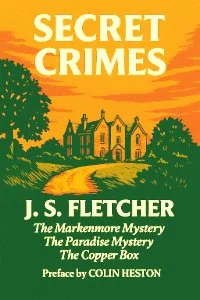
Secret Crimes

by Colin Heston (Author),/editor J. S. Fletcher (Author)

Three Classic Mysteries by J. S. Fletcher: The Markenmore Mystery • The Paradise Mystery • The Copper Box

Secrets, deception, hidden identities, and murder lie at the heart of these three masterful mysteries from one of Britain's finest Golden Age crime writers.

J. S. Fletcher was a pioneer of the modern detective novel, renowned for weaving intricate plots, memorable characters, and surprising revelations into stories that keep readers guessing until the final page. In Secret Crimes, three of his most engaging mysteries are brought together in a single volume.

In The Markenmore Mystery, a seemingly ordinary country-house murder uncovers a web of family secrets, concealed motives, and long-buried truths. As investigators delve deeper into the case, they discover that the victim's past may hold the key to solving the crime.

The Paradise Mystery begins with a shocking death in a quiet Yorkshire village. What appears at first to be a straightforward case soon develops into a complex puzzle involving hidden relationships, financial intrigue, and dangerous ambitions. Fletcher's skillful plotting leads readers through a maze of clues toward a startling conclusion.

In The Copper Box, a mysterious object becomes the center of an increasingly dangerous investigation. Murder, theft, and international intrigue combine as detectives seek to uncover the significance of a seemingly ordinary box whose contents could change everything.

Combining atmospheric settings, clever detective work, and expertly constructed mysteries, these three novels showcase Fletcher at the height of his powers. His stories capture the transition from Victorian sensation fiction to the detective fiction of the twentieth century, offering both historical charm and enduring suspense.

This new edition includes a specially written Preface by Colin Heston, placing Fletcher's work in the context of the development of modern crime fiction and examining why his mysteries continue to captivate readers today.

Perfect for fans of classic British detective fiction, Golden Age mysteries, and authors such as Arthur Conan Doyle, Freeman Wills Crofts, and Edgar Wallace, Secret Crimes is a compelling collection of hidden motives, dangerous secrets, and unforgettable crimes.

Read-Me.Org Inc. New York-Philadelphia-Australia. 2026. p.403.
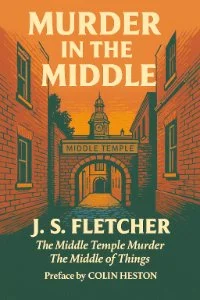
Murder in the Middle

Colin Heston (Editor and Author), J. S. Fletcher (Author)

Two Classic Mystery Novels by J. S. Fletcher. The Middle Temple Murder & The Middle of Things.
Edited with a New Preface by Colin Heston

Step into the shadowy world of Edwardian crime with two compelling mysteries from one of Britain's greatest masters of detective fiction, J. S. Fletcher.

In The Middle Temple Murder, a respected barrister is found dead in London's historic legal district. What first appears to be a straightforward case soon reveals a web of hidden identities, long-buried secrets, and unexpected motives. As investigators follow a trail of clues through the chambers, courts, and corridors of the Middle Temple, Fletcher demonstrates why he became one of the most admired crime writers of his age.

In The Middle of Things, an apparently ordinary man suddenly finds himself at the centre of a baffling mystery. Drawn into a world of deception, intrigue, and danger, he must untangle a series of puzzling events whose significance becomes clear only when he discovers that he is standing in the very middle of a much larger scheme. Combining suspense, clever plotting, and memorable characters, Fletcher once again delivers a masterclass in classic detective storytelling.

Both novels showcase Fletcher's remarkable ability to blend traditional mystery, legal intrigue, and psychological suspense. His carefully constructed plots, vivid settings, and attention to detail helped shape the development of modern crime fiction and influenced generations of mystery writers.

This new edition includes a specially written preface by Colin Heston, exploring Fletcher's enduring appeal, his contribution to detective literature, and the continuing relevance of his mysteries in an age still fascinated by crime, justice, and hidden truths.

Perfect for readers who enjoy Golden Age detective fiction, courtroom mysteries, and the works of Arthur Conan Doyle, Freeman Wills Crofts, and G. K. Chesterton, Murder in the Middle offers two engrossing tales from one of the early twentieth century's most accomplished mystery writers.

Read-Me.Org Inc. New York-Philadelphia-Australia. 2026. p.342.

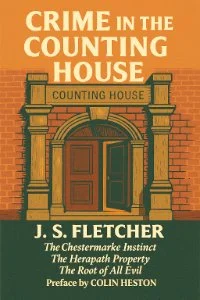
Crime In The Counting House: Three Stories from J. S. Fletcher

Colin Hestpn Editor and Preface. J. S. Fletcher author.

Crime in the Counting House gathers three of J. S. Fletcher’s most compelling investigations into the hidden workings of money, law, and power, where crime is concealed not in darkened streets but within the very institutions designed to uphold order. In The Chestermarke Instinct, The Herapath Property, and The Root of All Evil, Fletcher reveals a world in which trust is fragile, appearances are deceptive, and the pursuit of wealth can obscure both truth and justice. These are mysteries shaped as much by financial intrigue and legal complexity as by human ambition, drawing the reader into a network of secrets that extends far beyond the immediate crime.

Writing at a pivotal moment in the development of modern detective fiction, Fletcher shifts the genre’s focus from the isolated act of wrongdoing to the systems that make such acts possible. His narratives probe the respectable surfaces of society—banks, estates, partnerships, and inheritances—and uncover the tensions and hidden motives that lie beneath. Each novel unfolds with methodical precision, yet the solutions they offer point to a deeper unease, suggesting that corruption and deception are rarely confined to individuals alone.

This edition, introduced by a new preface from Colin Heston, situates Fletcher’s work within the broader history of crime writing and highlights its enduring significance. Heston argues that these stories occupy a crucial middle ground in the evolution of the genre, where the traditional puzzle begins to expand into a more complex exploration of social and economic reality. The result is a collection that is not only deeply engaging as narrative, but also revealing in its portrayal of a world where the most dangerous crimes are often those committed in plain sight.

For readers who value classic British mystery, Crime in the Counting House offers both intellectual intrigue and narrative richness, demonstrating why Fletcher remains one of the most important and versatile writers of early twentieth‑century crime fiction.

Read-Me.Org Inc. New York-Philadelphia-Australia. 2026. 425 p.

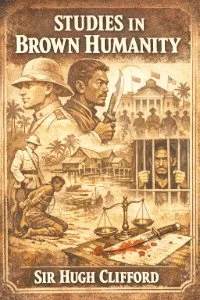
Studies in Brown Humanity: :Being Scrawls and Smudges in Sepia, White, and Yellow

By Hugh Clifford (Author), Graeme Newman (Introduction)

Studies in Brown Humanity by Sir Hugh Clifford is a striking collection of literary sketches drawn from the author’s experiences as a British colonial administrator in the Malay Peninsula during the late nineteenth century. Blending storytelling with observation, Clifford presents a series of vivid portraits of village life, local customs, personal conflicts, and dramatic encounters shaped by the social structures of colonial Southeast Asia. The narratives explore themes of honor, betrayal, justice, and authority, often focusing on moments when traditional Malay codes of conduct collide with the legal and moral framework imposed by the British colonial state.

Although written as literary sketches rather than formal social analysis, the book provides revealing insights into the ways communities understand wrongdoing and punishment. Clifford’s stories depict acts of violence, disputes over reputation, and conflicts between individuals and authority, illustrating how social norms, kinship ties, and communal expectations shape both criminal behavior and responses to it. In this sense, the work can be read not only as colonial literature but also as an early, informal contribution to the sociological study of crime and social control.

At the same time, Studies in Brown Humanity reflects the attitudes and assumptions of its imperial context. Clifford’s interpretations are filtered through the perspective of a European observer, and the book reveals much about the intellectual climate of the British Empire at the turn of the twentieth century. For modern readers, the volume is therefore both a vivid narrative of colonial life and a historical document that illuminates how crime, justice, and cultural difference were understood within the framework of empire.

Rich in atmosphere and dramatic detail, Clifford’s work remains valuable today as a window into the complex social worlds of colonial Southeast Asia and as a reminder of how early narratives about crime and punishment were shaped by the cultural and political conditions of their time.

Read-Me.Org Inc. New York-Philadelphia-Australia. 2026. 291p.

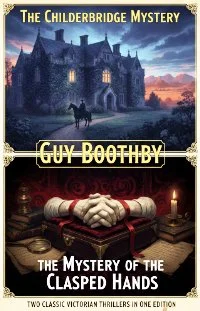
The Mystery of the Clasped Hands & The Childerbridge Mystery: Two Novels

by Guuy Boothby (Author), Colin Heston (Introduction)

In this combined edition, readers are presented with two quintessential examples of the late Victorian "shocker" from the pen of Guy Boothby, a writer who defined the era’s taste for fast-paced, sensational mystery. The first novel in this volume, The Mystery of the Clasped Hands, originally published in 1901 by F.V. White & Co., serves as a dark exploration of the macabre and the forensic. The story begins with a truly visceral hook: a wedding gift that contains the severed, preserved hands of a woman. It is a classic example of the Victorian obsession with reputation and the legal system, as the protagonist, Godfrey Tring, finds himself trapped in a web of circumstantial evidence. Boothby expertly depicts how quickly a gentleman’s life can be dismantled by a single accusation, making the legal system itself a source of mounting dread. This work highlights Boothby's skill in using sensational artifacts to drive a plot that forces the reader to question whether innocence alone is enough to survive a vengeful conspiracy.
Published just a year later in 1902, The Childerbridge Mystery shifts the focus toward the "sins of the father" trope and the intersection of colonial wealth and domestic stability. When wealthy Australian squatter William Standerton returns to England to establish himself at Childerbridge Manor, he brings with him a fortune that carries the shadow of his past. The mystery is not merely a puzzle of logic but a psychological examination of how the "New World" of the colonies—often viewed by Victorians as a place of lawless opportunity—inevitably catches up with the refined "Old World" of the English gentry. Boothby uses the tranquil setting of a country estate to highlight the tension between a man’s desire for a respectable future and the inescapable reach of his history.
Bound together, these two novels illustrate the common threads of Boothby’s literary legacy: the fragility of social identity, the weight of previous associations, and a relentless narrative pace that bridges the gap between 19th-century Gothic horror and the structured detective fiction of the 20th century. Whether dealing with a grisly forensic artifact or a haunted family legacy, Boothby provided his audience with a perfect blend of the familiar and the shocking. This edition serves as a testament to a writer who, though often overlooked today, once stood as a master of the mystery genre, capturing the collective anxieties of a world on the brink of change.

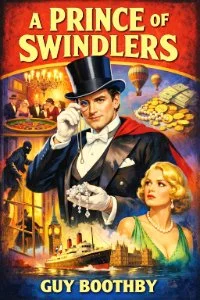
A Prince of Swindlers

By Guy Boothby

In the glittering drawing rooms and shadowed corridors of a restless empire, one man reigns supreme—not by birthright, but by brilliance. In A Prince of Swindlers, Guy Boothby introduces a criminal of rare charm and audacity, a master strategist who turns society’s vanity and greed into instruments of his art.

Elegant, daring, and always one step ahead, the “Prince” moves effortlessly among the wealthy and powerful, weaving deceptions so intricate that even his victims admire the skill with which they are undone. Yet behind the polished manners and calculated risks lies a dangerous truth: in a world obsessed with status and fortune, the greatest illusion may be respectability itself.

Fast-paced and irresistibly clever, this classic tale of high-stakes fraud and psychological intrigue remains as entertaining—and unsettling—today as when it first captivated readers.

Read-Me.Org Inc. New York-Philadelphia-Australia. 2026. 175p.

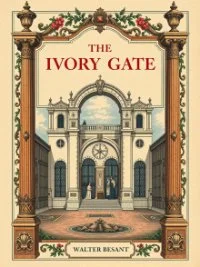
The Ivory Gate

By Walter Besant. Introduction by Colin Heston.

First published in 1893, The Ivory Gate stands among the late novels of Walter Besant, a writer whose career was defined by a sustained engagement with the moral, social, and psychological pressures of modern urban life. Appearing at the close of the Victorian era, the novel reflects both Besant’s long-standing commitment to social realism and his increasing interest in the interior life of the individual—especially the fragile boundary between aspiration and illusion.
The title itself announces the book’s governing metaphor. In classical and medieval literature, the “ivory gate” is the passage through which false dreams pass into waking life, as opposed to the gate of horn, from which true dreams emerge. Besant adapts this image to late-nineteenth-century conditions, using it to explore the seductive power of unrealized hopes, romantic delusions, and social fantasies that shape—and often distort—human conduct. The novel is less concerned with overt villainy than with self-deception: the quiet, persistent capacity of individuals to misread their circumstances and to substitute imagined futures for lived realities.
For modern readers, the novel remains strikingly relevant. Its exploration of illusion, self-fashioning, and the tension between inner fantasy and external reality resonates with contemporary concerns about identity, expectation, and social pressure. While its Victorian idiom and moral framework are firmly rooted in the nineteenth century, its psychological insights anticipate later treatments of self-deception and emotional displacement.
This new edition invites readers to reconsider The Ivory Gate not simply as a period piece, but as a thoughtful and understated meditation on the human tendency to live in dreams of our own making. In tracing the quiet tragedies that arise when those dreams eclipse judgment, Besant offers a work of enduring moral seriousness—one that illuminates both the anxieties of his age and the persistent vulnerabilities of our own.

A READ-ME.ORG CLASSIC REPRINT. New York-Philadelphia-Australia. 2025. 321p.

Prince Otto

by Robert Louis Stevenson (Author), Colin Heston (Editor)

Volume VII of the Swanston Edition of "The Works of Robert Louis Stevenson" continues to present a diverse collection of Stevenson's literary output. This volume typically includes a mix of his essays, short stories, and other writings, reflecting his wide-ranging interests and talents. The lead piece, "Prince Otto", was first published in 1885. The story is set in the fictional Germanic principality of Grünewald and follows the titular character, Prince Otto Johann Friedrich. Otto is a well-meaning but somewhat ineffectual ruler, whose reign is marked by political intrigue and personal dilemmas. The novel explores themes of power, responsibility, and personal growth as Otto grapples with his duties as a prince and his relationships with those around him, including his wife, Princess Seraphina, and his scheming ministers. "Prince Otto" is notable for its blend of romance, adventure, and political satire, showcasing Stevenson's versatility as a writer.

This volume has been carefully edited and redesigned by Colin Heston, renowned novelist and story writer, to make the book more comprehensible to the present-day reader.

The Case of Mr. Crump: Editied with an Introduction by Graeme R. Newman

Byy Ludwig Lewisohn (Author), Graeme Newman (Editor)

“The Case of Mr. Crump” by Ludwig Lewisohn is a richly detailed narrative that delves into the complex lives of Anne and Herbert Crump. The story spans multiple stages of their lives, exploring themes of love, manipulation, duty, and the pursuit of artistic integrity. Anne’s tumultuous past and manipulative nature clash with Herbert’s aspirations as a young musician, leading to a series of personal and professional struggles. Set against the backdrop of early 20th-century America, the novel portrays Herbert’s journey through marital conflicts, familial obligations, and his relentless quest for success in the music industry. The narrative is marked by intense emotional conflicts, societal pressures, and the enduring impact of past traumas on the characters’ lives. Editing of the book corrects punctuation and spelling errors and improves the overall design and layout of the book, taking care to preserve the author's style. The interior design has been improved to make the book easier to read. The new Introduction offers a detailed overview of the novel and discusses the cultural and historical significance of Lewisohn's work.

Read-Me.Org Inc. 2025.

A Sydney Side Saxon

By Rolf Boldrewood

"A Sydney Side Saxon" is a captivating tale that delves into the complexities of identity, heritage, and belonging. Set against the backdrop of multicultural Sydney, the story follows the protagonist as she navigates the challenges of straddling two worlds—the traditional expectations of her Anglo-Saxon lineage and the vibrant diversity of her Australian upbringing. As she learns to embrace her heritage while forging her own path, readers are taken on a poignant journey of self-discovery and acceptance. With richly drawn characters and evocative storytelling, this novel is a compelling exploration of cultural fusion and the universal quest for understanding one's place in the world.

Heinemann and Balestier, 1891, 96 pages

A Colonial Reformer

By Rolf Boldrewood

A Colonial Reformer delves deep into the life of an unsung hero of colonial America. Through meticulous research and insightful analysis, this book brings to light the struggles and triumphs of a visionary figure who challenged the status quo and paved the way for change. Readers will be captivated by the story of a man ahead of his time, whose unwavering dedication to reform reshaped the course of history. A compelling narrative that sheds light on a forgotten chapter of America's past, A Colonial Reformer is a must-read for anyone interested in the untold stories of courage and perseverance.

Macmillan and Company, 1891, 518 pages

The Lost Stradivarius

By John Meade Falkner

Edited with an Introduction by Edward Wilson who notes: “The detailed apparatus to this edition has been demanded not only by Time, which has altered not just the senses of words but a whole cultural hinterland beyond a modern reader's recognition, but by Falkner himself, who delighted in sowing his novel with literary and antiquarian allusions. Indeed, a character, Mr Gaskell, in The Lost Stradivarius itself, when reading an eighteenth-century diary in pursuit of highly sensational matter cannot resist telling us that "the minute details given were often of high antiquarian interest'“

London. Oxford University Press. 1954. (1895). USED BOOK. CONTAINS MARK-UP.

The Bostonians

By Henry James

The Bostonians is a novel by Henry James, first published as a serial in The Century Magazine in 1885–1886 and then as a book in 1886. This bittersweet tragicomedycentres on an odd triangle of characters: Basil Ransom, a political conservative from Mississippi; Olive Chancellor, Ransom's cousin and a Boston feminist; and Verena Tarrant, a pretty, young protégée of Olive's in the feminist movement. The storyline concerns the struggle between Ransom and Olive for Verena's allegiance and affection, though the novel also includes a wide panorama of political activists, newspaper people, and quirky eccentrics.

London. Macmillan . 1886. 419p.

Silas Marner. The Lifted Veil. Brother Jacob.

By George Eliot III

Silas Marner is George Eliot's (1819-1880) short novel of 1861, in which the protagonist is obliged to leave his small religious community after being falsely accused of theft. He settles in Raveloe, where he works diligently as a weaver for 15 years and manages to accumulate and hoard a substantial amount of gold.
“The Lifted Veil” concerns themes of fate, extrasensory perception, the mystery of life and life after death. Eliot's interest in these themes stemmed partly from her own struggles with religious faith, as she was an extremely devout Christian as a child and young adult who later renounced Christianity completely. “Brother Jacob'“raises issues of perennial concern to George Eliot as an author who was also a woman. In particular, this fabular tale about a hapless confectioner and his imbecilic broth- er exposes the pitfalls in women's relationship(s) to cultural authority, 'the strange bright fruits of knowledge' (Woolf 160). As a fable whose hero is distinguished by fraudulence and guile, 'Brother Jacob' reflects its author's attitude towards plagiarists and other impostors with pre- tensions to authorship. Even as Marian Evans disguised herself as George Eliot, the 'silly lady novelist' of her day is disguised in the story's protagonist, David Faux.

London. Oxford University Press. 1861., 1859, 1860. 318p.

John Halifax, Gentleman

By Mrs. Craik.

The action is centred on the town of Tewkesbury, scarcely disguised by the fictional name Norton Bury, in Gloucestershire. The story is narrated by Phineas, a friend of the central character. John Halifax is an orphan, determined to make his way in the world through honest hard work. He is taken in by a tanner, Abel Fletcher, who is a Quaker, and thus meets Phineas, who is Abel's son. John eventually achieves success in business and love, and becomes a wealthy man. (Wikipedia)

London: Ward, Lock and Co. 1856. 449p.

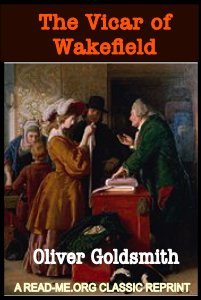
The Vicar of Wakefield

By Oliver Goldsmith.

“When Dr Primrose loses his fortune in a disastrous investment, his idyllic life in the country is shattered and he is forced to move with his wife and six children to an impoverished living on the estate of Squire Thornhill. Taking to the road in pursuit of his daughter, who has been seduced by the rakish Squire, the beleaguered Primrose becomes embroiled in a series of misadventures–encountering his long-lost son in a travelling theatre company and even spending time in a debtor’s prison. Yet Primrose, though hampered by his unworldliness and pride, is sustained by his unwavering religious faith. In The Vicar of Wakefield, Goldsmith gently mocks many of the literary conventions of his day–from pastoral and romance to the picaresque – infusing his story of a hapless clergyman with warm humour and amiable social satire.”

J.C. Krieger and Company, 1828 300p.

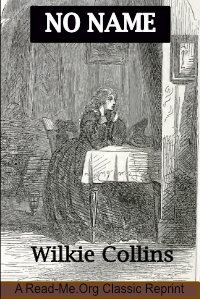
No Name

By Wilkie Collins.

This book is a 19th-century novel by the master of sensation fiction, Wilkie Collins. A country gentleman is killed in an accident and his wife dies shortly after him. The blow is double for their daughters, who discover that they were born before their parents were married. Their sudden illegitimacy robs them of their inheritance and their accustomed place in society.

New York: Harper and Brothers, 1873. 622p.

The Dead Secret

By Wilkie Collins. .

A Novel . Two of the characters which appear in these pages -- "Rosamond," and "Uncle Joseph" -- had the good fortune to find friends everywhere who took a hearty liking to them. A more elaborately drawn personage in the story -- "Sarah Leeson" -- was, I think, less generally understood. The idea of tracing, in this character, the influence of a heavy responsibility on a naturally timid woman, whose mind was neither strong enough to bear it, nor bold enough to drop it altogether, was a favorite idea with me, at the time, and is so much a favorite still, that I privately give "Sarah Leeson" the place of honor in the little portrait-gallery which my story contains.

London: Bradbury and Evans, 1857. 322p.

The Ball And The Cross

By G.K. Chesterton.

When two men decide to fight for their respective beliefs, they discover to their astonishment that an unbelieving world won’t let them, and they find themselves partners and fugitives from the law in this steampunk satire. Penned by G.K. Chesterton in 1909, this whimsical and biting novel eerily foreshadows a world in which “tolerance” is the only god and all those who believe ideas are worth dying for are forced to stand together to defend freedom of speech and belief.

New York: J. Lane, 1909. 436p.

The Bride of the Sun

By Gaston Leroux.

Young engineer Raymond Ozoux, accompanied by his uncle, arrives in Peru to meet his fiancée, Marie-Thérèse. Meanwhile, descendents of the Incas are preparing a great feast during which a virgin will be sacrificed to the Sun, walled up alive in a secret temple. At the same time, a mysterious Inca bracelet is sent to Marie-Thérèse purporting to be a gift of the Sun to his future bride.. The young girl is then kidnapped by the Incas and Raymond, his uncle and Marie-Thérèse's father set out on a trek across Peru to free her while a revolution shakes the country.

NY. Harrow and Heston Classic Reprint. (1912) 177 pages.