Open Access Publisher and Free Library
Fiction+Mediajpg.jpg

FICTION and MEDIA

CRIME AND MEDIA — TWO PEAS IN A POD

Posts tagged suspense
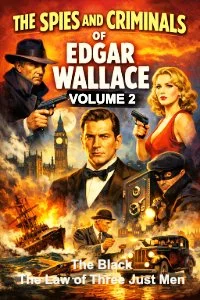
The Spies And Criminals Of Edgar Wallace -Volume 2

SCOTLAND YARD AND BEYOND

By Edgar Wallace. Edited and Introduced by Graeme R. Newman

The Spies and Criminals of Edgar Wallace — Volume 2 brings together one of Edgar Wallace’s most intriguing crime novels alongside the stories that introduced one of his most famous creations. At the center of this volume is the gripping novel The Black, a tale of mystery, intrigue, and shadowy power in which a secretive criminal force challenges the authority of the law and tests the ingenuity of those determined to bring it down. Filled with unexpected twists, daring schemes, and Wallace’s trademark rapid pacing, the novel showcases the author at the height of his storytelling powers.

Complementing the novel are the classic stories of The Law of the Three Just Men, the remarkable vigilante trio who became one of Wallace’s most celebrated inventions. Acting outside the formal machinery of government, the Three Just Men intervene when justice fails. Their warnings are precise, their judgments uncompromising, and their reach seems limitless. Governments tremble when they speak, for their word is always followed by action.

Together, The Black and the stories of The Law of the Three Just Men reveal Wallace’s extraordinary ability to create suspenseful plots and unforgettable characters. His world is one where spies, secret societies, and daring investigators move through a landscape of danger and intrigue, where justice may come from unexpected quarters, and every page brings a new surprise.

In this second volume of The Spies and Criminals of Edgar Wallace, readers are invited to rediscover the excitement, ingenuity, and narrative brilliance that made Wallace one of the most widely read thriller writers of his time—and whose stories continue to entertain audiences around the world.

Read-Me.Org Inc. New York-Philadelphia-Australia. 2026. 299p.

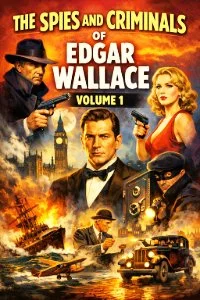
The Spies And Criminals Of Edgar Wallace -Volume 1

 SCOTLAND YARD AND BEYOND

By Edgar Wallace. Edited and introduced by Graeme R. Newman

From the shadowed streets of London to the secret worlds of spies and master criminals, Edgar Wallace delivers the kind of high-speed storytelling that made him one of the most widely read writers of his age.

The Spies and Criminals of Edgar Wallace — Volume 1 gathers a thrilling selection of Wallace’s most entertaining tales of intrigue, deception, and daring adventure. Within these pages readers encounter brilliant detectives, elusive thieves, secret societies, and dangerous conspiracies that challenge the keenest minds of Scotland Yard. Each story unfolds with Wallace’s trademark pace—swift, suspenseful, and filled with surprising twists.

A master of popular fiction, Wallace combined sharp dialogue, vivid characters, and ingenious plots to create stories that remain as gripping today as when they first captivated readers in the early twentieth century.

This exciting new edition invites modern readers to rediscover a classic voice of crime fiction and experience the suspense, wit, and adventure that made Edgar Wallace a legend of the thriller.

Dr. NIKOLA - The Complete Saga: Volume 2


by Guy Boothby (Author), Graeme Newman (Editor), Colin Heston (Introduction)

. When the enigmatic Dr. Nikola first stepped onto the literary stage in 1895, clutching his sinister black cat Apollyon and weaving schemes that stretched from the back alleys of Shanghai to the hidden monasteries of Tibet, he didn't just capture the Victorian imagination—illegally or otherwise, he colonized it.
These volumes bring together, for the first time in a single definitive collection, the complete saga of Dr. Nikola: A Bid for Fortune, Dr. Nikola, The Lust of Hate, Dr. Nikola’s Experiment, and Farewell, Nikola. To read them in succession is to witness the birth of the modern "super-villain" and to appreciate the unique, rugged perspective Boothby brought to the crowded field of late-Victorian sensation fiction.
Born in Adelaide in 1867, Guy Newell Boothby was the son of a prominent South Australian parliamentarian. While he eventually found fame in the drawing rooms of London, his formative years were spent in the wide-open, often unforgiving landscapes of the Australian colonies.
In the 1890s, the literary world was reeling from "Sherlock-mania." While Sir Arthur Conan Doyle gave the world the ultimate champion of logic, Boothby gave it the ultimate agent of chaos. Dr. Nikola is not merely a criminal; he is a polymath, an occultist, and a man of immense physical and intellectual magnetism.
Across these five novels, we see Nikola evolve:
Volume 1:
A Bid for Fortune (1895): We are introduced to the Doctor through the eyes of Richard Hattasall. Here, Nikola is a vengeful shadow, a man whose "vendetta" drives a globe-trotting chase.
Dr. Nikola (1896): Arguably the centerpiece of the series, Boothby takes us into the forbidden heart of Tibet. It remains one of the finest examples of the "Lost World" genre, enriched by Stanley L. Wood’s iconic illustrations.
The Lust of Hate (1898): A darker, more psychological turn where Nikola manipulates a broken man’s desire for revenge.
Volume 2
Dr. Nikola’s Experiment (1899): Here, Boothby touches on the "mad scientist" tropes that would later define 20th-century sci-fi, as Nikola attempts to conquer death itself.
Farewell, Nikola (1901): The swan song of the character, providing a sense of closure to a man who lived his life in the liminal space between genius and madness.
Guy Boothby died tragically young at the age of 37, leaving behind a staggering 53 novels written in just over a decade. For years, his work languished in the shadows of more "academic" Victorian literature. However, as these works have entered the public domain, a new generation of readers—and editors—has rediscovered the sheer, unadulterated joy of his storytelling.
Boothby’s Dr. Nikola remains a vital link in the evolution of popular fiction. Without Nikola, would we have Sax Rohmer’s Fu Manchu? Would we have the sophisticated antagonists of James Bond? Probably not. By centering this edition on Boothby’s Australian roots, we acknowledge that the "King of Sensation" wasn't just a product of London’s Fleet Street, but a traveler of the world who brought the wild energy of the Antipodes to the heart of the Empire. This collection aims to preserve the thrill of the original serialization while providing the context necessary for a modern reader. As you follow the Doctor through the mist-shrouded streets of London and the sun-bleached ports of the Pacific, remember that you are in the hands of a master who knew those ports firsthand.
Welcome to the world of Dr. Nikola. Tread carefully—Apollyon is watching!

Read-Me.Org Inc. New York-Philadelphia-Australia. 2026. 292p.

The Beautiful White Devil

By Guy Boothby

The Beautiful White Devil (1896) by Guy Boothby stands as one of the most vivid artifacts of the fin-de-siècle adventure boom, a moment when popular fiction fused imperial restlessness, criminal romance, and the growing public appetite for charismatic anti-heroes. Boothby, already known for his flair for exotic atmospheres and high-velocity plotting, crafted in this novel a figure who upends the moral architecture of late-Victorian adventure: a brilliant, elusive woman outlaw who commands the seas with a mixture of theatrical bravado, disciplined intelligence, and a distinctly modern sensibility about power.

The novel’s pacing is unmistakably Boothby’s—rapid, cinematic, and unembarrassed in its desire to enthrall—but what gives The Beautiful White Devil enduring interest is its central inversion. Instead of the conventional male pirate-captain or gentleman-adventurer, Boothby builds his drama around a woman whose audacity challenges the gender codes of the 1890s. She is both a product of her age and a challenge to it, exploiting the cracks in a world structured by empire, commerce, and male authority. Her crimes unsettle not simply because they are daring, but because they are executed with a level of strategic clarity usually reserved, in Victorian fiction, for men. Even today, she reads less like a stock villain and more like the prototype of the morally ambiguous mastermind—an ancestor of the elegant thief, the tactical vigilante, and the charismatic rogue.

For modern readers, this fusion of high adventure and gender subversion gives the novel a surprisingly contemporary resonance. Boothby captures the anxieties and fascinations of an empire confronting its own vulnerabilities: the fragility of control over distant seas, the shifting status of women within public life, and the ambiguity of heroism in a world where law, power, and personal justice do not always align. The tension between official authority and individual agency—especially when wielded by someone who is not expected, in the Victorian imagination, to possess it—feels strikingly current in an age that still debates the ethics of resistance, the allure of transgression, and the politics of criminality.

As a narrative artifact for a modern edition, The Beautiful White Devil is more than an adventure story; it is a window into the performative spectacle of crime at the turn of the century and a reminder of how popular fiction often anticipates social transformation before “serious” literature acknowledges it. Boothby’s tale, with its blend of romance, danger, and social provocation, remains a compelling example of how the adventure novel can reveal the shadows and ambitions of the culture that produced it.

Read-Me.Org Inc. New York-Philadelphia-Australia. 2026. 216p.

The La Chance Mine Mystery

By S. Carleton. Introduction by Colin Heston.

The 1920 publication of The La Chance Mine Mystery by S. Carleton, the pseudonym for Susan Morrow Jones, represents a pivotal moment in the evolution of the North American thriller. By weaving the Victorian Gothic tradition into the rugged landscape of the Canadian wilderness, Carleton created a narrative that serves as a sophisticated precursor to modern psychological suspense. In contemporary literature, this work remains highly relevant as a masterclass in atmospheric isolation, where the "frozen North" acts not merely as a setting but as a primary antagonist. This technique mirrors modern "Environment as Character" tropes seen in current survivalist fiction, reminding readers that the primitive fear of being trapped in a vast, uncaring wilderness transcends technological advancement and remains a powerful literary hook.

From a criminological perspective, the novel offers a compelling study of frontier anomie. In the absence of formal state policing, the isolated mine becomes a vacuum where white-collar crimes like corporate fraud and title theft inevitably devolve into violence. This lack of social control forces characters into a state of informal justice, predating modern investigative frameworks through "bushcraft forensics." In an era before chemical analysis or DNA, Carleton’s characters rely on environmental reconstruction—analyzing the crust of snowdrifts or the set of a footprint—to determine the timing of a crime. This reliance on natural preservation within a crime scene provides a proto-historical look at how physical environment shapes both criminal opportunity and the subsequent forensic analysis used to untangle it.

The social dynamics of the mine also provide deep insights into early 20th-century victimology. Carleton highlights a hierarchy of vulnerability, focusing on how marginalized laborers and isolated individuals are targeted by those with institutional power. In this setting, victims are often chosen specifically because their disappearances can be conveniently blamed on the harsh climate rather than foul play. This exploration of "invisible victims" and structural exploitation resonates with modern social justice themes regarding labor and corporate overreach. By subverting the "hard-boiled" male tropes of her time, Carleton used her unique perspective as a female author to provide an emotional depth and keen eye for power imbalances that continue to inform the DNA of modern suspense and elevated horror.

Read-Me.Org Inc. New York-Philadelphia-Australia. 2026. 192p.

The Golden Beast

By E. Phillips Oppenheim. Introduction by Colin Heston.

When E. Phillips Oppenheim published The Golden Beast in 1926, he was already firmly established as the "Prince of Storytellers," a title earned by his uncanny ability to blend high-society glamour with the cold mechanics of crime. This novel, however, stands as a particularly striking waypoint in the history of the genre, moving beyond the simple "whodunnit" to explore the darker, more systemic shadows of the human psyche. For the modern reader, and especially for the student of criminology, the book serves as a fascinating precursor to contemporary theories on the intersection of power, wealth, and deviance.

The narrative significance of the work lies primarily in its early exploration of the "Power Elite" as a distinct criminal class. Long before modern criminology formalized the study of white-collar crime and corporate sociopathy, Oppenheim was illustrating how extreme financial leverage could create a vacuum of accountability. The "Beast" of the title is not merely a man, but a symbol of the socio-economic predator who views the law as an inconvenience to be bypassed rather than a boundary to be respected. This mirrors modern discussions on "moral insanity" in elite spaces, where the perpetrator’s perceived status grants them a psychological immunity to the social contract.

Furthermore, The Golden Beast captures a pivotal moment in forensic evolution. Written during a decade of rapid scientific advancement, the plot reflects the transition from Victorian-era intuition to the more clinical, methodical approach of forensic science. Oppenheim flirts with themes of biological erasure and chemical disposal, tapping into the 1920s anxiety that science, in the wrong hands, could facilitate the "perfect crime." It also ventures into early criminal profiling, as the narrative shifts focus from the physical evidence of the crime to the warped mental architecture of the criminal.

By examining the concept of the "disappearing victim," Oppenheim also prefigures modern victimology. He explores how a sophisticated offender can manipulate social structures to make an individual vanish not just physically, but legally and socially. This focus on the systemic nature of crime—how it is hidden, how it is financed, and how it is rationalized by the perpetrator—makes the novel an enduring piece of literature that remains relevant to our current understanding of the psychology of the super-criminal. It is a cautionary tale of a world where the law is always one step behind the man with the means to reinvent it.

Read-Me.Org Inc. New York-Philadelphia-Australia. 2026. p.255.

The Ransom for London

by J. S. Fletcher. Preface by Colin Heston.

The Ransom for London is one of the last full-length mysteries penned by J. S. Fletcher, the prolific master of British crime fiction whose work helped shape the modern detective novel. First published in 1937—just months before the golden age of classic mystery reached its twilight—this novel stands as a testament to Fletcher’s enduring gifts: intricate plots, bristling suspense, and a keen sense of how crime reveals the hidden tensions of society.

This edition invites readers to rediscover a late gem from a writer whose contributions to the detective genre paved the way for many who followed. With The Ransom for London, Fletcher delivers a fast-moving, atmospheric tale that demonstrates his continuing relevance, his wit, and his unmatched instinct for suspense.

Step into London on the brink—into a story built on riddles, danger, and the high cost of holding a city’s fate in the balance. The ransom has been demanded. Whether the truth is paid in gold or courage is for you to discover.

Read-Me.Org Inc. New York-Philadelphia-Australia. 2025. p.229.

Dracula

By Bram Stoker

Bram Stoker's Dracula, first published in 1897, remains one of the most iconic and influential novels in the Gothic literary tradition. More than a simple horror story, Dracula is a rich tapestry of Victorian anxieties, cultural tensions, and symbolic complexity. Through its epistolary structure and vivid characters, the novel explores themes of modernity versus antiquity, sexuality and repression, imperialism, and the supernatural. It is a work that not only defined the vampire genre but also reflected the fears and fascinations of its time.

The late 19th century was a period of profound transformation in Britain. The Industrial Revolution had ushered in an age of technological innovation and scientific progress, while the British Empire stood at the height of its global influence. Yet beneath this veneer of confidence lay deep-seated anxieties about degeneration, foreign invasion, and the erosion of traditional values. Dracula captures these tensions through its central antagonist, Count Dracula, a foreign aristocrat who threatens the sanctity of British society. His arrival in England symbolizes a reverse colonization, where the East invades the West, challenging notions of cultural superiority and national security.

Stoker’s use of the epistolary format—comprising diaries, letters, newspaper articles, and ship logs—serves to ground the supernatural elements of the story in a framework of realism and documentation. This narrative technique reflects the Victorian obsession with empirical evidence and rationality, even as the characters confront a force that defies scientific explanation. The juxtaposition of modern tools such as typewriters and phonographs with ancient folklore and religious symbols underscores the novel’s central conflict between progress and the past.

One of the most compelling aspects of Dracula is its exploration of sexuality and repression. Victorian society was marked by strict moral codes, particularly regarding gender roles and sexual behavior. The novel subverts these norms through the seductive and transgressive nature of vampirism. Characters like Lucy Westenra and Mina Harker become battlegrounds for these tensions, as their encounters with Dracula blur the lines between victimhood and desire. The act of bloodsucking, laden with erotic undertones, becomes a metaphor for the loss of innocence and the threat of moral corruption.

Religion plays a crucial role in the narrative, often positioned as the ultimate defense against the vampire’s evil. Crucifixes, holy water, and sacred rites are employed alongside scientific reasoning, suggesting a synthesis of faith and logic in the fight against darkness. This duality reflects the Victorian struggle to reconcile religious belief with the rise of secularism and scientific thought.

Dracula also engages with the theme of identity and duality. Count Dracula himself embodies contradictions: he is both man and monster, aristocrat and predator, host and parasite. His ability to transform into animals and control the elements adds to his mystique and reinforces his role as a symbol of the uncanny. The characters who oppose him—Jonathan Harker, Van Helsing, Dr. Seward, and others—represent various facets of Victorian society, from legal and medical professions to religious authority, united in their mission to restore order.

The legacy of Dracula is vast and enduring. It established many of the conventions of vampire fiction and inspired countless adaptations across literature, film, and popular culture. Count Dracula has become a cultural archetype, embodying both fear and fascination. The novel’s rich symbolism and thematic depth continue to invite critical analysis, from psychoanalytic and feminist readings to postcolonial and queer interpretations.

In conclusion, Bram Stoker’s Dracula is far more than a tale of terror. It is a mirror reflecting the complexities of its time, a narrative that intertwines the rational and the irrational, the modern and the ancient, the sacred and the profane. Its enduring power lies in its ability to evoke fear while provoking thought, making it a masterpiece of Gothic literature and a cornerstone of cultural history.

Read-Me.Org Inc. New York-Philadelphia-Australia. 2025. 284p.

The Inner Beams

By Afshin rad

The document The Inner Beams by Afshin Rad is a historical novel set in East Berlin during the final years of the Cold War, focusing on the brutal atmosphere created by the East German Ministry of State Security, the Stasi. The narrative combines political history with a deeply personal story, illustrating how authoritarianism corrodes ordinary lives. It opens with a preface explaining the power and reach of the Stasi, an organization that employed nearly a hundred thousand agents and twice as many informants under the chilling slogan that anyone who “thinks differently” is an enemy.

The story follows Nadia, a young, marginalized woman surviving on the fringes of society through prostitution while raising her daughter Maya. Despite her poverty, stigmatization, and abuse at the hands of neighbors and strangers, she displays resilience and a rebellious spirit. Her life becomes entangled with the violence and hypocrisy of both the state and the church. She is alternately vilified and desired, caught between accusations of being a spy and exploitation by priests who hide their own corruption.

As events unfold, Nadia becomes a victim of the Stasi’s cruelty. She is imprisoned, tortured, and left for dead, only to be saved by a compassionate old man who hides her and helps her plan to reclaim her daughter, who has been taken by Party officials. Their efforts culminate in a daring but tragic attempt to rescue the child from a powerful regime family. The old man sacrifices his life to protect Nadia, while she herself endures near-death encounters in the collapsing state.

Against the backdrop of the Berlin Wall’s fall and the chaos of 1989, Nadia’s fate is sealed in both tragedy and symbolic triumph. Though she dies violently, her memory and sacrifice become a posthumous inspiration. Her grave, once marked with disdain, is later reclaimed as a shrine to freedom, with an epitaph honoring her rebellious spirit.

The work blends history, fiction, and allegory to show how individuals—especially the marginalized and forgotten—resist oppression and become unwilling martyrs of liberty. Through Nadia’s story, the book captures the human cost of totalitarianism while leaving readers with a sense of dignity, defiance, and the enduring value of freedom.

Read-Me.Org Inc. New York-Philadelphia-Australia. 2025. 77p.

Treasure Island: Works of R.L.Stevenson Vol.6

By R. L. Stevenson. Edited by Colin Heston

"Treasure Island" is a classic adventure novel by Robert Louis Stevenson, first published in 1883. The story follows young Jim Hawkins, who discovers a treasure map in the chest of a deceased pirate. This discovery sets him on a thrilling journey across the seas aboard the Hispaniola, in search of the hidden treasure. Along the way, Jim encounters a host of memorable characters, including the charismatic and cunning Long John Silver, who leads a mutiny among the crew. The novel is celebrated for its vivid characters, gripping plot, and timeless themes of adventure, bravery, and the quest for fortune. "Treasure Island" has had a lasting impact on popular culture, shaping the modern image of pirates and inspiring countless adaptations.

Volume VI of the Swanston Edition of "The Works of Robert Louis Stevenson" continues to showcase the breadth of Stevenson's literary talent. This volume typically includes a mix of his essays, short stories, and other writings. The Swanston Edition is known for its comprehensive and authoritative compilation of Stevenson's works, offering readers a thorough exploration of his diverse contributions to literature. Each volume in this series provides insight into Stevenson's versatility as a writer, highlighting his ability to engage readers across various genres and styles.

This volume has been carefully edited and redesigned by Colin Heston, renowned novelist and story writer, to make the book more comprehensible to the present-day reader.

Read-Me.Org Inc. NY. Philal Australia. 2025. 197p.

Strange Case of Dr. Jekyll and Mr. Hyde: The Works of Robert Louis Stevenson Vol. V.

By R. L. Stevenson. Edited by Colin Heston

"Strange Case of Dr. Jekyll and Mr. Hyde" is a novella by Robert Louis Stevenson, first published in 1886. The story explores the duality of human nature through the character of Dr. Henry Jekyll, a respected scientist who creates a potion that transforms him into the sinister and violent Mr. Edward Hyde. As Hyde, Jekyll indulges in immoral acts without fear of social repercussions. The narrative delves into themes of identity, morality, and the struggle between good and evil within the human soul. The novella is renowned for its suspenseful and gothic atmosphere, as well as its profound psychological insights.
In addition to Jekyll and Hyde, this volume features a mix of Stevenson’s essays, short stories, and other literary works. The Swanston Edition iis known for its comprehensive and authoritative compilation of Stevenson's oeuvre, providing readers with a deep dive into his diverse literary contributions. Additional stories and writings in this volume include:.
Thrawn Janet. A short story, first published in 1881. Set in a small Scottish village, the tale revolves around the mysterious and eerie events surrounding Janet, an old woman believed to be a witch. The story is narrated by the local minister, who recounts Janet's unsettling behavior and the supernatural occurrences that follow her arrival. The narrative is steeped in gothic elements and explores themes of superstition, fear, and the clash between rationality and the supernatural.
More New Arabian Nights, The Dynamiter. A collection of linked short stories co-written by Robert Louis Stevenson and his wife, Fanny Van de Grift Stevenson. Published in 1885, the stories are set in London and revolve around the adventures of various characters entangled in plots involving dynamite and political intrigue. The collection is a sequel to Stevenson's earlier work "New Arabian Nights" and continues to employ a similar structure of interconnected tales. Themes of adventure, mystery, and social commentary are prevalent throughout the stories.
This volume has been carefully edited and redesigned by Colin Heston, renowned novelist and story writer, to make the book more comprehensible to the present-day reader.

Read-Me.Org Inc. NY-Phila.-Australia. 2025. 193p.

The Body Snatcher

By R.L. Stevenson. Edited by Colin Heston

Volume 3 of the works of Robert Louis Stevenson is a fascinating collection that showcases his versatility as a writer. This volume includes the chilling short story "The Body Snatcher" and the insightful essays in "Familiar Studies of Men and Books."

"The Body Snatcher" is a macabre tale that delves into the dark world of grave robbing and medical ethics. Set in 19th-century Scotland, the story follows Fettes, a medical student, and his involvement with the unscrupulous Dr. Wolfe Macfarlane. The duo engages in the illegal practice of body snatching to supply cadavers for anatomical study. Stevenson's narrative is rich with suspense and horror, exploring themes of guilt, morality, and the consequences of one's actions. The story's climax is particularly haunting, leaving readers with a lingering sense of dread and contemplation about the darker aspects of human nature.

"Familiar Studies of Men and Books" is a collection of essays in which Stevenson examines the lives and works of various literary figures and thinkers. Through these essays, Stevenson offers his reflections on the personalities and contributions of individuals such as Victor Hugo, Robert Burns, and Walt Whitman. His writing is characterized by a blend of critical analysis and personal insight, revealing his deep appreciation for literature and the human condition. Stevenson’s essays are not merely biographical; they are thoughtful explorations of the impact these figures had on their respective fields and on Stevenson himself. The essays are marked by Stevenson's eloquent prose and his ability to connect with readers on an intellectual and emotional level.

Overall. Volume 3 of Stevenson's works is a testament to his literary prowess, combining the eerie and gripping narrative of "The Body Snatcher" with the reflective and scholarly essays in "Familiar Studies of Men and Books." This volume highlights Stevenson's ability to traverse different genres and themes, offering readers a rich and varied reading experience. Through his storytelling and essays, Stevenson continues to captivate and provoke thought, making this collection a valuable addition to his oeuvre.

Read-Me.Org. Australia. 2025. 185p.

Acid Row

MAY CONTAIN MARKUP

Minette Walters

FROM THE COVER: 'Acid Row' is the name the beleaguered inhabitants give to their housing estate. A no-man's land of single mothers and fatherless chíldren-where angry, alienated youth control the streets. Into this battlefield comes Sophíe Morrison, a young doctor visiting a patient in Acid Row. Litle does she know that she is entering the home of a known paedophile ...and with reports circulating that a tormented child called Amy has disappeared, the vigilantes are out in force. Soon Sophie is trapped at the centre of a terrifying siege, held hostage by a violent psychopath. Whipped to a frenzy by unsubstantiated rumour, the mob unleashes its hatred. Against authority.. the law...and the pervert'. Protecting.Amy' becomes the catch-all defence for the terrible events that follow. And if murder is part of it, then so be it. But is Amy really missing?

London Allen and Unwin. 2001. 353p.

On Dangerous Ground

may contain markup

By Jack Higgins

FROM THE COVER: “……London 1993, and the day looms ever closer when Communist China will finally seize the much coveted island of Hong Kong, with billions at stake. British Intelligence have just discovered the existence of a document, known as the Chungking Covenant, that would extend the lease on Hong Kong for another century. Sean Dillon, once a feared IRA enforcer now working for the British, is tasked to track down the document before Mafia-based interests with billions invested in Hong Kong can use it for their own ends. Pitted against sly and ruthless adversaries, Dillon and his intelligence associates follow a deadly trail to a castle in the Highlands of Scotland, by Loch Dhu, the Place of Dark Waters, the home of an American billionaire and Matia boss. Dillon's usual clear-headed commitment to his mission is compromised by the alluring young socialite Asta Morgan. However, as the evidence of fifty years begins to unfold, the solution to the enigma comes tantalisingly close. But only one side can reap the spoils…”

Australia. Griffin. BCA. Michael Josephs. 1994. 286p.

Careless in Red

MAY CONTAIN MARKUP

By Elizabeth George

FROM THE COVER: It is barely three months since the murder of his wife and Thomas Lynley has taken to the South-West Coast Path in Cornwall, determined to walk its length in an attempt to recover from his loss. On the forty-third day of this walk, he spies a body on the beach - a young cliff climber has suffered a fatal fall. The nearest house to the death site belongs to a woman veterinarian from Bristol, and this proximity makes her an automatic suspect, particularly as she seems to have no personal history before her thirteenth year. The case brings Barbara Havers from London and thrusts both detectives into the rugged beauty of out-of-season Cornwall, with its community of surfers and hoteliers. But the wild landscape is the scene of jealousy, betrayal and revenge, and Lynley and Havers must sift through all these human emotions in their search for the killer. Careless in Red marks the welcome return of Scotland Yard's Detective….”

London. by Hodder & Stoughton. 2008. 547p.

I Am Pilgrim

MAY CONTAIN MARKUP

By Terry Hayes

"I Am Pilgrim" by Terry Hayes is a gripping thriller that will keep you on the edge of your seat until the very last page. This intricately woven tale follows the life of a former intelligence operative known as Pilgrim, who is drawn back into the world of espionage to track down an elusive terrorist known as Saracen. As Pilgrim navigates a web of intrigue, deceit, and danger, the reader is taken on a thrilling journey across the globe, from the bustling streets of New York to the remote deserts of the Middle East. With its complex characters, meticulously researched plot, and heart-pounding suspense, "I Am Pilgrim" is a masterfully crafted novel that will leave readers breathless from start to finish.

London. Bantam. 2013. 707p.

LOCKED ON

MAY CONTAIN MARKUP

TOM CLANCY WITH Mark Greaney

Privately training with special forces, he’s honing his combat skills to continue his work within the Campus, hunting down and eliminating terrorists wherever he can—even as Jack Ryan Sr. campaigns to become President of the United States again.
 
But what neither father nor son knows is that the political and personal have just become equally dangerous. A devout enemy of Jack Sr. launches a privately-funded vendetta to discredit him and connect him to a mysterious killing in his longtime ally John Clark’s past. All they have to do is catch him.
 
With Clark on the run, it’s up to Jack Jr. to stop a growing threat emerging in the Middle East, where a corrupt Pakistani general has entered into a deadly pact with a fanatical terrorist to procure four nuclear warheads they can use to blackmail any world power into submission—or face annihilation.

London. New York. MICHAEL JOSEPH, an imprint of PENGUIN BOOKS. 2011. 882p.

REVENGE

MAY CONTAIN MARKUP

By Mary Stanley

Millicent McHarg, an eccentric and forthright novelist, is adored by her three granddaughters. When the eldest, Prunella, nicknamed Plumpet, is found hurt and bewildered in her own bed on Christmas morning following a party the night before, her family must at once deal with the emotional pain, and try to solve the mystery. With Plumpet's sisters' help, Millicent prepares to take a grandmother's revenge...

London. Headline Book Publishing. 2023. 320p.

SHADOWS IN DEATH

MAY CONTAIN MARKUP

J. D. ROBB

While Eve examines a fresh body in Washington Square Park, her husband, Roarke, spots a man among the onlookers he’s known since his younger days on the streets of Dublin. A man who claims to be his half brother. A man who kills for a living—and who burns with hatred for him.

Eve is quick to suspect that the victim’s spouse—resentful over his wife’s affair and poised to inherit her fortune—would have happily paid an assassin to do his dirty work. Roarke is just as quick to warn her that if Lorcan Cobbe is the hitman, she needs to be careful. Law enforcement agencies worldwide have pursued this cold-hearted killer for years, to no avail. And his lazy smirk when he looked Roarke’s way indicates that he will target anyone who matters to Roarke...and is confident he’ll get away with it.

Eve is desperate to protect Roarke. Roarke is desperate to protect Eve. And together, they’re determined to find Cobbe before he finds them—even if it takes them across the Atlantic, far outside Eve’s usual jurisdiction...

PIATKUS First published in the United States i by St Martin's Press. 2020. 348p.

Brother Odd

MAY CONTAIN MARKUP

Dean Koontz

Loop me in, odd one.The words, spoken in the deep of night by a sleeping child, chill the young man watching over her. For this was a favorite phrase of Stormy Llewellyn, his lost love, and Stormy is dead, gone forever from this world. In the haunted halls of the isolated monastery where he had sought peace, Odd Thomas is stalking spirits of an infinitely darker nature Through twoNew York Timesbestselling novels Odd Thomas has established himself as one of the most beloved and unique fictional heroes of our time. Now, wielding all the power and magic of a master storyteller at the pinnacle of his craft, Dean Koontz follows Odd into a singular new world where he hopes to make a fresh beginning—but where he will meet an adversary as old and inexorable as time itself. St. Bartholomew’s Abbey sits in majestic solitude amid the wild peaks of California’s high Sierra, a haven for children otherwise abandoned, and a sanctuary for those seeking insight. Odd Thomas has come here to learn to live fully again, and among the eccentric monks, their other guests, and the nuns and young students of the attached convent school, he has begun to find his way. The silent spirits of the dead who visited him in his earlier life are mercifully absent, save for the bell-ringing Brother Constantine and Odd’s steady companion, the King of Rock 'n' Roll. But trouble has a way of finding Odd Thomas, and it slinks back onto his path in the form of the sinister bodachs he has met previously, the black shades who herald death and disaster, and who come late one December night to hover above the abbey’s most precious charges. For Odd is about to face an enemy who eclipses any he has yet encountered, as he embarks on a journey of mystery, wonder, and sheer suspense that surpasses all that has come before. From the Hardcover edition.

NY. Harper Collins. 2006. 378p.