Open Access Publisher and Free Library
Fiction+Mediajpg.jpg

FICTION and MEDIA

CRIME AND MEDIA — TWO PEAS IN A POD

The Case of Oscar Slater

By Arthur Conan Doyle.

It is impossible to read and weigh the facts in connection with the conviction of Oscar Slater in May, 1909, at the High Court in Edinburgh, without feeling deeply dissatisfied with the proceedings, and morally certain that justice was not done. Under the circumstances of Scotch law I am not clear how far any remedy exists, but it will, in my opinion, be a serious scandal if the man be allowed upon such evidence to spend his life in a convict prison. The verdict which led to his condemnation to death, was given by a jury of fifteen, who voted: Nine for "Guilty," five for "Non-proven," and one for "Not Guilty." Under English law, this division of opinion would naturally have given cause for a new trial.

New York: Hodder & Stoughton, George H. Doran, 1912. 102p.

download
Read-Me.Org
The Innocent Murderers

By William Johnston and Paul West.

In every detail so far this day was a duplicate of almost every previous day in Josiah Hopkins' life since he had first come to Gray don as instructor in chemistry. But the deadly sameness ceased then and there, marking the eighteenth of May as a day long to be remembered in the history of the little college.

Toronto: McLeod & Allen, 1910. 344p.

download
Read-Me.Org
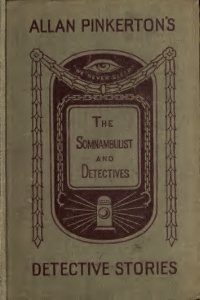
The somnambulist and the detective

By Alan Pinkerton.

I desire to again call attention to the fact that the stories herein contained, as in the case of their predecessors in the series, are literally true. The incidents in these cases have all actually occurred as related, and there are now living many witnesses to corroborate my statements. Maroney, the expressman, is living in Georgia, having been released during the war. Mrs. Maroney is also alive. Anyone desiring to convince himself of the absolute truthfulness of this narrative can do so by examining the court records in Montgomery, Ala., where Maroney was convicted. The facts stated in the second volume are well known to many residents of Chicago. Young Bright was in the best society during his stay at the Clifton House, and many of his friends will remember him. His father is now largely interested in business in New York, Chicago, and St. Louis. The events connected with the abduction of " The Two Sisters," will be readily recalled by W. L. Church, Esq., of Chicago, and others. The story of " Alexander Gay," the Frenchman, will be found in 2047318 6 PREFA CE. the criminal records of St. Louis, where he was sentenced for forgery.

New York: G. W. Dillingham Co., 1903. 256p.

download
Read-Me.Org
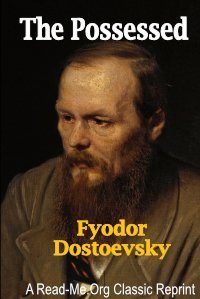
The Possessed

By Fyodor Dostoevsky.

Or The Devils. Translated From The Russian By Constance Garnett. “Inspired by the true story of a political murder that horried Russians in 1869, Fyodor Dostoevsky conceived of Demons as a "novel-pamphlet" in which he would say everything about the plague of materialist ideology that he saw infecting his native land. What emerged was a prophetic and ferociously funny masterpiece of ideology and murder in pre-revolutionary Russia.” 1872 (Russian)

A Read-Me.Org classic reprint. 1916 (English). 718p.

download
Read-Me.Org
The Brothers Karamasov

By Fyodor Dostoevsky.

This was his last novel, published as a serial in The Russian Messenger from January 1879 to November 1880. Dostoevsky died less than four months after its publication. Set in 19th-century Russia, this book is a passionate philosophical novel that enters deeply into questions of God, free will, and morality. It is a theological drama dealing with problems of faith, doubt, and reason in the context of a modernizing Russia, with a plot that revolves around the subject of patricide.

NY. Lowell Press. 1880. 600p.

download
Read-Me.Org
Crime and Punishment

By Fyodor Dostoyevsky.

A timeless story of love and violence, the rationalized triumph of passion over reason, of self deception over care, envy and hatred of authority and class, and of course, much, much more in this dense novel.

NY. Parkway Printing (1886) 600p.

Download
Read-Me.Org
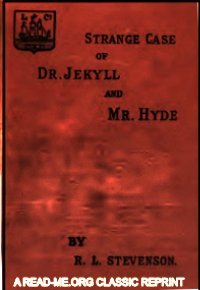
Strange Case of Dr. Jekyll and Mr. Hyde

By Robert Louis Stevenson.

Set in the backdrop later Victorian London, this book can be told as belonging to the category of science fiction, psychological thriller and suspense thriller. Dr Jekyll, a famous and notable scientist seems to be somehow linked with Mr Hyde, a most-wanted criminal. Mr Utterson, a good renown lawyer of the period as well as Jekyll's good friend, tries connecting the dots to find out the truth, a most-shocking truth.

London: Longmans, Green, 1886. 141p.

download
Read-Me.Org
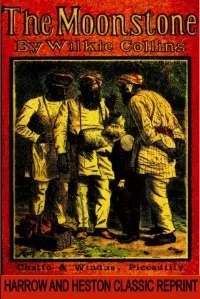
Moonstone

By Wilkie Collins.

The loss of the diamond opens the beginning of this adventure and events as related by Gabriel Betteredge, house-steward in the service of Julia, Lady Verinder. “ The Moonstone is a 19th-century British epistolary novel. It is an early modern example of the detective novel, and established many of the ground rules of the modern genre. Told from the perspective of 11different characters, tale of mystery and suspicion was considered the first modern English detective novel at its time of publication.” (Amazon).

NY. Harrow and Heston Classic Reprint. (1868) 510 pages.

download
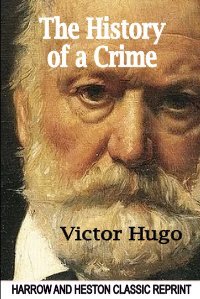
The History of Crime

By Victor Hugo.

Testimony of an eyewitness. History of a Crime is a novel based on actual events surrounding the assumption of power of Napoleon III following the 1848 revolution. Hugo's narrative takes in the four days during which Napoleon enacted a coup d'etat through which he assumed the Presidency and concludes with an exposition of the Franco-German War in 1970 which resulted in Napoleon's downfall. The narrative is written from the perspective of Hugo himself who was briefly involved in the before exiling himself to Belgium and thence to the Chanel Islands and while the novel is clearly dramatized, it does well to invoke the drama of the times and provides a sense of the times on behind the barricades.

NY. Harrow and Heston Classic Reprint. (1877) 515 pages.

download
Read-Me.Org
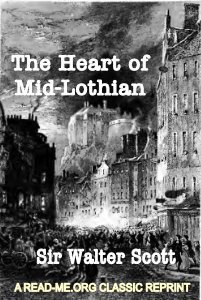
The Heart of Mid-Lothian

By Sir Walter Scott.

“Edinburgh, 1736: an indignant crowd has gathered in the Grassmarket to watch the execution of a smuggler...” Opening with the start of the Porteous Riots, The Heart of Midlothian is one of Walter Scott's most famous historical novels, featuring murder, madness and seduction. Following his brutal suppression of the spectators, John Porteous, Captain of the Guard, is charged with murder and locked up in Edinburgh's Tolbooth prison, also known as the Heart of Midlothian. When news comes that he has been pardoned, an angry mob breaks into the jail, liberating its inmates and bringing Porteous to its own form of justice. But one prisoner who fails to take this opportunity to flee is Effie Deans, who, wrongly convicted of infanticide, has been sentenced to death. Jeanie, her older sister, sets off to London on foot to beg for her pardon from the queen.

Boston: Dana Estes & Co., 1893.

download
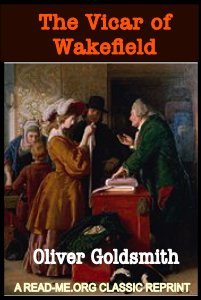
The Vicar of Wakefield

By Oliver Goldsmith.

“When Dr Primrose loses his fortune in a disastrous investment, his idyllic life in the country is shattered and he is forced to move with his wife and six children to an impoverished living on the estate of Squire Thornhill. Taking to the road in pursuit of his daughter, who has been seduced by the rakish Squire, the beleaguered Primrose becomes embroiled in a series of misadventures–encountering his long-lost son in a travelling theatre company and even spending time in a debtor’s prison. Yet Primrose, though hampered by his unworldliness and pride, is sustained by his unwavering religious faith. In The Vicar of Wakefield, Goldsmith gently mocks many of the literary conventions of his day–from pastoral and romance to the picaresque – infusing his story of a hapless clergyman with warm humour and amiable social satire.”

J.C. Krieger and Company, 1828 300p.

download
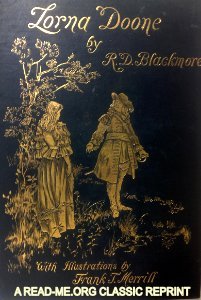
Lorna Doone: a romance of Exmoor

By R.D. Blackmore.

“This work is called a 'romance,' because the incidents, characters, time, and scenery, are alike romantic. And in shaping this old tale, the Writer neither dares, nor desires, to claim for it the dignity or cumber it with the difficulty of an historic novel….Every woman clutched her child, and every man turned pale at the very name of "Doone" ….John Ridd, an unsophisticated farmer, falls in love with the beautiful and aristocratic Lorna Doone, kidnapped as a child by the outlaw Doones on Exmoor. Ridd's rivalry with the villainous Carver Doone reaches a dramatic climax that will determine Lorna's future happiness.”

New York: Harper & Brothers, 1878. 280p.

download
Hard Cash: A Matter-of-Fact Romance

By Charles Reade.

‘Hard Cash like ‘The Cloister and the Hearth' is a matter-of-fact Romance—that is, a fiction built on truths ; and these truths have been gathered by long, severe, systematic labour, from a multitude of volumes, pamphlets, journals, reports, blue-books, manuscript narratives, letters, and living people, whom I have sought out, examined, and cross-examined, to get at the truth on each main topic I have striven to handle. The madhouse scenes have been picked out by certain disinterested gentlemen, who keep private asylums, and periodicals to puff them ; and have been met with bold denials of public facts, and with timid personalities, and a little easy cant about Sensation * Novelists ; but in reality those passages have been written on the same system as the nautical, legal, and other scenes : the best evidence has been ransacked ; and a large portion of this evidence I shall be happy to show at my house to any brother writer who is disinterested, and really cares enough for truth and humanity to walk or ride a mile in pursuit of them.” (From Preface)

London: Chatto and Windus, 1899. 625p.

download
Read-Me.Org
The Wild Ass's Skin and Other Stories

By Honoré de Balzac.

“The Wild Ass's Skin is Honoré de Balzac's 1831 novel that tells the story of a young man, Raphaël de Valentin, who discovers a piece of shagreen, in this case a rough untanned piece of a wild ass's skin, which has the magical property of granting wishes. However the fulfillment of the wisher's desire comes at a cost, after each wish the skin shrinks a little bit and consumes the physical energy of the wisher. "The Wild Ass's Skin" is at once both a work of incredible realism, in the descriptions of Parisian life and culture at the time, and also a work of supernatural fantasy, in the desires that are fulfilled by the wild ass's skin. Balzac uses this fantastical device masterfully to depict the complexity of the human nature in civilized society.”

Philadelphia: Gebbie Publishing, 1897, 324p.

download
Read-Me.Org
The Old Curiosity Shop

By Charles Dickens.

“The sensational bestselling story of Little Nell, the beautiful child thrown into a shadowy, terrifying world, seems to belong less to the history of the Victorian novel than to folklore, fairy tale, or myth. The sorrows of Nell and her grandfather are offset by Dickens's creation of a dazzling contemporary world inhabited by some of his most brilliantly drawn characters—the eloquent ne'er-do-well Dick Swiveller; the hungry maid known as the "Marchioness"; the mannish lawyer Sally Brass; Quilp's brow-beaten mother-in-law; and Quilp himself, the lustful, vengeful dwarf, whose demonic energy makes a vivid counterpoint to Nell's purity.”

London: Chapman and Hall, 1840. 460p.

download
Read-Me.Org
On the Trail of the Bad Men

By Arthur Train.

New York: On the trail of the bad men. The district attorney. Human nature in the court room. Animals in court. Foolish laws. Sanctity by statute. Criminal law and common sense. Twelve good women and true. Beware of the dog! Marriage and divorce. Have you a lawyer? Is it a crime to be rich? A man born to be hanged cannot be drowned.

Charles Scribner's Sons, 1925. 427p.

download
Read-Me.Org
Through the Magic Door

By A. Conan Doyle.

“ I care not how humble your bookshelf may be, nor how lowly the room which it adorns. Close the door of that room behind you, shut off with it all the cares of the outer world, plunge back into the soothing company of the great dead, and then you are through the magic portal into that fair land whither worry and vexation can follow you no more. You have left all that is vulgar and all that is sordid behind you. There stand your noble, silent comrades, waiting in their ranks. Pass your eye down their files. Choose your man. And then you have but to hold up your hand to him and away you go together into dreamland. Surely there would be something eerie.”

New York: Double, Page, 1908. 176p.

download
Read-Me.Org
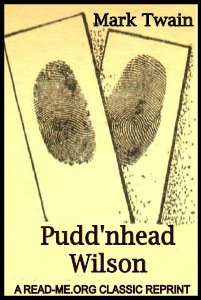
Pudd'nhead Wilson

By Mark Twain.

“A young slave woman attempting to protect her son from the horrors of slavery, switches her light-skinned infant with the master's white son. This novel features a literary first — the use of fingerprinting to solve a crime.”

London: Chatto and Windus, 1905. 262p.

download
Read-Me.Org
Kidnapped

By David Balfour .

Being memoirs of the adventures of David Balfour in the year 1751, written by himself and now set forth. “Set in 1751, the flight of David Balfour and Alan Breck across the Highlands of Scotland is based on real events. Though he wrote the book to make money, while living as an invalid in Bournemouth. Stevenson was proud of it; he inscribed a presentation copy with the couplet. Here is the one sound page of all my writing. The one I'm proud of and that I delight in. Rowland Hilder is famous for his paintings of the English countryside but his work in book illustration covered a much wider canvas…. His drawing for Kidnapped were first published in 1930 and have undeservedly, been long out of print. A sixteen-year-old orphan is kidnapped by his villainous uncle, but later escapes and becomes involved in the struggle of the Scottish highlanders against English rule. “

New York: Charles Scribner's Sons, 1886. 324p.

download
Read-Me.Org
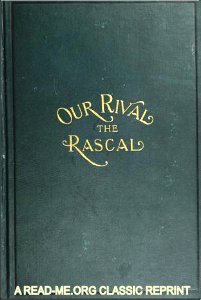
Our Rival, the Rascal

By Benjamin P. Eldridge and William B. Watts.

A Faithful Portrayal of the Conflict Between the Criminals of This Age and the Defenders of Society, the Police. “AS we sit in our office chairs, our rival, the rascal, leers down at us through a thousand masks. He is reckless, gay, demure, stolid, dogged, sullen, surly, threatening, desperate. He has the smirk of the confidence man, the furtive glance of the sneak thief, the scowl of the burglar, the menace of the murderer. The moulds of every vice and crime which the world knows are ranged before us in a single group of pictures -- the photographs which compose the Rogues' Gallery. Our rival, the rascal, was born before the beginning of history. He has existed ever since knavery sought to outwit honesty and villainy attacked by force or fraud the natural right of man to life, liberty and the pursuit of happiness. In the earliest conditions of society the honest man fought the rascal singlehanded Or with the chance help of his neighbors. With the advance of civilization, came the institution of the standing safeguards of watchmen and constables, culminating at length in the great disciplined forces of our city police. From the farthest stretch of tradition down to the present hour society has been fighting our rival, the rascal, day and night, with all its accumulating powers of defence and suppression, and yet the rascal has not been subdued and for ages to come he will doubtless continue to defy the law and infest the earth. Still the advancing experience, organization and deter- mination arrayed against him have succeeded, at least, in making his path in life a painful tramp over rocks and thorns with traps and pitfalls threatening his feet at every step. Between him and the grand organization of the defenders of society, simply summed up in the term, the police, there is an undying rivalry and an incessant contest, the one striving by every hook and crook to blind the eyes or escape the clutch of the other which in turn is constantly spurred on to meet craft with craft and foil every new shift of resourceful villainy by redoubled alertness in detection and capture. In the following pages we have designed to show the rascal of to-day in his multiform bodies and faces. We have distinguished, as sharply, and vividly as we can, the varying types in our Rogues' Gallery. We have depicted the bunco man, the sneak thief, the burglar, the forger—the trickster and ruffian of every known stripe. We have shown what conditions make or mould them, how they plan, how they work, what covers they seek, and how the police in turn plan and work to forestall, deter, detect and capture them.”

Boston, MA: Pemberton Pub. Co, 1897. 433p.

download
Read-Me.Org