Open Access Publisher and Free Library
CRIMINAL JUSTICE.jpeg

CRIMINAL JUSTICE

CRIMINAL JUSTICE-CRIMINAL LAW-PROCDEDURE-SENTENCING-COURTS

A New International Approach to Beating Serious and Organised Crime

By Crest Advisory and The Tony Blair Institute for Global Change

It almost feels like a cliché to say that serious and organised crime (SOC) is evolving rapidly and continuously in scale, shape and sophistication. However, after five years leading INTERPOL’s global operational responses to crime and terrorism, I’ve seen first-hand how far these escalating threats are outstripping our well-intentioned but linear, dated and fragmented response mechanisms.

In any losing battle, it is necessary to draw back and reconsider one’s approach. That is why it is time for us to recognise that SOC is no longer simply a criminal-justice matter alone – it has become a societal threat, and it is time it was treated with the seriousness, focus and renewal of tactics this demands.

My time as Executive Director of Police Services at INTERPOL fundamentally changed not just the way I see crime but the way I see the business models behind that crime. I came into this role from specialist commands at New Scotland Yard and geographic leadership as Chief Constable of Essex. But when I began looking at crime through its actual drivers and enablers – technology, transport, communication and broader logistical systems – it became impossible to ignore just how far our current models were falling short.

The implications are profound. This unique role offered a rare perspective and it was an immense privilege. Whether it was the fallout of the Afghan government’s collapse on drug flows and human trafficking, or the levels of sophistication, reach and ruthlessness of West African organised crime groups, the conclusion was the same: the criminal threats have moved on, and we haven’t.

Working internationally, it is clear how SOC embeds itself in our economies, institutions and in some cases governance and political systems. These subtle, malign networks are built to avoid law-enforcement attention, to adapt on the fly, to exploit our media and political distractions, and our global obsession with “perimeter” mindsets. The reality is that not only is law enforcement often too busy and too consumed by existing threats to notice the emergence of new, more sinister ones, but its global architecture is fractured, duplicative and falling behind.

Nowhere is this as evident as in the use of technology, which has become the ultimate enabler for SOC. From AI and deepfakes to encrypted comms and crypto flows, organised crime groups are exploiting every tool at their disposal. They’re using entrepreneurial models to recruit, move money, manage their supply chains and to attack at speeds and volumes that overwhelm traditional policing models.

This paper makes the case plainly: in the face of such technically enabled criminal business models, if we don’t treat our data and computing power as strategic assets, we are choosing to lose.

Law enforcement is still chasing symptoms, not systems. Exceptional individuals working in law enforcement are constrained by legacy tools, bureaucratic structures and performance frameworks that were created for a bygone age. Prosecutions take years. Trials are complex and juries are expected to seize complex legal and evidential issues. Meanwhile, the criminal networks regenerate.

This paper highlights the urgent need for a bolder, more strategic and proactive set of tools that sit beyond law enforcement – including sanctions, online disruption and new global mechanisms that match the transnational nature of the threat. It is refreshing because it challenges the orthodoxy and questions the institutional inertia that prevents us from taking a fundamentally different tack: one that focuses on enablers, is rooted in disruption and built on bold, trusted partnerships.

Arrests alone will never dismantle criminal economies. Organised crime functions as an economy, and must be considered and tackled accordingly. This will require disrupting logistics, targeting financial facilitators, and redirecting seized assets to strengthen the very systems needed to fight back.

This situation also means the private sector must at long last be integrated into the frontline response. Finance, tech, logistics and data systems are being exploited daily, yet their operators remain on the sidelines, or are brought in through fragmented, ad hoc efforts. These sectors can see the damage, and wish to help, yet we just haven’t made it easy for them. This paper rightly calls for their operational integration, as part of a strategic design, as essential and included partners, not as an afterthought.

No matter how imperfect or distasteful, we must be willing to put a value on serious and organised criminal harms, exactly in the way we do with other global security threats. Too often politicians avoid attaching a price to abuse and exploitation as it highlights the scale of what is happening to the public and the media. But if we’re serious about resourcing a meaningful and sustainable response, we can no longer afford to look away. Influence, funding and political attention follow data. A serious response must follow the same logic.

In the same vein, we cannot afford to ignore the geopolitics of SOC. Today on the global stage and even at a domestic level, consensus is hard-won in a world defined by distrust, instability and polarised politics. But that’s no excuse to retreat. Democracies cannot afford to treat SOC as an abstract or future concern. We must learn the lessons from across the world – just because it is difficult to see, does not mean it is not already here, not already shaping global systems, and it demands a response as strategic, coordinated and relentless as the threat itself.

The path forward will not be easy, but the case for change is clear. Conventional structures and risk-averse strategies will not meet the moment. It is time for a new mindset: one that treats data and computing power as strategic assets, accepts disruption as vital tools, and one that is willing to experiment with new institutional models that break with convention.

The ideas set out here reflect that new mindset. They propose not incremental reform, but a fundamental rethink of how the international community responds to SOC. The goal is not simply to cope with today’s threat landscape, but to get ahead of it.

This moment demands strategic ambition and operational realism, and, above all, urgency. Criminals relish our adherence to old models. SOC has already shaped the world around us.

Our response must now do the same

London: Crest Advisory and The Tony Blair Institute for Global Change, 2025. 48p.
Notification of Concerns Regarding the Federal Bureau of Prisons’ Policies Pertaining to the Use of Restraints on Inmates

By The U.S. Department of Justice, OFFICE OF THE INSPECTOR GENERAL

The purpose of this memorandum is to advise the Director of the Federal Bureau of Prisons’ (BOP) of the Department of Justice (DOJ or Department) Office of the Inspector General’s (OIG) concerns regarding the BOP’s policies and practices pertaining to the use of restraints on inmates. The OIG identified these concerns in connection with our investigators’ reviews of allegations by multiple BOP inmates at multiple BOP institutions that they were placed in restraints while confined to a bed or chair for extended periods and were assaulted or otherwise mistreated while in restraints. Some of these inmates were placed in fourpoint restraints, which are restraints using four points of contact—both wrists and both ankles—to confine an inmate to a bed, and others were placed in restraints on both wrists and ankles while confined to a chair. Some inmates reportedly suffered long-term injuries after prolonged placement in restraints. For example, one inmate suffered injury requiring the amputation of part of the inmate’s limb after being kept in restraints for over 2 days. We found that shortcomings in BOP’s policies and practices contributed to the concerns we identified and limited the availability of evidence that could either corroborate or refute inmates’ accounts of what happened while they were in restraints, thereby impairing the OIG’s ability to investigate allegations of misconduct by BOP employees. Specifically, we identified the following shortcomings: Lack of clarity in BOP policy as to the meaning of four-point restraints and lack of clear guidance regarding restraint, medical, and psychology checks of inmates in restraints that are not considered four-point restraints; Policies and practices that allow inmates to be kept in restraints for prolonged periods, sometimes leading to long-term injuries, and that require only limited oversight by BOP regional offices while inmates are in restraints; Inadequate guidelines to memorialize what occurred during restraint checks, including the absence of a requirement that BOP staff video and audio record restraint checks; and Inadequate guidelines to document medical checks of inmates in restraints. Clearer and more robust policies would assist the BOP in protecting inmates from abusive treatment, shielding staff from false allegations, deterring misconduct by staff, and holding staff who engage in misconduct accountable. Since the OIG reviewed the allegations that formed the basis of this memorandum, the BOP has made updates to its policies regarding the use of force and application of restraints, including new training guidelines for confrontation avoidance and de-escalation tactics. While these updates are an improvement to the BOP’s policies, additional policy revisions are needed to address the OIG’s concerns. In this memorandum, the OIG makes six recommendations to address the concerns we identified. Separately, the OIG is continuing to conduct an audit related more broadly to the BOP’s oversight of its use of restraints.

Washington, DC: The U.S. Department of Justice, OFFICE OF THE INSPECTOR GENERAL2025. 22p.

Comparing the Uses and Benefits of Stationary Cameras Versus Body-Worn Cameras in a Local Jail Setting

By Brittany C. Cunningham, Bryce E. Peterson, Daniel S. Lawrence, Michael D. White, James R. Coldren, Jr., Jennifer Lafferty, Keri Richardson

With funding from the National Institute of Justice (2018-75-CX-0019), CNA examined the impact BWCs provided to correctional deputies within the Loudoun County Adult Detention Center (LCADC) in Virginia. The study aimed to contribute to the body of knowledge on the implementation and impact of BWCs in jail settings and to assess the degree to which BWCs affect correctional deputy safety, serious events, resident injuries, and cost effectiveness. The LCADC implemented the Watchguard VISTA BWCs provided by Motorola Solutions. This study is supported by several other publications. First, we conducted an analysis of the changes in deputies' attitudes toward the BWC program over the course of the yearlong study period (November 2020 to October 2021) (Peterson et al., 2023). Second, we investigated the impact of BWCs on the prevalence and dynamics of RTR events, including deputy control methods and resident resistance levels (Lawrence et al., 2023a). Third, we assessed the impact BWCs had on the number of resident injuries and how RTR event characteristics affect the likelihood of an injury occurring (Lawrence et al., 2023b). The final research report of the grant provides a comprehensive summary of the project and its numerous findings (Cunningham et al., 2023) The LCADC, operated by the Loudoun County Sheriff’s Office, provides jail services to Loudoun County, Virginia, which is the third most populous county in the state, with a population of nearly 421,000 in 2020 (US Census Bureau, 2023). The facility houses maximum-, medium-, and minimum-security level residents and includes work release, workforce, drug treatment, and mental health programs. Most LCADC residents are pretrial detainees, with approximately 20 percent serving sentences for misdemeanor or felony convictions. During the evaluation period, the facility had an average daily population of 222 residents of which 81 percent were male and 51 percent were white, 24 percent were Black, 21 percent were Hispanic, and 3 percent were Asian. During this time, more than 80 percent of residents had a length of stay under two weeks, while only 4 percent of residents had a length of stay over six months. The LCADC is staffed by 124 individuals, including 102 front-line deputies and 22 supervisors, the majority of whom are white and male. Staff supervise eight housing units that have one to four housing pods (20 pods in the entire facility), in addition to four general units that include the medical unit, hallways, intake unit, and transportation between the facility and outside locations (e.g., county courthouse, offsite medical facilities)

Arlington, CA: CNA , 2023. 16p.

From Incarceration to Encampment: Why So Many Ontario Prisoners End Up Homeless

By Safiyah Husein, Capryce Taylor, Jacqueline Tasca, Meaghan Costa, Reza Ahmadi

John Howard Society of Ontario

“At least 10% of Ontario’s homeless population went directly from an Ontario jail to life on the streets.”

This report outlines actionable recommendations and best practices to reduce homelessness among individuals with experiences of incarceration. The insights provided are based on comprehensive discussions with people with lived experience, housing providers, community service agencies and policy professionals.

Kingston: John Howard Society of Ontario, 2025. 36p.

The Sociology of Police Behavior

By Rashawn Ray, Connor Powelson, Genesis Fuentes, and Long Doan

Black Americans are 3.5 times and Black teenagers are 21 times more likely to be killed by police than their White counterparts. Generally, protective factors such as social class do little to reduce this disparity, as high-income Black Americans are just as likely to be killed by police as low-income Black Americans. Given these outcomes, it is unsurprising that the bulk of sociological research on policing examines disparities in policing outcomes between Black and Brown communities and individuals and their White counterparts. We begin by outlining this important research. In addition to focusing on the consequences of (over)policing, sociologists can make unique contributions to our understanding of the empirical limitations of contemporary policing data and the macro-, meso-, and micro-level mechanisms that contribute to policing inequalities. While we draw upon some research in other disciplines, sociologists can and should do more in these areas. Accordingly, the end of this review focuses on future directions and theoretical possibilities by centering emerging research that pivots sociology to a more direct focus on overcoming the methodological limits of police research and contributing to meaningful behavioral, organizational, and policy changes.

ANNUAL REVIEW OF SOCIOLOGY Volume 50, 2024

The Study of Racism and Policing in the United States

By Spencer Piston,1 Kaneesha R. Johnson,2 Selma Hedlund,3 and Chas Walker

We begin this article by discussing two moments, in the late 1800s and late 1900s, in which the racist views of influential political scientists fundamentally shaped research on policing. In contrast, today’s scholarship, breaking sharply with research of the past, does not attempt to justify racist policing but to study it. The dominant approach today follows a racial disparities framework, which maps out the uneven allocation of police harms. As we discuss, these studies have made valuable contributions to the field and to real-world efforts to resist the damage done by police. At the same time, however, the racial disparities framework has limitations that make it difficult for scholars to understand racist police oppression. We conclude by arguing that, to take the next step forward, future scholarship should follow the lead of and expand upon work that centers the voices of the highly policed.

Annu. Rev. Political Sci. 2025. 28:499–519

Post-Visit Briefing: Monitoring Visit to Washington Correctional Facility (March 26–27, 2024)

By The Correctional Association of New York (CANY)

The Correctional Association of New York (CANY) has released a report on Washington Correctional Facility, a medium-security prison for men located in Washington County, NY. The report details findings from interviews with incarcerated individuals, analysis of administrative data, meetings with staff, and observations made by CANY during a monitoring visit in March 2024.Key findings include:

73% of incarcerated individuals interviewed reporting witnessing or experiencing verbal, physical, or sexual abuse.

The facility had a 21% vacancy rate in January 2024, which resulted in high rates of mandatory overtime and reduced operations, such as limited access to recreation for incarcerated individuals.

Grievance filing rates were lower than other medium-security prisons. No individuals interviewed reported that they felt the grievance process was fair.

Many incarcerated people reported positive experiences with vocational (e.g., welding, custodial maintenance) and academic programs. The facility administration expressed concern about low rates of attendance.

New York: Correctional Association of New York, 2025. 66p

Incarceration on Rikers Island in the Aftermath of the New York State Corrections Officers Strike

By Kellyann Bock & Michael Rempel

Following a statewide corrections officer strike in February 2025 and the termination of over 2,000 officers, New York State prisons have been unable to accept timely transfers of people sentenced to state time. This brief analyzes the resulting surge in the “state-ready” population on Rikers Island—those awaiting transfer to prison—which rose more than eight-fold from 101 to 875 people from February to June 2025. As of the end of June 2025, these individuals accounted for 11% of the total jail population and are responsible for 89% of February-to-June 2025 jail population growth. In short, the jail population would have changed little in the first half of 2025 if not for the ripple effects of the corrections officer strike.

New York : Data Collaborative for Justice, 2025. 7p.

Minimal Impact: Analyzing State Sentencing Reforms and Racial Disparities in Selected State Prison Populations

By Georgia State University, the Crime and Justice Institute, and the Council on Criminal Justice

Over the past 20 years, most American states have adopted a wide range of changes to their criminal sentencing statutes. The goals of the reforms varied. Some targeted certain offenses for greater or lesser penalties. Others aimed to cut correctional costs, expand alternatives to incarceration, and reduce recidivism. Few laws were enacted explicitly to reduce racial and ethnic disparities. Still, many policymakers hoped they would do just that, and the starkly disproportionate incarceration of Black people has been a central component of the national conversation about criminal justice reform.

New York: Council on Criminal Justice, 2024.

Literature and Epistemic Injustice: Power and Resistance in the Contemporary Novel

By Sarah Colvin

A vital resource for anyone interested in literature and politics, this is the first in-depth study of epistemic injustice as a concept for literary studies. Focusing on contemporary fiction in an age of post-truth, it shows how eight novels set in different global contexts reveal epistemic injustice as an authoritarian practice and offer an aesthetics of resistance. Epistemic injustice valorises the thinking of those in power while suppressing other people’s knowledge; it declares some people omniscient and others targets for violence. This book tracks how the novels make tangible its strategic use and effects while suggesting – in their form as well as their content – that something else is possible. Bridging political philosophy and literary analysis in clear prose, this study offers exciting new stimuli for reading groups and general readers as well as for students of literature.

Oxford: Routledge, 2025. 258p.

Global Trends in Law Enforcement - Theory and Practice

By Stamatakis, Nikolaos

Global Trends in Law Enforcement - Theory and Practice is a thought-provoking collection of studies that define contemporary policing on a global scale. As the world becomes increasingly interconnected, law enforcement agencies face unprecedented challenges, from rapidly advancing technology to the complexities of transnational crime. This comprehensive volume brings together diverse perspectives from leading scholars and practitioners, offering a rich tapestry of insights that illuminate the evolving landscape of law enforcement. The present book is an indispensable resource for academics, practitioners, policymakers, and students seeking a deep understanding of the rapidly evolving world of law enforcement. As a definitive guide to global trends, Global Trends in Law Enforcement - Theory and Practice paves the way for a new era of informed and effective policing in an interconnected world.

London: IntechOpen, 2024.

Good Governing 

By Rodriguez, Daniel B. 

Good Governing: The Police Power in the American States is a deep historical and legal analysis of state police power, examining its origins in the founding period of the American public through the 20th century. The book reveals how American police power was intended to be a broad, but not unlimited, charter of regulatory governance, designed to implement key constitutional objectives and advance the general welfare. It explores police power's promise as a mechanism for implementing successful regulatory governance and tackling societal ills, while considering key structural issues like separation of powers and individual rights. This insightful book will shape understanding of the neglected state police power, a key part of constitutional governance in the U.S.

Cambridge, UK: Cambridge University Press, 2024. 

Community Vigilantes in Metropolitan Kano 1985-2005 

By Rasheed Olaniyi

Kano is a city where a multi-layered form of community policing was established in the era of the rollback of the state in social provisioning in the midst of ever-increasing armed banditry and crime. Between 1985 and 2005, vigilante groups were established in almost all the neighbourhoods of Kano with the support of the traditional authority and community leaders. However, government interference, political instrumentalisation and inadequate support undermined its critical rote. Part of the rationale for the Police Community Relations Committee (PCRC) in Sabongari lies not in the efficacy of such initiative in reducing the incidence of crime but to confer a sense of identity, control of crime and security. The contradiction in PCRC could be located in the pathological fixation of police on corruption, which alienated and depressed the public from providing valuable information for crime control. The activities of vigilante groups and Hisba have reduced the high rate of juvenile delinquency in metropolitan Kano. The litmus test for Hisba in the implementation of Sharia law would be how it could reconcile the social diversity in a multicultural society such as Kano to ensure security and social harmony. The study concludes that the gap between different forms of vigilante groups, conflicting political motivations and the near discordant relations with the police, produced a dysfunctional mechanism for crime control.

Ibadan: IFRA-Nigeria: 2005

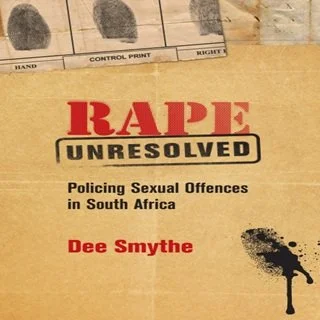
Rape Unresolved: Policing Sexual Offences in South Africa

By Dee Smythe

More than 1 000 women are raped in South Africa every day. Around 150 of those women will report the crime to the police. Fewer than 30 of the cases will be prosecuted and no more than 10 will result in a conviction. This translates into an overall conviction rate of 4–8 per cent of reported cases. What happens to all the other cases?

Rape Unresolved is concerned with the question of police discretion and how its exercise shapes the criminal justice response to rape in South Africa. Through a detailed, qualitative review of rape dockets and victim statements, as well as interviews with detectives, prosecutors, magistrates and rape counsellors, the author provides key insights into police responses to rape.

A complex picture emerges, of myths and stereotypes, of skills deficits, of disengagement by police as well as victims. Responsibility for the investigation of the cases – and their ultimate failure – is shifted onto the complainants, who must constantly prove their commitment to the criminal justice process in order to be taken seriously.

The vast majority of rape victims who approach the criminal justice system in South Africa do not receive justice or protection. This book uncovers the fault line between the state’s rhetorical commitment to addressing sexual violence through legal guarantees and the actual application of these laws.

Cape Town: University of Cape Town, 2022. 

Getting Away with Murder Obstacles to Police Accountability

Edited by Wornie Reed

Despite the national attention police violence gained and the calls for police reform following the murder of George Floyd in 2020, police officers are killing more people each year.1 Police killed at least 1,173 people in 2024.2 Although half of the people shot and killed by police are white, black Americans are shot at a disproportionate rate. Hispanic people are also killed at a disproportionate rate. One reason this assault on citizens continues is that very few roadblocks have been put in the way of excessive violent policing. While any policing reform is beneficial, many reforms being discussed and enacted are unlikely to significantly reduce police use of excessive force. Many critical issues in policing affect African American people. This book addresses several of them. The Black Lives Matter protests in the United States and around the world were primarily about the excessive use of force by police against African American people. This excessive use of force includes homicides. In the U.S., police kill black people at more than twice the rate they kill white people, and black people are 30 percent more likely than white people to be unarmed when killed.3 Of all the police killings documented between 2013 and 2019, one data source, Mapping Police Violence, found only 1 percent of cases led to a conviction of a police officer.4 Many members of the public andsome elected officials have argued that the excessive use of force by the police could be curtailed if more officers were held accountable for their actions, primarily their actions against innocent citizens. The authors of the papers in this series subscribe to that view and discuss some significant reasons why and how police are not held accountable for their excessive use of force. 

Blacksburg, VA, Virginia Tech Publishing, 2025. 98p.

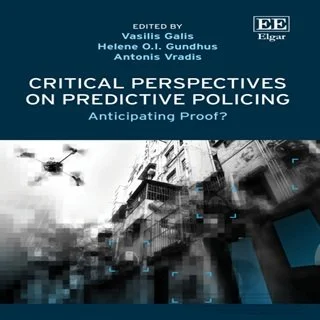
Critical Perspectives on Predictive Policing: Anticipating Proof?

Edited by Vasilis Galis, Helene O.I. Gundhus, and Antonis Vradis

Taking a critical approach, this book advances understanding of the social, legal and ethical aspects of digitalisation in law enforcement and the reliance on data-driven tools to predict and prevent crime. It shows how the proliferation of data analytics challenges citizens’ rights, at a time when what counts as ‘safety’ or ‘policing’ is being fundamentally transformed.

Cheltenham, UK · Northampton, MA; Edward Elgar, 2025.

Adapting to Climate Change in Modern Policing: The Rise of the “Eco-Cop”

By Anna Matczak

This open access brief explores the profoundly accelerating impact of climate change on law enforcement globally. Drawing on the concept of climatisation, it examines how, on one hand, rising temperatures, extreme weather events, resource scarcity, and sustainability transitions pose new challenges for the evolving role of law enforcement in a changing climate. On the other, these developments also present opportunities to adapt and transform the ways the police do policing. This book builds on the author’s earlier research into the impact of climate change on police work. It combines interdisciplinary research and 23 expert interviews to systematize current knowledge in the field. The aim is to provide a comprehensive understanding of how climate change intersects with policing at societal, organizational, and individual levels. This volume is ideal for policymakers, practitioners, and researchers working at the intersection of climate change and policing.

Cham: Springer Nature, 2025

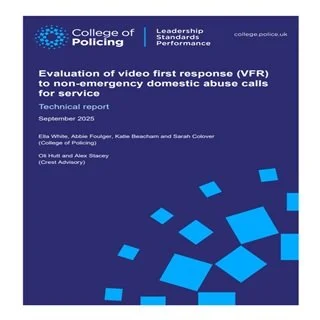
Evaluation of Video First Response (VFR) to Non-Emergency Domestic Abuse Calls for Service Technical Report September 2025 

By Ella White, Abbie Foulger, Katie Beacham and Sarah Colover. Oli Hutt and Alex Stacey 

Video first response (VFR) is a virtual police response to eligible non-emergency domestic abuse calls for service that uses video conferencing software. The evaluation of VFR aimed to understand the impact of the initial police response to domestic abuse calls being conducted via video. The quality and victim perceptions of the initial police VFR and criminal justice outcomes were compared with an in-person, business as usual response (BAU). The research involved two pilot forces, with a randomised control trial in one force and a quasi-experiment in the other. The research compared data from police systems, case file reviews, a victim survey, and interviews with officers and stakeholders. Meta-analysis The meta-analysis aimed to provide an aggregated assessment of the outcome measures from:  the two pilot forces in this evaluation  the evaluation of rapid video response (RVR) conducted in Kent Police in 2021 The meta-analysis found:  Time taken to both respond to and resolve a call for service was significantly faster for VFR, compared to BAU.  Differences in arrest rates between VFR and BAU cases were not statistically significant. However, the meta-analysis found a statistically significant difference between the pilot studies. This reflects the mixed results between pilot studies. The Kent pilot found a significantly higher arrest rate in VFR cases. The West Yorkshire pilot found a significantly higher arrest rate in BAU cases. The West Midlands pilot found that VFR cases had a similar arrest rate to BAU, with no statistical difference between them.  No statistically significant difference was found in victim satisfaction between the VFR cases and BAU overall.Findings from the VFR evaluation Impact on quality of initial police response  VFR response can speed up response times – response times increased significantly in both forces.  VFR may affect whether or not an incident is ‘crimed’. In one force, more BAU cases were reported as a crime than VFR cases, while the other force showed no difference. High levels of missing data may have affected these findings.  VFR may improve the quality of risk assessment. Appropriately detailed risk assessment forms were significantly more likely in VFR conditions in one of the pilot forces. The other force showed no difference between VFR and BAU.  The findings were mostly in favour of VFR victims having more positive safeguarding outcomes. In both forces, case file review data suggested that more safeguarding referrals were made in VFR cases, compared to BAU cases. In one force, the case file review found that information on support services was more likely to be shared with victims who had a VFR response compared to those who had a BAU response. In the other force, the victim survey found that more BAU victims said they were referred to an independent domestic violence adviser (IDVA) compared to VFR victims. However, the sample size was small for both the case file review and victim survey. Impact on criminal justice outcomes  Arrest rate and time taken to arrest differed in the pilot forces. For one force, VFR had a similar arrest rate to BAU cases, with VFR having a shorter time to arrest compared to BAU. In the other force, the arrest rate was higher for BAU, which also had a shorter time to arrest compared to VFR.  In both forces, VFR cases had a similar charge rate and outcome 16 rate (victim chooses not to support, or withdraws support for, further police action) to BAU.  

College of Policing. college.police.uk. September 2025

Community Solutions to Prevent Gun Violence Strengthening Research and Evaluation to Build Safer Neighborhoods

By Ileana Mendoza,and Cierren Edmondson

For far too long, law enforcement has been the primary response to the gun violence epidemic in the United States. However, an institution built and sustained through coercive control and violence cannot be expected to bring healing to communities, nor can it address the social conditions that lead people to choose gun violence as a means to an end. Addressing community-level gun violence requires a public health-based approach that centers the community and addresses the root causes of gun violence. Through evidence-based, public health strategies, Community Violence Intervention and Prevention Initiatives (CVIPI) provide a comprehensive and compassionate alternative for addressing and preventing gun violence. This issue brief highlights the need for community-driven strategies, examines the current challenges in evaluating CVIPI e orts and argues that e ective evaluation must involve community partnerships and focus on the experiences of program participants and violence intervention and prevention specialists (VIPs).This focus on CVIPI comes at a critical moment. Communities are still experiencing gun violence while simultaneously facing shrinking budgets for prevention and public health initiatives. Staggering cuts to Department of Justice (DOJ) funding, the looming expiration of American Rescue Plan Act (ARPA) funds in 2026 and the dismantling of the White House O ce of Gun Violence Prevention threaten the future of CVIPI. Without federal funding and a dedicated o ce to coordinate and champion CVIPI, these programs may be faced with the decision to scale-back operations or shut down. These converging realities make it clear that the time to rigorously evaluate, strengthen, and sustain CVIPI is now. Doing so can ensure these strategies not only survive current funding gaps, but also become a permanent fixture in the nation’s approach to prevent and intervene in gun violence.

West Hollywood, CA,: Center for Policing Equity, 2025. 17p.

Carceral Citizenship in Post-Protest Nicaragua: Political Imprisonment and Civil Death

By Julienne Weegels University of Amsterdam

This paper demonstrates how the extension and intensification of penal power across Nicaragua following the 2018 protests has produced particular experiences of carceral citizenship. In order to fully understand these experiences, it is necessary to take into account that states can enforce carceral citizenship (and its restrictions, benefits, and duties) not only legally, but also extralegally. As such, I examine the tenets of carceral citizenship in relation to the country’s hybrid carceral system, conceptualizing how such citizenship may be produced and policed. Following from this, I elicit how political prisoners are acted upon by (para)state actors and excluded from prison’s co-governance arrangements, which pushes some of them to engage in (dis)organizing practices of their own. Following them into their post-release lives, I examine the tight ‘transcarceral grip’ they are subjected to. This produces a state of de facto civil disenfranchisement, understood by ex-carcelados as “civil death.” In spite of their predicament, however, released political prisoners continue to organize in the face of the Sistema and the violations it has committed (and continues to commit). 

EUROPEAN REVIEW OF LATIN AMERICAN AND CARIBBEAN STUDIES, No. 116 (2023): July-December, pp. 163-183