Open Access Free Library
CRIMINAL JUSTICE.jpeg

CRIMINAL JUSTICE

CRIMINAL JUSTICE-CRIMINAL LAW-PROCDEDURE-SENTENCING-COURTS

Posts tagged police behavior
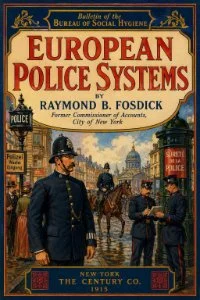
European Police Systems

By Raymond B. Fosdick

European Police Systems

Raymond B. Fosdick (1915)

Published in 1915, European Police Systems is a pioneering comparative study of law enforcement in the major nations of Europe during the early twentieth century. Based on extensive travel and firsthand investigation, Raymond B. Fosdick examined how police organizations in England, France, Germany, Austria-Hungary, Italy, Belgium, and the Netherlands were structured, governed, and employed to maintain public order.

Fosdick explores the fundamental differences between the British tradition of local policing and the more centralized police systems of Continental Europe. He analyzes police recruitment, training, discipline, detective work, administrative organization, and the relationship between police authority and civil liberty. Drawing upon interviews with police officials and direct observation of police operations, he provides a detailed portrait of the institutions responsible for public safety in some of Europe's most important cities.

Written on the eve of the First World War, the book captures a European society in transition while addressing questions that remain relevant today: How much power should the police possess? What forms of accountability are most effective? How can governments maintain order while preserving the freedoms of citizens?

Combining careful scholarship with vivid observation, European Police Systems became a landmark work in the study of policing and public administration. More than a historical record, it offers valuable insight into the origins of modern police institutions and the enduring challenges of balancing authority, efficiency, and democratic governance.

New York. Century. 1915 . p.410.
American Police Systems

By Raymond B. Fosdick

American Police Systems (1920) by Raymond B. Fosdick is a landmark study of law enforcement in the United States during the early twentieth century. Drawing on extensive research and firsthand observation, Fosdick examines the organization, responsibilities, and challenges of American police departments, comparing them with policing models in Europe. The book explores issues such as crime prevention, public order, police administration, and the evolving relationship between law enforcement and the communities they serve.

A valuable resource for historians, criminologists, and students of public administration, American Police Systems offers a fascinating snapshot of policing at a pivotal moment in American history. Its insights into reform, professionalism, and accountability remain relevant to contemporary discussions about law enforcement and public policy.

Read-Me.Org Inc. New York-Philadelphia-Australia. 2026. p.429.

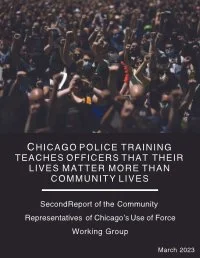
CHICAGO POLICE TRAINING TEACHES OFFICERS THAT THEIR LIVES MATTER MORE THAN COMMUNITY LIVES

Public Report on Chicago Police Training on the Use of Force

From the introduction; This Report from community representatives of Chicago’s Use of Force Community Working Group offers our feedback on the Chicago Police Department’s (CPD) training on de-escalation and the use of force. The Working Group was first convened in the summer of 2020 in response to the requirements of the federal civil rights Consent Decree designed to bring an end to the CPD’s pattern of police brutality and racial discrimination. Over the course of two years, the Working Group persuaded the CPD to make transformative changes to its policies governing police use of force. 1 Last fall, we issued a Public Report on CPD’s new policies, including areas still in need of change. 2 The new policies, if implemented and enforced on the ground, have the potential to dramatically reduce unnecessary CPD violence and improve public safety.

Second Report of the Community Representatives of Chicago’s Use of Force Working Group. 2023March 2023. 24p.

The Sociology of Police Behavior

By Rashawn Ray, Connor Powelson, Genesis Fuentes, and Long Doan

Black Americans are 3.5 times and Black teenagers are 21 times more likely to be killed by police than their White counterparts. Generally, protective factors such as social class do little to reduce this disparity, as high-income Black Americans are just as likely to be killed by police as low-income Black Americans. Given these outcomes, it is unsurprising that the bulk of sociological research on policing examines disparities in policing outcomes between Black and Brown communities and individuals and their White counterparts. We begin by outlining this important research. In addition to focusing on the consequences of (over)policing, sociologists can make unique contributions to our understanding of the empirical limitations of contemporary policing data and the macro-, meso-, and micro-level mechanisms that contribute to policing inequalities. While we draw upon some research in other disciplines, sociologists can and should do more in these areas. Accordingly, the end of this review focuses on future directions and theoretical possibilities by centering emerging research that pivots sociology to a more direct focus on overcoming the methodological limits of police research and contributing to meaningful behavioral, organizational, and policy changes.

ANNUAL REVIEW OF SOCIOLOGY Volume 50, 2024