Open Access Publisher and Free Library
HUMAN RIGHTS.jpeg

HUMAN RIGHTS

Human Rights-Migration-Trafficking-Slavery-History-Memoirs-Philosophy

Posts tagged Public opinion
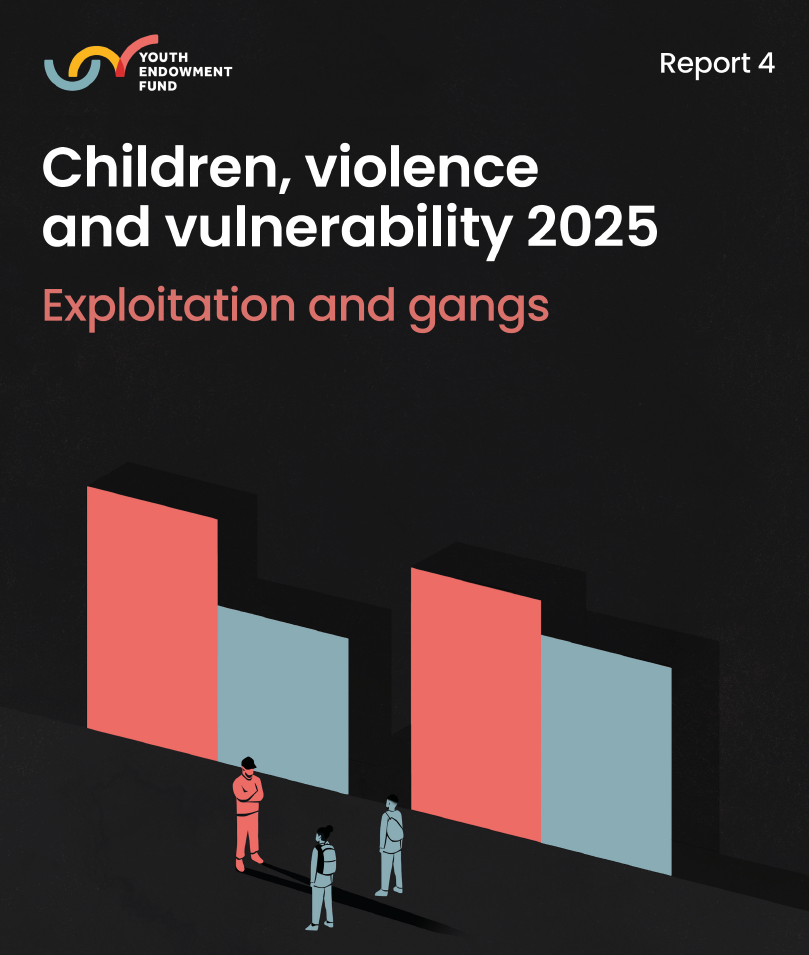
Children, violence and vulnerability 2025 . Exploitation and gangs

By The Youth Endowment Fund

The Youth Endowment Fund asked nearly 11,000 children aged 13–17 across England and Wales to share their experiences of violence. The findings are set out in separate reports, each exploring a different theme. This one focuses on teenage children’s experiences of exploitation and ‘gangs’. When we asked teenage children whether they had been in a ‘gang’, we defined a ‘gang’ as: “A group of young people who think of themselves as a ‘gang’, probably with a name, who are involved in violence or other crime.” We used the word ‘gang’ because it is one that many young people recognise and use themselves, more than phrases such as group-based criminality. But we also recognise its limitations: the term oversimplifies a complex issue and can reinforce harmful stereotypes. To reflect these sensitivities, we use inverted commas when referring to ‘gangs’. At several points in this report, we share the words of James (whose name has been changed to protect his identity), who, from ages 12 to 18, was criminally exploited. His story lays bare the reality

Media, Migration and Public Opinion: Myths, Prejudices and the Challenge of Attaining Mutual Understanding between Europe and North Africa

Edited by Ivan Ureta

Sensitive issues like migration and human mobility provoke paradigms and prejudices in public opinion. Media, Migration and Public Opinion is a collective effort of academic criticism to overcome these myths. The main motive of this book is linked to the fact that migration, media and public opinion related issues focusing on North Africa have not been addressed properly by available literature. Against this background, the objective of Media, Migration and Public Opinion pursues three aims: Firstly, it fills a gap in the scholarly literature regarding media, political communication and migration by shifting the focus to the North African countries Morocco, Algeria and Libya. Secondly, it assesses to what extent the paradigms of the «other» and its characterization as a source of problems established in receiving countries are also present in sending and transit countries. Thirdly, the book puts North African issues in relation to European countries by presenting case-studies focused on Spain, Malta and Switzerland in order to raise commonalities and differences.

Bern, SWIT: Peter Lang, 2011. 292p.