Open Access Free Library
HUMAN RIGHTS.jpeg

HUMAN RIGHTS

Human Rights-Migration-Trafficking-Slavery-History-Memoirs-Philosophy

Posts in Criminal Justice
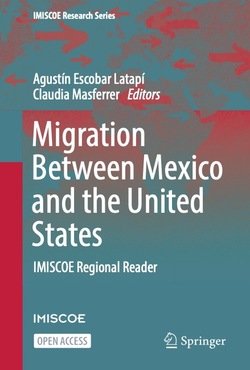
Migration: Between Mexico and the United States

Edited by Agustín Escobar Latapí and Claudia Masferrer

This open access Regional Reader describes how Mexico - United States migration changed substantially during the first decade of the 21st Century. The book provides an in-depth analysis on the changes in the flows into and out of both countries, thus highlighting the issues arising from Mexico - US migration as well as addressing the large numbers of adults and children entering Mexico from the United States. It covers how this tidal change affects the Hispanic population of the U.S. and return migrants' reincorporation in Mexico; their jobs, access to school, health and access to health services, how fear became a dominant aspect of Mexicans’ lives in the U.S., and the role played by crime and social policy in Mexico.

Cham: Springer Nature, 2022. 278p.

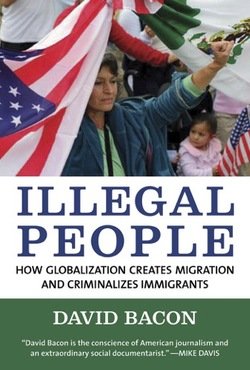
Illegal People: How Globalization Creates Migration and Criminalizes Immigrants

By David Bacon

For two decades veteran photojournalist David Bacon has documented the connections between labor, migration, and the global economy. In Illegal People Bacon explores the human side of globalization, exposing the many ways it uproots people in Latin America and Asia, driving them to migrate. At the same time, U.S. immigration policy makes the labor of those displaced people a crime in the United States. Illegal People explains why our national policy produces even more displacement, more migration, more immigration raids, and a more divided, polarized society.Through interviews and on-the-spot reporting from both impoverished communities abroad and American immigrant workplaces and neighborhoods, Bacon shows how the United States' trade and economic policy abroad, in seeking to create a favorable investment climate for large corporations, creates conditions to displace communities and set migration into motion. Trade policy and immigration are intimately linked, Bacon argues, and are, in fact, elements of a single economic system. In particular, he analyzes NAFTA's corporate tilt as a cause of displacement and migration from Mexico and shows how criminalizing immigrant labor benefits employers. For example, Bacon explains that, pre-NAFTA, Oaxacan corn farmers received subsidies for their crops. State-owned CONASUPO markets turned the corn into tortillas and sold them, along with milk and other basic foodstuffs, at low, subsidized prices in cities. Post-NAFTA, several things happened: the Mexican government was forced to end its

Boston: Beacon Press, 2009. 272p.

Preventing Trafficking in Human Beings: Labour and criminal exploitation

By The European Crime Prevention Network (ECPN)

Trafficking in human beings (THB) is a serious offence against personal and sexual freedom and integrity. It is often associated with legal and illegal migration flows, but this is only partly the case. It is true that irregular migration flows create a market for trafficking and exploitation, often connected to illegal migrant smuggling.1 This is why new migration flows, such as the arrival of many Ukrainian refugees in the EU, create a concern for the living conditions and the potential exploitation of migrants. On the other hand, half of the registered victims and three quarters of child victims of THB in the EU are EU nationals, with one third being registered in their own country.2 These are staggering statistics that indicate that there is a sizeable THB market within the EU that is independent of migration flows from outside the EU. The open internal borders of the Schengen zone have given rise to a specific pattern of regional trafficking that present a unique challenge to Europe.  

Brussels: EUCPN, 2022.  20p. 

Climate-induced Migration and Modern Slavery: A toolkit for policy-makers

By Ritu Bharadwai, Danielle Bishop, Somnath Hazra,  Enock Pufaa and James Kofi Annan.

Contemporary forms of slavery are often categorised as slavery, slavery-like practices, bonded labour, debt bondage and forced sexual exploitation. These are all interrelated and constitute a continuum.1 According to the Global Estimate of Modern Slavery,2 40.3 million people are living in slavery worldwide, which disproportionately affects the most marginalised, such as women, children and minorities.3 Climate change and climate-induced migration heightens existing vulnerabilities of slavery. Drivers of vulnerability to modern slavery are complex and impacted by many layers of risk. While several socio-economic, political, cultural and institutional risks shape vulnerability, they are increasingly considered to be made worse by climate change impacts and environmental degradation. Climate-induced displacements are becoming unavoidable. The rise of sea levels, salination and flooding are already forcing entire coastal communities – in countries such as the Solomon Islands, Vanuatu and Sierra Leone – to relocate. And as climate shocks are set to intensify, many more millions will be displaced by climate change in the coming decades. The World Bank estimates that by 2050 climate change will force more than 143 million people in sub-Saharan Africa, South Asia and Latin America from their homes. …

London:  Anti-Slavery International and The International Institute for Environment and Development, 2021. 38p.

The Intersection of irregular Migration and Trafficking in West Africa and the Sahel: Understanding the Patterns of Vulnerability

By Arezo Malakooti

A number of policy and security changes in the Mediterranean, North Africa and the Sahel over the last five years have led to a decrease in mobility options towards Europe. The study aims to measure whether the pattern of vulnerability towards trafficking has shifted for migrants in light of the increased difficulty in reaching Europe. This is achieved through an innovative methodology where a 1600-person survey was conducted with migrants along the routes to North Africa and proxies were used to gauge changes in patterns of vulnerability. Respondents’ experiences with trafficking were also tracked, thereby creating a new set of data in relation to trafficking along routes to Europe.

Geneva: Global Initiative Against Transnational Organized Crime, 2020. 108p.

Exploratory Assessment of Trafficking in Persons in the Caribbean Region: The Bahamas, Barbados, Guyana, Jamaica, The Netherlands, Antilles, St Lucia, Suriname, Trinidad and Tobago. Second Edition

By Lucia Bird

Through a combination of qualitative and quantitative methods, including literature reviews, national surveys and key informant interviews, this exploratory research points to some level of internal and/or external human trafficking in all the countries studied. Victims of human trafficking in the Caribbean region were found to be men, women, boys and girls from the Caribbean as well as from countries outside the region. These victims were found in multiple forms of exploitation including sexual exploitation, forced labour and domestic servitude. This Exploratory Assessment (second edition) was primarily a qualitative exercise and not intended to supply statistics as to the numbers of trafficking victims within each country. The purpose of the research was to provide a starting point for the participating countries to examine human trafficking within their local context and to encourage dialogue about how to combat this crime within the region. Human trafficking exists at some level in the eight countries that participated in this study. The potential for human trafficking to grow makes a strong, pro-active approach to addressing the crime an important issue for the nations of the Caribbean and the region as a whole.

Geneva: International Organization for Migration (IOM), 2010. 268p.

Abuse by the System: Survivors of trafficking in immigration detention

By Beth Mullan-Feroze and Kamena Dorling

The Home Office routinely detains people who are subject to immigration control only to release them again back into the community,1,2 causing them significant harm in the process.3 This includes survivors of trafficking and slavery.4 Survivors are detained either after imprisonment, with many having been wrongly convicted for offences they were forced to commit by their traffickers, and/or because they do not have permission to remain in the UK and have not received the support necessary to enable them to disclose that they have been trafficked. For example, many survivors of trafficking are detained for removal after being picked up during raids on brothels, nail bars and cannabis farms. 1 See Immigration Detention in the UK - Migration Observatory - The Migration Observatory. 2 Out of the 25,282 people who entered detention in the year ending March 2022, there were only 3,447 enforced returns (14%) - Home Office National Statistics, How many people are detained or returned?, May 2022 3 Helen Bamber Foundation, The impact of immigration detention on mental health – research summary 4 The terms ‘trafficking’ and ‘slavery’ are used interchangeably throughout this report, with the primary term being ‘trafficking’. ….

London: Helen Bamber Foundation, 2022. 31p.

Smuggling of Migrants: A Global Review and Annotated Bibliography of Recent Publications

By Daphné Bouteillet-Paquet

Migrant smuggling has been an issue of increasing concern. The negative consequences of this type of transnational crime include the erosion of state sovereignty and the loss of control over who enters and leaves the territory, the potential security implications of clandestine entries and document smuggling, the large profits that accrue to human smugglers and organized criminal groups, the increasingly brutal treatment of migrants by careless smugglers leading to a growing number of deaths by drowning, dehydration, freezing or suffocation, and the high smuggling fees that migrants have to pay for the illegal transfer to destination countries, often leading to high debts for smuggled migrants and making them vulnerable to exploitation and human trafficking. Despite the fact that migrant smuggling has attracted great media and political attention over the last two decades, there has not been any comprehensive analysis of the state of expert knowledge. Great confusion still prevails about what is migrant smuggling within the global context of irregular migration.

Vienna: United Nations Office of Drugs and Crime, 2011. 148p.

Run for the Border: Vice and Virtue In U.S.-Mexico Border Crossings

By Steven W. Bender

Mexico and the United States exist in a symbiotic relationship: Mexico frequently provides the United States with cheap labor, illegal goods, and, for criminal offenders, a refuge from the law. In turn, the U.S. offers Mexican laborers the American dream: the possibility of a better livelihood through hard work. To supply each other’s demands, Americans and Mexicans have to cross their shared border from both sides. Despite this relationship, U.S. immigration reform debates tend to be security-focused and center on the idea of menacing Mexicans heading north to steal abundant American resources. Further, Congress tends to approach reform unilaterally, without engaging with Mexico or other feeder countries, and, disturbingly, without acknowledging problematic southern crossings that Americans routinely make into Mexico.

In Run for the Border, Steven W. Bender offers a framework for a more comprehensive border policy through a historical analysis of border crossings, both Mexico to U.S. and U.S. to Mexico. In contrast to recent reform proposals, this book urges reform as the product of negotiation and implementation by cross-border accord; reform that honors the shared economic and cultural legacy of the U.S. and Mexico. Covering everything from the history of Anglo crossings into Mexico to escape law authorities, to vice tourism and retirement in Mexico, to today’s focus on Mexican border-crossing immigrants and drug traffickers, Bender takes lessons from the past 150 years to argue for more explicit and compassionate cross-border cooperation.

New York; London: New York University Press, 2012. 233p.

Public Opinion About the Border, at the Border

By Tom K. Wong

To better understand the attitudes and preferences that border residents have on border policies, the U.S. Immigration Policy Center (USIPC) at UC San Diego surveyed 2,750 voters across the four southwestern border states—Arizona, California, New Mexico, and Texas. The survey was fielded from October 8 to October 22. The margin of error is +/- 2.1%. For more, see methodology section. The data show that the majority of registered voters across the four southwestern border states—Arizona, California, New Mexico, and Texas—disapprove of the way that the president is handling issues at the U.S.-Mexico border. The results also reveal a general lack of trust in the Border Patrol agency, which includes: lack of trust that Border Patrol officials will protect the rights and civil liberties of all people; lack of trust that Border Patrol officials will keep border residents safe; and lack of trust that Border Patrol officials who abuse their authority will be held accountable for their abuses. Moreover, registered voters in the southwestern border states generally prefer policies opposite to those of the current administration.

La Jolla, CA: U.S. Immigration Policy Center, UC San Diego, 2019. 23p.

Fractured Immigration Federalism: How Dissonant Immigration Enforcement Policies Affect Undocumented Immigrants

By Tom K. Wong, Karina Shklyan, Andrea Silva and Josefina Espino

As Congress remains gridlocked on the issue of comprehensive immigration reform, immigration policy debates, particularly with respect to interior immigration enforcement, are increasingly taking place at state and local levels. Scholarship on immigration federalism has thus far focused mostly on the relationship between the federal government and localities. However, states are increasingly passing laws that either tighten cooperation with U.S. Immigration and Customs Enforcement (ICE) or that delimit when and under what conditions local law enforcement officials can do the work of immigration enforcement (i.e., so-called sanctuary policies). Simultaneously, cities within these states are doing just the opposite. In this study, we examine how these ambiguities in interior immigration enforcement policies at state and local levels affect the trust that undocumented immigrants have in the efficacy of sanctuary policies. Moreover, we examine how these ambiguities affect the day-to-day behaviors of undocumented immigrants. Using California as a case, we embedded an experiment in a survey (n = 521) drawn from a probability-based sample of undocumented immigrants. We find that when cities want to opt out of statewide sanctuary laws, this undermines the trust that undocumented immigrants have in the efficacy of sanctuary policies. We also find that “opting out” has negative implications for the day-to-day behaviors of undocumented immigrants that are similar to the chilling effects that result when local law enforcement officials do the work of federal immigration enforcement.

La Jolla, CA: U.S. Immigration Policy Center, UC San Diego, 2019. 29p.

How Interior Immigration Enforcement Affects Trust in Law Enforcement

By Tom K. Wong, S. Deborah Kang, Carolina Valdivia, Josefina Espino, Michelle Gonzalez and Elia Peralta

Previous research shows that the day-to-day behaviors of undocumented immigrants are significantly affected when local law enforcement officials do the work of federal immigration enforcement. One such behavior, which has been widely discussed in debates over so-called sanctuary policies, is that undocumented immigrants are less likely to report crimes to the police when local law enforcement officials work with U.S. Immigration and Customs Enforcement (ICE) on federal immigration enforcement. However, the mechanism that explains this relationship, which is decreased trust in law enforcement, has not yet been systematically tested. Do undocumented immigrants become less trusting of police officers and sheriffs when local law enforcement officials work with ICE on federal immigration enforcement? To answer this question, we embedded an experiment that varied the interior immigration enforcement context in a survey (n = 512) drawn from a probability-based sample of undocumented immigrants. When local law enforcement officials work with ICE on federal immigration enforcement, respondents are statistically significantly less likely to say that they trust that police officers and sheriffs will keep them, their families, and their communities safe, protect the confidentiality of witnesses to crimes even if they are undocumented, protect the rights of all people, including undocumented immigrants, equally, and protect undocumented immigrants from abuse or discrimination.

La Jolla, CA: U.S. Immigration Policy Center, University of San Diego, 2019. 21p.

The Impact of Interior Immigration Enforcement on the Day-to-Day Behaviors of Undocumented immigrants

By Tom K. Wong, Karina Shklyan, Anna Isorena and Stephanie Peng

How does interior immigration enforcement affect the day-to-day behaviors of undocumented immigrants? Although there is some evidence that points to a broad range of “chilling effects” that result when local law enforcement officials work with U.S. Immigration and Customs Enforcement (ICE) on federal immigration enforcement, the academic literature is surprisingly sparse. In this study, we embedded an experiment in a survey (n = 594) drawn from a probability-based sample of undocumented immigrants in order to better understand how the behaviors of undocumented immigrants are affected when local law enforcement officials do the work of federal immigration enforcement. When respondents are told that local law enforcement officials are working with ICE on federal immigration enforcement, they are 60.8 percent less likely to report crimes they witness to the police, 42.9 percent less likely to report crimes they are victims of to the police, 69.6 percent less likely to use public services that requires them to disclose their personal contact information, 63.9 percent less likely to do business that requires them to disclose their personal contact information, and are even 68.3 percent less likely to participate in public events where the police may be present, among other findings.

La Jolla, CA: U.S. Immigration Policy Center, University of San Diego, 2019. 24p.

The Criminal Alien Program: Immigration Enforcement in Travis County, Texas

By Andrea Guttin

The Criminal Alien Program (CAP) is a program administered by Immigration and Customs Enforcement (ICE) that screens inmates in prisons and jails, identifies deportable non-citizens, and places them into deportation proceedings. In this Special Report, The Criminal Alien Program: Immigration Enforcement in Travis County, Texas, author Andrea Guttin, Esq., provides a brief history and background on the CAP program. Guttin also includes a case study of CAP implementation in Travis County, Texas, which finds that the program has a negative impact on communities because it increases the community’s fear of reporting crime to police, is costly, and may encourage racial profiling.

La Jolla, CA: Immigration Policy Center, 2010. 23p.

SCAAP Data Suggest Illegal Aliens Commit Crime at a Much Higher Rate Than Citizens & Lawful Immigrants

By Matt O’Brien, Spencer Raley and Casey Ryan

Advocates of open borders are fond of claiming that illegal aliens commit fewer crimes than native-born U.S. citizens. That makes perfect sense, they assert, because illegal aliens do not wish to be brought to the attention of law enforcement and risk deportation from the United States. In fact, this report finds that in the states examined, illegal aliens are incarcerated up to five and a half times as frequently as citizens and legal immigrants.

Washington, DC: The Federation For American Immigration Reform, 2019. 20p.

Illegal immigrant Incarceration Rates, 2010-2018: Demographics and Policy Implications

By Michelangelo Landgrave and Alex Nowrasteh

Illegal immigration and the crimes illegal immigrants commit are notoriously difficult to measure. This policy analysis is the latest paper in a series that attempts to answer that question by estimating illegal immigrant incarceration rates in the United States by using the American Community Survey Public Use Microdata Sample from the U.S. Census. This analysis goes beyond previous studies in the series as it updates our residual estimation method based on new research. Furthermore, we apply the updated methods to estimate the illegal immigrant incarceration rates in earlier years.

Washington, DC: CATO Institute, 2020. 16p.

Immigrants' Deportation, Local Crime and Police Effectiveness

By Annie Laurie Hines and Giovanni Peri

This paper analyzes the impact of immigrant deportations on local crime and police efficiency. Our identification relies on increases in the deportation rate driven by the introduction of the Secure Communities (SC) program, an immigration enforcement program based on local-federal cooperation which was rolled out across counties between 2008 and 2013. We instrument for the deportation rate by interacting the introduction of SC with the local presence of likely undocumented in 2005, prior to the introduction of SC. We document a surge in local deportation rates under SC, and we show that deportations increased the most in counties with a large undocumented population. We find that SC-driven increases in deportation rates did not reduce crime rates for violent offenses or property offenses. Our estimates are small and precise, so we can rule out meaningful effects. We do not find evidence that SC increased either police effectiveness in solving crimes or local police resources. Finally, we do not find effects of deportations on the local employment of unskilled citizens or on local firm creation

Bonn, Germany: IZA - Institute of Labor Economics, 2019. 42p.

Contact Between Smugglers and Refugees and Migrants in West and North Africa

Mixed Migration Centre and United Nations Office on Drugs and Crime

This snapshot focuses on how smugglers and refugees and migrants make contact in West and North Africa. It draws on 3,602 surveys of refugees and migrants who had used a smuggler or smugglers, conducted in Burkina Faso, Mali, Niger, Libya and Tunisia from February 2021 to March 2022. It also draws on 356 smuggler surveys conducted in the same countries over June-October 2021. It provides analysis of the channels and the timing of contact between migrants and smugglers.

Mixed Migration Centre, 2022. 7p.

The Role of Smugglers in Afghans’ Irregular Journeys to Türkiye

By Mixed Migration Centre

Despite the prevalence of smuggling networks, gaps remain in understanding how they operate, largely due to their illicit nature. This snapshot on the use of smugglers among Afghans en route to Türkiye aims to contribute to a solid evidence base to inform targeted responses and advocacy efforts related to migrant protection and migration movements to and through Türkiye. It is based on 2,403 surveys conducted with Afghans.

Mixed Migration Centre, 2022. 7p.

Selling Sex Overseas: Chinese Women and the Realities of Prostitution and Global Sex Trafficking

By Ko-lin Chin and James O. Finckenauer

Every year, thousands of Chinese women travel to Asia and the United States in order to engage in commercial sex work. In Selling Sex Overseas, Ko-lin Chin and James Finckenauer challenge the current sex trafficking paradigm that considers all sex workers as victims, or sexual slaves, and as unwilling participants in the world of commercial sex. Bringing to life an on-the-ground portrait of this usually hidden world, Chin and Finckenauer provide a detailed look at all of its participants: sex workers, pimps, agents, mommies, escort agency owners, brothel owners, and drivers. Ultimately, they probe the social, economic, and political organization of prostitution and sex trafficking, contradicting many of the ‘moral crusaders’ of the human trafficking world.

New York: London: New York University Press, 2012. 324p.