Open Access Publisher and Free Library
HUMAN RIGHTS.jpeg

HUMAN RIGHTS

Human Rights-Migration-Trafficking-Slavery-History-Memoirs-Philosophy

British Slave Emancipation

By William Law Mathieson

This is a continuation of " British Slavery and its Abolition, 1823-1838,” which was published in 1926, and the work would have appeared earlier if my attention had not been diverted to the slave trade. From the dates it will be seen that I have confined myself to the first eleven years of emancipation, which constitute its initial phase. The Sugar Act of 1846 had the same effect on the agriculture of the West Indian colonies as had the Corn Act of the same year on the agriculture of the home country; and the new regime was not permanently established till the planters had lost both the main supports of their former system—their slaves and their monopoly of the home market. In other words, the period is marked off by two crises, opening with the crisis of emancipation and closing with that of free trade. The Sugar Act, which provided for the gradual scaling down of protection, was revised in 1848, and was not secured against further alteration till the resistance to it in Jamaica and British Guiana had been abandoned in 1849.

Octagon Books, 1967, 253 pages

Captain Canot, Or, Twenty Years of an African Slaver

By Theodore Canot

This riveting account of the 19 th century slave trade delves into the life and adventures of Theodore Canot, a notorious figure in the transatlantic slave trade. Through Mayer's meticulous writing, based on Canot's own journals and conversations, readers are taken on a journey across the African coast, the interior, and the treacherous seas. Experience the raw and unfiltered reality of the 19th - century slave trade, as Canot navigates the complexities of his morally ambiguous career. This book offers a unique perspective on historical events, providing insights into the human condition and the dark chapters of our past. It's a must - read for history enthusiasts and anyone interested in understanding the depths of human resilience and the complexities of ethical dilemmas. Embark on this unforgettable voyage with Captain Canot and witness history through the eyes of a man who lived it. It’s a story of adventure, survival, and reflection. Key Events and Themes:

• Military Engagements: The text describes a planned military expedition involving American settlers, highlighting the tense and violent interactions between colonists and African natives . • Escapes and Betrayals: Canot is betrayed by his crew and attempts to escape , illustrating the treacherous nature of his ventures .

• Storm Survival: A perilous sea journey showcases Canot ’ s leadership and navigation skills during a storm, emphasizing his resilience and quick thinking .

• Cultural Interactions: Canot ’ s dealings wi th African chiefs and societies reveal the intricacies of trade and cultural exchanges, often marked by exploitation and manipulation [52 - 55].

• Revolts and Discipline: A slave revolt aboard Canot ’ s ship underscores the constant threat of rebellion and the harsh measures taken to maintain control.

• Social Dynamics: The narrative also explores the social dynamics within Canot ’ s trading community, including the influence of alcohol and the tension between different ethnic groups

D. Appleton, 346 & 348 Broadway, 1854, 301p.

Appeal to Americans: Republic Reforms

By Desha Denton

"Appeal to Americans: Republic Reforms" by Desha Denton, published in 1925 , is a thought - provoking work that proposes a series of reforms aimed at revitalizing the American republic. The book outlines ten major reforms and six ty suggestions designed to address various aspects of governance and societal issues [1] . Topics covered include Congress reform, jud icial reform, election reform, and constitutional reform [1] . Denton emphasizes the need for Americans to wake up to the challenges f acing their nation and take active steps to restore its vigor and integrity [1] .

Desha Denton, 1925, 371p.

America's Italian Founding Fathers

By Adolph Caso

Beccarias little book, On Crimes and Punishments, was so influential that many nations of Europe changed parts of their constitutions while the author was still alive. In America of the revolutionary period, the little book was more influential than any other single book, its spirit incorporated in documents such as the Declarations of Cause and of Independence, the Constitution, and the Bill of Rights. John Adams quoted from it as early as 1768; later, the same Adams quotes Beccaria in both English and in Italian. Jefferson made extensive usage of the book, as did many other prominent Americans of this period. It may be a surprise to many students and historians alike that Beccaria’s little book was published in America long before any book of men such as Voltaire, Rousseau, and Montesquieu, to name just a few.

Boston Branden Press Publishers, 1975, 279p.

After Repeal: A Study of Liquor Control Administration

By Leonard V. Harrison and Elizabeth Laine

Nature of Study: The book, "After Repeal," by Leonard V. Harrison and Elizabeth Laine, examines the administration of liquor control in the U.S. post-Prohibition, focusing on the effectiveness of various systems and policies.

Federal and State Roles: It discusses the roles of federal and state governments in liquor control, including licensing systems, state monopolies, and taxation.

Administrative Challenges: The study highlights the administrative challenges in liquor control, emphasizing the need for efficient management and the impact of local and state cooperation.

Revenue and Enforcement: It provides detailed analysis on revenue generation from liquor taxes and the enforcement efforts against illegal liquor activities.

Harper & Brothers Publisher, 1936, 316p.

Accent on the Right

By Leonard E. Read

In this work dedicated to the memory of Frederic Bastiat (1801-1850), Leonard E. Read explores an array of themes such as the sources of human progress, the political consequences of not thinking for one’s self, and finding what is right and wrong. Bastiat’s first rule, Read states, was obedience to conscience before all else. Bastiat worked to advance concepts that were wildly unpopular in his native France but did not give up in his pursuit of what he thought was right. In this way, Leonard E. Read advances Frederic Bastiat’s tradition and legacy by highlighting these matters and applying them to the importance of individual liberty.

The Foundation for Economic Education Irvington-On-Hudson, New York, 1968, 129p.

A Guide to Human Rights Education

By Paul D. Hines & Leslie Woods

"A Guide to Human Rights Education" by Paul D. Hines and Leslie Wood, published in 1969 , is a comprehensive resource designed to integrate human rights concepts into social studies curricula at elementary and secondary levels . The guide emphasizes the importance of universal human rights and provides historical context, from Hammurabi's Code to post - World War II developments [1] . It includes discussions on key human right s documents, the role of the United Nations, and practical strategies for educators to promote human rights awareness in the classroom

National Council For The Social Studies, 1969, 151p.

The Constitution of Liberty

By F. A. Hayek

From the $700 billion bailout of the banking industry to president Barack Obama’s $787 billion stimulus package to the highly controversial passage of federal health-care reform, conservatives and concerned citizens alike have grown increasingly fearful of big government. Enter Nobel Prize–winning economist and political theorist F. A. Hayek, whose passionate warning against empowering states with greater economic control, The Road to Serfdom, became an overnight sensation last summer when it was endorsed by Glenn Beck. The book has since sold over 150,000 copies.

University of Chicago Press, Apr 1, 2011, 569 pages

Crime and Immigration

By Joshua D. Freilich and Graeme R. Newman

The first series of the International Library of Criminology, Criminal Justice and Penology has established itself as a major research resource by bringing together the most significant journal essays in contemporary criminology, criminal justice and penology. The series made available to researchers, teachers and students an extensive range of essays which are indispensable for obtaining an overview of the latest theories and findings in this fast changing subject. Indeed the rapid growth of interesting scholarly work in the field has created a demand for a second series which like the first consists of volumes dealing with criminological schools and theories as well as with approaches to particular areas of crime criminal justice and penology. Each volume is edited by a recognised authority who has selected twenty or so of the best journal articles in the field of their special competence and provided an informative introduction giving a summary of the field and the relevance of the articles chosen. The original pagination is retained for ease of reference. The difficulties of keeping on top of the steadily growing literature in criminology are complicated by the many disciplines from which its theories and findings are drawn (sociology, law, sociology of law, psychology, psychiatry, philosophy and economics are the most obvious). The development of new specialisms with their own journals (policing, victimology, mediation) as well as the debates between rival schools of thought (feminist criminology, left realism, critical criminology, abolitionism etc.) make necessary overviews that offer syntheses of the state of the art.

Ashgate, 2007, 510p.

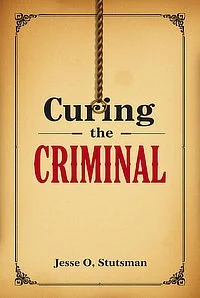
Curing the Criminal: A Treatise on the Philosophy and Practices of Modern Correctional Methods

By Jesse O.. Stutman

Can crime be cured—or must it always be punished?

In Curing the Criminal: A Treatise on the Philosophy and Practices of Modern Correctional Methods, Jesse O. Stutsman offers one of the most ambitious reformist visions of the early twentieth century. Writing in an age of optimism about science and psychology, Stutsman argues that offenders are not beyond redemption but can be guided, educated, and rehabilitated. He calls for prisons to function as clinics, where work, education, and moral training replace idleness and despair. His treatise blends philosophy with practical strategies, insisting that true justice requires transformation, not vengeance.

Paired in spirit with later works such as Graeme Newman’s The Punishment Response, which reveals the deep human roots of our urge to punish, Stutsman’s book invites readers to reconsider the purpose of punishment itself. Should society cling to retribution, or strive toward cure? Nearly a century after its first appearance, this question is more urgent than ever.

Both a historical landmark and a timeless challenge, Curing the Criminal reminds us that the measure of a civilization lies in how it treats its most troubled members.

Macmillan, 1926,Read-Me.Org 2025. 276 pages

Emergence: Labeled Autistic

By Temple Grandin PhD, Margaret M. Scariano

A true story that is both uniquely moving and exceptionally inspiring, Emergence is the first-hand account of a courageous autistic woman who beat the odds and cured herself. As a child, Temple Grandin was forced to leave her "normal" school and enroll in a school for autistic children. This searingly honest account captures the isolation and fears suffered by autistics and their families and the quiet strength of one woman who insisted on a miracle.

Grand Central Publishing, Sep 1, 1996, 184 pages

Ethnicity and Nation-Building : Comparative, International, and Historical Perspectives

Edited by Wender Bell and Walter E. Freeman

This book is the result of the twelfth annual convention of the International Studies Association which was held March 17-20, 1970, in San Juan, Puerto Rico. Although we have subsequently asked a few additional people to contribute, most of the chapters were prepared for and presented at several sessions of the ISA convention, the participants having been invited and the panels organized by William J. Foltz and Leo Kuper, in addition to the editors.

Our theme was “Ethnicity in Nation-Building, Regional Integration, and International Conflict,” and our discussions turned out to be among those happy intellectual occasions when a deep, common interest in a given subject matter washes away disciplinary distinctions. This was especially important because we are an interdisciplinary group composed of political scientists, sociologists, historians, community developers, anthropologists, and planners.

We were also gladdened by the sun, sand, and sea of the Caribbean and we all owe much for the pleasant surroundings, both physical and intellectual, to theProgram Officers—Basil A. Ince, Fred W. Riggs, and Luis Vega. After the conference, the idea of bringing these papers together in a published volume was encouraged by Norman D. Palmer, Richard C. Snyder, and John E. Turner.

We wish to thank Lorraine Estra, of Yale University, and Kay McClellan Richard Gold, and Carol Gold, all of Pennsylvania State University, for editorial assistance. The first editor also wishes to thank the National Science Foundation for a grant (GS-2637) under which he was able to take the time to work on this volume.

AGE PUBLICATIONS LTD, 1974, 381p.

Chinese Political Thought

By Elberty Dengan Thomas

China is the only existing independent nation that can claim to have been a contemporary of the great empires of antiquity— Egypt, Assyria, and Babylon. To these great powers, however, she apparently owed nothing. Shut in on the west by the loftiest mountains in the world, protected on the north by the deserts of Taklamakan and Gobi, and on the east and south by the restless sea, the Chinese people in seclusion developed a civilization that was in nothing inferior to the best that these great empires could show. In the long period of time covered by their history they met with problems similar in character to those encountered by men elsewhere. Dr. Thomas says very truly that “it no longer shocks our habits of thought to assume that man, acting as is his right as a ‘political animal,’ has responded to a given s

NEW YORK: PRENTICE-HALL, Inc. 1927, 332p.

The American Citizens Handbook

By Joy Elmer Morgan

To be a good father, mother, brother, sister, or friend; To be a dependable, faithful, and skilled worker in home, school, field, factory, or office; To be an intelligent, honest, useful, and loyal citizen, with faith in God and love of fellowman; To recognize the brotherhood of man and to five by the Golden Rule— These are the aspirations that have brought happiness and achievement to the America we all love. These are the aspirations that must help us find our way to new glory and grace in the midst of worldwide change. A great civilization must have its roots in the soil of the past and its branches reaching to the stars of the future. Otherwise it lacks the experience and motive necessary for noble achievement in the present. Has the nation lost its way? Let it return again to the faith of its youth. This faith is found at its best in the lives and writings of great leaders who have quickened and purified the national spirit.

National Council for the Social Studies, 1968, 417p.

Policing

By P.A.J. Waddington, Peter Neyroud

This inaugural issue of Policing: a Journal of Policy and Practice launches with a bang. First, it is devoted to the topic that is at the top of policing agendas throughout the world: the response to global mass—casualty terrorism, epitomized by, but far from restricted to, the attacks of September 11 2001. Secondly, it sets a precedent for what we hope will be the defin- ing characteristic of this journal: an informed conversation between practitioners and aca- demics.

A Journal of Policy and Practice, Vol 1, Num 1, 2007, 132p.

Human Sterilization: The History of the Sexual Sterilization Movement

By Jacob Henry Landman


"Human Sterilization" by J. H. Landman is a comprehensive examination of the sterilization movement, its foundations, and its implications. The book delves-in to the history and development of sexual sterilization laws, discussing the various social, legal, and scientific aspects that have influenced this controversial practice. Landman provides a detailed account of the movement's origins, key figures, and the arguments both for and against sterilization, making it a significant contribution to the understanding of this complex issue.The book also addresses the administration of sterilization laws, highlighting five critical problems in their implementation. Extensive appendices summarize the history and current status of human sterilization in the United States, offering valuable insights into the practical challenges and ethical dilemmas associated with the practice. Overall, Landman's work is well-documented and serves an important resource for those interested in the history and impact of the sterilization movement

The Macmillan Company , 1932 , 341 pages

Father Flanagan of Boys Town: A Man of Vision

By Hugh Reilly, Kevin Warneke

A biography of Father Edward Flanagan's birth in rural Ireland, the founding and growth of his world-famous Boys Town, and his global travels following World War II to advocate for youth.

This is the tale of Edward Flanagan, a young Irish lad shepherding a flock of sheep on a farm in Ballymoe, who became the famed Father Flanagan, founder of America's Boys Town, guardian of thousands of orphaned, neglected, and abandoned boys, and adviser to presidents.

From a large Irish family, Flanagan suffered through ill health and setbacks to pursue his desire to join the priesthood. Following his older brother and fellow priest to the plains of Nebraska, he served several parishes and opened a hotel for homeless men before finding his life's mission to care for and give a voice to young boys whom society had despaired of and cast aside. Father Flanagan opened his home in 1917 for boys of any race and creed. In this definitive biography, the authors recount his struggles with drought, fire, lack of funds, and skeptical citizens to create a safe haven for these boys.

Boys Town Press, 2008, 347p.

Seeking Capture, Resisting Seizure: An International Legal History of the Anglo-Brazilian Treaty for the Suppression of the Slave Trade (1826–1845)

By Adriane Sanctis de Brito

The treaties to suppress the slave trade were the subject of intense legal battles in the first half of the 19th century. This book explores the legal disputes about the Anglo Brazilian treaty to highlight the political importance of what initially looks like mere argumentative hurdles over the rules and proceedings regarding the search and capture of ships. It reveals the complex legal translations of state inequality, abolition and slavery, as well as war and peace.

Frankfurt am Main: Max Planck Institute for Legal History and Legal Theory, 2024.

Against! Rebellious Daughters in Black Immigrant Fiction in the United States

By Asha Jeffers

Human trafficking has generated intense global concern, with stories of sex slavery and images of women forced into prostitution so persuasive that states have raced to respond ahead of empirical data and clear definitions of the crime. In Trafficking Rhetoric, Annie Hill analyzes the entanglement of state veneration and state violence by tracking how the United Kingdom points to the alleged crimes of others in order to celebrate itself and conceal its own aggression. Hill compares the UK’s acclaimed rescue approach to human trafficking with its hostile approach to migration, arguing that they are two sides of the same coin—one that relies on rhetorical constructions of “trafficked women” and “illegal migrants” to materialize the UK as an Anglo-white space.Drawing from official estimates, policy papers, NGO reports, news stories, and awareness campaigns and situating them in the broader EU context, Hill accounts for why the UK’s anti-trafficking agenda emerged with such rhetorical force in the early twenty-first century. Trafficking Rhetoric reframes controversies over labor, citizenship, and migration while challenging the continued traction of race-baiting and gender bias in determining who has the right to live, work, and belong in the nation.

Columbus, OH: Ohio State University Press, 2025.