Open Access Publisher and Free Library
TERRORISM.jpeg

TERRORISM

Terrorism-Domestic-International-Radicalization-War-Weapons-Trafficking-Crime-Mass Shootings

Posts in Violence and Oppression
Reaching and Connecting: Preliminary Results from Chicago CRED’s Impact on Gun Violence Involvement

By Northwestern Neighborhood & Network Initiative (N3).

A new research brief from Northwestern Neighborhood & Network Initiative (N3) was just published affirming that Chicago CRED:

works with the highest-risk individuals.

successfully connects them with needed services.

“potentially” reduces their likelihood of being shot or arrested by 50% and 48% respectively. As always, they are cautious about suggesting direct causation, but it is nevertheless encouraging.

The report explicitly mentions that “other outreach-focused programs such as Communities Partnering 4 Peace (CP4P) and READI Chicago find similar results.”

The report also says, “for every one CRED participant, we found more than 20 other individuals with similar risk profiles who were not receiving similar services,” so the case for going to scale is real.

” Chicago CRED is a multifaceted approach to reducing gun violence that strives to create lasting change by working directly with individuals who are most likely to be involved in serious gun violence. Beginning with direct street outreach efforts, CRED invites its participants to engage in a comprehensive intervention that connects this hard-to-reach population to services, including dedicated life coaching, trauma counseling, education, and, ultimately, reliable jobs. CRED launched its efforts in 2016 and operates in communities on Chicago’s South and West Sides. The current study examines the 234 men who entered the CRED program in 2019 from Roseland and West Pullman. All of these participants are Black, the average participant age at intake is roughly 24 years old, and the average level of completed education was 11 years of school. Some 85% of participants reported a personal or familial history of gang/group involvement, 75% reported a criminal record, and 9% reported being a gunshot victim prior to intake.

Chicago: Northwestern Neighborhood & Network Initiative (N3) at the Institute for Policy Research, Northwestern University, 2021. 5p.

Evaluating the impact of a street outreach intervention on participant involvement in gun violence

By Marisa C. Ross, Erin M. Ochoa, and Andrew V. Papachristos

The past several years have witnessed increased calls for community violence interventions (CVIs) that address firearm violence while centering local expertise and avoiding the criminal legal system. Currently, little evidence exists on CVI effectiveness at the individual level. This study presents an evaluation of the impact of a street outreach-based CVI [Chicago CRED (Create Real Economic Destiny)] on participant involvement in violence. We used a quasiexperimental design with a treatment sample of 324 men recruited by outreach staff from 2016 to 2021 and a balanced comparison sample of 2,500 men from a network of individuals arrested in CRED’s service areas. We conducted a Bayesian survival analysis to evaluate CRED’s effect on individual violence-related outcomes on three levels of treatment: All enrolled participants, a subsample that made it through the initial phase, and those who completed programming. The intervention had a strong favorable effect on the probability of arrest for a violent crime for those completing the program: After 24 mo, CRED alumni experienced an 11.3 percentage point increase in survival rates of arrest for a violent crime relative to their comparisons (or, stated differently, a 73.4% reduction in violent crime arrests). The other two treatment levels experienced nontrivial declines in arrests but did not reach statistical significance. No statistically significant reduction in victimization risk was detected for any of the treatment levels. Results demonstrate that completion of violence intervention had a strong favorable effect on the probability of arrest for a violent crime for those completing the program: After 24 mo, CRED alumni experienced an 11.3 percentage point increase in survival rates of arrest for a violent crime relative to their comparisons (or, stated differently, a 73.4% reduction in violent crime arrests). The other two treatment levels experienced nontrivial declines in arrests but did not reach statistical significance. No statistically significant reduction in victimization risk was detected for any of the treatment levels. Results demonstrate that completion of violence intervention programming reduces the likelihood of criminal legal involvement for participants, despite the numerous systemic and environmental factors that impede personal success.

PNAS, Vol. 120 | No. 46, 2023. 8p.

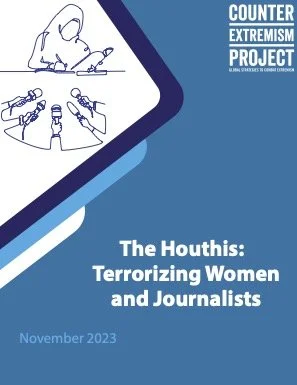
The Houthis: Terrorizing Women and Journalists

By The Counter Extremism Project, Global Strategies to Combat Extremism

In recent years, the U.S. sanctions regime has targeted the world’s most egregious human rights violators. It has done so based on the 2016 Global Magnitsky Human Rights Accountability Act (the Magnitsky Act) and the 2017 Executive Order (E.O.) 13818, which empower the U.S. government to impose “tangible and significant consequences on those who commit serious human rights abuse or engage in corruption, as well as to protect the financial system of the United States from abuse by these same persons.” Since then, the White House has used sanctions to target government organizations, officials, corporations, and private individuals engaged in the systematic violation of human rights around the globe. Such sanctions have been enacted against entities in Europe, the Middle East, Asia, and beyond. Unfortunately, the crimes committed against the Yemeni people by the Houthi rebels have gone largely overlooked. Fewer than 15 Houthi officials have been sanctioned in total, and the majority of those targeted are military officials who have been sanctioned for their role in destabilizing Yemen (E.O. 13611), with minimal attention paid to Houthi violations committed against the population under their rule. This report will focus on the Houthis’ systematic abuse of women and journalists. While these are tragically common phenomena in Houthi-controlled areas, they remain poorly documented. In addition to clearly documenting these abuses, the report will also map out the Houthi mechanics of repression: from the security forces responsible for unjustly arresting and harassing vulnerable individuals to those officials in the justice and prison systems responsible for subjecting the victims to torture and sham trials. The aim of this report is to raise awareness of Houthi human rights violations and provide informational support for efforts to penalize those who can and should be targeted with sanctions for their crimes.

New York: The Counter Extremism Project, Global Strategies to Combat Extremism, 2023. 16p.

In Their Eyes: How European Security Services Look at Terrorism and Counter-Terrorism

By Laura Winkelmuller-Real, Kacper Rekawek, Thomas Renard

How do counter-terrorism services assess the threat in Europe? What trends do they notice? What are their most pressing concerns? Experts and observers regularly discuss the evolution of the terrorist threat, but what do counter-terrorism professionals have to say about this? This report aims to bring to the fore the perspectives of those that are in the first line to assess or respond to terrorism. Compared with some other initiatives focused on key terrorism trends (such as terrorism databases or indexes),1 this report focuses more strictly on a counter-terrorism perspective. While some reports on counter-terrorism already exist, they are largely drafted by and for governments. This includes notably the assessments conducted by the UN Counter-Terrorism Executive Directorate (UN CTED), which are unfortunately not in the public domain. In Europe, Europol’s TE-SAT annual reports constitute a very useful publicly available resource, although very much focused on a law-enforcement perspective. This report constitutes, therefore, an innovative attempt to monitor counter-terrorism efforts, with a focus on European Union (EU) Member States. It focuses on original sources, such as reports published by security services, a treasure of information largely neglected by scholars. It covers various dimensions, namely: 1. National threat levels (related to terrorism and/or extremism); 2. Discussion on the main types of terrorist and extremist threats perceived; 3. National security contexts in which the aforementioned threat levels and threat assessments were produced; 4. New legislative efforts designed and introduced to help CT and P/CVE efforts; 5. Main challenges to CT or P/CVE activities encountered by the EU MS; 6. Major CT operations conducted in Europe; 7. Main efforts in countering the financing of terrorism by different EU MS; 8. Key developments with regard to terrorism sanctions and proscriptions; 9. Communication and transparency efforts related to CT and P/CVE; To conduct this research, the International Centre for Counter-Terrorism (ICCT) compiled and analysed more than 70 official counter-terrorism and security reports published by the EU Member States (MS) in 2024 and 2023, which it combined with a survey distributed among European counter-terrorism officials. More details on the methodology of this report are available in the appendix. By combining practitioner perspectives gathered through the survey with detailed, structured narratives from national security documents, the report captures both operational realities and strategic priorities.  . These insights were used to develop specific themes for analysis, and to effectively describe the state of terrorism and counter-terrorism in Europe, as described by security services themselves. Overall, this report, while combining new material with data from the aforementioned secondary sources, offers original insights into the secretive world of counter-terrorism and highlights interesting trends. Furthermore, it could serve as a basis for further investigations into counterterrorism efforts, in Europe or elsewhere, including with a view to their being evaluated.   

The Hague: The International Centre for Counter-Terrorism (ICCT) 2025. 34p.

Exploring the evolution of posting behavior and language use in a racially and ethnically motivated extremist forum

By Sydney Litterer, Ryan Scrivens,Thomas W. Wojciechowski &Richard Frank

Researchers, practitioners, and policymakers are increasingly interested in examining online posting behaviors in virtual communities known to facilitate violent racially and ethnically motivated extremism. However, little is empirically known about how such behaviors develop over time, and even less is known about how the content of posts is related to other posting behaviors. This study used group-based multi-trajectory modeling to explore how users’ online posting behaviors (i.e., posting frequency and use of offensive language) evolved as they engaged with other users on Stormfront, the largest and most well-known white supremacist forum, relative to typical user behaviors. Overall, several noteworthy posting behaviors were identified in the data. We conclude with a discussion of the implications of the analysis, its limitations, and avenues for future research.

Behavioral Sciences of Terrorism and Political Aggression, 2025, 21p.

Right- and left-wing violent extremist abuse of digital technologies in South America, Africa and Asia

By Arthur Bradley and Galuzzi, O.

The abuse of digital technologies by violent extremists is keeping pace with the exponential growth of new technologies, and poses multifaceted challenges to national and global security. Cyber-enabled threats manifest for example in terrorist-operated websites, the shift to alternative or fringe social media platforms, the use of the decentralised web, the exploitation of gaming and adjacent platforms, and the abuse of live-streaming technologies to amplify terrorist and violent extremist attacks. In addition to these online activities, there are concerns also around more disruptive or destructive cyber operations, such as Distributed Denial-of-Service attacks and the hacking of critical infrastructure to cause civilian casualties. In all the research on the diverse range of malicious actors behind these threats, there is comparatively little on the online activity of violent extremist movements, whether right-wing or left-wing, in the Global South. This report forms part of UNICRI’s effort to investigate the threats stemming from the complex interplay between terrorism, violent extremism and cybercriminality – threats that are often overlooked, owing to the difficulty of gathering evidence and attributing offensive cyber operations, and to the prioritisation of more pressing security threats in diverse geographic locations. UNICRI strives to shed light on the online presence, activities and trends of right- and left-wing violent extremist movements and the cyber-enabled threats they may consequently pose to global security. The report was compiled following a three-part research methodology consisting of a literature review, expert interviews and open-source investigations conducted in order to analyse the online activities of right- and left-wing violent extremist movements in South America, Africa and Asia, and examining both their intent and ability to mount offensive cyber-attacks. The report includes particular case studies within these regions, including in Brazil, South Africa, India and Maritime South-East Asia. The case studies were selected because of the availability of public information online, the known presence of active non-state violent extremist actors with right- and left-wing ideologies, the similarities and differences these actors present, and their geographic diversity. These factors, and consequently the choice of case studies, demonstrate the global nature of the phenomenon which still requires contextually relevant solutions. The selection of these case studies does not imply that similar threats in other geographies are not considered relevant to international peace or development, and conversely, the omission of any movements is merely the result of restricted resources and time. The groups and movements presented within this report are not necessarily referenced as violent extremists either by the United Nations or by the Member States mentioned, however, their alignment, proximity, and connection with right- and left-wing violent extremist ideologies, as well as their use of violent extremist tactics, justify mention in this report to ultimately reflect on the global dimension of the abuse of digital technologies by violent extremists . This report finds widespread exploitation of digital platforms by right- and left-wing violent extremists based in South America, Africa and Asia. Groups and their affiliated networks use a wide variety of platforms and services for a range of different purposes, and they often seem to face fewer restrictions in terms of content moderation by technology companies, many of which are based in the United States or European countries. In particular, it found: As in Europe, North America, and Australasia, the online activities of right- and leftwing violent extremist groups in South America, Africa and Asia are increasingly superseded by more disparate, horizontal online networks. In many of the case studies, for example in Brazil and India, physical attacks have increasingly been carried out by lone actors or small cells, some of which may have had previous engagement with organised groups. This dynamic has implications for the ability of technology companies and law enforcement agencies to counter the threat, as planned attacks and their perpetrators may be more difficult to prevent or identify. * Violent extremist networks and individuals are increasingly using a more diverse range of online platforms and services to further their goals. This is in line with the increase in the number of online platforms and services used by broader populations generally, but it may also be part of a concerted effort by these networks to reach a broad audience and mitigate the impact of the potential removal of their accounts or groups by technology companies. Violent extremist networks continue to exploit multiple platforms simultaneously, using outlinking between platforms to evade detection or enforcement by specific companies. Violent extremists comprise the minority of the perpetrators delivering cyber-attacks globally, most of which are believed to be carried out by state-backed actors, hacktivist collectives, or financially motivated criminals. Interviews with a group of 31 experts consulted as part of this research, however, indicate that the threat from cyber-attacks motivated by a belief system and delivered by individuals or groups affiliated with violent extremist movements is likely to increase in the coming years, and is likely to be particularly high in countries believed to have less developed cybersecurity defences. This report suggests that international technology companies are not adequately fulfilling their content moderation policies as consistently in South America, Africa and Asia as in other countries in Europe, North America, and Australasia. Also, they do not appear to be allocating sufficient resources to ensuring platform safety in these regions, where they face significant challenges in effectively countering the exploitation of their services by violent extremist movements. Practical challenges are compounded by definitional challenges regarding contentious terms such as “violent extremism” and “terrorism”, neither of which has an internationally agreed definition. Also, technology companies, it seems, still struggle to detect and understand violent extremist content or communications effectively in languages other than English. This task is made more difficult by the challenge of interpreting and understanding local dynamics and the community-specific slang found in content, and by the efforts of malevolent networks to evade detection or enforcement by moderation teams. Evidence suggests that, to date, this – together with an imbalance in resource allocation – means that the capability of many technology companies to moderate content in languages other than English is comparatively ineffective. Often, a splintered regulatory landscape also makes it difficult for technology companies to apply their policies consistently across multiple jurisdictions around the world. Technology companies operating globally are subject to a variety of differing and often contradictory regulatory requirements, including those relating to designations, hate speech legislation and Internet-related laws, and companies can be under pressure from the political or cultural contexts in particular countries. This can make it difficult for these companies consistently and effectively to maintain a balance between removing violative content and upholding human rights and fundamental freedoms. The report focuses on a set of case studies diving into the online activities of right- and left-wing violent extremist groups in South America, Africa and Asia, and the ways in which they abuse digital technologies

Turin, Italy: United Nations Interregional Crime and Justice Research Institute (UNICRI) and the VOX-Pol Institute. 2025. 88p.

Community correlates of change: A mixed-effects assessment of shooting dynamics during COVID-19

By Nicole J. Johnson ,Caterina G. Roman

This study examines changes in gun violence at the census tract level in Philadelphia, PA before and after the onset of the COVID-19 pandemic. Piecewise generalized linear mixed effects models are used to test the relative impacts of social-structural and demographic factors, police activity, the presence of and proximity to drug markets, and physical incivilities on shooting changes between 2017 and June, 2021. Model results revealed that neighborhood structural characteristics like concentrated disadvantage and racial makeup, as well as proximity to drug markets and police activity were associated with higher shooting rates. Neighborhood drug market activity and police activity significantly predicted changes in shooting rates over time after the onset of COVID-19. This work demonstrates the importance of understanding whether there are unique factors that impact the susceptibility to exogenous shocks like the COVID-19 pandemic. The increasing risk of being in a neighborhood with an active drug market during the pandemic suggests efforts related to disrupting drug organizations, or otherwise curbing violence stemming from drug markets, may go a long way towards quelling citywide increases in gun violence.

. PLoS ONE 17(2):, 2022. e0263777

Reducing Gun Violence in Brooklyn: Recommendations to Improve Gun Violence Prevention and Intervention Initiatives in the East Flatbush Neighborhood and Surrounding Areas

By Lily Robin, Josh Fording, Travis Reginal, Paige Thompson, Andreea Matei, Jerome Louison, Ramik Jamar Williams

Since the peak of violent crime in the early 1990s, New York City has experienced a sustained decline in violence but, like many cities across the country, has seen an increase in violent crime since 2019. In the 67th Precinct in particular, where the East Flatbush neighborhood is located, there were 34.5 shootings per 100,000 people in 2022. There are several community-led, government-led, and law enforcement–led initiatives in East Flatbush and surrounding areas to address violent crime and gun violence. This report examines gun violence and gun violence prevention and intervention initiatives in the 67th Precinct and surrounding neighborhoods.

WHAT WE FOUND

  • Community organizations employ a holistic approach to violence prevention that addresses root causes of violence using a multifaceted approach to mitigate and address violence and diffuse tension between communities and law enforcement.

  • Community members had negative views of criminal legal system actors and generally lacked awareness of community-based organizations involved in violence prevention work.

  • Several barriers exist to community-led anti–gun violence, including limited funding, a lack of supports for staff, a lack of visibility in the community, and a lack of housing for people in crisis.

We make the following five recommendations:

  • Rely on evidence to target research, funding, and initiatives to the areas most in need.

  • Leverage and grow the existing strengths of communities.

  • Identify and address drivers of gun violence.

  • Develop funding opportunities for gun violence prevention and intervention programs that encourage collaboration and visibility in the community.

  • Invest in community engagement and cultural competency for law enforcement and other criminal legal system actors.

HOW WE DID IT

With funding from the New York City Mayor’s Office of Criminal Justice (MOCJ), Urban, in partnership with the Kings Against Violence Initiative (KAVI), investigated gun violence and gun violence prevention and intervention initiatives in the 67th Precinct and surrounding neighborhoods through a review of existing literature, analysis of crime and shooting data, and interviews and focus groups with gun violence prevention and intervention initiative staff and community members.

Washington, DC: Urban Institute, 2025. 44p.

Unveiling the Threat: Women’s Expanding Roles in Terrorism and Radicalisation

By Mohamed Bin Ali and Rafillah Rapit

The increasing involvement of women in terrorism challenges traditional perceptions and necessitates a shift in counterterrorism strategies. Recent cases in Singapore illustrate how women are radicalised through online propaganda, familial influence, and ideological indoctrination, leading to their participation in extremist activities. Addressing this evolving threat demands gender-sensitive prevention and rehabilitation efforts, community engagement, digital counterterrorism, and tailored intervention programmes to counter radicalisation at its roots. COMMENTARY The recent detention of a 15-year-old self-radicalised female student in Singapore highlights the growing vulnerability of young individuals, especially women, to extremist influences online. Her case, the first involving a female minor under the Internal Security Act (ISA), signals an alarming shift in radicalisation trends, where even adolescents are being drawn to violent ideologies. This underscores the urgency of addressing radicalisation at its early stages, particularly in digital spaces where extremist propaganda thrives. Just months earlier, the case of a 56-year-old radicalised housewife demonstrated that women are no longer confined to passive roles in extremist networks. These developments challenge traditional assumptions about gender and radicalisation, reinforcing the need for targeted intervention efforts across different demographic groups.

In many cases, women were often involved as facilitators of terrorism, providing logistical support, acting as recruiters, or serving as symbols of ideological purity. However, recent trends show a growing number of women assuming leadership roles, engaging in combat, and even carrying out suicide attacks. Several factors drive this shift, including ideological indoctrination, social and economic disenfranchisement, and extremist organisations' strategic exploitation of gender norms. Terrorist groups such as ISIS, Boko Haram, and Al-Qaeda have actively sought to recruit women, recognising their potential to evade security measures and access targets that male operatives might struggle to reach. Extremist groups have used women as suicide bombers, assassins, and enforcers of their doctrine. In some instances, they have also taken on prominent roles in radicalisation efforts, using online platforms to spread extremist propaganda and recruit new members.

S. Rajaratnam School of International Studies, NTU Singapore 2025. 4p,

Cattle Rustling in the Border Regions of Cameroon and Chad

By Oluwole Ojewale and Raoul Sumo Tayo

This study presents evidence on the dynamics of cattle rustling in border regions of Cameroon and Chad. It identifies the drivers and enablers of the phenomenon and the networks of actors engaged in the criminal economy. The ungoverned spaces of border regions pose security challenges and accentuate the illicit economy of cattle rustling. Addressing cattle rustling in southern Chad and northern Cameroon requires a comprehensive, multi-stakeholder approach due to the complex interplay of economic, social and security dynamics in the regions. Key findings • The primary enablers of cattle rustling include transhumance and child labour, multiple conflicts, failure of governance, environmental factors, porous borders, cultural perception and social acceptance, corruption and ineffective justice system. • The link between cattle rustling and other forms of organised crime manifests through terrorism financing, cross-border smuggling, arms trafficking, abduction and money laundering. • In addition to the traditional cattle rustlers, the dominant actors perpetrating cattle rusting are ISWAP (71.4%), Boko Haram (9.5%), separatist groups (8.1%) and unidentified armed groups (5.4%).

ENACT, 2025. 36p.

The Iron River of Weapons to Mexico: Its Sources and Contents

   By John Lindsay-Poland. Cleary Gottlieb Steen & Hamilton and Giffords  

  The iron river of weapons transiting from the United States to Mexico and Central America that empowers criminal organizations and accelerates forced migration originates from hundreds of gun manufacturers and passes through thousands of local U.S. gun dealers, every year. In reaction to the flow of illicit weapons, a firearms race has developed, in which gun companies export more and increasingly militarized weapons to Mexican police and military forces. But the number of lives lost or disappeared through violence in Mexico continues to increase, while migrants fleeing through Mexico have become understandably more desperate to get to safety. Political discourse focuses on the U.S.-Mexico border. But the unregulated, massive and militarized U.S. gun market that feeds the violence, drug trafficking, and displacement is growing – and often ignored. The Stop US Arms to Mexico project obtained finely grained data, never before disclosed, on the origins of guns trafficked and exported to Mexico and Central America from the United States since 2015. We are publishing this data, in conjunction with this report, at stopusarmstomexico.org/iron-river  Gun violence in Mexico has spiraled in the last two decades since the expiration of the U.S. federal assault weapons ban in 2004 and the 2007 declaration of the drug war in Mexico with U.S. support. A modest decline in gun homicides since 2019 has not reduced violence even to the elevated levels of 2010-2011. Moreover, the growing number of forced disappearances, primarily carried out by criminal organizations armed with U.S. weapons and sometimes with collusion of Mexican security forces, has nullified the modest decline in gun homicides

San Francisco, CA:  Stop US Arms to Mexico, 2024. 12p.

No Shelter from the Storm: Update on Iron River of Guns New Data on the U.S. Gun Trade to Mexico, Central America and the Caribbean

By John Lindsay-Poland

The U.S. firearms market is generating growing storms of violence in neighboring countries. From Mexico – where traffickers in fentanyl and other criminal businesses are armed with thousands of U.S.- sourced assault weapons and .50 caliber rifles – to Haiti, where gangs armed with rifles easily purchased and smuggled from Florida and Georgia dominate and terrorize broad swaths of territory – the permissive, militarized and enormous gun trade in the United States is driving thousands of families to flee their homelands, arming the men who disappear people and commit femicide, empowering traders in narcotics that take thousands more lives, and looting economies. The damage is not limited to Mexico and Haiti. Firearms homicides – just one indicator of gun harms – have grown in Jamaica, Barbados, Central America and other nations, in tandem with the retail proliferation of U.S. weapons. In Guatemala, the exponential growth of exports of U.S. pistols has fed weapons trafficking and homicide rates. The United States is not exempt, of course: there were more shootings in U.S. schools in the last three years than any prior year.1 The concept frequently used for this violence is that of a pandemic: the health consequences of gun violence are severe and growing, with firearms and bullets as vectors and agents, respectively.2 But gun violence also behaves like a storm system in its violence and shattering effects. And the islands in which people may imagine that they are safe from these storms of gun violence are shrinking.

San Francisco, CA Stop US Arms to Mexico, 2025. 9p

Iron River Gun Trafficking Case

By William R. Slomanson

An estimated quarter- to half-million guns are smuggled from the U.S. into Mexico each year. Seventy percent of guns recovered at Mexican crime scenes are traced back to the U.S. Many of these weapons are military-styled assault rifles, shipped into Mexico by U.S. drug gangs. This pipeline endangers citizens of the four U.S. border states, many of the nation’s counties, and the police who are outgunned by cartels. According to the complaint, 'tens of thousands of Mexico’s citizens have been wounded and killed.'

The typical precursor is sloppy or illegal practices in the manufacturer-wholesaler-retailer-buyer distribution chain. Data available to the gun industry could be used by its members to substantially reduce sales of guns to 'bad apple' retailers.

Mexico’s unique law suit  is the first whereby a foreign government has sued American gun makers. If ultimately successful, the trial judge has hinted that this novel filing would encourage similar litigation−in the U.S. and other nations.

Estados Unidos Mexicanos is not a lawsuit against the Second Amendment. Mexico instead hopes to trigger an exception to the federal statute that generally bars such suits against the U.S. gun industry. The plaintiff relies on lower U.S. court cases that have either interpreted that immunity from suit−in a way that allows such suits to proceed−or have considered this federal statute unconstitutional.

Mexico filed in the U.S. for several presumptive reasons. It seeks stratospheric damages of 'billions of dollars each year'. A large recovery is more likely in an American court than in Mexico. Securing the appearance of these U.S. corporations in a Mexican venue would be beyond wishful thinking. Mexico’s other major hurdle is whether a U.S. court can exercise personal jurisdiction, when all of the alleged harm has occurred in Mexico.

The case is now in the trial court. After that result is appealed, and case-split certiorari is sought, the reviewing courts may dismiss this case because: (1) it does not trigger the key exception to federal immunity from suit; and/or (2) the court lacks personal jurisdiction over the non-resident defendants.

56 Suffolk University Law Review (forthcoming 2022), 35p.

Firearm-related threats before migrating to the USA from Latin America and the Caribbean

By Eugenio Weigend Vargas , Jason Goldstick, Laura Vargas

Background - Every year, thousands of people from Latin America and the Caribbean are migrating to the USA. Policy-makers have argued that US firearms are fuelling violence in these countries and are contributing to migration. The objective of this article is to examine the proportion of immigrants from Latin America and the Caribbean arriving at the US border who have previously been threatened with a firearm. This article further explores sociodemographic factors associated with the likelihood of previous firearm-related threats, whether those threats are associated with post-traumatic stress disorder, as well as the reasons behind those threats. Methods Data were obtained from a survey of migrants recruited at the southern US border from March 2022 to August 2023. To be selected, respondents had to be 18 years of age or older, had to speak English or Spanish and come from a Latin American or Caribbean country. We used descriptive statistics and a logistic regression. Results We analysed 321 cases. Roughly, 48% of respondents reported previous firearm-related threats. Males and respondents coming from Honduras, Venezuela and El Salvador were more likely to report previous firearm-related threats. There was a strong association between previous firearm-related threats and signs of post-traumatic stress disorder. Most threats occurred during robberies or extortions, but other threats were perpetrated by authorities, to prevent crime reporting, or by intimate partners. Conclusion Understanding the violence, particularly firearm-related violence, experienced by those migrating to the USA from Latin America and the Caribbean could help guide policy discussion and actions.

Injury Prevention, Epub ahead of print: . doi:10.1136/ip-2024-045369

Long Range Terror:  How U.S. 50 Caliber Sniper Rifles Wreak Havoc in Mexico

By Kristen Rand. Additional research was provided by Kaya van der Horst

Fifty caliber sniper rifles are used by militaries around the world and can penetrate armor plating and shoot down aircraft on take-off and landing, but can be purchased under federal law in the U.S. as easily as a single-shot hunting rifle. The study’s release comes the day before the U.S Supreme Court will hear oral arguments by the government of Mexico in its lawsuit against gunmaker Smith & Wesson, another manufacturer of military bred weaponry utilized by the cartels.

VPC Government Affairs Director Kristen Rand states, “Fifty caliber sniper rifles are the guns most coveted by the cartels and most feared by Mexican law enforcement. The VPC has warned for years about the unique threat these anti-materiel guns present. Now they are being used to inflict maximum harm in Mexico. The U.S.-based manufacturers of these weapons must be held accountable.”

The VPC joined other gun violence prevention organizations in an amicus brief in support of the government of Mexico. The VPC has issued a wide range of studies on the threat posed by 50 caliber sniper rifles, including the risk they pose in the U.S. to infrastructure, civil aviation, and national security.

The study details the history of the Barrett, manufactured in Murfreesboro, Tennessee and the original 50 caliber sniper rifle, the gun’s unmatched combination of firepower and range, and the use of it and other 50 caliber rifles in numerous attacks and assassinations by Mexican cartels. Data contained in the study reveal that from 2010 to February 2023, the majority of 50 caliber sniper rifles (519 of 831) recovered by Mexican authorities were Barretts. Barrett and other 50 caliber sniper rifles have also been obtained by terrorists around the world, including Al Qaeda. In addition, the study:

  • Cites numerous reports and research warning of the terror threat posed by the easy accessibility of 50 caliber sniper rifles, including: compromising command and control via assassination; the threat to aircraft (including civilian airliners); and, infrastructure.

  • Offers numerous examples of terrorist and other criminal acts, including assassination, involving 50 caliber sniper rifles in Mexico, the U.S., and around the world.

  • Details how the use of armor-piercing rifle rounds can further magnify the power – and the threat – of these deadly weapons.

  • Includes profiles of companies manufacturing 50 caliber sniper rifles.

The study also puts forth policy recommendations including a federal ban in the United States of these uniquely destructive firearms.

Washington, DC: Violence Policy Center, 2025. 34p.

Assessing Gun Violence Risk from the Group Up

By The Center for Neighborhood Engaged Research & Science (CORNERS) at Northwestern University

Gun violence reduction initiatives that seek to engage individuals involved in violence must effectively identify and manage risk. Risk assessment informs participant recruitment, service provision, and program evaluation. Discussions around risk assessment often center quantitative metrics and researcher-designed assessment tools, deemphasizing the lived and professional experience of frontline professionals who work and often live in the communities they serve. The study outlined here analyzes the perspectives of frontline street outreach and victim services workers in Chicago on how they define, assess, and respond to gun violence risk on the job. The findings are based on a series of semi-structured focus group discussions and a participatory analysis session conducted in early 2021 by researchers at the Center for Neighborhood Engaged Research & Science (CORNERS). These discussions sought to answer the following 1. How do frontline violence prevention workers define risk for gun violence? 2. How do violence prevention workers assess and respond to risk? 3. What role do/should formal assessment tools play in violence prevention? Seasoned staff from both street outreach and victim services programs shared their experience identifying when, where, and who is at risk of shooting or being shot. It also gathers perspectives on strategies to mitigate this risk.

Evanston, IL: The Center for Neighborhood Engaged Research & Science (CORNERS) at Northwestern University, 2022. 28p.

Evaluating Illinois’ Peacekeepers Program Peacekeepers Program Data and Violence Trends Analysis July 1, 2023 - December 31, 2024

By The Center for Neighborhood Engaged Research & Science (CORNERS) at Northwestern University

The Peacekeepers Program originally launched in Chicago in the summer of 2018 as the Flatlining Violence Inspires Peace (FLIP) Strategy. FLIP began as a summer-based community violence intervention program and grew to provide services in 16 Chicago community areas (CCAs) that held the lion’s share of violence in the city of Chicago. FLIP combined group violence intervention, violence prevention, and workforce development strategies designed as a street outreach apprenticeship program. Its immediate goal was to reduce gun violence in hotspots—areas with disproportionately high levels of shootings and victimizations. FLIP theorized that if gun violence could be reduced in these spatial pockets within a program community, it would create extended periods of peace across the broader community, ultimately contributing to a citywide decline in gun violence victimizations over time. In January 2023, the Illinois Office of Firearm Violence Prevention (OFVP), housed within the Illinois Department of Human Services (IDHS), supported FLIP’s transition into a year-round initiative, piloting their involvement and investment in the re-branded Peacekeepers Program (the Program). At the conclusion of the pilot period, two critical milestones occurred: the Program was integrated into the Reimagine Public Safety Act (RPSA) portfolio and, for the first time, received public funding to operate year-round. Moreover, with this funding, the Program was required to expand into RPSA priority communities, allowing the intervention to extend beyond Chicago and into surrounding Suburban Cook County  

  The report begins by providing an analysis of the 14 communities that implemented the Program for two consecutive calendar years. This exploration seeks to understand violence trends during the 2023-2024 year-round implementation of the Program compared to 2021-2022 calendar years, when the Program was only implemented during the summer months. Additional analyses will examine violence trends at both the community area and city-wide levels to assess the Program model’s claim that a reduction in hotspots might contribute to broader reductions across Program communities and the City of Chicago. The report also provides a brief overview of the year-over-year violence trends in the 13 Chicago-based Program expansion communities and their respective hotspots, during their launch year, to better understand violence trends following their start dates. This focus on both established and expansion communities highlights the progress made across all program community areas and offers insights into how implementation over consecutive 24-month periods aligns with observed violence trends. This report does not seek to establish causation or correlation between violence trends in program community areas and the implementation of the Program. Instead, it provides an exploratory analysis of gun violence trends in these areas, with a particular focus on program hotspots. Finally, the report concludes with early findings and recommendations on the implementation of the Program.  

Evanston, IL: Center for Neighborhood Engaged Research & Science (CORNERS) at Northwestern University 2025. 34p.

Punishing Fear: The devastating impacts of the war on gun possession in Chicago

By Naomi Johnson, Austin Segal, Maya Simkin, Stephanie Agnew, Kareem Butler, and Briana Payton

Over the last two decades, the policing, prosecution, incarceration, and surveillance of people who carry guns has increased tremendously. This criminalization has majorly impacted Black communities in the state – especially in Chicago and Cook County – without improving safety. In fact, the criminalization of gun possession and the conflation of gun possession and gun use have made communities less safe by entangling more people in the criminal legal system. Time and time again, Black men, teenagers, and children are targeted, arrested, and criminalized for carrying guns that they feel are necessary for their own protection in areas with high rates of gun violence and low clearance rates by police. The purpose of this report is to analyze the policies, processes, and sociocultural realities that have led to the “War on Guns,” which parallels the historic War on Drugs1 and has similarly devastated Black and Brown communities for decades. In this brief report, we use public information to provide a set of facts that explain how the mounting public pressure to stop gun violence has regressively and ineffectively targeted the victims of violence and their neighbors who carry guns for protection. We detail how this approach has contributed to discriminatory policing, confusing laws, harsh sentencing, over-incarceration, and other unnecessary and long-term entanglements with the criminal legal system.   

Chicago: Chicago Appleseed Center for Fair Courts, 2024. 44p.

Print Media Framing of Gun Violence in Kenya: the case of Nation and Standard Newspapers

By Anne K. Mwobobia

This study sought to examine print media framing of gun violence in Kenya with reference to the Nation and Standard newspapers. The objectives of the study are to establish dominant frames in reporting gun violence by the Nation and the Standard newspapers; analyze the diction in framing gun violence by the Nation and the Standard Newspapers; to examine the figures of speech in framing gun violence by the Nation and the Standard Newspapers and; to assess the portrayal of gun violence as a serious societal problem by the Nation and the Standard Newspapers. The study was based on the Framing Theory and Goffman’s Frame Analysis. The study employed the descriptive research design and the mixed methods research approach. Purposive sampling technique was used to select suitable newspaper articles for the study. The study involved the collection of data on gun violence from Nation and Standard Newspapers for the period 1st September 2019 –30th August 2020. Data was collected using a code sheet and interview guide. The target population of the study consisted of 730 articles published by Nation and Standard Newspapers articles on gun violence. Two editors and three reporters experienced in reporting gun violence were also interviewed. Data was collected and analyzed using content analysis. Regarding the dominant frames in reporting gun violence by the Nation and the Standard newspapers, it is evident that most of dominant frame used to portray gun violence in both Nation and the Standard newspapers were fatality, terrorism, crime, citizen participation, cattle rustling, tactical response and accomplice. Cartoons and photos were also used as visual persuasion frames. Diction was also extensively used in the reporting of gun violence stories. In this regard, various catchwords and catchphrases were used in depicting gun violence. These included: silencing the guns, impunity, and proliferation of guns, dead, robbery, shootout and coup attempt. It was also made manifest that various figures of speech were used. These include idioms, similes, metaphors and idiomatic expressions. Lastly, the findings show that some of the major issues of societal concern focused by both newspapers included armed robbery, police brutality, cattle rustling and terrorism. It can thus be concluded that the print media plays a pivotal role in checking gun violence since it is widely viewed as the mirror of society and protective shield against violent gun crimes. The study recommends that the print media should expand the dominant frames used in reporting gun violence so as maximally show the various angles to the deep issue of gun violence. This could be through enhanced research on gun violence in Kenya. The use of diction and figures of speech could also be exploited within the process of enriching the presentation of gun violence stories. The print media should also increase the level to which they offer balanced coverage of gun violence stories in the whole country.

Nairobi: University of Nairobi, 2021. 92p.

Evaluations of countering violent extremism programs: Linking success to content, approach, setting, and participants

By Wesam Charkawi , Kevin Dunn ,  Ana-Maria Bliuc

Since the September 11 attacks, prevention and countering violent extremism (P/CVE) programs have rapidly increased worldwide, garnering significant interest among researchers. This paper is a systematic review focusing on the evaluations of primary, secondary and tertiary prevention programs from 2001 until 2020. The review identified 74 program evaluations that included satisfactory measures and metrics. Only 32% of the studies deemed the intervention successful, 55% described limited success, and 8% deemed the program had failed. Many of the programs evaluated failed to reach their objectives; some generated negative outcomes such as community disdain and an increase in the likelihood of alienation and stigma. Success was largely a self-assessed measure by the facilitators or stakeholders of the programs or the evaluators of the study. Success indicators can be operationalized as the degree of enhanced sense of belonging (connectedness to the community, social connection), trust and willingness to engage in programs, development of critical thinking skills (integrative complexity theory), and a strong sense of worth (quest for significance). Without a generally accepted set of metrics and no cohesive framework for conducting evaluations, this review offers an important addition to the field on the evidence suitable for program evaluations. An important aim of this systematic review was to identify what makes an effective and successful countering violent extremism program. The key findings indicate that enhancing belonging, identity, trust and community engagement, acknowledging perceptions of injustice, religious mentoring, and the promotion of critical thinking/self-reflection are associated with successful programs. The findings press upon policymakers, funders, and researchers the need to consider and support high-quality evaluations of programs.

International Journal of Law, Crime and Justice, 2024., 19p.