By the Little Hoover Commission
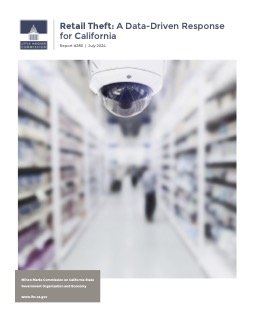
The state should prioritize data collection and collaboration with research institutions as it seeks to understand and combat retail theft in the long term, the Little Hoover Commission concluded in a new report, Retail Theft: A Data-Driven Response for California.
The report was prompted by a request from 66 members of the legislature to study issues surrounding retail theft. The report notes that since the Legislature and the voters are now considering changes to the penal code sections addressing retail theft, the Commission’s recommendations focus on long-term improvements in the way the state reports and assesses retail theft and law enforcement’s response.
In recent years, alarming videos showing brazen thefts of commercial property have circulated on social media, increasing public concern. Some businesses have cited theft as a reason for closing stores. These crimes also burden the criminal justice system, using limited resources that could be redirected toward more severe crimes.
Looking at available data, the Commission found that, despite a recent uptick, reported retail theft remains at roughly the same level as during the 2010s and lower than it was in earlier decades. Like many crimes, retail theft is undoubtedly underreported, but the report notes that by its nature, the level of underreporting is difficult to measure.
The Commission concluded that more detailed crime data is needed for policymakers to craft an evidence-based response. The Commission commended the Department of Justice for its existing data initiatives, and recommend they be expanded in consultation with experts. At a minimum, data should include information on crime statistics, demographics, law enforcement response times, prosecution and adjudication data, and rehabilitation, reentry, and recidivism data. In addition to data collection, the Commission recommended that the state partner with California universities and other nonpartisan research institutions to study preventative measures, rates of underreporting, economic impact, and drivers of public perception.
“Never was the aphorism, ‘You can’t manage what you don’t measure,’ more true than when discussing retail theft. We can’t fully comprehend the effects of retail theft, or address its causes, without detailed data. As it now stands, necessary data is missing,” said Commission Chair Pedro Nava. “There are many potential partners who can collaborate to remedy the information gap. Working with stakeholders, California can fund coordinated studies and data collection efforts to better understand the complexities of these crimes.”
“California has the opportunity to join efforts with some of the best researchers in the nation as it navigates the issue of retail theft,” said Vice Chair Anthony Cannella. “With a more complete picture of how retail theft is impacting the state, the Governor and Legislature can make evidence-based decisions on how to respond effectively.”
Sacramento: Little Hoover Commission, 2024. 35p.