Open Access Publisher and Free Library
CRIME+CRIMINOLOGY.jpeg

CRIME

Violent-Non-Violent-Cyber-Global-Organized-Environmental-Policing-Crime Prevention-Victimization

Posts tagged crime policy
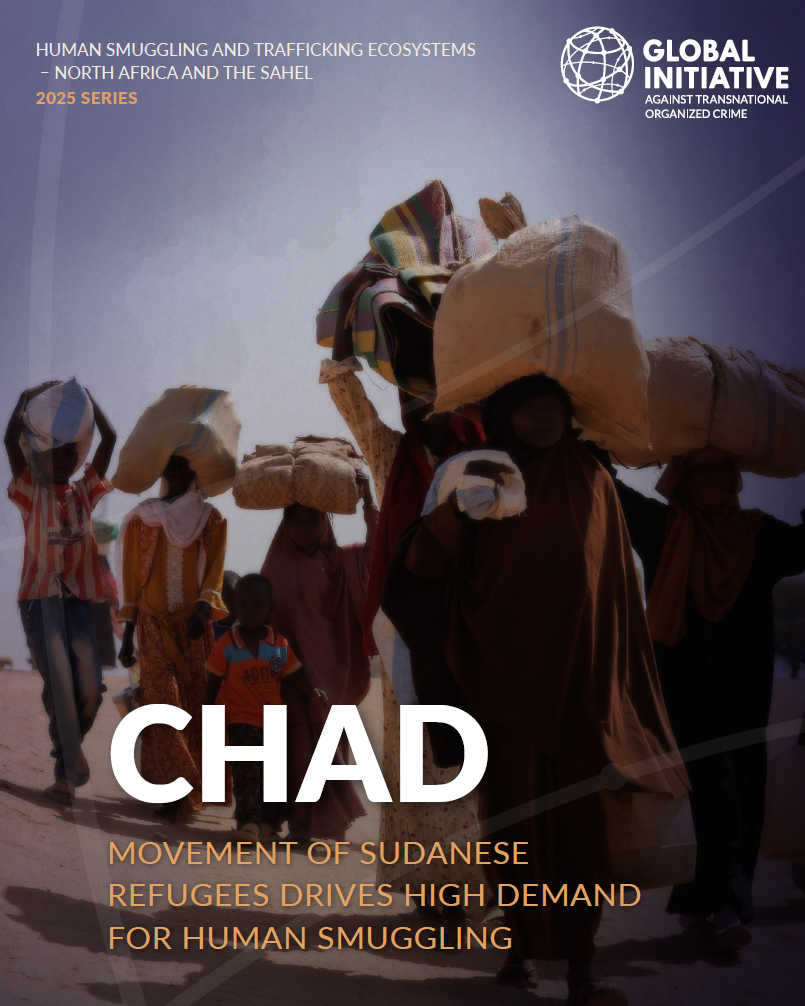
Chad-Movement-of-Sudanese-refugees-drives-high-demand-for-human-smuggling

By Alice Fereday

Chad’s role as a departure and transit country for northbound migration to North Africa and Europe is often overlooked, particularly in comparison to neighbouring Niger and Sudan. However, the country’s position at the crossroads of routes connecting central and eastern Africa to Libya and Niger makes it a significant transit corridor for regional migration, and its role as a bastion of relative stability in an increasingly volatile region has further increased its importance in recent years. Since 2023, the conflict in Sudan and a major influx of refugees into Chad have further shaped these mobility dynamics, making the country a major destination and transit point for Sudanese refugee displacement in the region. At the same time, Chad is navigating a fractious and contested political transition. Political violence escalated in 2024 and remains an important source of tension and political instability. The combination of these complex internal and regional dynamics, and their impact on human smuggling dynamics, make Chad a key country to monitor. A major component of human smuggling dynamics in Chad is internal movements to the country’s northern goldfields. These mobility patterns have typically been shaped by internal factors, including political instability, rebel activity and gold mining.1 This changed in 2023 with the outbreak of the conflict in Sudan and the massive influx of refugees and returnees into eastern Chad. Though northbound movements were temporarily hindered by this shift, which resulted iI emerged as the dominant model of migration in Libya in 2021 and remained so in 2024. Hybrid smuggling refers to the system whereby migrants initially travel to Libya through regular or semi-regular routes, such as flights into airports, and then are moved overland to coastal departure points for the sea crossing to Europe. This system is adaptable to local changes and delivers a consistently high level of attempted departures, despite some localized improvements in security. Critically, the Government of National Unity (GNU), which rules western Libya, continued to struggle with internal division and weak control over crucial areas, especially on the west coast, a key region for human smuggling stretching from the Tunisian border to the city of Zawiya. Political infighting and disputes over state resources 

Sex Fiends, Perverts, and Pedophiles: Understanding Sex Crime Policy in America

By Chrysanthi Leon

From Megan’s Law to Jessica’s Law, almost every state in the nation has passed some law to punish sex offenders. This popular tough-on-crime legislation is often written after highly-publicized cases have made the gruesome rounds through the media, and usually features harsh sentences, lifetime GPS monitoring, a dramatic expansion of the civil commitment procedures, and severe restrictions on where released sex offenders may live. In Sex Fiends, Perverts, and Pedophiles, Chrysanthi Leon argues that, while the singular notion of the sexual boogeyman has been used to justify these harsh policies, not all sex offenders are the same and such ‘one size fits all’ policies can unfairly punish other offenders of lesser crimes, needlessly targeting, sometimes ostracizing, citizens from their own communities.While many recognize that prison is not the right tool for every crime problem, Leon compellingly argues that the U.S. maintains a one-size-fits-all approach to sexual offending which is undermining public safety. Leon explains how we’ve reached this point—with a large incarcerated sex offender population, many of whom will be released in the coming years with multiple barriers to their success in the community, and without much expertise to guide them or to guide those who are charged to help them. Leon argues that we cannot blame the public, nor even the politicians, except indirectly. Instead, we might blame the institutions we charge with making placement decisions and with the experts—both those who have chosen to work in the field and those who have caused its

  • marginalization. Ultimately, Leon shows that when policies intended for the worst offenders take over, all of us suffer.

New York: New York University Press, 2011. 263p.

Interventions Against Child Abuse and Violence Against Women: Ethics and Culture in Practice and Policy

Edited by Carol Hagemann-White, Liz Kelly, Thomas Meysen

This book offers insights and perspectives from a study of “Cultural Encounters in Intervention Against Violence” (CEINAV) in four EU-countries. Seeking a deeper understanding of the underpinnings of intervention practices in Germany, Portugal, Slovenia and the United Kingdom, the team explored variations in institutional structures and traditions of law, policing, and social welfare. Theories of structural inequality and ethics are discussed and translated into practice

Leverkusen-Opladen: Verlag Barbara Budrich, 2019. 282p.