Open Access Publisher and Free Library
CRIME+CRIMINOLOGY.jpeg

CRIME

Violent-Non-Violent-Cyber-Global-Organized-Environmental-Policing-Crime Prevention-Victimization

Posts in Environmental studies
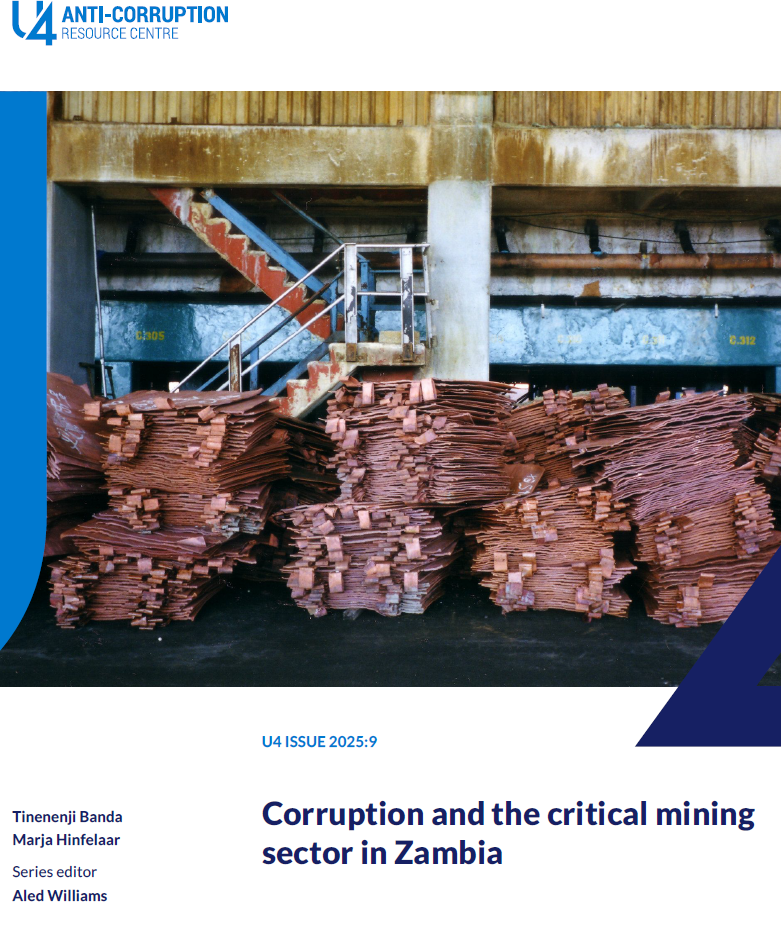
Corruption and the critical mining sector in Zambia

By Tinenenji Banda and Marja Hinfelaar

Zambia is a significant source of critical minerals including copper, cobalt, lithium, nickel and graphite. Interest in Zambia’s minerals is growing, particularly from Western countries and China. Unfortunately, due to governance weaknesses, there is ample corruption and illicit financial flows at several transaction levels in the value chain. This U4 Issue therefore identifies government interventions Zambia can use to curtail corruption considering existing political pressures.

Main points

  • Intense competition for critical mineral value chains results in an increased risk of revenue leakage due to corruption and tax evasion. Illicit financial flows (IFF) threaten Zambia’s economic development and undermine its fiscal systems.

  • Zambia has formal commitments in place, such as laws, regulatory institutions and international commitments, to battle corruption and IFFs, but the institutional architecture is fragmented and inadequately enforced. Inter-agency collaboration is required to address these challenges.

  • Through a literature review, including a law and policy review, and a stakeholder mapping exercise with 21 key informant interviews with government, civil society, academic and industry representatives, we constructed a qualitative understanding of the key risk factors for corruption and IFFs.

  • Significant factors are the lack of a transparent, coherent and disciplined mining licensing system; a non-transparent bidding process; public-private collusion across value chains; abuse of intermediaries and agents; and weak regulation in the sector.

  • Opportunities for interventions are enhanced systems for disclosure and due diligence, reform of the Mining Cadastre, support for evidence-based policymaking, support for the organisation of the artisanal mining sector, enhanced quality of civil society organisation public discourse, and enhanced collaboration in anti-corruption agencies, while keeping political pressures in mind.
Uncovering the Biological Toll of Neighborhood Disorder Trajectories: New Evidence Using Machine Learning Methods and Biomarkers in Older Adults

By Jiao Yu Thomas, K.M. Cudjoe , Walter S. Mathis, Xi Chenao 

This study examined the link between neighborhood disorder trajectories and metabolic and inflammatory biomarkers in U.S. older adults. We analyzed data from community-dwelling Medicare beneficiaries in the National Health and Aging Trends Study. Neighborhood physical disorder was assessed annually through interviewer observations over six years. Latent class analysis was used to identify exposure trajectory subgroups. Machine learning based inverse probability weighted (IPW) regression models were conducted to estimate associations with five biomarkers, including body mass index (BMI), waist circumference, hemoglobin A1C (HbA1c), high-sensitivity C-reactive protein (hsCRP), and interleukin-6 (IL-6). Compared to the stable low exposure group, older adults with increased exposure, decreased exposure, and stable high exposure exhibited higher levels of HbA1c. Only stable high exposure was associated with increased hsCRP. No significant associations were found for other biomarke rs. Residential environments play an important role in shaping the biological risk of aging. Incorporating routine screening for neighborhood environmental risks and implementing community-level interventions are pivotal in promoting healthy aging in place.

2025 ACADEMIC ASSOCIATION INTEGRITY INDEX: THE STATE OF ANTISEMITISM IN PROFESSIONAL ACADEMIC ASSOCIATIONS

By The Anti-Defamation League


The State of Antisemitism in Professional Academic Associations, reveals a problem that extends far beyond faculty meetings or disciplinary debates. When bias takes hold in professional academic associations, it shapes the ideas, frameworks, and standards that guide entire fields and seeps into curricula, research, and public discourse, quietly shaping how students, future professionals and the wider public interpret the world. Simply put, the consequences of this reach everyone.

By assessing where antisemitism persists – and how associations are responding – RAI’s 2025 report provides both a warning and a path forward: to ensure that academic spaces remain not only intellectually rigorous, but also ethically sound, inclusive and accountable to the public they ultimately serve – and to the scholars who call these associations their academic homes.


Recidivism, Service Characteristics, and Changes in Risk and Protective Scores in Juvenile Probation

By D. Michael Applegarth, JoAnn S. Lee

This study examines changes in risk and protective factors among youth on probation (N=6,997) and how services received relate to these changes and subsequent recidivism. Using standardized risk assessments at intake and exit, logistic regression models assessed changes in risk and protective subscales, the relationship between specific services and observed changes, and associations with rearrest and reconviction. Overall, youth showed reduced risk and increased protective scores during probation. Increases in treatment, restitution, and assessments were linked to risk reductions, while treatment, assessments, and skill-building services were associated with gains in protective factors. Notably, more treatment services corresponded with increased risk in the school domain. Youth of color were less likely to experience a decrease in risk and an increase in protective scores. Increases in protective school scores and treatment services were linked to lower odds of rearrest and reconviction. In comparison, more monitoring services and increased legal history were associated with higher odds of recidivism. Findings highlight the potential of rehabilitative services to support youth success and suggest compliance based approaches, such as increased monitoring, may undermine outcomes. The study underscores the need for equitable, developmentally appropriate, and supportive interventions in juvenile probation.


Can enhanced street lighting improve public safety at scale?

By John M. MacDonald, Aaron Chalfin, Maya Moritz, Brian Wade, Alyssa K. Mendlein, Anthony A. Braga, Eugenia South

Street crimes are thought to be inBy John M. MacDonald, Aaron Chalfin, Maya Moritz, Brian Wade, Alyssa K. Mendlein, Anthony A. Braga, Eugenia South

Street crimes are thought to be influenced by changes in ambient lighting; yet, most studies have focused on small-scale interventions in limited areas. It remains unclear whether enhanced lighting can improve safety on a larger, jurisdiction-wide scale. This study examined the first 10 months of Philadelphia's citywide rollout of enhanced street lighting. Between August 2023 and May 2024, 34,374 streetlights were upgraded across 13,275 street segments, converting roughly one third of the city's street segments to new LED (light-emitting diode) fixtures that provide clearer and more even lighting. We assessed the impact of these upgrades on total crimes, violent crimes, property crimes, and nuisance crimes. Our findings reveal a 15% decline in outdoor nighttime street crimes and a 21% reduction in outdoor nighttime gun violence following the streetlight upgrades. The streetlight upgrades may have contributed to 5% of the citywide decline in Philadelphia gun violence during the study period. Qualitative data also suggest that resident perceptions of safety and neighborhood vitality improved after new streetlights were installed.

Policy Implications

Although prior research has mostly focused on small-scale implementations, our study demonstrates that improvements in street lighting can significantly reduce crime rates across large urban areas. These results support the adoption of energy-efficient LED street lighting as a crime reduction strategy for cities. Further research is needed to explore the impact of enhanced streetlight interventions on other types of crime and to determine whether the crime reduction benefits are sustained when these upgrades are implemented across the entire City of Philadelphia for an extended period

fluenced by changes in ambient lighting; yet, most studies have focused on small-scale interventions in limited areas. It remains unclear whether enhanced lighting can improve safety on a larger, jurisdiction-wide scale. This study examined the first 10 months of Philadelphia's citywide rollout of enhanced street lighting. Between August 2023 and May 2024, 34,374 streetlights were upgraded across 13,275 street segments, converting roughly one third of the city's street segments to new LED (light-emitting diode) fixtures that provide clearer and more even lighting. We assessed the impact of these upgrades on total crimes, violent crimes, property crimes, and nuisance crimes. Our findings reveal a 15% decline in outdoor nighttime street crimes and a 21% reduction in outdoor nighttime gun violence following the streetlight upgrades. The streetlight upgrades may have contributed to 5% of the citywide decline in Philadelphia gun violence during the study period. Qualitative data also suggest that resident perceptions of safety and neighborhood vitality improved after new streetlights were installed.

Policy Implications

Although prior research has mostly focused on small-scale implementations, our study demonstrates that improvements in street lighting can significantly reduce crime rates across large urban areas. These results support the adoption of energy-efficient LED street lighting as a crime reduction strategy for cities. Further research is needed to explore the impact of enhanced streetlight interventions on other types of crime and to determine whether the crime reduction benefits are sustained when these upgrades are implemented across the entire City of Philadelphia for an extended period

Climate Chains: Mapping the Relationship between Climate, Trafficking in Persons and Building Resilience in Ethiopia

By The International Organization for Migration

This report, Climate Chains: Mapping the Relationship between Climate, Trafficking in Persons and Building Resilience in Ethiopia, explores the complex links between climate change, livelihood, vulnerability, migration and human trafficking in Ethiopia. Commissioned by IOM under the Climate Resilience Against Trafficking and Exploitation (CREATE) project, this study forms part of a broader research focusing on Ethiopia and the Philippines – two countries facing distinct climate challenges: slow-onset droughts and sudden-onset typhoons, respectively.  

The research used a mixed-methods approach including household surveys, interviews and focus group discussions. The report puts forward a conceptual model that links climate events and trafficking through a series of intertwined steps. It identifies a causal chain where climate events disrupt livelihood, increase vulnerability and heighten migration intentions, which can lead to exploitation and trafficking. The research explores how factors linking climate and trafficking operate in Ethiopia. 

This study provides critical insights and recommendations for policymakers, donors and organizations in Ethiopia and internationally that are working to combat human trafficking and exploitation, while strengthening resilience to climate change.

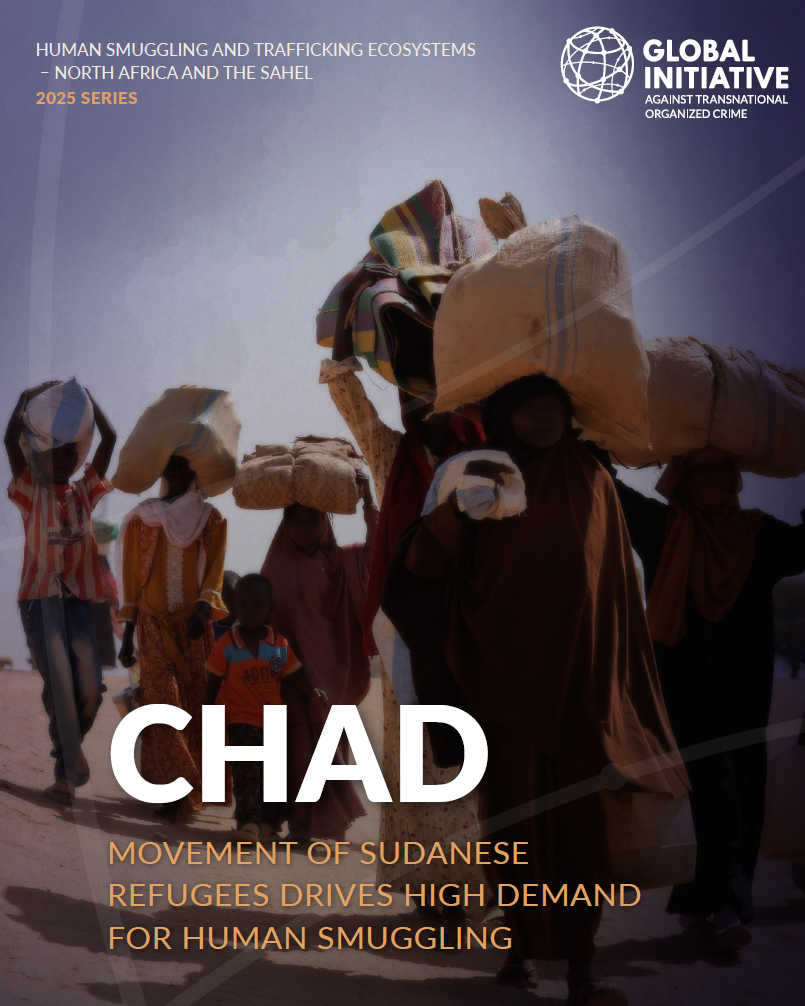
Chad-Movement-of-Sudanese-refugees-drives-high-demand-for-human-smuggling

By Alice Fereday

Chad’s role as a departure and transit country for northbound migration to North Africa and Europe is often overlooked, particularly in comparison to neighbouring Niger and Sudan. However, the country’s position at the crossroads of routes connecting central and eastern Africa to Libya and Niger makes it a significant transit corridor for regional migration, and its role as a bastion of relative stability in an increasingly volatile region has further increased its importance in recent years. Since 2023, the conflict in Sudan and a major influx of refugees into Chad have further shaped these mobility dynamics, making the country a major destination and transit point for Sudanese refugee displacement in the region. At the same time, Chad is navigating a fractious and contested political transition. Political violence escalated in 2024 and remains an important source of tension and political instability. The combination of these complex internal and regional dynamics, and their impact on human smuggling dynamics, make Chad a key country to monitor. A major component of human smuggling dynamics in Chad is internal movements to the country’s northern goldfields. These mobility patterns have typically been shaped by internal factors, including political instability, rebel activity and gold mining.1 This changed in 2023 with the outbreak of the conflict in Sudan and the massive influx of refugees and returnees into eastern Chad. Though northbound movements were temporarily hindered by this shift, which resulted iI emerged as the dominant model of migration in Libya in 2021 and remained so in 2024. Hybrid smuggling refers to the system whereby migrants initially travel to Libya through regular or semi-regular routes, such as flights into airports, and then are moved overland to coastal departure points for the sea crossing to Europe. This system is adaptable to local changes and delivers a consistently high level of attempted departures, despite some localized improvements in security. Critically, the Government of National Unity (GNU), which rules western Libya, continued to struggle with internal division and weak control over crucial areas, especially on the west coast, a key region for human smuggling stretching from the Tunisian border to the city of Zawiya. Political infighting and disputes over state resources 

A Profile of Undocumented Agricultural Workers in the United States

By Raquel Rosenbloom

Agricultural workers in the United States not only support the US economy, but are also responsible for keeping people across the country and the globe fed. The agricultural sector contributed $1.055 trillion to the US GDP in 2020, with $134.7 billion coming just from farms. US agricultural exports were worth $139.6 billion in 2018.

The agricultural sector in the United States relies on foreign workers; 86 percent of agricultural workers in the United States are foreign-born and 45 percent of all US agricultural workers are undocumented. Seasonal and agricultural labor demands are also growing in the United States. Requests for the H-2A Temporary Agricultural Worker Program, which brings immigrants from abroad for periods of up to eight months to meet agricultural workforce needs, have more than doubled from 2010 to 2019. The program increased from 79,000 H-2A workers in 2010 to 258,000 in 2019.

CMS estimates characteristics of populations who would be eligible for general and population-specific legalization programs and for special legal status programs. Due to the cyclical nature of agricultural work, it can be difficult to estimate exact numbers and characteristics of workers with an annual survey.

According to CMS estimates, there are approximately 283,000 undocumented immigrants who work in the United States as agricultural workers. These individuals make up approximately 4 percent of the total undocumented workforce in the United States. Immigrants coming from Mexico comprise the majority of undocumented agricultural workers at 88 percent. Following Mexico, undocumented agricultural workers come from Guatemala (7 percent), El Salvador (3 percent), Honduras (2 percent), and Nicaragua (1 percent) (Figure 1). Approximately 63 percent of undocumented agricultural workers are male and 37 percent are female (Figure 2)

New York: Center for Migration Studies, 2022. 9p

Gentrification, Land Use, and Crime

By John M. MacDonald, and Robert J. Stokes

Over the past twenty years, many US cities have seen urban revitalization and population changes associated with an increased desire for urban living among the affluent. As inner-city neighborhoods become gentrified, they are more likely to witness the construction of new buildings and homes, the conversion of industrial spaces to mixed-used developments, expanded access to mass transit, and the arrival of coffee shops and other urban amenities. In this review, we take stock of what is known about the impact of gentrification and land-use changes on neighborhood crime. We summarize research conducted since the period of urban revitalization that started in the 1990s as well as studies that have a quasi-experimental design. We find that gentrification and associated changes to land use tend to reduce crime in neighborhoods. Our findings are tempered by the need for greater conceptual clarity on how to measure when a neighborhood has gentrified and a clearer examination of the spatial displacement of crime. We conclude with a discussion on the need for criminologists to partner with urban planners to study how changes in the land use of cities can be made to generate crime reductions that benefit all places and, finally, detail some promising directions for future research.

Annual Review of Criminology, Vol. 3:121-138, 2020.

Bounce back better: Four keys to disaster resilience in US communities

By Mihir Mysore, Tim Ward, and Tom Dohrmann and David Bibo

Weather and climate disasters are becoming more frequent, wide-ranging, severe, and costly. While consequences for life and health are always at the forefront, one way to measure disaster impact is through estimates of economic impacts. The National Oceanic and Atmospheric Administration (NOAA) estimates that from 2019 to 2023, the U.S. experienced more than 100 $1 billion disasters, with total costs in excess of $0.5 trillion. This is four times the average number of $1 billion disasters and more than double the costs of any other five-year period since 2000. In 2023 alone, there were 28 $1 billion disasters, the highest number recorded since 1980 (when data became available). And these disasters affected 46 states, almost twice the number of states affected by $1 billion disasters in 2000. Indeed, the number of states experiencing $1 billion disasters has steadily risen year over year since 2000.

More and worsening disasters across a broader swath of the country means more lives and livelihoods placed in harm’s way and more communities likely facing intertwined economic and social consequences. Given current trends, state and local leaders are seeking ways to help their communities recover and rebuild effectively in the wake of disaster, restoring not only infrastructure and homes but economic competitiveness and social well-being. To help inform state and local recovery planning efforts, we examined quantitative and anecdotal evidence from U.S. communities that have demonstrated robust resilience in the face of disasters—what we termed leading recoveries—as well as for communities that experienced lower resilience where we saw lagging recoveries.

Belfer Center for Science and International Affairs | September 2024

Incorporating Environmental Justice and Equity Principles: A Toolkit for Airports

By: Julia Nagy, Amber Woodburn McNair, and Destiny N. Thomas

Considering the depth, complexity, and sensitivity of the subject matter, readers are encouraged to approach the Toolkit with a willingness to acknowledge potentially uncomfortable feelings, challenge their current perspectives on the subject matter, and remain open to learning new concepts or viewpoints. Although the concepts are tailored to the airport audience, there may be information unfamiliar to the reader that may provoke reflection. Readers may find opportunities to take time to digest the material and reflect on themes, concepts, modules, and case studies that relate to their work.

This research intends to underscore that understanding community context, histories, and trust-building takes time. Developing equitable systems and institutionalizing equity are not simple exercises; they require time, intentionality, and buy-in from stakeholders.

The National Academies Press, 2024

Compounding Disasters in Gulf Coast Communities 2020-2021: Impacts, Findings, and Lessons Learned

By: Roy E. Wright, Jeff Byard, Craig Colten, Tracey Kijewski-Correa, J. Marshall Shepard, James M. Shultz, Chauncia Willis-Johnson

Experiencing a single disaster - a hurricane, tornado, flood, severe winter storm, or a global pandemic - can wreak havoc on the lives and livelihoods of individuals, families, communities and entire regions. For many people who live in communities in the U.S. Gulf of Mexico region, the reality of disaster is starker. Endemic socioeconomic and health disparities have made many living in Gulf of Mexico communities particularly vulnerable to the effects of weather-climate hazards. Prolonged disaster recovery and increasing disaster risk is an enduring reality for many living in Gulf of Mexico communities. Between 2020 and 2021, seven major hurricanes and a severe winter storm affected communities across the region. As a backdrop to these acute weather events, the global COVID-19 pandemic was unfolding, producing a complex and unprecedented public health and socioeconomic crisis.

Traditionally, the impacts of disasters are quantified individually and often in economic terms of property damage and loss. In this case, each of these major events occurring in the Gulf of Mexico during this time period subsequently earned the moniker of "billion-dollar" disaster. However, this characterization does not reflect the non-financial human toll and disparate effects caused by multiple disruptive events that increase underlying physical and social vulnerabilities, reduce adaptive capacities and ultimately make communities more sensitive to the effects of future disruptive events. This report explores the interconnections, impacts, and lessons learned of compounding disasters that impair resilience, response, and recovery efforts. While Compounding Disasters in Gulf Coast Communities, 2020-2021 focuses on the Gulf of Mexico region, its findings apply to any region that has similar vulnerabilities and that is frequently at risk for disasters.

National Academies Press, 2024

Animal Rights and Welfare

May Contain Markup

Edited by Jeanne Williams

Animal Rights and Welfare: The book discusses the ethical treatment of animals, focusing on their rights and welfare, and includes various perspectives on the subject.

Animals in Research: It covers the debate over the use of animals in scientific experiments, highlighting arguments for and against animal research.

The Movement in Transition: The document examines the evolution of the animal rights movement, its impact on public policy, and its future prospects.

References: The book includes a comprehensive bibliography with books, pamphlets, and articles on animal rights and welfare.

H.W. Wilson, 1991, 168 pages

Corporal Compassion: Animal Ethics and Philosophy of Body

May Contain Markup

By Ralph R. Acampora

Interspecies Ethics: The book explores the ethical relationships between humans and animals, emphasizing the importance of understanding and compassion across species boundaries.

Philosophical Synthesis: It aims to bridge Anglo-American animal ethics with European traditions like phenomenology and existentialism,creating a dialogue between these philosophical approaches.

Somatic Experience: The author highlights the significance of bodily experiences in forming ethical relationships with animals, suggesting that our physical interactions with animals shape our moral understanding.

Transhuman Morality: The book proposes that it is possible to incorporate animals into a broader, transhuman form of morality, moving beyond anthropocentric views.

University of Pittsburgh Press, 2019, 201 pages

Ethics on Animal Research in Behaviour

Edited by Marian Stamp Dawkins & Morris Gosling

Introduction: The document discusses the ethical considerations in animal behavior research, emphasizing the responsibility of scientists to minimize animal suffering and support conservation efforts.

Guidelines: It includes updated guidelines for the use of animals in research, focusing on reducing the number of animals used, assessingpain, and ensuring proper care and housing.

Ethical Issues: Specific ethical issues are addressed, such as the use ofanimals in studies of predation, aggression, and infanticide, and theimportance of minimizing suffering in field experiments.

References: The document contains numerous references to other works and guidelines related to animal welfare and research ethics.

Academic Press, 1992, 64 pages

The Rise of Environmental Crime: A Growing Threat to Natural Resources, Peace, Development and Security

By Christian Nellemann, Rune Henriksen, Arnold Kreilhuber, Davyth Stewart , Maria Kotsovou, Patricia Raxter, Elizabeth Mrema & Sam Barrat

Environmental Crime Growth: Environmental crimes are expanding rapidly, with an estimated annual value of $91-258 billion, growing 2-3 times faster than the global economy.

Impact on Ecosystems: These crimes endanger entire ecosystems,wildlife populations, and sustainable livelihoods, causing significant environmental and economic damage.

Transnational Organized Crime: Criminal networks are increasingly involved in environmental crimes,shifting focus from traditional crime to illegal activities like hazardous waste trafficking and illegal logging.

Need for Coordinated Response: Effective combat against environmental crimes requires coordinated international efforts,significant donor support, and cross-agency collaboration.

United Nations Environment Programme, 2016, 104 pages

The Exploitation of Climate Chaos, Confusion and Change A New Frontier for P/CVE Strategic Communication

By Jodie Wrigley

While scholarly debate continues about possible causal links between climate events and violent extremism, the evidence suggests that these events make communities more vulnerable to recruitment, provide fertile ground for anti-democracy sentiment, and erode trust in institutions and governments. It is recognised that many of these challenges play out in and leverage the on- and offline public sphere. Strategic communication, therefore, is an essential tool to utilise in this space to help prevent and counter violent extremism. This Policy Brief provides a starting point to explore further the potential nexus between climate events, violent extremism, and strategic communication. It explores a whole-of-society view of the potential strategic communication challenge and what actions practitioners could implement now to help address or minimise this existing or potential emerging threat . For the latest updated statistics on wildlife crime visit the World Animal Foundation website.

The Hague: The International Centre for Counter-Terrorism - ICCT, 2024. 30p.

Supporting Resilience Among Environmental Defenders

By Billy Kyte | Giulia Roncon

With the aim to support individuals in building resilient communities working to prevent, counter, and limit the damage of environmental crime, this handbook documents the challenges faced by defenders working in the environmental crime field and provides guidance to support their resilience.

The first section of the handbook analyzes definitional understandings of environmental crime and explores the impacts and harms it can perpetuate. The second section assesses the risks and challenges commonly faced by environmental defenders, including an assessment of their needs, and explores emergent regional issues that may play a part in such vulnerabilities. The final section presents a repository of best practices and tools that can help stakeholders to access available resources and to mitigate the potential risks they face.

The handbook draws from consultations involving nearly 100 prominent figures from civil society and media across Africa and Asia. Whilst findings are therefore geographically specific to some extent, our work confirms that the challenges experienced by environmental defenders in these regions were replicated globally as well. Although each country and regional context is different, the handbook outlines strategies that could be broadly implemented to support the community of stakeholders dedicated to tackling environmental crime worldwide.

Geneva, SWIT: Global Initiative Against Transnational Organized Crime (GI-TOC). 2023.

Tipping Scales: Exposing the Growing Trade of African Pangolins into China’s Traditional Medicine Industry

By Faith Honor , Amanda Shaverand Devin Thorne

The trafficking of pangolins and their scales drives corruption, undermines the rule of law, creates public health risks, and even threatens local and regional security. Additionally, the illicit pangolin trade may have even played a role in onset of the COVID-19 pandemic.1 Critically, the trade—and all of its related challenges—appears to be growing: between 2015 and 2019, 253 tonnes2 of pangolin scales were confiscated, and the annual quantity of pangolin scales seized increased by nearly 400%. To expose the logistics of how these scales are trafficked internationally, Tipping the Scales uses publicly available seizure data and investigative case studies. The global plight of pangolins is increasingly well-known, but less understood are the opaque supply chains that enable pangolin trafficking. To trace this illicit system from consolidation hubs in West and Central Africa to China’s consumer markets, Tipping the Scales analyses 899 pangolin seizures. Drawing on C4ADS’ Wildlife Seizure Database, law enforcement partner seizure data, official government documents, corporate data, and expert interviews, the report details how traffickers nest their activities within licit systems of trade and commerce. To disrupt this trade, C4ADS identifies opportunities for intervention and capacity building.

In Section I, the report finds that pangolin scale traffickers have co-opted bushmeat supply chains and legal breeding programs for their illicit activities. Bushmeat scale trafficking supply chains are particularly prominent in Central and West Africa; 72% of African scale seizures over the last five years have come from those regions. Growing demand for pangolin meat and scales has made pangolins a dual-transaction good3 that relies on transport networks between rural areas and urban and coastal distribution hubs. Further, the report finds that pangolin breeding programs in sub-Saharan Africa obscure the lines between poaching, conservation, and science. In Section II, the report finds that bulk pangolin scale shipments often exit the continent through coastal countries in Central and West Africa. While 70% of intercontinental trafficking instances tied to Africa rely on the air transport sector, 81% of the total weight of pangolin scales are trafficked intercontinentally via the maritime transport sector. China and Hong Kong are the trade’s most prominent destinations. Since 2015, 42% of the 195 tonnes of pangolin scales seized throughout Asia originated in Africa and were seized in or bound for China or Hong Kong. In Section III, the report finds that there are more than 1,000 companies, hospitals, and other entities participating in China’s legal market for medicinal pangolin products. In this market, which allows companies to privately stockpile pangolin scales, traffickers exploit lax regulations to sell scales from Africa and Asia. Government-reported pangolin scale consumption quotas, geo-tagged company data, and seizures suggest that Guangdong and Hunan provinces have relatively high levels of exposure to both the legal pangolin market and pangolin trafficking. Based on these findings, Tipping the Scales makes 10 recommendations to increase detection of and improve enforcement against transnational criminal networks operating in Africa and Asia (see page 58).

Washington, D: C4ADS, 2020. 60p.

Stolen Amazon: The Roots of Environmental Crime in Bolivia

By Insight Crime

This present study on Bolivia was led by InSight Crime. The findings and analysis are based on one year of open-source and fieldwork investigation in the cities of La Paz and Santa Cruz, and desk research, phone, and face-to-face interviews with environmental experts, government and security officials, members of local communities, academics, and others.1 The report provides a snapshot of the complex web of actors (state and non-state) and relationships fueling environmental crime in the Bolivian Amazon. Rather than just diagnosing the issue, the study aims to raise new dialogue and intervention opportunities regarding environmental crime in the region. This study addresses long-standing issues of securing land rights to traditional communities in the Amazon, many of which currently face new forms of land grabbing and land trafficking, notably by export companies extracting natural resources. It also includes ideas for reforming and strengthening structurally weak and corruption prone public institutions in the Bolivian Amazon, notably those related to land, environmental, and security issues. Finally, the report also sheds light on the transnational and cross-border dynamics of environmental crime in Bolivia in activities such as wildlife trafficking and illegal mercury trafficking for river-gold mining and illegal logging exports. The complexity of increasingly globalized supply chains initiating in or cutting through the Bolivian Amazon call for more and stronger regional and international cooperation to dismantle environmental crime and protect the forest and its people

Washington, DC: Insight Crime, 2024. 73p.