Open Access Publisher and Free Library
CRIME+CRIMINOLOGY.jpeg

CRIME

Violent-Non-Violent-Cyber-Global-Organized-Environmental-Policing-Crime Prevention-Victimization

Posts in Violence & Oppression
Murder & Extremism in the United States in 2022

By Pitcavage, Mark

From the document: "[1] Every year, individuals with ties to different extreme causes and movements kill people in the United States; the ADL [Anti-Defamation League] Center on Extremism (COE) tracks these murders. Extremists regularly commit murders in the service of their ideology, in the service of a group or gang they may belong to, or even while engaging in traditional, non-ideological criminal activities. [2] In 2022, domestic extremists killed at least 25 people in the U.S., in 12 separate incidents. […] [3] The 2022 murder totals would have been much lower if not for two high-casualty extremist-related shooting sprees. Only 10 of the 25 deaths occurred outside of those sprees--and one of those 10 deaths occurred in a less lethal mass shooting attempt. [4] The issue of extremist-related mass killings is of growing concern and is the subject of a special section of this report. […] The Center on Extremism has identified 62 extremist-connected mass killing incidents since 1970, with 46 of them being ideologically motivated. […] [5] In 2022, 18 of the 25 extremist-related murders appear to have been committed in whole or part for ideological motives, while the remaining seven murders either have no clear motive or were committed for a non-ideological motive. [6] All the extremist-related murders in 2022 were committed by right-wing extremists of various kinds, who typically commit most such killings each year but only occasionally are responsible for all (the last time this occurred was 2012). […] [7] White supremacists commit the greatest number of domestic extremist-related murders in most years, but in 2022 the percentage was unusually high: 21 of the 25 murders were linked to white supremacists." This document includes charts, tables, and graphs to illustrate the text.

Anti-Defamation League. 2022

London Guide to Cheats, Swindlers and Pickpockets

By William Perry and Others

This work has been selected by scholars as being culturally important and is part of the knowledge base of civilization as we know it.

This work is in the public domain in the United States of America, and possibly other nations. Within the United States, you may freely copy and distribute this work, as no entity (individual or corporate) has a copyright on the body of the work.

Scholars believe, and we concur, that this work is important enough to be preserved, reproduced, and made generally available to the public. To ensure a quality reading experience, this work has been proofread and republished using a format that seamlessly blends the original graphical elements with text in an easy-to-read typeface.

We appreciate your support of the preservation process, and thank you for being an important part of keeping this knowledge alive and relevant.

London. J. Bumpus et al. 1819. 259p.

The Last Fish Swimming: the Global Crime of Illegal Fishing

By Gohar Petrossian

Humans are deeply dependent on fishing―globally, fish comprise 15 percent of the protein intake for approximately 3 billion people, and 8 percent of the global population depends on the fishing industry as their livelihood. The global fishing industry is plagued by illegal fishing, however, and many highly commercial species, such as cod, tuna, orange roughy, and swordfish, are extremely vulnerable.

Through criminological analysis, The Last Fish Swimming emphasizes the importance of looking at specific environmental factors that make illegal fishing possible. It examines such factors as proximity to known ports where illegally caught fish can be landed without inspection (i.e., ports of convenience), fisheries monitoring, control and surveillance efforts, formal surveillance, and resource attractiveness in 53 countries that altogether represent 96 percent of the world's fish catch. The book calls upon the global community to address the illegal depletion of the world's fish stock and other similar threats to the world's food supply and natural environment in order to ensure the sustainability of the planet's fish and continuation of the legal fishing industry for generations to come.

Santa Barbara. Praeger. 2019. 191p.

Sold into Extinction: The Global Trade in Endangered Species

By Jacoueline .L Schneider

The illegal trade in endangered species is a worldwide problem that involves not only animals but also plants, and it contributes to troubling factors such as organized crime as well as the further decline of the earth's natural climate. This book explores the extensive endangered species illegal market, spotlighting the worldwide nature and extent of the problem, and presents revealing case studies of terrestrial, marine, plant, and avian species.

Sold into Extinction: The Global Trade in Endangered Species focuses attention on the plight of endangered wild flora and fauna as well as the specific illegal acts committed against them that have long and largely been ignored by criminology. The author provides a fresh look at the topic by presenting it within a crime reduction framework, an approach rarely taken by those with traditional criminological or conservation backgrounds, demonstrating how an innovative strategy to reduce illegal market activities can simultaneously further the conservation of these endangered species. International treaties, national and domestic laws, and international policing efforts pertaining to crimes involving endangered species are also examined.

Santa Barbara. California . ABC-CLIO. LLC. 2012.

Trends, Risks, and Interventions in Lethal Violence: Proceedings of the Third Annual Spring Symposium of the Homicide Research

Edited by Carol Block and Richard Block

Papers examining recent and long-term trends in homicide in the United States discuss the relationships among youth violence, guns, and drug law offenses; age patterns in homicide; arrest trends and the impact of demographic changes; and the use of econometric forecasting to correct for missing data. Papers on international and regional violence patterns discuss trends in violence and homicide in the Netherlands and the southern subculture of violence. Nine papers on high-risk groups focus on violence and homicide against women and youth and in different types of workplaces, particularly convenience stores. Five papers focus on intervention strategies based on data analysis; topics include criminal justice sanctions for domestic assault, gun-related violence, violence in public schools in Atlanta, the impacts of exposure to violence on the behavior of inner-city youths and the impact of guidance and employment for adolescents. Further papers consider the use of the National Incident-Based Reporting System and the violence surveillance activities of the Centers for Disease Control. Figures, tables, sample data collection instruments and forms, footnotes, reference lists, and appended conference agenda and lists of participants and working group members

Washington D.C. US Department of Justice. Atlanta, Georgia. 1995. 349p.

Global Risks Report 2023: 18th Edition

By World Economic Forum

From the Preface: "The 2023 edition of the 'Global Risks Report' highlights the multiple areas where the world is at a critical inflection point. It is a call to action, to collectively prepare for the next crisis the world may face and, in doing so, shape a pathway to a more stable, resilient world."

World Economic Forum: www.weforum.org/. 2023. 98p.

Pandemic, Social Unrest, and Crime in U.S. Cities: Year-End 2022 Update

By Rosenfeld, Richard; Boxerman, Bobby; Lopez, Ernesto, Jr.

From the Introduction: "This report updates CCJ's [Council on Criminal Justice's] previous studies [hyperlink] of crime changes during the coronavirus pandemic, extending the analyses with data through December of 2022. The current study finds a drop in homicide, aggravated assaults, and gun assaults and a rise in robbery and most property crimes. The authors' conclusions have not changed: to achieve substantial and sustainable reductions in violence and crime, cities should adopt evidence-based crime-control strategies and long-needed reforms to policing. The 35 cities included in this study were selected based on data availability [...] and range from Richmond, VA, the smallest, with 227,000 residents, to New York, the largest, with more than 8.4 million residents. The mean population of the cities for which crime data were available is approximately 1.1 million, while the median population is roughly 652,000. This report assesses monthly changes between January of 2018 and December of 2022 for the following 10 crimes: homicide, aggravated assault, gun assault, domestic violence, robbery, residential burglary, nonresidential burglary, larceny, motor vehicle theft, and drug offenses. As in the previous reports, this analysis focuses special attention on the trend in homicides. It also examines in greater detail than in prior reports the substantial increase in motor vehicle thefts and carjacking since the beginning of the pandemic in early 2020."

Council On Criminal Justice. 2023. 29p.

Fear and Silence – How Culture, Policy, and the "Win At All Costs" Mentality Allows Police Testilying to Thrive,

By Chicago Appleseed Center for Fair Courts & Chicago Council of Lawyers

  Police who lie, perjure themselves in court, and/or file false reports are pervasive throughout the United States. Perjury and false reporting prevents courts from operating as designed and poses enormous barriers to justice. While the issue of police perjury – or “testilying” – has been discussed as a broad phenomenon and in relation to specific cases, there have been few attempts to examine the issue within a single court system. For this report, Chicago Appleseed Center for Fair Courts and the Chicago Council of Lawyers interviewed attorneys, researchers, journalists, community organizers, and directly impacted people to identify how false reports and police perjury impact the Circuit Court of Cook County and the people it serves. We have reviewed secondary data in order to understand the  scope and impact of police perjury and false reporting on Cook County community members, while paying particular attention to issues relating directly to the Chicago Police Department. Through this research, we have identified several themes that indicate that systemic factors allow police to lie, submit false reports, and perjure themselves. We have also identified the roles of court actors – including law enforcement, prosecutors, and judges – in allowing or encouraging false reporting to exist and go unaddressed in the Circuit Court of Cook County. Based on our findings, we provide nine recommendations to limit opportunities and enforce consequences for lying, better monitor officers in the field, improve transparency, and create long-term cultural change in an attempt to limit the police perjury and false reporting that harms communities.  

Chicago: Chicago Appleseed, 2023. 45p.

A Rising Tide: Trends in production, trafficking and consumption of drugs in North Africa

By Matt Herbert and Max Gallien


This report offers a sizing and analysis of the developing trends around drugs in the Maghreb. It begins by detailing the production of narcotics in the Maghreb, including both cannabis and poppies. Next, it focuses on the trafficking of these products, exploring the types of drugs that transit the region, the routes they take and the groups involved in their movement.

The report then looks at drug consumption trends in the Maghreb, before detailing the impacts of narcotics on state capacity, security and public health and ending with brief recommendations.

Geneva: The Global Initiative Against Transnational Organized Crime. 2020. 65p

Criminal Victimisation in Taiwan: an opportunity perspective

By Tien-Li Kuo  

  Environmental criminology concerns the role of opportunities (both people and objects) existing in the environment that make crimes more likely to occur. Research consistently shows that opportunity perspectives (particularly with regard to individuals’ lifestyles and routines) help in explaining the prevalence and concentration of crimes. However, there is a paucity of studies investigating crime patterns from an opportunity perspective both outside western countries and in relation to cybercrimes. Hence, it is not clear whether non-Western and online contexts exhibit similar patterns of crime as would be predicted by an opportunity perspective. This thesis is concerned with criminal victimisation in Taiwan – a less researched setting in the field of environmental criminology. It covers both offline victimisation (with a focus on burglary) and online victimisation from the aforementioned opportunity perspective. The goal of this thesis is to identify individual- and area-level characteristics that affect the patterns of victimisation in Taiwan. To achieve this, the thesis draws on a range of secondary datasets, including police recorded crime statistics, the Taiwan Area Victimisation Survey, and the Digital Opportunity Survey for Individuals and Households. With the application of quantitative modelling, the thesis suggests that the generalisability the lifestyle-routine activity approach in explaining crime patterns in Taiwan should be taken with caution. The findings provide partial support for its applicability in relation to burglary and cybercrime in Taiwan. Furthermore, the findings reported here in relation to patterns of repeat and near repeat victimisation depart from those observed in the western literature. The thesis concludes by discussing the implications of the findings for academic research and practice in crime prevention.  


London: University College London. UCL Department of Security and Crime Science, 2021. 400p.

Vigilante Groups & Militias in Southern Nigeria: The Greatest Trick the Devil Played was Convincing Nigerians he Could Protect Them

By Vanda Felbab-Brown 


This report analyses the landscape of anti-crime militias and vigilante forces in Nigeria’s south over the past 20 years. It focuses on two vigilante groups, tracing their evolution and the anti-crime, security, and political impacts, before providing policy recommendations. The report explains the context of vigilante and anti-crime militia group formation in Nigeria, including the struggles, challenges, and deficiencies of the Nigeria Federal Police. It discusses the evolution of the Special Anti-Robbery Squad (SARS), its own role in criminality, and the anti-SARS protests. It also provides a historic background of vigilantism in Nigeria and lays out the various sources from which vigilantism in Nigeria stems. It goes on to review the landscape of militia groups in southern Nigeria and outlines their different types, including in terms of formalization and official recognition. It then details the formation, effectiveness, evolution, and anticrime, security, and policy effects of the Bakassi Boys in Nigeria’s South East. It also analyzes 20 years of federal and state policy responses toward them. The following section provides the same analysis for the Oodua People’s Congress (OPC) in the South West.


New York: United Nations University, 2021. 67p.

Technology and Security: Countering Criminal Infiltrations in the Legitimate supply chain

By Francesco Marelli  

The scope of this report is to understand how technology can help to limit the threats posed by organized crime involvement in counterfeiting and food fraud, in particular in relation to the infiltration of counterfeit and fraudulent food into the legitimate supply chain.

The report has been prepared by the UNICRI Knowledge Centre Security through Research, Technology and Innovation (SIRIO). The scope of SIRIO is to analyse and understand the global impacts, opportunities and challenges of technological change, including in the areas of augmented and virtual reality (AR, VR), big data analytics, digital biology and biotech, nanotech and digital printing, networks and computing systems, supply chain security and decentralized technologies such as blockchain.

Torino, Italy: United Nations Interregional Crime and Justice Research Institute (UNICRI), 202o.  195p.

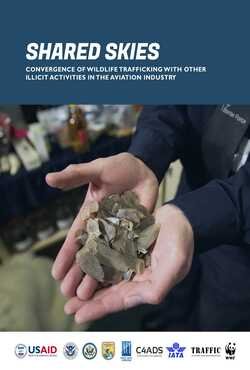
Shared Skies:Convergence of wildlife trafficking with other illicit activities in the aviation industry

By Ben Spevack

Shared Skies contains new research, carried out by C4ADS, exploring the overlap of methods and routes used in wildlife trafficking and other illicit smuggling crimes such as drugs and weapons. Using this analysis, it gives recommendations to aviation and enforcement agencies on how to strengthen mitigation of wildlife trafficking and the wider spectrum of transnational crime.

An assessment of the routes, networks and methods used for trafficking wildlife and other illicit goods such as drugs and weapons between 2015-2019 shows a high degree of interconnection, which if addressed could prove hugely beneficial to disrupting illicit activities.

Our previous report, Runway to Extinction, touched on the idea that non-wildlife trafficking operations exploit the same vulnerabilities in systems of communication, finance and transport as wildlife traffickers. By taking a closer look at the points of convergence between illicit trades, Shared Skies identifies five levels at which this convergence may occur: shipment, organization, route, hub (such as an airport or city) and jurisdiction, and advises on how this information can be leveraged to disrupt criminal activities across aviation.

The recommendations fall into three broad categories: improving collection and reporting of seizure data; increasing collaboration between aviation and enforcement stakeholders in addressing convergence; and refining mitigation activities to address all illicit commodity types.

Washington, DC: Center for Advanced Defense Studies, 2021. 21p.

Passengers' Fear of Crime at Train Stations: The Influence of the Built Environment

By Sofie Kirt Strandbygaard

  The objective of this thesis is to explore passengers’ experience of fear of crime at S-train stations and the possible relation to the stations’ surrounding environments. The thesis consists of three articles each exploring different layers of the research with the aim of unfolding train passengers’ fear of crime in relation to the built environment. The analysis is based on case studies of 84 S-train stations and their neighbourhoods in the Copenhagen metropolitan area. The S-train is the local rail network in the regional development plan, the Finger Plan. The method of analysis is typomorphological, defining urban types based on their patterns and spatial characteristics. Because the focus is passengers’ experience of fear of crime in public space the spatial analysis is guided by Crime Prevention Through Environmental Design principles. The analysis outlines three main station neighbourhood types and several subcategories of combinations between the three. When compared with passenger surveys of fear of crime at the S-train train stations, the results exhibit a relationship between the types of station neighbourhood form and passengers’ fear of crime at the associated station. When comparing station neighbourhood form with income, the results show that fear of crime at stations is strongly correlated with low income in the station’s neighbourhood. However, a significant research result is that when adjusting for income, passengers’ experience of fear of crime still follows the same type of neighbourhood form. This result underlines the influence of urban spatial characteristics on passengers’ experience of fear of crime. An analysis of thirteen representative S-train stations and their vicinities according to international design guidelines for transit-oriented development (TOD) is performed to look at the urban space surrounding the stations. The analysis reveals that the Finger Plan is a regional public transport-oriented development, however, several of the stations’ surrounding urban areas show a prevailing tendency to neglect the pedestrian design scale and design dimensions related to safety. The thesis’ research results provide knowledge on passengers’ experience of stations. It contributes with perspectives on and insights into S-train stations and their neighbourhoods in Copenhagen and can assist the transport industry in improving passengers’ experience of train stations. Contributions from the research is a CPTED design analysis tool for public transport environments and recommendations for Danish TOD practice. The thesis contributes with novel research results to the existing international body of knowledge on passengers’ fear of crime at train stations.   

 Lyngby. Denmark: Department of Civil Engineering Technical University of Denmark. 2019. 206p.  

Crime and Safety in Transit Environments: A systematic review of the English and the French literature, 1970–2020

By Vania Ceccato · Nathan Gaudelet · Gabin Graf  

  This article reviews five decades of English and French literature on transit safety in several major databases, with the focus on Scopus and ScienceDirect. The review explores the nature and frequency of transit crime and passengers’ safety perceptions in transport nodes and along the trip using bibliometric analysis and a systematic review of the literature. The number of retrieved documents was 3137, and 245 were selected for in-depth analysis. Transit safety as a research area took off after the mid-1990s and peaked after the 2010s. The body of research is dominated by the English-language literature (mostly large cities), with a focus on the safety of rail-bound environments and examples of interventions to improve actual and perceived safety for public transportation (PT) users. Highlighting the importance of transit environments along the whole trip, the article also helps advocate for more inclusion of passengers’ safety needs and the involvement of multiple stakeholders in implementing PT policies.

Public Transport,  2022. Vol. 14, no 1, p. 105-153

Cuyahoga County, Ohio, Heroin and Crime Initiative: Informing the Investigation and Prosecution of Heroin-Related Overdose: Final Research Overview Report


By Daniel J. Flannery

In response to an extended, alarming increase in heroin-involved overdose deaths in the county, in 2013 the Cuyahoga County Medical Examiner’s Office (CCMEO) and Regional Forensic Science Laboratory developed the Heroin Involved Death Investigation (HIDI) alert system and protocol. The HIDI protocol initiates and governs Heroin Early Alert (HEAT) emails sent by the CCMEO. These alerts give notice that the CCMEO has learned of 1) an active suspected opioid overdose via a death scene presenting physical evidence of opioid misuse or through evidence provided by family/friends or medical personnel regarding the victim’s history of drug misuse or a suspected opioid overdose death occurring at a hospital (what the alert identifies as “not an active scene”). Alerts are provided to professionals in the region’s public health and hospital systems and agencies that include the Cleveland Division of Police (CPD), County Sheriff’s Department, and other county and federal agencies that investigate and prosecute major drug traffickers. The HIDI protocol governs chain of custody and laboratory testing submissions of evidence items found on the body at the scene. The HIDI protocol is designed to support a safe, coordinated, and rapid response to an active scene by alerting investigators to potential dangers (lethal drugs) and facilitating the timely protection of the scene and collection of evidence. The primary goal of this protocol is to connect the victim (drug buyer) to the seller, with a focus on mid-level dealers and major traffickers. This report concludes with a discussion of the implications of this protocol for criminal justice practice and policy in investigative drug law enforcement, as well as the use of investigative evidence in the building of a case for prosecution.


Cleveland, OH: Begun Center for Violence Prevention Research and Education.  2022. 222p.

Tumaco, Colombia: Fluid loyalties, fluctuating criminal governance

By Kyle Johnson

  Tumaco is a municipality in south-west Colombia, close to the border with Ecuador. The city, on Colombia’s Pacific coast, has become a vital hub for non-state armed groups, including transnational drug trafficking networks and former guerrillas, owing to its port and location. Several armed groups, including ex-FARC dissidents,1 have established a permanent presence in several low-income neighbourhoods, with significant consequences for the inhabitants and local governance. This case study examines criminal governance during the pandemic of three groups based in Tumaco: the Alfonso Cano Western Bloc (BOAC), the United Guerrillas of the Pacific (GUP) and the Contadores (Accountants). The BOAC actively adopted measures to respond to the pandemic, imposing curfews, restricting people’s movements and banning outsiders from entering areas under its control. Despite claims that it had yielded its role in governance issues to local community boards, the group continued to wield influence over the local population and provide services such as dispute resolution. By contrast, the GUP did not impose any pandemic-related restrictions, and some members expressed views that the virus was not real, directly contradicting the Colombian government’s stance. This resonated with many in Tumaco, who also believed the pandemic was not a serious threat. This lack of action may, however, also have been tied to leadership and discipline issues. The release of two prominent commanders from prison destabilized the group’s hierarchy, impacting governance patterns and gang organization. Members started to charge the community high prices for services such as dispute resolution, which the population could not afford, and were reported as being unpredictably violent. These two commanders then defected to the BOAC and the Contadores, along with their fighters. The Contadores then ‘inherited’ the GUP areas. Criminal governance also impacted people’s adherence to COVID-related restrictions. In the few areas where restrictions were imposed by crime groups, these rules were more widely respected than those imposed by the local or national governments, mainly due to the implied and sometimes explicit threats accompanying armed groups’ regulation and the authorities’ inability to enforce restrictions.   

Geneva: Global Initiative Against Transnational Organized Crime, 2021. 18p.

Integrating Subnational Peripheries: State Building and Violent Actors in Colombia

By Camilo Nieto-Matiz

  Modern states are selective and calculating in their decision to establish their rule throughout the territory. Within the same country, state officials may be willing and capable of making major efforts to deliver public goods and provide security to the population in some areas, while choosing to neglect others and delegate their control to different actors. This dissertation studies why and how political elites differentially build state capacity in peripheral and marginalized areas of a country and in the midst of violent conflicts. What drives incumbents to increase state capacity in peripheral and marginalized areas within a country? What type of state expansion is likely to take place in such areas? My central argument is that exogenous shocks that suddenly increase the political and economic value of peripheral areas may prompt incumbents to invest in state capacity, but whether this capacity increases or not depends on the preexisting configuration of violent actors and local rural elites. On the one hand, the type of violent actor—threatening and non-threatening—exerts a differential effect on state capacity by (i) shaping subnational politicians’ incentives to cooperate with the central state and (ii) establishing collusive agreements with violent actors. In addition, because greater state capacity tends to undermine rural elites’ economic and political power, they will have incentives to oppose greater state presence and—in contexts  of insecurity and violence—establish alliances with non-threatening groups. In short, state capacity is likely to be higher in municipalities with weak rural elites and facing threatening violent groups. In contrast, state capacity will be more difficult to attain in areas with stronger rural elites and where violent groups do not pose a major threat to state authority....

Notre Dame, Indiana : University of Notre Dame, 2020. 231p.

Mapping Disparities in Homicide Trends Across Brazil: 2000-2014

By 

Homicides are a major problem in Brazil. Drugs and arms trafficking, and land conflicts are three of the many factors driving homicide rates in Brazil. Understanding long-term spatiotemporal trends and social structural factors associated with homicides in Brazil would be useful for designing policies aimed at reducing homicide rates.

Methods

We obtained data from 2000 to 2014 from the Brazil Ministry of Health (MOH) Mortality Information System and sociodemographic data from the Brazil Institute of Geography and Statistics (IBGE). First, we quantified the rate of change in homicides at the municipality and state levels. Second, we used principal component regression and k-medoids clustering to examine differences in temporal trends across municipalities. Lastly, we used Bayesian hierarchical space-time models to describe spatio-temporal patterns and to assess the contribution of structural factors.

Results

There were significant variations in homicide rates across states and municipalities. We noted the largest decrease in homicide rates in the western and southeastern states of Sao Paulo, Rio de Janeiro and Espirito Santo, which coincided with an increase in homicide rates in the northeastern states of Ceará, Alagoas, Paraiba, Rio Grande Norte, Sergipe and Bahia during the fifteen-year period. The decrease in homicides in municipalities with populations of at least 250,000 coincided with an increase in municipalities with 25,000 people or less. Structural factors that predicted municipality-level homicide rates included crude domestic product, urbanization, border with neighboring countries and proportion of population aged fifteen to twenty-nine.

Conclusions

Our findings support both a dissemination hypothesis and an interiorization hypothesis. These findings should be considered when designing interventions to curb homicide rates

Law Enforcement and Illegal Markets: Evidence from the regulation of junkyards in Brazil

By Andre Mancha

I describe how monitoring and harsher law enforcement reduce the expected economic benefits of crime. I investigate the effect of shifts in legal authorities’ surveillance by focusing on junkyards, firms often associated with illegal markets and auto theft. Starting in 2014, many municipalities in Brazil increased the monitoring of spare parts sold by junkyards through new regulations at the state level.

I show that levels of auto theft dropped significantly after the introduction of the new law, and this decrease is more extensive in neighbourhoods containing junkyards. Municipalities that implemented the new regulation presented, on average, a 6.4 per cent drop in auto thefts by year compared to non-target ones. Other crimes do not show a similar decrease, and there is no evidence of a previous downward trend in vehicles stolen.

My results shed some light on the effect of harsher supervision over a market that criminals may exploit to convert stolen vehicles into cash.


Helsinki, Finland:  United Nations University, World Institute for Development Economic Research (UNU-WIDER), 2022. 27p.