Open Access Publisher and Free Library
CRIME+CRIMINOLOGY.jpeg

CRIME

Violent-Non-Violent-Cyber-Global-Organized-Environmental-Policing-Crime Prevention-Victimization

Posts in INCLUSION
Coercion and Violence in Mental Health Settings: Causes, Consequences, Management

Edited by Nutmeg Hallett, Richard Whittington, Dirk Richter, Emachi Eneje

This book aims to provide a state-of-the-art overview of the contexts, causes and treatments that relate to the reduction of coercion and the prevention of violence in mental health settings. The objective of this new edition in Open Access is to integrate theoretical explanations, empirical findings and practical solutions on the topic from many countries and diverse professional contexts.

A large proportion of the text is concerned with practical and applied guidance for practitioners and others based on a clear understanding of conceptual and theoretical issues. Significantly enriched by the contributions of lived experience editors and co-authors, this edition brings authentic, new perspectives that deepen its relevance and impact.

There is extensive use of case studies drawn from practice and the media to enliven the discussion. The scope of the book is intended to go beyond a reductionist medical/biological orientation on coercion and violence in mental health by integrating this within broader psychological and social frameworks. It includes new relevant contributions from nursing, psychology, psychiatry and sociology. The language of the book is clear and understandable to a broad audience whilst offering new knowledge for researchers and other specialists.

Cham Springer Nature, 436p.

download
Right Place, Right Time? Making Crime Pattern theory Time-Specific

By Sabine E. M. van Sleeuwen, Stijn Ruiter, Wouter Steenbeek

Objectives: Crime pattern theory and the related empirical research have remained rather a-temporal, as if the timing of routine activities and crime plays no role. Building on previous geography of crime research, we extend crime pattern theory and propose that an offender’s spatial knowledge acquired during daily routine activities is not equally applicable to all times of day. Methods: We put this extended theory to a first empirical test by applying a discrete spatial choice model to detailed information from the Netherlands on 71 offences committed by 30 offenders collected through a unique online survey instrument. The offenders reported on their most important activity nodes and offence locations over the past year, as well as the specific times they regularly visited these locations. Results: The results show that almost 40% of the offences are committed within the neighbourhoods of offenders’ activity nodes, increasing to 85% when including first-, second- and third-order neighbourhoods. Though not statistically significant in our small sample, the results further suggest that offenders are more likely to commit crime in neighbourhoods they have regularly visited at the same time of day than in neighbourhoods they have regularly visited at different times of day. Conclusion: Our extension of crime pattern theory is only tentatively supported. We argue for replication research with larger samples before any firm conclusions are warranted.

Crime Science volume 10, Article number: 2, 2021, 10p.

download
Are frequent offenders more difficult to find and less willing to participate? An analysis of unit non-response in an online survey among offenders

By Wim Bernasco*, Marre Lammers, Barbara Menting, Stijn Ruiter

The interpretation of research findings based on self-reported delinquency requires knowledge of how response rates depend on the attributes of potential respondents, including their prior offending. The purpose of the present study was to quantify the extent to which, in a sample of offenders, the two main determinants of non-response – non-contact and refusal – depend on prior offending frequency. We used binomial and multinomial regression models to assess whether frequent offenders are more difficult to contact and less willing to participate in online surveys. These hypotheses are tested on a sample of offenders who were invited by regular mail to participate in the Online Activity Space Inventory Survey (OASIS), an online survey on mobility and safety. Controlling for gender and age as potential confounders, our findings do not confirm that frequent offenders are less likely to be successfully contacted, but they do confirm that, if contacted, they are less likely to participate. Response rates in offender-based research are selective and thus potentially biased towards infrequent offenders. They generally favour conservative estimates and conclusions, implying that any associations found between crime and its predictors are likely stronger in reality.

European Journal of Criminology, Volume 19, Issue 6, November 2022, Pages 1403-1420

download
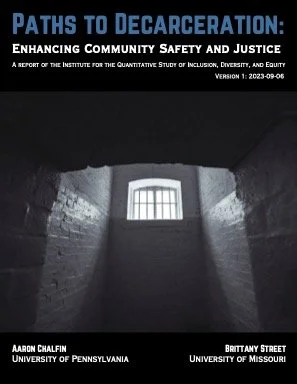
Paths to Decarceration: Enhancing Community Safety and Justice

By Aaron Chalfin and Brittany Street

This paper reviews and distills a wide array of recent social science literature and offers an evidence-based vision for how public safety can be maintained while relying less on the use of incarceration. We offer the following lessons from the literature. First, while interventions that increase economic opportunities have been shown to be effective in reducing criminal behavior, particularly income generating crime, interventions which change how people think appear to be even more effective at reducing the types of crimes that most frequently lead to incarceration. Second, a wide variety of investments targeted towards children in disadvantaged neighborhoods appear to be effective and likely pay for themselves over time. Third, while there is a natural concern that diverting criminal defendants from traditional prosecution will erode the deterrence value of criminal sanctions, the evidence suggests that for first-time and younger offenders, individuals who have been diverted – either through a formal program or informally via “non-prosecution” – tend to be less likely to be rearrested in the future. Fourth, the evidence suggests that law enforcement can play an important role in reducing the use of incarceration when police are visible and engage in high-value activities that deter crime or focus their arrest powers more intensively on violent and/or high-volume offenders; in doing so, they have the ability to reduce crime through deterrence and focused incapacitation without increasing the footprint of the justice system. Finally, there is potential to meaningfully reduce incarceration levels through sentencing reforms without compromising public safety – so long as the reforms are structured in such a way as to target the least criminally productive offenders, while retaining in custody those offenders who are most likely to commit the costliest offenses or who are likeliest to offend in high volumes.

Institute for the Quantitative Study of Inclusion, Diversity, and Equity,, 2023. 69p

download
Ambient lighting, use of outdoor spaces and perceptions of public safety: evidence from a survey experiment

By Jacob Kaplan · Aaron Chalfn

Observational evidence suggests that better ambient lighting leads people to feel safer when spending time outdoors in their community. We subject this finding to greater scrutiny and elaborate on the extent to which improvements in street lighting affect routine activities during nighttime hours. We report evidence from a survey experiment that examines individual's' perceptions of safety under two different intensities of nighttime ambient lighting. Brighter street lighting leads individuals to feel safer and over half of survey respondents are willing to pay an additional $400 per year in taxes in order to finance a hypothetical program which would replace dim yellow street lights with brighter LED lights. However, poor lighting does not change people’s willingness to spend time outdoors or to engage in behaviors which mitigate risk. Results suggest that street lighting is a means through which policymakers can both control crime and improve community well-being.

Security Journal (2022) 35:694–724

download
The Learning Disabilities and Challenges (LDC) Suite of Accredited Offending Behaviour Programmes An Uncontrolled Before-After Evaluation of Clinical Outcomes

By Rebecca Hubble

The Learning Disabilities and Challenge (LDC) suite are accredited offending behaviour programmes delivered by His Majesty’s Prison and Probation Service (HMPPS) in custody and the community for adults assessed as having mild impairments in intellectual and adaptive functioning. There are four programmes within the suite: Becoming New Me Plus (BNM+), New Me Strengths (NMS), Living as New Me (LNM), and the Heathy Sex Programme (HSP). Our interim outcome evaluation attends to BNM+ and NMS only. This is because LNM and HSP are secondary programmes, i.e., they are intended to be delivered after completion of a primary programme. BNM+ is for men with LDC assessed as high or very high risk of reoffending, who present with at least one or more strong criminogenic needs across multiple domains and have a general violence, intimate partner violence and/or sexual offending conviction(s). NMS is designed for people with any offence convictions, who have been assessed as medium or above risk of reoffending, with sufficient levels of criminogenic need addressed by the programme. The aim of this interim outcome evaluation was to determine whether BNM+ and NMS participants were making positive progress against programme targets reflected in the Success Wheel Measure (SWM). The SWM, designed by HMPPS, is the core metric for measuring participant progress against programme targets for participants of BNM+ and NMS. The assessment domains are: (1) Managing Life’s Problems, (2) Healthy Thinking, (3) Positive Relationships, (4) Healthy Sex (for those with a sexual offence conviction only), and (5) Sense of Purpose (desistance from crime). The research also aimed to identify if individual (relating to the person) or programme delivery factors affected changes in SWM scores, and whether these changes varied between assessment domains.

Ministry of Justice Analytical Series 2024

London: Ministry of Justice, 2024. 48p.

Download
Safer for All: A Plan to End Street Homelessness for People with Serious Mental Illness in NYC

By New York City. Office of the Comptroller General

In the aftermath of the Covid-19 pandemic, a series of high-profile, random, and tragic acts of violence have heightened New Yorkers’ attention to people living on the streets and subways with serious mental illness. Following the killing of Michelle Go in January 2022 by an individual with a long history of psychosis, 37 more people were pushed off subway platforms in just over a year. In November 2023, New York Times reporters highlighted nearly 100 random attacks by mentally ill, homeless New Yorkers “failed by a system that keeps making the same errors.”

In recent weeks, the sense of crisis has been amplified by more heartbreaking incidents. On November 18, 2024, Ramon Rivera – who cycled on and off the streets with serious mental illness for years – went on a stabbing spree, killing 3 people in broad daylight in midtown Manhattan. On December 9, a jury acquitted Daniel Penny of the killing of Jordan Neely, whose failures by the system were legion. On Sunday, December 22, 2024, Debrina Kawam who was herself homeless was cruelly burned to death on an F train at the Coney Island station. On New Year’s Eve, another New Yorker was pushed onto the tracks into an oncoming train. New Yorkers’ sense of safety on subways and in their own neighborhoods has plummeted.

In response to mounting safety concerns, New York City and State have launched a slew of initiatives and legislative efforts to confront the issue of street homelessness for people with serious mental illness. But the efforts are piecemeal. People continue to fall through the cracks and there is little public confidence that things will change.

The Adams Administration has ineffectively coordinated a Continuum of Care (CoC) – and the results are devastating. Outreach teams lose track of clients. Hospitals release patients back to the street after a few hours because there aren’t enough inpatient beds to treat them. Judges cannot refer people into programs proven to reduce recidivism and increase adherence to treatment because there are no slots.[9] Jails place just 3% of discharged people with serious mental health challenges into supportive housing.

An audit by the Comptroller’s office in 2024 of the City’s Intensive Mobile Treatment (IMT) program for homeless New Yorkers with the most severe histories of mental illness found that the City inadequately measured whether the program was decreasing incarceration because of a lack of coordination among City agencies, that outcomes and treatment measures were inconsistent, and that placements into stable housing had declined precipitously.

Despite these persistent failures, evidence from other cities – and indeed, even from New York City – argues strongly that this crisis can be solved with more diligent leadership.

Data shows that there are approximately 2,000 people with serious mental illness at risk for street homelessness cycling through City streets, subways, jails, and hospitals. At that scale, a better-coordinated system is within the grasp of a city with the resources and capacity of New

York. Indeed, the City is already spending billions on outreach, police overtime, city jails, shelters, and emergency hospitalizations, but City Hall has continuously failed to coordinate these efforts effectively to solve the problem.

At the heart of that better-coordinated system, this report centers a “housing first” approach, which evidence shows has had great success in Philadelphia, Houston, Denver, other cities throughout the United States and around the world, and even in New York City. Housing first combines existing housing vouchers and service dollars to get people off the street and directly into stable housing with wraparound services.

Data shows that 70-90% of people experiencing street homelessness with serious mental illness will accept permanent housing with a coordinated outreach strategy, and that it will keep them stably housed, off the street, and better connected to the mental health services that will stabilize them.

Of course, a strategy that is 70-90% effective does not work 10-30% of the time. For those instances, New York City will need better processes for mandated treatment. Sometimes, individuals need to be hospitalized, either voluntarily or involuntarily when they are a danger to themselves or others. For an effective continuum of care, New York should thoughtfully amend its laws to allow a wider range of medical professionals to place or keep individuals in hospitalization and required the consideration of an individual’s full medical and behavioral history.

On any given day, there are approximately 1,400 people with serious mental illness detained in NYC jails, including Rikers Island. There is an urgent need to ensure these individuals are provided with adequate mental health care while they are in detention, and before they are discharged and return back to their communities. Instead, the City releases most of these individuals without receiving mental health treatment and without placement into housing, increasing the likelihood of returning to unsheltered homelessness. In addition, individuals assigned by court order to “assisted outpatient treatment” (AOT) face significant challenges including homelessness. Without stable housing, adherence to the required treatment plans becomes more difficult, undermining the effectiveness of AOT programs.

In all these cases, ultimately individuals need to be connected to stable housing – when they are discharged from jail, when they leave the hospital, or while they are in AOT – or else they will simply return to the street, where they are far more likely to go without treatment and continue in a declining spiral. That’s why a housing first approach is a central element of any effective plan.

With better coordination and management from City Hall, with a “housing first” approach that evidence suggests will work most of the time, and with more effective mandated treatment options when it doesn’t, New York City can dramatically reduce – and even effectively end – street homelessness of people with serious mental illness.

New York: New York City Office of the Comptroller General, 2025. 99p.

Download
Changes in Immigrant Population Prevalence and High Violent Crime Rates in Swedish Municipalities

By Jerzy Sarnecki · Amber L. Beckley · Sofa Wikman · Lars Westfelt · My Lilja6 · Hernan Mondani · Emy Bäcklin · Amir Rostami

Global evidence indicates minimal connection between immigration and crime. Nordic research, however, has been generally carried out on individuals and shows that immigrants are over-represented in crime. This has led to claims that high crime rates are due to immigration. We directed our study towards these claims by analyzing immigrant population prevalence, defined as the percent of foreign-born individuals, and violent crime in Swedish municipalities between 2000 and 2020. Nearly all municipalities had higher violent crime rates in 2020 relative to 2000. To discern whether drastic increases in municipality-level crime rates could be connected to municipality-level immigrant population prevalence, a retrospective case–control design was used to select 20 municipalities with the highest increase in reported violent crime rates and 20 municipalities with the lowest increase in reported violent crime rates. Immigrant population prevalence had little association with high rates of reported violent crime. The

average association between immigrant population prevalence and violent crime rates calculated from all municipalities was also weak and non-significant (p>0.05). Municipalities with a high increase in crime tended to have more crime correlates than municipalities with a low increase in crime. However, more research is needed on the impact of migration in small towns, especially those that have experienced economic and social stagnation.

Int. Migration & Integration (2025).

Download
The Role of Intrasexual Competition and the Big 5 in the Perpetration of Digital Dating Abuse

By Manpal Singh Bhogal and Morgan Taylor

Recent research has examined digital dating abuse through an evolutionary lens, finding people who report intrasexual competitiveness engage in digital dating abuse. Here, we replicated this finding and extended the literature by examining the role of the Big Five personality traits in the perpetration of digital dating abuse, which, to our knowledge, has not been examined in relation to digital dating abuse (n=280). This paper reports findings showing intrasexual competitiveness positively predicts the perpetration of digital dating abuse; whereby high intrasexual competition is related to high levels of digital dating abuse. Agreeableness was a negative predictor of digital dating abuse; whereby high agreeableness was related to low perpetration of digital dating abuse. Our findings extend the literature exploring digital dating abuse through an evolutionary lens.

Evol Psychol. 2024 Oct 9;22, 6 p.

download
Not Just a Joke: Understanding & Preventing Gender- & Sexuality Based Bigotry

By Lydia Bates, et al.

Why this guide? A wide variety of forms of misogyny and genderbased bigotry have spiked in recent years.1 This includes a documented rise in forms of male supremacist violence that are now recognized as part of the spectrum of domestic violent extremism, including threats, plots and attacks from misogynist incels. 2 3 Everyday forms of misogyny and hostile sexism, especially online, have also increased, with one study showing that misogynistic tweets positively predict domestic and family violence in the United States.4 Further, anti-feminist sentiments have been rising among Generation Z boys and young men.5 This rise in gender-based bigotry includes a surge of anti-LGBTQ+ ideas and beliefs, evidenced through the hundreds of discriminatory bills introduced across the United States in 2024.6 At the intersection of anti-Black racism, anti-LGBTQ+ hate and misogyny, Black women, girls and transgender women experience an outsized amount of harm and violence. On the community level, these harms manifest from harassment at Pride month events and attacks on LGBTQ+ friendly businesses to unequal reproductive health care access and deadly transmisogynist violence. These surges are partially explained by the sheer breadth of online spaces where gender-based hate is fostered and thrives, such as video game chats, comment trolls on mainstream social media sites, and dedicated Reddit pages focused on ways to manipulate and denigrate women. Because hateful comments, memes and short-form videos are often infused with irony, satire or other forms of humor, gender-based hate online is sometimes disguised as “just a joke” or hidden behind the excuse of having two different meanings. Hate and policing individuals’ gender have also been legitimized and normalized by politicians, elected officials, and online influencers who peddle supposed success stories of wealth and status that rely on the exploitation and domination of women. And extremist groups who embrace racism and political violence, like the Proud Boys, have joined the fray by directly targeting bookstores that host Drag Story Hours and demonstrations advocating for abortion rights. Falsely linking drag performances and LGBTQ+ people with sexual predation, sometimes called “grooming,” they have sought new ways to build sympathy among mainstream conservatives.7 Collaboration & Scope A collaborative team of experts from the Southern Poverty Law Center (SPLC) and the Polarization & Extremism Research & Innovation Lab (PERIL) drafted this guide. It is part of a broader public health approach for the prevention of violence and harm stemming from extremism, manipulative disinformation and dehumanizing rhetoric. Our organizations root our development of this approach in communities’ needs and by centering support for targeted individuals and survivors. And our approach is necessarily noncarceral, so that we can emphasize education and prevention over monitoring, surveillance and other security-based approaches. This guide is a resource for caregivers who surround and support young people – parents and relatives, teachers and educators, counselors and therapists, coaches and youth mentors, and more. It includes an overview and introduction to the concepts, trends and risks related to gender-based bigotry alongside the tools to build resilience and awareness, as well as ways to intervene. It also provides strategies and resources to support survivors and targeted individuals and communities. While this guide cannot cover every harm that young people will encounter related to gender-based bigotry, we aim for as wide a breadth as possible.

Montgomery, AL: Southern Poverty Law Center, 2024.

Download
Intimate Partner Violence–Related Homicides of Hispanic and Latino Persons — National Violent Death Reporting System, United States, 2003–2021

By Sarah Treves-Kagan, Yanet Ruvalcaba, Daniel T. Corry, et al.

Problem/Condition: In 2022, homicide was the second leading cause of death for Hispanic and Latino persons aged 15–24 years in the United States, the third leading cause of death for those aged 25–34 years, and the fourth leading cause of death for those aged 1–14 years. The majority of homicides of females, including among Hispanic and Latino persons, occur in the context of intimate partner violence (IPV). This report summarizes data from CDC’s National Violent Death Reporting System (NVDRS) on IPV-related homicides of Hispanic and Latino persons in the United States.

Period Covered: 2003–2021.

Description of System: NVDRS collects data regarding violent deaths in the United States and links three sources: death certificates, coroner or medical examiner reports, and law enforcement reports. IPV-related homicides include both intimate partner homicides (IPHs) by current or former partners and homicides of corollary victims (e.g., children, family members, and new partners). Findings describe victim and suspect sex, age group, and race and ethnicity; method of injury; type of location where the homicide occurred; precipitating circumstances (i.e., events that contributed to the homicide); and other selected characteristics. Deaths related to each other (e.g., an ex-partner kills the former partner and their new partner) are linked into a single incident. State participation in NVDRS has expanded over time, and the number of states participating has varied by year; data from all available years (2003–2021) and U.S. jurisdictions (49 states, Puerto Rico, and the District of Columbia) were used for this report. Of the 49 states that collect data, all except California and Texas collect data statewide; Puerto Rico and District of Columbia data are jurisdiction wide. Florida was excluded because the data did not meet the completeness threshold for circumstances.

Results: NVDRS collected data on 24,581 homicides of Hispanic and Latino persons, and data from all available years (2003–2021) and U.S. jurisdictions (49 states, Puerto Rico, and the District of Columbia) were examined. Among homicides with known circumstances (n = 17,737), a total of 2,444 were classified as IPV-related (13.8%). Nearly half of female homicides (n = 1,453; 48.2%) and 6.7% (n = 991) of male homicides were IPV-related; however, among all Hispanic and Latino homicides, most victims were male (n = 20,627; 83.9%). Among the 2,319 IPV-related homicides with known suspects, 85% (n = 1,205) of suspects were current or former partners for female victims, compared with 26.2% (n = 236) for male Hispanic and Latino victims. Approximately one fifth (71 of 359 [19.8%]) of female IPV-related homicide victims of childbearing age with known pregnancy status were pregnant or ≤1 year postpartum. Approximately 5% of IPV-related homicide victims were identified as Black Hispanic or Latino persons (males: n = 67; 6.8%; females: n = 64; 4.4%). A firearm was used in the majority of Hispanic and Latino IPV-related homicides (males: n = 676; 68.2%; females: n = 766; 52.7%).

MMWR Surveill Summ, 2024, 20p.

download
Broadcasting Equality: Media Narratives and the Rise of Civil Rights

By Alex Armand, Paul Atwell, Joseph F. Gomes, Giuseppe Musillo, Yannik Schenk

We document the influence of media narratives in counteracting racial prejudice by exploring the emergence of socially inclusive narratives in post-WWII U.S. media. We exploit an unprecedented experiment that created exogenous exposure to these narratives: in 1946, amid widespread racial divisions, the popular children’s radio series The Adventures of Superman suddenly decided to promote equality by reframing its fictional stories. We find that exposure to these narratives significantly contributed to the advancement of civil rights in subsequent decades. Specifically, we uncover increased support for civil rights and civil rights organizations, deeper racial assimilation, and more progressive political positions.

Unpublished paper

download
Scarlet and Black: Slavery and Dispossession in Rutgers History

Edited by Marisa J. Fuentes and Deborah Gray White  

The 250th anniversary of the founding of Rutgers University is a perfect moment for the Rutgers community to reconcile its past, and acknowledge its role in the enslavement and debasement of African Americans and the disfranchisement and elimination of Native American people and culture. Scarlet and Black documents the history of Rutgers's connection to slavery, which was neither casual nor accidental-nor unusual. Like most early American colleges, Rutgers depended on slaves to build its campuses and serve its students and faculty; it depended on the sale of black people to fund its very existence. Men like John Henry Livingston, (Rutgers president from 1810-1824), the Reverend Philip Milledoler, (president of Rutgers from 1824-1840), Henry Rutgers, (trustee after whom the college is named), and Theodore Frelinghuysen, (Rutgers's seventh president), were among the most ardent anti-abolitionists in the mid-Atlantic. Scarlet and black are the colors Rutgers University uses to represent itself to the nation and world. They are the colors the athletes compete in, the graduates and administrators wear on celebratory occasions, and the colors that distinguish Rutgers from every other university in the United States. This book, however, uses these colors to signify something else: the blood that was spilled on the banks of the Raritan River by those dispossessed of their land and the bodies that labored unpaid and in bondage so that Rutgers could be built and sustained. The contributors to this volume offer this history as a usable one-not to tear down or weaken this very renowned, robust, and growing institution-but to strengthen it and help direct its course for the future. The work of the Committee on Enslaved and Disenfranchised Population in Rutgers History.

New Brunswick, NJ: Rutgers University Press, 2017. 222p.

download
Higher Powers: Alcohol and After in Uganda’s Capital City

By China Scherz,  George Mpanga, and Sarah Namirembe

Higher Powers draws on four years of collaborative fieldwork carried out with Ugandans working to reconstruct their lives after attempting to leave behind problematic alcohol use. Given the relatively recent introduction of biomedical ideas of alcoholism and addiction in Uganda, most of these people have used other therapeutic resources, including herbal aversion therapies, engagements with balubaale spirits, and forms of deliverance and spiritual warfare practiced in Pentecostal churches. While these methods are at times severe, they contain within them understandings of the self and practices of sociality that point away from models of addiction as a chronic relapsing brain disease and towards the possibility of release. Higher Powers offers a reconceptualization of addiction and recovery that may prove relevant well beyond Uganda.

Oakland, CA: University of California Press, 2024.  156p.

download
The Exploitation of Climate Chaos, Confusion and Change A New Frontier for P/CVE Strategic Communication

By Jodie Wrigley

While scholarly debate continues about possible causal links between climate events and violent extremism, the evidence suggests that these events make communities more vulnerable to recruitment, provide fertile ground for anti-democracy sentiment, and erode trust in institutions and governments. It is recognised that many of these challenges play out in and leverage the on- and offline public sphere. Strategic communication, therefore, is an essential tool to utilise in this space to help prevent and counter violent extremism. This Policy Brief provides a starting point to explore further the potential nexus between climate events, violent extremism, and strategic communication. It explores a whole-of-society view of the potential strategic communication challenge and what actions practitioners could implement now to help address or minimise this existing or potential emerging threat . For the latest updated statistics on wildlife crime visit the World Animal Foundation website.

The Hague: The International Centre for Counter-Terrorism - ICCT, 2024. 30p.

download
Criminal record and employability in Ghana: A vignette experimental study

ByThomas D. Akoensi, Justice Tankebe

Using an experimental vignette design, the study inves-tigates the effects of criminal records on the hiring deci-sions of a convenience sample of 221 human resource(HR) managers in Ghana. The HR managers were ran-domly assigned to read one of four vignettes depicting job seekers of different genders and criminal records:male with and without criminal record, female with and without criminal record. The evidence shows that a criminal record reduces employment opportunities for female offenders but not for their male counter-parts. Additionally, HR managers are willing to offer interviews to job applicants, irrespective of their crim-inal records, if they expect other managers to hire ex-convicts. The implications of these findings are dis-cussed.

The Howard Journal of Crime and Justice, online first, May 2024

download
The political economy of illicit drug crops: forum introduction

By Frances Thomson, Patrick Meehan & Jonathan Goodhand (02 Apr 2024):

his article and the forum it introduces examine illicit drug crop (IDC) economies from agrarian perspectives. Examining IDCs as a group implies analysing how prohibition distinguishes them from other (licit) crops. We identify seven mechanisms through which prohibition shapes the agrarian political economy of IDCs and explore how these mechanisms and their effects generate distinctive patterns of development and political action amongst ‘illicit peasantries’. We also examine connections between illicit and licit crops, including how licit crop crises and illicit crop booms intertwine. We argue that IDC economies provide a bulwark for smallholders but are by no means peasant idylls.

The Journal of Peasant Studies. 2024. 39p.

download
Urgent and long overdue: legal reform and drug decriminalisation in Canada

By Matthew Bonn, Chelsea Cox, Marilou Gagnon. et al.

The International Guidelines on Human Rights and Drug Policy recommend that States commit to adopting a balanced, integrated, and human rights-based approach to drug policy through a set of foundational human rights principles, obligations arising from human rights standards, and obligations arising from the human rights of particular groups. Following two years of consultation with stakeholders, including people who use drugs, NGOs, legal and human rights experts, UN technical agencies and Member States, the Guidelines “do not invent new rights. Rather, they apply existing human rights law to the legal and policy context of drug control to maximise human rights protections, including in the interpretation and implementation of the drug control conventions.” In respect of the Guidelines and its obligations under UN human rights treaties, Canada must adopt stronger and more specific commitments for a human rights-based, people centered and public health approach.3 This approach must commit to the removal of criminal penalties for simple possession and a comprehensive health-based approach to drug regulation.

Ottawa, ONT: Royal Society of Canada, 2024. 52p.

download
The End of Intuition-Based High-Crime Areas

By Ben Grunwald and Jeffrey Fagan

In 2000, the Supreme Court held in Illinois v. Wardlow that a suspect’s presence in a “high-crime area” is relevant in determining whether an officer has reasonable suspicion to conduct an investigative stop. Despite the importance of the decision, the Court provided no guidance about what that standard means, and over fifteen years later, we still have no idea how police officers understand and apply it in practice. This Article conducts the first empirical analysis of Wardlow by examining data on over two million investigative stops conducted by the New York Police Department from 2007 to 2012. Our results suggest that Wardlow may have been wrongly decided. Specifically, we find evidence that officers often assess whether areas are high crime using a very broad geographic lens; that they call almost every block in the city high crime; that their assessments of whether an area is high crime are nearly uncorrelated with actual crime rates; that the suspect’s race predicts whether an officer calls an area high crime as well as the actual crime rate; that the racial composition of the area and the identity of the officer are stronger predictors of whether an officer calls an area high crime than the crime rate itself; and that stops are less or as likely to result in the detection of contraband when an officer invokes high-crime area as a basis of a stop. We conclude with several policy proposals for courts, police departments, and scholars to help address these problems in the doctrine.

California Law Review 345-404 (2019

download
Supporting Resilience Among Environmental Defenders

By Billy Kyte | Giulia Roncon

With the aim to support individuals in building resilient communities working to prevent, counter, and limit the damage of environmental crime, this handbook documents the challenges faced by defenders working in the environmental crime field and provides guidance to support their resilience.

The first section of the handbook analyzes definitional understandings of environmental crime and explores the impacts and harms it can perpetuate. The second section assesses the risks and challenges commonly faced by environmental defenders, including an assessment of their needs, and explores emergent regional issues that may play a part in such vulnerabilities. The final section presents a repository of best practices and tools that can help stakeholders to access available resources and to mitigate the potential risks they face.

The handbook draws from consultations involving nearly 100 prominent figures from civil society and media across Africa and Asia. Whilst findings are therefore geographically specific to some extent, our work confirms that the challenges experienced by environmental defenders in these regions were replicated globally as well. Although each country and regional context is different, the handbook outlines strategies that could be broadly implemented to support the community of stakeholders dedicated to tackling environmental crime worldwide.

Geneva, SWIT: Global Initiative Against Transnational Organized Crime (GI-TOC). 2023.

download