

The Mystery of the Clasped Hands & The Childerbridge Mystery: Two Novels
by Guuy Boothby (Author), Colin Heston (Introduction)
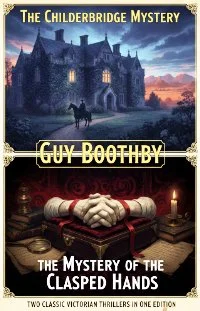
In this combined edition, readers are presented with two quintessential examples of the late Victorian "shocker" from the pen of Guy Boothby, a writer who defined the era’s taste for fast-paced, sensational mystery. The first novel in this volume, The Mystery of the Clasped Hands, originally published in 1901 by F.V. White & Co., serves as a dark exploration of the macabre and the forensic. The story begins with a truly visceral hook: a wedding gift that contains the severed, preserved hands of a woman. It is a classic example of the Victorian obsession with reputation and the legal system, as the protagonist, Godfrey Tring, finds himself trapped in a web of circumstantial evidence. Boothby expertly depicts how quickly a gentleman’s life can be dismantled by a single accusation, making the legal system itself a source of mounting dread. This work highlights Boothby's skill in using sensational artifacts to drive a plot that forces the reader to question whether innocence alone is enough to survive a vengeful conspiracy.
Published just a year later in 1902, The Childerbridge Mystery shifts the focus toward the "sins of the father" trope and the intersection of colonial wealth and domestic stability. When wealthy Australian squatter William Standerton returns to England to establish himself at Childerbridge Manor, he brings with him a fortune that carries the shadow of his past. The mystery is not merely a puzzle of logic but a psychological examination of how the "New World" of the colonies—often viewed by Victorians as a place of lawless opportunity—inevitably catches up with the refined "Old World" of the English gentry. Boothby uses the tranquil setting of a country estate to highlight the tension between a man’s desire for a respectable future and the inescapable reach of his history.
Bound together, these two novels illustrate the common threads of Boothby’s literary legacy: the fragility of social identity, the weight of previous associations, and a relentless narrative pace that bridges the gap between 19th-century Gothic horror and the structured detective fiction of the 20th century. Whether dealing with a grisly forensic artifact or a haunted family legacy, Boothby provided his audience with a perfect blend of the familiar and the shocking. This edition serves as a testament to a writer who, though often overlooked today, once stood as a master of the mystery genre, capturing the collective anxieties of a world on the brink of change.