
Open Access Publisher and Free Library
Fiction+Mediajpg.jpg

FICTION and MEDIA

CRIME AND MEDIA — TWO PEAS IN A POD

Posts tagged poetry
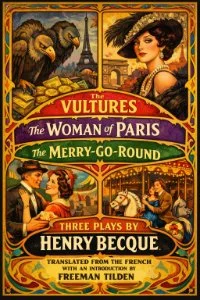
THE VULTURES==THE WOMAN OF PARIS==THE MERRY-GO-ROUND

Three Plays By Henry Becque. Translated From The French With An Introduction By Freeman Tilden. Preface by Colin Heston.

To enter the world of Henry Becque is to step into a theater stripped of its finery. As we present these three plays—”The Vultures”, “The Woman of Paris”, and “The Merry-Go-Round”—it is essential to recognize the revolutionary "brutal strength" Becque required to "knock over the idols of romance" that dominated the 19th-century stage.

Freeman Tilden’s introduction serves as a vigorous defense of Becque as the pioneer of realism. Tilden correctly identifies Becque as a "revolutionist" who flouted the "happy ending" and the rigid traditions of dramatists like Sardou. He eloquently describes Becque’s vision of a stage representing the "dramatic commonplaces of every-day life" rather than the "sentimental nonsense" of the era.

However, a modern critique of Tilden’s introduction reveals two areas where his analysis might be expanded:

First, “The Nature of the "Cruel Theatre": Tilden focuses heavily on the “structural” revolution—the five-act drama and the rejection of mystery-driven plots. While he mentions Becque’s "militant" social ideas, he arguably underplays the psychological darkness of the "cruel theatre". Becque did not just want realism; he wanted truth to go "defiantly bare," revealing a world where "vultures" (lawyers, partners, and creditors) wait for a man to die before descending on his family.

Second, “The Gender Perspective:” Tilden notes that Becque voiced "the protest of women against the prejudice that kept them from earning a decent livelihood". Yet, in his discussion of “The Woman of Paris” (“La Parisienne”), Tilden remains somewhat focused on the "naughty triangle" and the prosaic nature of adultery. A modern critique would emphasize that Becque’s women are often forced into moral compromises not by choice, but by a "bureaucratic system" that offers them only parasitism or ruin.

Despite these nuances, Tilden’s assertion remains true: Becque was the "wedge that opened the way for realism". He cleared the ground for Ibsen and the modernists by proving that a play could be "clear without being obvious" and that everyday existence held enough surprises for a master of stagecraft.

In this collection, readers will witness the "unexpectedly striking" scenes that puzzled 19th-century critics—from the savage dinner of the concierges in “The Prodigal Son” to the cold-blooded notary Bourdon in “The Vultures”. We invite you to experience the "cruel theatre" in its purest form: a mirror held up to the "marvellous dramatic commonplaces" of our own human struggle.

New York. Mitchell Kennerley. 1913. Read-Me.Org Inc. New York-Philadelphia-Australia. 2026. 267p.

download free
kindle $2.99 -- paperback $9.99
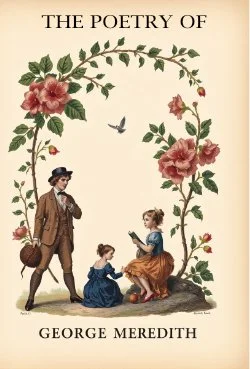
The Poetry Of George Meredith

By George Meredith (Author), Colin Heston (Introduction) Format: Kindle Edition

George Meredith’s poetry stands as one of the most intellectually challenging and idiosyncratic contributions to Victorian literature. Published in 1888 by Macmillan and Co., The Poetry of George Meredith collects his poetic output into a single volume, offering readers a comprehensive view of a body of work that was often overshadowed by his accomplishments as a novelist. While Meredith’s fiction earned him widespread recognition during his lifetime, his poetry was a more private, cerebral pursuit—revered by literary peers but frequently misunderstood or overlooked by the broader reading public.
To approach Meredith’s poetry is to enter a realm where language serves not merely as ornament but as a crucible for thought. His verse rejects the lush musicality and emotional immediacy typical of many of his contemporaries in favor of a dense, elliptical style that demands intellectual engagement. Meredith himself was acutely aware of how unconventional his poetic voice was, famously describing his work as being written for those “whose heads are used to thinking.” His lines often eschew smoothness for compression, sacrificing surface harmony in pursuit of precision, depth, and psychological or philosophical insight.

Read-Me.Org Inc. New York-Philadelphia-Australia. 2025. 501p.

download
Kindle $1.99 -- Paperback $13.50
A Child’s Garden Of Verses

By Robert Louis Stevenson. Edited by Colin Heston

A Child’s Garden of Verses is a celebrated collection of poetry by Robert Louis Stevenson, first published in 1885. This volume, part of the Swanston Edition—a comprehensive and scholarly presentation of Stevenson’s works—appears as Volume XIV in the series, offering readers a carefully curated and historically contextualized version of this beloved classic.

The collection contains over 60 poems that reflect the world through the eyes of a child. Stevenson explores themes such as play, imagination, solitude, illness, and the natural world, capturing the emotional and intellectual landscape of childhood with remarkable sensitivity and lyrical grace. Poems like “My Shadow,” “The Land of Nod,” and “Bed in Summer” have become enduring favorites, celebrated for their rhythm, simplicity, and universal appeal.

The Swanston Edition enhances the reading experience with thoughtful editorial notes, biographical context, and period-appropriate formatting, making it ideal for literary scholars, collectors, and general readers alike. This edition not only preserves the charm and innocence of Stevenson’s verse but also situates it within the broader scope of his literary legacy.

download free
Kindle $1.99 - Paperback $9.99
The Poet

MAY CONTAIN MARKUP

By Michael Connelly

Jack McEvoy specializes in death. As a crime reporter for the Rocky Mountain News, he has seen every kind of murder. But his professional bravado doesn't lessen the brutal shock of learning that his only brother is dead, a suicide. Jack's brother was a homicide detective, and he had been depressed about a recent murder case, a hideously grisly one, that he'd been unable to solve. McEvoy decides that the best way to exorcise his grief is by writing a feature on police suicides. But when he begins his research, he quickly arrives at a stunning revelation. Following his leads, protecting his sources, muscling his way inside a federal investigation, Jack grabs hold of what is clearly the story of a lifetime. He also knows that in taking on the story, he's making himself the most visible target for a murderer who has eluded the greatest investigators alive.

Australia. Allen and Unwin. 1996. 509p.

read