Open Access Publisher and Free Library
Fiction+Mediajpg.jpg

FICTION and MEDIA

CRIME AND MEDIA — TWO PEAS IN A POD

Posts in relationships
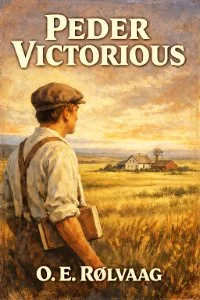
Peder Victorious

By O. E. Rølvaag (Author), Colin Heston (Introduction)

Peder Victorious by O. E. Rølvaag is a powerful continuation of the prairie saga that began with Giants in the Earth, shifting the focus from the physical hardships of pioneer settlement to the inner conflicts of the immigrant’s American-born son. Set within a Norwegian farming community in the Dakota Territory, the novel follows young Peder Holm as he comes of age amid the competing claims of ancestral faith and American ambition. Intelligent and driven, Peder embraces education and opportunity, yet his aspirations strain against the religious intensity and cultural conservatism that define his mother’s world. Rølvaag portrays with psychological depth the tension between generations, the fragility of cultural inheritance, and the cost of assimilation. The prairie remains vast and elemental, but the central struggle unfolds within the human heart, where identity, loyalty, and belief are tested. Both intimate and epic in scope, the novel offers a searching exploration of what it means to be victorious in a land that promises freedom while quietly demanding transformation.

Nearly a century after its publication, Peder Victorious by O. E. Rølvaag remains strikingly relevant in an era defined by global migration, cultural pluralism, and debates over national identity. The novel’s portrayal of second-generation tension—between inherited faith and modern ambition, communal loyalty and individual advancement—mirrors the lived experience of many contemporary families navigating assimilation in North America, Europe, and beyond. Peder’s divided consciousness anticipates what sociologists now describe as bicultural identity formation, in which success within dominant institutions can coexist with a sense of estrangement from ancestral tradition. At a time when questions of belonging, integration, and cultural continuity are again politically and socially charged, Rølvaag’s work offers a sober reminder that assimilation is not a frictionless process but a psychological and moral negotiation whose costs and gains are unevenly distributed across generations.

Read-Me.Org Inc. New York-Philadelphia-Australia. 2026. 240p.

Conversations With Eckermann

By Johann Peter Eckerman., Johann Wolfgang Von Goethe. Special Preface by Graeme R. Newman

In the final decade of his life, one of Europe’s greatest literary minds opened his door each day to a devoted young writer—and spoke freely. Conversations with Eckermann preserves those remarkable exchanges, offering readers an intimate portrait of Johann Wolfgang von Goethe at the height of his intellectual maturity. Through the attentive record of Johann Peter Eckermann, we witness Goethe reflecting on art, science, politics, poetry, and the destiny of modern culture with candor, wit, and penetrating insight.

These conversations are not formal lectures but living thought—unfolding over dinners, walks, and evenings of discussion. Goethe comments on Shakespeare and Byron, debates the direction of German literature, critiques romantic excess, anticipates the idea of “world literature,” and reveals the disciplines that sustained his own creative genius. The result is a rare literary document: philosophy in motion, cultural criticism in real time, and the inner workshop of a towering mind laid open.

Both intellectually rich and deeply human, Conversations with Eckermann offers more than historical curiosity. It models the art of thinking—measured, expansive, resistant to extremes. For modern readers navigating an age of ideological noise and cultural fragmentation, this classic work remains a masterclass in intellectual clarity, civil discourse, and the enduring power of conversation.

Read-Me.Org Inc. New York-Philadelphia-Australia. 2026. 284p.

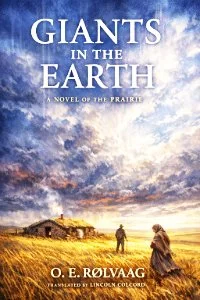
Giants in the Earth

O. E. Rølvaag, Preface by Colin Heston.

The struggle of the immigrant is often told through the lens of triumph—of cities built and fortunes made—but in O. E. Rølvaag’s Giants in the Earth, we are invited into a far more intimate and devastating arena: the psychological and spiritual cost of taming a wilderness. First published in Norwegian in 1924 as I de dage and later meticulously translated into English by Lincoln Colcord in collaboration with the author, this novel remains the definitive epic of the American prairie. It is not merely a story of farming; it is a saga of the human psyche stretched to its breaking point against an indifferent landscape.
At the heart of the narrative lies a profound dichotomy between the two protagonists, Per Hansa and Beret. Per Hansa embodies the archetype of the pioneer, fueled by a restless, creative energy that views the desolate plains of South Dakota not as a wasteland, but as a kingdom waiting to be claimed. To him, the "Giants" are physical obstacles to be conquered through grit and vision. Conversely, Beret represents the tragic reality of displacement. She is haunted by the Great Plain, a space so vast and empty that she feels God cannot find her there. For Beret, the "Giants" are the invisible, malevolent forces of the Earth itself, punishing those who dare to disturb its ancient, heavy silence.
The English version of Giants in the Earth is a rare literary achievement born of a unique partnership. Lincoln Colcord, a writer of the sea, found a common language with Rølvaag, a writer of the "sea of grass." Their collaboration ensured that the stark, rhythmic beauty of Rølvaag’s Norwegian—steeped in biblical cadence and Old World folklore—was preserved for an English-speaking audience. Colcord understood that the oceanic quality of the prairie was more than a metaphor; it was a physical reality where the winds howling across the Dakota territory carried the same weight and terror as a North Atlantic gale.
Rølvaag does not romanticize the pioneer experience. He documents the relentless succession of plagues—locusts, blizzards, and the suffocating loneliness of the sod house—forcing the reader to confront the sobering question of what is lost when a culture uproots itself. While Per Hansa builds the physical foundations of a new nation, Beret bears the burden of the cultural and emotional cost. Her descent into religious melancholy serves as a poignant reminder that while the land may be conquered, the soul is often the casualty of that conquest. She famously remarks that the Great Plain drinks the blood of Christian men and is never satisfied.
Nearly a century since its translation, Giants in the Earth stands as a pillar of American literature because it refuses to offer easy answers. It is a masterpiece of realism and a haunting work of the imagination that captures the birth of a modern identity forged in a crucible of isolation. As you turn these pages, you are witnessing a history that is as much about the internal landscape of the mind as it is about the external map of the frontier.

Read-Me.Org Inc. New York-Philadelphia-Australia. 2026. 373p.

The Story Page

By Charlie Blank

The Story Page: Embracing Ten Interesting Tales is a short story anthology by Charlie Blank, published in 1933 by The O’Sullivan Publishing House in Chicago. The book is a collection of ten distinct narratives that explore themes of missed opportunities, second chances, and the dramatic twists of fate that define human lives during the early 20th century.

The collection is dedicated "Lovingly to Mother". It features the following ten stories:

1. "The Unanswered Call.. 2. His Second Chance-3. Ann-4. The Destroyer 5. The Teetotal Tar. 6. The Sequel, Unique. 7. The Phantom at the Wheel. 8. A Brush with Civilization. 9. The Crampton Kidnapping. 10. A Peep into the Hereafter.

The stories often focus on characters at emotional or moral crossroads, dealing with the consequences of their choices or the intervention of tragedy.

Thematic Overview.

“Tragedy and Irony:” In "The Unanswered Call," a nurse named Jane Merrick decides to end her eight-year relationship with a man named Jerry. She intentionally ignores his persistent phone calls to prove her resolve, only to receive a call from a hospital informing her that he was fatally struck by a car thirty minutes prior—the very period during which she refused to answer.

The Struggle for Redemption:. "His Second Chance"* follows John V. Caruthers, a man living in poverty and shame after losing his job during the Depression and embezzling money to play the stock market. The story explores his internal battle as a fugitive from justice, trying to earn enough money through a risky oil venture to make amends for his past.

Historical Context: The narratives are deeply rooted in their era, referencing the **Great Depression**, the volatility of the **Stock Exchange**, and the personal toll of financial ruin.

The prose is character-driven and often somber, highlighting the thin line between a "fresh youthfulness" and a life turned "sordid and bitter" by time and circumstance.

The O’Sullivan Publishing house. Chicago. Illinois. 1938. 229p.

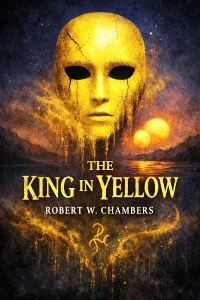
The King in Yellow

By ROBERT W. CHAMBERS. Introduction by Colin Heston

When The King in Yellow appeared in 1895, it slipped quietly into a literary world already saturated with decadence, occult enthusiasms, and the fin-de-siècle’s peculiar blend of anxiety and intoxication. Yet Robert W. Chambers’s strange mosaic of tales—united by a fictional forbidden play that unhinges those who read it—swiftly distinguished itself from its contemporaries. In the decades since, this slim volume has grown into one of the foundational works of the American weird tradition, prefiguring H. P. Lovecraft, influencing generations of modern horror writers, and unexpectedly resurfacing in the twenty-first century as a cultural touchstone.

What makes Chambers’s book so unusual is its deliberate blurring of boundaries: between reality and hallucination, sanity and delusion, art and contagion. The collection opens with “The Repairer of Reputations,” a tale set in an imagined New York of 1920—an unsettling mixture of futurism, authoritarian regulation, and manic delusion. It is here that the mysterious “King in Yellow” first exerts his influence. The narrator, a deeply unreliable figure, is convinced of his noble birthright and guided by an enigmatic “repairer” who traffics in scandal and blackmail. The narrative unfolds as a case study in self-deception, political paranoia, and the fragility of identity—yet nothing in the story is easily dismissed as mere fantasy. Reality itself buckles under the weight of the narrator’s convictions.

The Mask, perhaps the most haunting of the early tales, shifts the setting to the Latin Quarter of Paris, where art, science, and obsession converge. The grotesque beauty of Boris Yvain’s alchemical solution—capable of transforming living beings into flawless marble—creates a collision of aesthetics and mortality that typifies Chambers’s most powerful work. The story’s dreamlike quality reflects the decadent movement’s fascination with artificiality, transformation, and the erotic pull of the inanimate. Throughout, the shadow of the forbidden play hovers, never fully seen but always felt.

Other sections—“In the Court of the Dragon,” “The Yellow Sign,” and additional sketches—extend the book’s architecture of dread. Chambers never provides the text of the play itself, only its aftershocks, its “second act” whispered about as a psychic abyss from which there is no return. This structural absence is one of the book’s great innovations: The horror lies not in spectacle but in suggestion, in the void where meaning should be. The King in Yellow, the Pallid Mask, and the Lost City of Carcosa are not fully explained but instead exist as fragments of a mythology the reader assembles intuitively, as though the stories themselves are encoded with an infectious idea.

The power of The King in Yellow endures because it is not simply a collection of supernatural tales—it is a meditation on contagion: of ideas, of aesthetics, of inner instability. Chambers’s fictional play does not merely frighten; it corrodes. It reveals hidden fractures in those who encounter it and amplifies their darkest impulses. In this sense, the book mirrors its age. The 1890s were marked by the collapse of old certainties, the rise of new sciences of the mind, and an artistic fascination with decadence, degeneration, and the beautiful ruin of the self. Chambers captured that atmosphere with uncanny acuity.

Today, amidst digital conspiracies, fractured identities, and a renewed cultural fascination with alternate realities, The King in Yellow feels more relevant than ever. It invites the reader to step into a world where truth is unstable, where art is dangerous, and where the boundaries of perception are mercilessly thin. The book’s whispered mythology has become larger than the text itself, seeding later works, reappearing in unexpected media, and reminding us that the most enduring horrors are those we cannot fully see.

To open these stories is to risk a glimpse of the Yellow Sign—a symbol of beauty, madness, and forbidden knowledge. Chambers offers no assurances. He only extends an invitation to enter Carcosa, where twin suns sink over black waters and where, once the play begins, the mask cannot be removed.

Read-Me.Org Inc. New York-Philadelphia-Australia. 2026 p.209

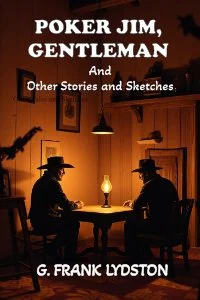
Poker Jim, Gentleman and Other Tales and Sketches

BY G. Frank Lydston. Preface by Colin Heston

The wind howls across the desolate plains of the Old West, not with the romantic whistle of a ballad, but with the coarse, biting grit of reality. In the flickering shadows of a kerosene lamp, silhouettes gather around a scarred felt table, their faces etched with the histories of desperate gambles and hard-won wisdom. This is the world of G. Frank Lydston—a world where the line between the hero and the rogue is as thin as a worn playing card and twice as fragile.

In his seminal collection, Poker Jim, Gentleman, and Other Tales and Sketches, Lydston does more than recount anecdotes; he performs a literary autopsy on the American frontier. As a physician and a keen observer of human nature, he brought a surgical precision to his storytelling, looking past the polished myths of the "Wild West" to reveal the raw, pulsing nerves of the men and women who inhabited it. He understood that the wilderness was not merely a location, but a crucible that burned away the pretenses of civilization to reveal the true metal of the soul.

The titular character, Poker Jim, serves as the ultimate paradox of this untamed wilderness. He is a man who thrives in the so-called dens of iniquity, yet he carries himself with a code of ethics more rigid and unwavering than many of the city judges who would seek to condemn him. Through Jim and a cast of vibrant, often tragic figures, Lydston explores the profound duality of man, demonstrating how a gambler can possess the heart of a saint while a self-proclaimed gentleman might harbor the soul of a thief. To Lydston, the environment was never just a backdrop; it was a character in its own right—one that tested, broke, and occasionally redeemed the human spirit.

Lydston’s prose is a unique blend of Victorian elegance and frontier ruggedness, capturing the rough dialect of the mining camp and the sophisticated musings of the scholar with equal fervor. This collection stands as a testament to an era that was rapidly vanishing even as he wrote—a transition from lawless expansion to the paved certainty of the modern age. As you turn these pages, you step into smoke-filled saloons and silent, starlit canyons to witness the birth of a national identity forged in the fires of chance. You are invited to learn the philosophy of the hand: that life, much like the game itself, is rarely about the cards you are dealt, but the courage with which you play them.

Monarch Book Co., Chicago, 1906. Read-Me.Org Inc. New York-Philadelphia-Australia. 2026. p.233.

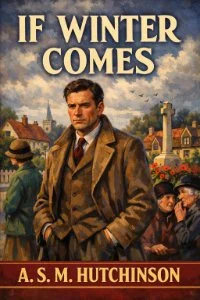
If Winter Comes

By A. S. M. Hutchinson. Introduction by Colin Heston.

When If Winter Comes appeared in 1921, it entered a literary moment marked by exhaustion, reassessment, and a profound unease about the moral and emotional consequences of the First World War. Written by A. S. M. Hutchinson, the novel achieved immediate popularity on both sides of the Atlantic, resonating with readers who recognized in its restrained drama a faithful portrait of postwar disillusionment. Today, the book stands as one of the most representative middle-class English novels of the early 1920s, combining psychological realism with a quietly devastating critique of social conformity.

At the center of If Winter Comes is Mark Sabre, a man neither heroic nor villainous, but painfully ordinary—an embodiment of the conscientious, educated Englishman caught between private integrity and public expectation. Sabre’s tragedy unfolds not through sensational events but through accumulated compromises: the erosion of affection within marriage, the pressures of respectability, and the moral cowardice of a community that prizes appearances above truth. Hutchinson’s great achievement is to dramatize these pressures with such precision that the reader comes to see how social cruelty can be enacted without overt malice, simply through silence, gossip, and moral indifference.

The novel reflects a society struggling to redefine itself after catastrophe. Although the war remains largely offstage, its psychological presence is unmistakable. Characters speak and act as if something fundamental has been broken: faith in institutions, confidence in moral authority, and trust in traditional roles. Hutchinson does not frame this as a generational revolt, as some of his modernist contemporaries did, but rather as a slow moral suffocation. The England of If Winter Comes is orderly, polite, and profoundly unforgiving—a place where deviation from accepted norms is punished less by law than by social annihilation.

Stylistically, Hutchinson occupies a middle ground between Edwardian realism and the emerging psychological novel. His prose is clear, controlled, and often deceptively simple. Sentiment is present, but carefully disciplined; emotional climaxes arise organically from character rather than authorial intrusion. This restraint partly explains the book’s enduring power. Hutchinson trusts the reader to perceive the cruelty embedded in everyday interactions and to grasp the cumulative weight of small injustices. The result is a novel that feels at once intimate and inexorable.

Equally important is Hutchinson’s treatment of marriage and masculinity. Mark Sabre is not undone by vice or ambition but by a moral rigidity that prevents him from acting decisively in his own defense. In this sense, If Winter Comes anticipates later twentieth-century explorations of male emotional paralysis. Sabre’s passivity—his belief that decency alone will protect him—proves to be a fatal misconception. Hutchinson exposes how a culture that rewards restraint and silence can become complicit in personal destruction.

Upon publication, the novel’s success was amplified by its adaptation into a widely seen stage play and later film versions, cementing its reputation as a defining postwar narrative. Yet its popularity should not obscure its seriousness. Beneath its accessible surface lies a sharp moral inquiry into responsibility, courage, and the cost of social obedience. Hutchinson does not offer easy consolation; the title itself suggests a stoic endurance rather than renewal, implying that survival may require a reckoning with loss rather than its denial.

Read today, If Winter Comes remains strikingly contemporary. Its depiction of reputational ruin, public shaming, and institutional indifference speaks to modern anxieties about social judgment and moral isolation. Hutchinson’s novel reminds us that cruelty need not be loud to be lethal, and that the gravest tragedies often occur not in moments of drama but in the long, quiet seasons of neglect. As such, this book endures not merely as a historical artifact of postwar Britain, but as a timeless study of how societies fail their most conscientious members when compassion yields to convention.

Came a Cavalier

By Frances Parkinson Keyes

Came a Cavalier by Frances Parkinson Keyes is a sweeping historical romance set against the backdrop of two world wars. The novel explores themes of resilience, identity, and the transformative power of love. At its heart is Constance “Connie” Galt, a young woman whose life is reshaped by personal betrayal and the chaos of global conflict. Her journey begins with heartbreak, which propels her into service with the American Red Cross in France during World War I. This experience becomes a crucible for her character, forcing her to confront suffering and loss while discovering inner strength and purpose.

The story delves deeply into the theme of personal growth through adversity. Connie’s evolution from a disillusioned college student to a confident, compassionate woman mirrors the broader societal shifts of the early twentieth century. Her relationships—first with Duncan Craig, an American doctor, and later with Tristan de Fremond, a French cavalry officer—highlight the tension between security and passion, as well as the cultural contrasts between America and Europe during wartime.

Historically, the novel captures the atmosphere of wartime France with vivid detail, from the scarcity and danger of the front lines to the elegance and traditions of the French aristocracy. It reflects the impact of war on both individuals and nations, portraying how global upheaval can dismantle old social orders while creating new opportunities for connection and renewal. The narrative also touches on themes of honor and duty, embodied in Tristan’s role within the prestigious Cadre Noir, and contrasts these ideals with the pragmatic realities of survival and love in times of uncertainty.

Ultimately, Came a Cavalier is not just a romance but a meditation on courage, endurance, and the human capacity for reinvention. It situates personal drama within the grand sweep of history, offering readers both an intimate love story and a rich portrait of a world in transition.

Julian Messner, Inc. NY. 1947. Read-Me.Org Inc. New York-Philadelphia-Australia. 2025. 437p.

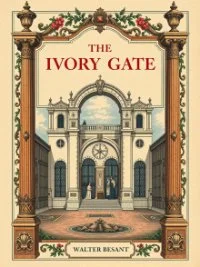
The Ivory Gate

By Walter Besant. Introduction by Colin Heston.

First published in 1893, The Ivory Gate stands among the late novels of Walter Besant, a writer whose career was defined by a sustained engagement with the moral, social, and psychological pressures of modern urban life. Appearing at the close of the Victorian era, the novel reflects both Besant’s long-standing commitment to social realism and his increasing interest in the interior life of the individual—especially the fragile boundary between aspiration and illusion.
The title itself announces the book’s governing metaphor. In classical and medieval literature, the “ivory gate” is the passage through which false dreams pass into waking life, as opposed to the gate of horn, from which true dreams emerge. Besant adapts this image to late-nineteenth-century conditions, using it to explore the seductive power of unrealized hopes, romantic delusions, and social fantasies that shape—and often distort—human conduct. The novel is less concerned with overt villainy than with self-deception: the quiet, persistent capacity of individuals to misread their circumstances and to substitute imagined futures for lived realities.
For modern readers, the novel remains strikingly relevant. Its exploration of illusion, self-fashioning, and the tension between inner fantasy and external reality resonates with contemporary concerns about identity, expectation, and social pressure. While its Victorian idiom and moral framework are firmly rooted in the nineteenth century, its psychological insights anticipate later treatments of self-deception and emotional displacement.
This new edition invites readers to reconsider The Ivory Gate not simply as a period piece, but as a thoughtful and understated meditation on the human tendency to live in dreams of our own making. In tracing the quiet tragedies that arise when those dreams eclipse judgment, Besant offers a work of enduring moral seriousness—one that illuminates both the anxieties of his age and the persistent vulnerabilities of our own.

A READ-ME.ORG CLASSIC REPRINT. New York-Philadelphia-Australia. 2025. 321p.

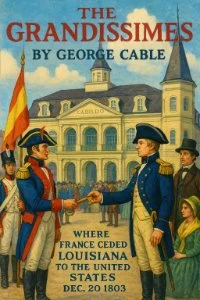
The Grandissimes: A Story of Creole Life

By George W. Cable

The Grandissimes: A Story of Creole Life stands among the most vivid and penetrating literary portraits of early New Orleans—its tangled ancestries, its hierarchies of caste and color, and its rich cultural complexity at the turn of the nineteenth century. First published in 1880, George W. Cable’s novel announced the arrival of a distinctive Southern voice: one capable of blending romance, social critique, historical reconstruction, and an almost anthropological attention to the manners and moral contradictions of Creole society.

Cable, himself native to New Orleans, wrote at a moment when the American public was only beginning to recognize the significance of Louisiana’s unique heritage. The city had passed from French to Spanish control, then back to France, then suddenly into the hands of the United States through the Louisiana Purchase. In Cable’s imagination, this swirl of sovereignties—compounded by the interwoven legacies of France, Spain, Africa, the Caribbean, and Indigenous peoples—created a society unlike any other on the continent. The Grand–issimes dramatizes this world at a moment of profound transition, when old loyalties struggled against the pressures of Americanization, and when the boundaries of race, class, and honor were both fiercely guarded and constantly transgressed.

At its center stands the old Creole family of the Grandissimes, whose branches include both the proud white aristocracy and a free man of color who bears the same name—a blood relationship that must not, in respectable society, be spoken aloud. Through this intricate family history, Cable exposes the contradictions of slavery, the moral compromises of privilege, and the tragic limitations imposed on people of mixed heritage. Yet the novel is anything but a simple moral allegory. Its pages teem with humor, local color, memorable characters, and a richly textured atmosphere that evokes the city’s architecture, dialects, festivals, and customs with unmatched fidelity.

Cable’s realism—rare among Southern writers of his generation—caused both admiration and controversy. His depictions of racial injustice were received with anger in parts of the post-Reconstruction South, and his advocacy for Black civil rights would eventually drive him to relocate to the North. Today, his work is recognized as foundational: a precursor to later explorations of New Orleans identity by Kate Chopin, Lafcadio Hearn, Lyle Saxon, and many others.

This edition of The Grandissimes invites readers to rediscover Cable’s great novel not merely as an historical document but as a living work of art. Its themes of belonging, cultural collision, and the moral weight of inherited systems remain deeply resonant. In tracing the fate of a family—and of a city—at a crossroads, Cable offers a vision both critical and compassionate, illuminating a world whose complexities still echo through the streets of New Orleans today.

Read-Me.Org Inc. New York-Philadelphia-Australia. 2025. p.248.

The Inner Beams

By Afshin rad

The document The Inner Beams by Afshin Rad is a historical novel set in East Berlin during the final years of the Cold War, focusing on the brutal atmosphere created by the East German Ministry of State Security, the Stasi. The narrative combines political history with a deeply personal story, illustrating how authoritarianism corrodes ordinary lives. It opens with a preface explaining the power and reach of the Stasi, an organization that employed nearly a hundred thousand agents and twice as many informants under the chilling slogan that anyone who “thinks differently” is an enemy.

The story follows Nadia, a young, marginalized woman surviving on the fringes of society through prostitution while raising her daughter Maya. Despite her poverty, stigmatization, and abuse at the hands of neighbors and strangers, she displays resilience and a rebellious spirit. Her life becomes entangled with the violence and hypocrisy of both the state and the church. She is alternately vilified and desired, caught between accusations of being a spy and exploitation by priests who hide their own corruption.

As events unfold, Nadia becomes a victim of the Stasi’s cruelty. She is imprisoned, tortured, and left for dead, only to be saved by a compassionate old man who hides her and helps her plan to reclaim her daughter, who has been taken by Party officials. Their efforts culminate in a daring but tragic attempt to rescue the child from a powerful regime family. The old man sacrifices his life to protect Nadia, while she herself endures near-death encounters in the collapsing state.

Against the backdrop of the Berlin Wall’s fall and the chaos of 1989, Nadia’s fate is sealed in both tragedy and symbolic triumph. Though she dies violently, her memory and sacrifice become a posthumous inspiration. Her grave, once marked with disdain, is later reclaimed as a shrine to freedom, with an epitaph honoring her rebellious spirit.

The work blends history, fiction, and allegory to show how individuals—especially the marginalized and forgotten—resist oppression and become unwilling martyrs of liberty. Through Nadia’s story, the book captures the human cost of totalitarianism while leaving readers with a sense of dignity, defiance, and the enduring value of freedom.

Read-Me.Org Inc. New York-Philadelphia-Australia. 2025. 77p.

The Count Of Monte-Cristo: Volume Two


By Alexandre Dumas (Author), G. Staal (Illustrator), J.A. Beauce (Illustrator), & 2more Format: Kindle Edition

Few novels have captured the imagination of readers across generations as powerfully as The Count of Monte Cristo. First published in 1844, this sweeping tale of betrayal, revenge, and redemption is the work of Alexandre Dumas, one of France’s most celebrated literary figures. Set against the backdrop of post-Napoleonic France, the novel follows the transformation of Edmond Dantès, a young sailor whose promising future is shattered by the treachery of those he trusted. Wrongfully imprisoned in the Château d’If, Dantès emerges years later not as the man he once was, but as the enigmatic and wealthy Count of Monte Cristo—determined to exact justice on those who wronged him. At once a thrilling adventure and a profound exploration of human nature, The Count of Monte Cristodelves into themes of vengeance, justice, mercy, and the enduring power of hope. Dumas weaves a rich tapestry of characters and subplots, each contributing to the novel’s intricate moral landscape. His storytelling is both grand in scope and intimate in detail, offering readers a journey that is as emotionally resonant as it is exhilarating.
This two volume edition is based on the five volume 1888 English edition. It retains all text as in the original and includes most of the illustrations preserving the spirit and elegance of Dumas’s original edition, while making the novel accessible to contemporary readers. This version is most likely that of an anonymous translator who translated the work from the French for the publisher Chapman and Hall in 1846. There have been many translations in dozens of languages, and some in the 20th century basically rewriting the novel in modern prose and almost always considerably abridged.

Read-Me.Org Inc. New York-Philadelphia-Australia. 2025. 501 p.

The Count Of Monte-Cristo: Volume One


By Alexandre Dumas (Author), G. Staal (Illustrator), J.A. Beauce (Illustrator), & 2more Format: Kindle Edition

Few novels have captured the imagination of readers across generations as powerfully as The Count of Monte Cristo. First published in 1844, this sweeping tale of betrayal, revenge, and redemption is the work of Alexandre Dumas, one of France’s most celebrated literary figures. Set against the backdrop of post-Napoleonic France, the novel follows the transformation of Edmond Dantès, a young sailor whose promising future is shattered by the treachery of those he trusted. Wrongfully imprisoned in the Château d’If, Dantès emerges years later not as the man he once was, but as the enigmatic and wealthy Count of Monte Cristo—determined to exact justice on those who wronged him. At once a thrilling adventure and a profound exploration of human nature, The Count of Monte Cristodelves into themes of vengeance, justice, mercy, and the enduring power of hope. Dumas weaves a rich tapestry of characters and subplots, each contributing to the novel’s intricate moral landscape. His storytelling is both grand in scope and intimate in detail, offering readers a journey that is as emotionally resonant as it is exhilarating.
This two volume edition is based on the five volume 1888 English edition. It retains all text as in the original and includes most of the illustrations preserving the spirit and elegance of Dumas’s original edition, while making the novel accessible to contemporary readers. This version is most likely that of an anonymous translator who translated the work from the French for the publisher Chapman and Hall in 1846. There have been many translations in dozens of languages, and some in the 20th century basically rewriting the novel in modern prose and almost always considerably abridged.

Read-Me.Org Inc. New York-Philadelphia-Australia. 2025. 456 p.

Round Up: The Stories Of Ring W. Lardner

By Ring W. Gardner (Author), Colin Heston (Preface) Format: Kindle Edition

Round Up gathers together the taut, muscular stories of Ring W. Lardner, a writer whose work bridges the divide between the mythologized West and its harsher, less forgiving realities. In these pages, Lardner is neither sentimental nor nostalgic. He strips the Western narrative to its barest elements, presenting us with a landscape that is both expansive and claustrophobic, and characters who are caught between the lure of freedom and the inevitability of fate.
Lardner’s contribution to the American short story lies in his ability to invest the familiar tropes of frontier life with psychological depth and moral ambiguity. His cowboys and ranchers are not mere archetypes; they are restless souls negotiating loyalty, isolation, and survival in a world where law and justice are provisional at best. The violence in these stories is never gratuitous—it is sudden, often senseless, and always carries a human cost. Lardner understands that the West was not only a place but also an idea, one that promised reinvention yet often delivered ruin.
What sets Lardner apart from many of his contemporaries is his prose: terse, unsentimental, yet charged with a quiet lyricism. His narratives move with the inevitability of a gathering storm, his dialogue as spare as the plains he describes. The result is a body of work that feels astonishingly modern in its refusal of easy resolutions.
In an era when the Western genre risks being dismissed as an artifact of popular culture, Round Up demands reconsideration. These are not mere adventure tales or moral fables. They are stories of a liminal world, where the boundaries between civilization and wilderness, justice and vengeance, myth and memory, blur and collapse. Lardner’s West is not simply the West that was; it is also the West as it continues to haunt the American imagination.

Vittoria


By George Meredith (Author), Colin Heston (Introduction)

Vittoria, published in 1867, is one of George Meredith’s most ambitious historical novels and serves as a sequel to his earlier work Sandra Belloni (originally titled Emilia in England). While Sandra Belloni explored the struggles of an Italian-born heroine within the confines of English provincial society, Vittoria shifts the scene entirely to Italy during one of the most turbulent and significant periods of the 19th century—the Italian Risorgimento, the movement for national unification and independence from foreign rule.
In Vittoria, Meredith combines the personal and the political, weaving a narrative in which the inner development of the heroine, Vittoria, mirrors the aspirations and tumult of the Italian national cause. The novel is set during the events of 1848, a year of revolutionary fervor across Europe, when Italy was in the throes of armed uprisings against Austrian dominance. Through the story of Vittoria, a gifted opera singer who becomes involved in the nationalist struggle, Meredith addresses questions of patriotism, duty, identity, and the costs of freedom. Ultimately, Vittoria is a novel about courage—the courage to defy oppression, to embrace love in the face of danger, and to live a life that is aligned with one’s highest convictions. It is both a stirring narrative of revolution and an enduring meditation on the responsibilities that come with freedom. For readers willing to engage with its intellectual demands, Vittoria offers a richly rewarding experience—a testament to Meredith’s belief that literature should challenge as well as enlighten.

Read-Me.Org Inc. New York-Philadelphia-Australia. 2025. 358p.

The Shaving Of Shagpat

By George Meredith (Author)

Set in an imaginary Oriental landscape, The Shaving of Shagpat follows the humble barber Shibli Bagarag, who embarks on an epic quest to perform the symbolic and dangerous act of shaving Shagpat—a powerful figure whose enchanted, unshorn hair represents the tyranny of falsehood and delusion over the minds of men. The narrative is populated with genies, enchantresses, magical cities, and perilous tasks, weaving a tapestry of adventure that operates on both the literal and allegorical planes. At first glance, The Shaving of Shagpat appears to be a whimsical fantasy—an exotic romance filled with the familiar trappings of Eastern fable. Yet beneath the surface lies a sophisticated commentary on the nature of truth, illusion, and the moral evolution of the individual. Meredith uses the framework of fantasy not merely to entertain but to craft a parable about the necessity of intellectual courage and the struggle for personal enlightenment.

For contemporary readers, the book remains a fascinating artifact of literary daring—a playful yet profound reminder that the struggle against illusion, whether in the form of personal vanity or societal falsehood, is both eternal and essential. In The Shaving of Shagpat, Meredith offers not only an enchanting fable but also an enduring meditation on the human condition.

Read-Me.Org Inc. New York-Philadelphia-Australia. 2025. 242p.

The Egoist


By George Meredith (Author), Colin Heston (Introduction)

George Meredith’s “The Egoist” is widely regarded as one of his most accomplished and mature works, combining his characteristic wit, psychological depth, and social critique into a sharp and satirical narrative. Published in 1879, this novel represents a pinnacle in Meredith’s literary philosophy—his commitment to using fiction not merely as entertainment but as a vehicle for exploring human character, societal expectations, and the subtle dynamics of personal relationships. In many ways, “The Egoist” functions both as a comedy of manners and as a profound psychological study, holding a mirror up to the follies and vanities of Victorian society.
At the heart of “The Egoist” lies a central theme that preoccupied Meredith throughout his literary career: the tension between individual selfhood and the demands of others—particularly within the confines of marriage and social conventions. The story revolves around Sir Willoughby Patterne, a wealthy and charming yet profoundly self-absorbed gentleman, whose narcissism forms the axis upon which the novel’s drama turns. Meredith describes him as a man who regards others merely as extensions of his own identity, whose self-love blinds him to the autonomy, desires, and inner lives of those around him. Willoughby’s egoism is not the mere arrogance or pride commonly depicted in fiction but is an all-encompassing psychological state—a subtle, insidious failure of empathy and moral imagination.
In conclusion, “The Egoist” is more than a satire of a single narcissistic man; it is a brilliant dissection of the subtle forces that govern human relationships. Through its precise psychological characterization, sharp wit, and philosophical depth, the novel transcends its Victorian context to speak to enduring questions about identity, autonomy, and the ethical demands of living among others. Its challenge to readers remains as relevant today as it was in 1879: to recognize, confront, and transcend the egoisms that so often distort both personal and social life.
Read-Me.Org Inc. New York-Philadelphia-Australia. 2025. 441p..

The Poetry Of George Meredith

By George Meredith (Author), Colin Heston (Introduction) Format: Kindle Edition

George Meredith’s poetry stands as one of the most intellectually challenging and idiosyncratic contributions to Victorian literature. Published in 1888 by Macmillan and Co., The Poetry of George Meredith collects his poetic output into a single volume, offering readers a comprehensive view of a body of work that was often overshadowed by his accomplishments as a novelist. While Meredith’s fiction earned him widespread recognition during his lifetime, his poetry was a more private, cerebral pursuit—revered by literary peers but frequently misunderstood or overlooked by the broader reading public.
To approach Meredith’s poetry is to enter a realm where language serves not merely as ornament but as a crucible for thought. His verse rejects the lush musicality and emotional immediacy typical of many of his contemporaries in favor of a dense, elliptical style that demands intellectual engagement. Meredith himself was acutely aware of how unconventional his poetic voice was, famously describing his work as being written for those “whose heads are used to thinking.” His lines often eschew smoothness for compression, sacrificing surface harmony in pursuit of precision, depth, and psychological or philosophical insight.

Read-Me.Org Inc. New York-Philadelphia-Australia. 2025. 501p.

Sandra Belloni

By George Meredith. Designed and Edited with an Introduction by Colin Heston.

Sandra Belloni, first published in 1864 under the title Emilia in England, occupies a distinctive place in the literary corpus of George Meredith. It represents one of his earliest extended efforts to merge the comic novel with a more pointed social critique, a technique that would become a hallmark of his mature style. This novel, rich in subtle irony and psychological insight, grapples with the tensions between individuality and conformity, art and social convention, and the constraints of class and gender in Victorian England. At its heart, it is a narrative about a young woman of Italian descent, Emilia Belloni, whose musical gifts and unorthodox spirit clash with the expectations of the rigid English society into which she is thrust.

Meredith uses Emilia’s character not merely as a protagonist but as a symbolic figure—an embodiment of passionate sincerity, artistic freedom, and the disruptive power of the outsider. Emilia’s foreignness is not just ethnic; it is deeply cultural and emotional. Her instincts are governed by feeling and a commitment to truth, which repeatedly brings her into conflict with the carefully cultivated hypocrisies and social facades of the English middle and upper classes. Through her, Meredith examines the ways in which English society suppresses emotional authenticity in favor of propriety and self-interest.

In reading Sandra Belloni today, one encounters not only a portrait of Victorian society in all its contradictions but also an enduring exploration of the universal struggle between the self and society, between the voice that seeks to sing freely and the forces that would silence it. It is a novel that resonates beyond its historical moment, inviting readers to reflect on the costs and necessities of remaining true to oneself in the face of overwhelming pressure to conform.

Read-Me.Org Inc. New York-Philadelphia-Australia. 2025. 318p.

The Adventures Of Harry Richmond

By George Meredith. Designed and Edited with an Introduction by Colin Heston

The Adventures of Harry Richmond, first published in serial form between 1870 and 1871, then in full in 1871, occupies a fascinating place in the evolution of the English novel. A heady mixture of picaresque adventure, coming-of-age narrative, satire, romance, and psychological study, it is one of George Meredith’s most ambitious works. Beneath its surface as a lively and sometimes eccentric tale of a young man’s escapades lies an intricate meditation on the construction of identity, the conflict between appearance and reality, and the profound influence of family, class, and society. These themes connect the novel powerfully to concerns that dominate modern fiction.

At its core, Harry Richmond examines how identity is not simply inherited but assembled—through choice, resistance, deception, and chance. Harry Richmond is born into a web of conflicting influences: his father, Roy Richmond, is a charming but unscrupulous social climber whose life revolves around maintaining appearances and manipulating social structures; his grandfather, Squire Beltham, represents a rigid, landed English respectability that is both moralistic and emotionally cold. Caught between these poles, Harry’s life becomes a journey to define himself outside the narrow confines of these competing legacies.

Read-Me.Org Inc. New York-Philadelphia-Australia. 2025. 355p.