Open Access Publisher and Free Library
Fiction+Mediajpg.jpg

FICTION and MEDIA

CRIME AND MEDIA — TWO PEAS IN A POD

Cop this Lot

By Nino Culotta

From the cover: Cop This Lot by Nino Culotta (John O’Grady) is the hilarious sequel to the well-known They’re a Weird Mob. In Cop This Lot we enjoy once more the magnificent humour that comes from genuine Australian dialogue, and the lovable charac­ter of Nino, the friendly Italian migrant bent on becoming a 'dinkum Aussie’. A new note of hilarity is reached when Nino’s workmates, Joe and Dennis, accompany him on a visit to Nino’s parents in Italy. Their struggles with the Continental way of life enable Nino to get his own back, and provide countless laughs for the reader. Illustrated by WEP

Sydney. Ure Smith. 1960. 216p.

read
Chicago Manual of Style 13th Edition

Prepared by the Editorial Staff of the University of Chicago Press.

For over seventy-live years the University of Chicago Press Manual of Style has been the standard reference tool for authors, editors, copywriters, and proofreaders. Updated many times since 1906, it now goes into its thirteenth edition—the first revision since 1969, and the first to introduce a change in title. Bowing to what has become nearly universal usage, we now call the Manual what everybody else calls it. The Chicago Manual of Style—or, for short, The Chicago Manual.

Two pervasive features characterize the present edition: it reflects the impact of the new technology on the entire editing and publishing process, and it spells out, in greater detail and with many more examples, the procedures with which it deals. It is, in short, much more a “how-to” book for authors and editors than was its predecessor. In chapter 2, on manuscript preparation and copyediting, for example, new sections have been added on how to mark a manuscript and how to mark type specifications on a script. Chapter 12 (“Tables”), completely rewritten, begins with advice on how to make a table from raw data. Chapters 15 through 17, on documentation, have been reorganized and greatly expanded, offering many more alternative methods of citation and a wealth of examples. In chapter 18 (“Indexes”), clear step-by-step
procedures for the mechanics of index making are set forth. The terminology and methodology of technological advances (in word processing, computerized electronic typesetting, and the like) are reflected most prominently in chapter 20, “Composition, Printing, and Binding” (new to this edition), and in the Glossary. Other notable features of the present edition are chapter 4 (“Rights and Permissions”), rewritten in light of the new copyright law, and chapter 9 (“Foreign Languages”), which includes a new table of diacritics, a pinyin (Chinese) conversion chart, and data on several more languages.

Throughout, The Chicago Manual aims to give clear and straightforward guidelines for preparing and editing copy—with the emphasis on the sensible, the practical, and the economical. As did its predecessors, the thirteenth edition of the Manual states the style preferences of the University of Chicago Press and reflects the current practices and requirements of the great majority of American publishers.

Chicago. University of Chicago Press. 1982. 718p.

read
Cancer Ward

By Aleksandr Solzhenitsyn.

From the jacket: Cancer Ward, which has been compared to the master­piece of another Nobel Prize winner, Thomas Mann's The Magic Mountain,examines the relationships of a group of people in a provincial Soviet hospital in 1955, two years after Stalin's death. Through their stories, Aleksandr Solzhenitsyn has created a vivid portrait of life in the So­viet Union. Alexsandr Solzhenitsyn, winner of the 1970 Nobel Prize in Literature, was born in 1918. In 1945, while a captain in the Soviet Army, he was arrested—for criticiz­ing Stalin in a letter to a friend—and sentenced to an eight-year term in a labor camp and permanent exile. In exile, he became a patient in a cancer ward, and later re­covered. Although he was allowed to publish One Day in the Life of Ivan Denisovich in 1962, Solzhenitsyn was expelled from the Soviet Writers Union in 1969. When the KGB discovered the manuscript of The Gulag Archi­pelago, it became imperative for Solzhenitsyn to have the book published in the West. The authorities retaliated in 1974 by exiling him from the Soviet Union. He settled in the United States in 1976 and now lives in Vermont.

NY. Farrar, Straus and Giroux. 1968. 630p.

read
Aesop's Fables

Translated Into English By Samuel Croxall.

This version is beautifully illustrated and contains “New applications, Morals etc. by the Rev. Geo. Tyler Townsend, editor of the “Arabian Nights’ Entertainments.” Eighty original Illustratiiona.

London” Frederick Warne and Co. Strand. ca. 1885. 161p.

download
The Politics of Social Media Manipulation

Edited by Richard Rogers and Sabine Niederer

Disinformation and so-called fake news are contemporary phenomena with rich histories. Disinformation, or the willful introduction of false information for the purposes of causing harm, recalls infamous foreign interference operations in national media systems. Outcries over fake news, or dubious stories with the trappings of news, have coincided with the introduction of new media technologies that disrupt the publication, distribution and consumption of news -- from the so-called rumour-mongering broadsheets centuries ago to the blogosphere recently. Designating a news organization as fake, or <i>der Lügenpresse</i>, has a darker history, associated with authoritarian regimes or populist bombast diminishing the reputation of 'elite media' and the value of inconvenient truths. In a series of empirical studies, using digital methods and data journalism, the authors inquire into the extent to which social media have enabled the penetration of foreign disinformation operations, the widespread publication and spread of dubious content as well as extreme commentators with considerable followings attacking mainstream media as fake.

Amsterdam: Amsterdam University Press, 2020. 257p.

download
Crime and Punishment

By Fyodor Dostoevsky Translated By Constance Garnett

“Dostoevsky says: “They snapped words over our heads, and they made us put on the white shirts worn by persons condemned to death. Thereupon we were bound in threes to stakes, to suffer execution. Being the third in the row, I concluded I had only a few minutes of life before me. I thought of you and your dear ones and I contrived to kiss Plestcheiev and Dourov, who were next to me, and to bid them farewell. Suddenly the troops beat a tattoo, we were unbound, brought back upon the scaffold, and informed that his Majesty had spared us our lives.” The sentence was commuted to hard labour. One of the prisoners, Grigoryev, went mad as soon as he was untied, and never regained his sanity.” (From the introduction).

Modern Library. 1954. 529p

read
Read-Me.Org
Crime Fiction and the Law

Edited by Maria Aristodemou; Fiona Macmillan; Patricia Tuitt

This book opens up a range of important perspectives on law and violence by considering the ways in which their relationship is formulated in literature, television and film. Employing critical legal theory to address the relationship between crime fiction, law and justice, it considers a range of topics, including: the relationship between crime fiction, legal reasoning and critique; questions surrounding the relationship between law and justice; gender issues; the legal, political and social impacts of fictional representations of crime and justice; post-colonial perspectives on crime fiction; as well as the impact of law itself on the crime fiction’s development. Introducing a new sub-field of legal and literary research, this book will be of enormous interest to scholars in critical, cultural and socio-legal studies, as well as to others in criminology, as well as in literature.

Abingdon, Oxon, OX; New York: Birkbeck Law Press; 2017. 181p.

download
Philosophies of Crime Fiction

By Josef Hoffmann

Josef Hoffmann covers influences and inspirations in crime writing with references to a stellar cast of crime writers including Arthur Conan Doyle, G. K. Chesterton, Dashiell Hammett, Albert Camus, Borges, Agatha Christie, Raymond Chandler, and Ted Lewis. Hoffmann examines why crime literature may provide stronger consolation for readers than philosophy. In so doing, he demonstrates the truth of Wittgenstein's claim that more wisdom is contained in the best crime fiction than in philosophical essays. Josef Hoffmann's combination of knowledge, academic acuity, and enthusiasm makes this a must-have book for any crime fiction aficionado—with or without a philosophical nature.

Harpenden, Herts, UK: No Exit Press, 2013. 192p.

download
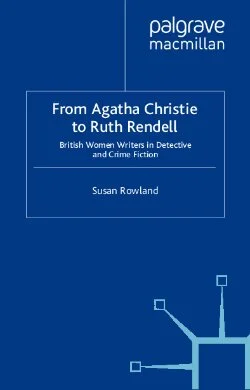
From Agatha Christie to Ruth Rendell: British Women Writers in Detective and Crime Fiction

From Agatha Christie to Ruth Rendell: British Women Writers in Detective and Crime Fiction

By Susan Rowland

From Agatha Christie to Ruth Rendell is the first book to consider seriously the hugely popular and influential works of Agatha Christie, Dorothy L. Sayers, Margery Allingham, Nag Marsh, P.D. James and Ruth Rendell/Barbara Vine. Providing studies of 42 key novels, this volume introduces these authors for students and the general reader in the context of their lives, and of critical debates on gender, colonialism, psychoanalysis, the Gothic, and feminism. It includes interviews with P.D. James and Ruth Rendell/Barbara Vine.
Palgrave macmillan, 2000. 232p.

download
Deviance in Contemporary Crime Fiction

By Christiana Gregoriou

This book explores the three aspects of deviance that contemporary crime fiction manipulates: linguistic, social, and generic. Gregoriou conducts case studies into crime series by James Patterson, Michael Connelly and Patricia Cornwell, and investigates the way in which these novelists correspondingly challenge those aforementioned conventions.

Houndmills, Basingstoke, Hampshire; New York: Palgrave Macmillan, 2007. 189p.

download
Shakespearean Allusion in Crime Fiction: DCI Shakespeare

By Lisa Hopkins

This book explores why crime fiction so often alludes to Shakespeare. It ranges widely over a variety of authors including classic golden age crime writers such as the four ‘queens of crime’ (Allingham, Christie, Marsh, Sayers), Nicholas Blake and Edmund Crispin, as well as more recent authors such as Reginald Hill, Kate Atkinson and Val McDermid. It also looks at the fondness for Shakespearean allusion in a number of television crime series, most notably Midsomer Murders, Inspector Morse and Lewis, and considers the special sub-genre of detective stories in which a lost Shakespeare play is found. It shows how Shakespeare facilitates discussions about what constitutes justice, what authorises the detective to track down the villain, who owns the countryside, national and social identities, and the question of how we measure cultural value.

London; New York: Palgrave Macmillan, 2016. 211p.

download
A Christmas Carol

By Charles Dickens

Illustrations by John Leech. Probably Dickens’s best known work, certainly a permanent fixture every Christmas. Feuding with his publishers, Dickens financed the publishing of the book himself, ordering lavish binding, gilt edging, and hand-colored illustrations and then setting the price at no more than five shillings. This combination resulted in disappointingly low profits despite high sales.

Chapman and Hall. (1843) 101 pages.

download
fictionRead-Me.Orgchristmas
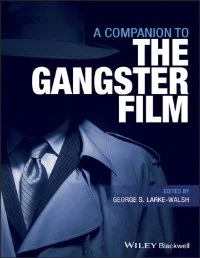
A Companion To The Gangster Film

Edited by George S. Larke-Walsh

Gangster films have consistently been one of America’s most popular genres. In 1954, Robert Warshow calls their protagonists the logical development of the myth of the Westerner and suggests they “appeal to that side of us which refuses to believe in the normal possibilities of happiness and achievement” (454). Earlier, in 1946, Warshow had stated a gangster’s “tragic flaw” as their refusal to accept limitations, thus arguing the inevitability of their downfall in every film. As such, gangsters are symbols of freedom and selfexpression, but with a concurrent inability to control their impulses. Warshow’s descriptions provide easily understood and pragmatic reasons for the gangster’s appeal, and consequently these two analyses have dominated responses and writings about the gangster film ever since their mid century publication.

Gangster films are unique in comparison to other crime films, because they are not narratives about petty criminals, mentally disturbed serial killers, or individuals on a crime spree. They are narratives about organization, about loyalties and betrayals, and about success or failure; achievement is often measured simply through an individual’s ability to survive their environment. Cinematic gangsters don’t have lives outside of their profession; they don’t have the ability to walk away from their criminal identities. In these ways, the gangster genre is much more than just a type of crime film Warshow calls their protagonists the logical development of the myth of the Westerner and suggests they “appeal to that side of us which refuses to believe in the normal possibilities of happiness and achievement”

Hoboken, NJ: Wiley-Blackwell, 2018. 567p.

download
American Gangster Cinema: From Little Caesar to Pulp Fiction

By Fran Mason

Much analysis of gangster movies has been based upon a study of the gangster as a malign figuration of the American Dream, originally set in the era of the Depression. This text extends previous analysis of the genre by examining the evolution of gangster movies from the 1930s to the contemporary period and by placing them in the context of cultural and cinematic issues such as masculinity, consumerism and technology. With a close examination of many films from Scarface and Public Enemy to Reservoir Dogs and Pulp Fiction , this book provides a fascinating insight into a topical and popular subject.

Basingstoke, Hampshire. UK; New York: Palgrave Macmillan, 2002. 203p.

download
Gangsters and G-men on Screen: Crime Cinema Then and Now

By Gene D. Phillips

In this book, noted film and literature scholar Gene D. Phillips looks at the crime film genre. In addition to the usual suspects like Little Caesar, and The Godfather Part II, which he examines with a fresh perspective, Phillips also calls attention to some of the less heralded but no less worthy films and filmmakers that represent the genre.;The rise of the gangster film -- Little Caesar and The public enemy -- The story of Temple Drake and No orchids for Miss Blandish -- Dead end and This gun for hire -- Criss cross and White heat -- John Huston's Key Largo and The asphalt jungle -- The lady from Shanghai and The great Gatsby -- Fritz Lang's You only live once and The big heat -- The godfather, part II -- Bonnie and Clyde and The untouchables -- The grifters and The departed -- Dillinger and Public enemies -- Gangster squad (2013) and other films.

Lanham, MD: Rowman & Littlefield, 2014. 191p.

download
Dreams & Dead Ends: The American Gangster Film. Second Edition

By Jack Shadoian

Dreams and Dead Ends provides a compelling history of the twentieth-century American gangster film. Beginning with Little Caesar (1930) and ending with Things To Do In Denver When You're Dead (1995), Jack Shadoian adroitly analyzes twenty notable examples of the crime film genre. Moving chronologically through nearly seven decades, this volume offers illuminating readings of a select group of the classic films--including The Public Enemy, D.O.A., Bonnie and Clyde, and The Godfather--that best define and represent each period in the development of the American crime film. Richly illustrated with more than seventy film stills, Dreams and Dead Ends details the evolution of the genre through insightful and precise considerations of cinematography, characterization, and narrative style.

Oxford, UK; New York: Oxford University Press, 2003. 397p.

Read/Download

The Gangster Film: Fatal Success In American Cinema

By Ron Wilson

This volume examines the gangster film in its historical context with an emphasis on the ways the image of the gangster has adapted and changed as a result of socio-cultural circumstances. From its origins in Progressive-era reforms to its use as an indictment of corporate greed, the gangster film has often provided a template for critiquing American ideas and values concerning individualism, success, and business acumen. The gangster genre has also been useful in critically examining race and ethnicity in American culture in terms of "otherness." Films studied include Musketeers of Pig Alley (1912), The Racket (1928), The Captive City (1952), The Godfather, Part Two (1974), Goodfellas (1990), and Killing Them Softly (2012).

New York: Wallflower Press, 2015. 144p.

download
The Vendetta: Special Agent Melvin Purvis, John Dillinger, And Hoover's FBI in the Age of Gangsters

By Melvin Purvis with Alex Tresniowski

By the end of 1934 Melvin Purvis was, besides President Roosevelt, the most famous man in America. Just thirty-one years old, he presided over the neophyte FBI's remarkable sweep of the great Public Enemies of the American Depression -- John Dillinger; Pretty Boy Floyd; Baby Face Nelson. America finally had its hero in the War on Crime, and the face of all the conquering G-Men belonged to Melvin Purvis. Yet these triumphs sowed the seeds of his eventual ruin. With each new capture, each new headline touting Purvis as the scourge of gangsters, one man's implacable resentment grew. J. Edgar Hoover, Director of the FBI, was immensely jealous of the agent who had been his friend and prot'g', and vowed that Melvin Purvis would be brought down. A vendetta began that would not end even with Purvis's death. For more than three decades Hoover trampled Purvis's reputation, questioned his courage and competence, and tried to erase his name from all records of the FBI's greatest triumphs.

Alston Purvis is Melvin's only surviving son. With the benefit of a unique family archive of documents, new testimony from colleagues and friends of Melvin Purvis and witnesses to the events of 1934, he has produced a grippingly authentic new telling of the gangster era, seen from the perspective of the pursuers. By finally setting the record straight about his father, he sheds new light on what some might call Hoover's original sin -- a personal vendetta that is one of the earliest and clearest examples of Hoover's bitter, destructive paranoia..

New York: Public Affairs, 2009. 400p

read
Read-Me.Org
Paddy Whacked: The Untold Story of the Irish American Gangster

By T.J. English

Here is the shocking true saga of the Irish American mob. In Paddy Whacked, bestselling author and organized crime expert T. J. English brings to life nearly two centuries of Irish American gangsterism, which spawned such unforgettable characters as Mike "King Mike" McDonald, Chicago's subterranean godfather; Big Bill Dwyer, New York's most notorious rumrunner during Prohibition; Mickey Featherstone, troubled Vietnam vet turned Westies gang leader; and James "Whitey" Bulger, the ruthless and untouchable Southie legend. Stretching from the earliest New York and New Orleans street wars through decades of bootlegging scams, union strikes, gang wars, and FBI investigations, Paddy Whacked is a riveting tour de force that restores the Irish American gangster to his rightful preeminent place in our criminal history -- and penetrates to the heart of the American experience.

New York: HarperCollins, 2006. 480p.

read
Read-Me.Org
Claude Melnotte as a Detective, and Other Stories

By Allan Pinkerton

The stories which compose this volume are taken from the author’s original notes on three actual cases, which were placed in his hands several years ago. Whatever else may be said of these tales, they cannot be denied the merit of strict truthfulness ; and it is to this quality, more than to any pretensions to literary excel¬ lence, that the author trusts in presenting them to the public. The patrons of the old Clifton House in Chicago will readily recall the occurrences related in “ Claude Melnotte,” and many of the regular boarders will recognize the characters herein depicted. In some very minor details, a small ingredient of fiction has been introduced, but the accuracy of the story has not been perceptibly affected thereby. It is hardly necessary to state that the names given are all fictitious ; the characters, however, are genuine, and the localities are correctly described. The same is the case with the dramatis persona of the “Two Sisters”; but, for obvious reasons, the scene of the abduction is located at some distance from the town where it actually occurred. The operations of Jules Imbert, “ The Frenchman,” are given literally, without the slightest departure from the facts. (From Preface)

Chicago : W.B. Keen, Cooke & Co. ; Chicago : Lakeside Publishing and Printing Co. 1875. 346p.

download part 1
download part 2
Read-Me.Org