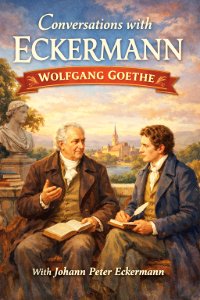
By Johann Peter Eckerman., Johann Wolfgang Von Goethe. Special Preface by Graeme R. Newman
In the final decade of his life, one of Europe’s greatest literary minds opened his door each day to a devoted young writer—and spoke freely. Conversations with Eckermann preserves those remarkable exchanges, offering readers an intimate portrait of Johann Wolfgang von Goethe at the height of his intellectual maturity. Through the attentive record of Johann Peter Eckermann, we witness Goethe reflecting on art, science, politics, poetry, and the destiny of modern culture with candor, wit, and penetrating insight.
These conversations are not formal lectures but living thought—unfolding over dinners, walks, and evenings of discussion. Goethe comments on Shakespeare and Byron, debates the direction of German literature, critiques romantic excess, anticipates the idea of “world literature,” and reveals the disciplines that sustained his own creative genius. The result is a rare literary document: philosophy in motion, cultural criticism in real time, and the inner workshop of a towering mind laid open.
Both intellectually rich and deeply human, Conversations with Eckermann offers more than historical curiosity. It models the art of thinking—measured, expansive, resistant to extremes. For modern readers navigating an age of ideological noise and cultural fragmentation, this classic work remains a masterclass in intellectual clarity, civil discourse, and the enduring power of conversation.
Read-Me.Org Inc. New York-Philadelphia-Australia. 2026. 284p.