
THE LEAGUE OF NATIONS: The Principle and the Practice
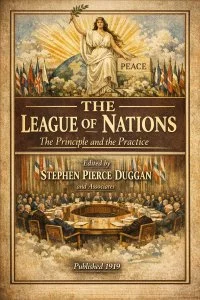
Edited by Stephen Pierce Duggan. Introduction by Graeme R. Newman
A Landmark Vision of International Order at the Dawn of the Modern World
Published in 1919 at the very moment when the post–First World War settlement was taking shape, The League of Nations: The Principle and the Practice, edited by Stephen Pierce Duggan, is one of the most authoritative and illuminating contemporary statements of the ideas that sought to prevent another global catastrophe. Written as the Covenant of the League of Nations moved toward ratification, this volume captures the urgency, optimism, and hard-headed realism of thinkers grappling with the central political question of the twentieth century: how can peace be made durable in a world of sovereign states?
Bringing together leading scholars, jurists, historians, and policy practitioners, the book moves beyond slogans to examine how an international organization must actually function. It explains not only the moral and historical foundations of the League idea, but also its practical machinery—arbitration, sanctions, international administration, and continuous cooperation across borders. Readers are guided through the institutional logic of collective security, the limits of national sovereignty, and the challenges posed by armaments, small nations, and postwar reconstruction.
Distinctive for its clarity and documentary richness, the volume includes key historical texts and the full Covenant of the League itself, allowing readers to engage directly with the constitutional framework of early international governance. Written in accessible but rigorous prose, it was intended for educated citizens as well as specialists—an informed guide for public debate at a decisive historical moment.
Today, The League of Nations: The Principle and the Practice stands as an indispensable primary source for understanding the intellectual foundations of modern global governance. It reveals how the ambitions and anxieties of 1919 shaped later institutions, including the United Nations, and it remains strikingly relevant in an era once again marked by questions of collective security, international law, and global cooperation. For historians, political scientists, legal scholars, and readers interested in the origins of the contemporary international order, this book is both a historical document and a continuing challenge to think seriously about how peace is organized.
The Atlantic Monthly Press. BOSTON. 1919. Read-Me.Org Inc. New York-Philadelphia-Australia. 2025. p.253.