Open Access Publisher and Free Library
HUMAN RIGHTS.jpeg

HUMAN RIGHTS

Human Rights-Migration-Trafficking-Slavery-History-Memoirs-Philosophy

Posts in Weapons
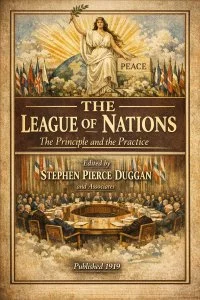
THE LEAGUE OF NATIONS: The Principle and the Practice

Edited by Stephen Pierce Duggan. Introduction by Graeme R. Newman

A Landmark Vision of International Order at the Dawn of the Modern World

Published in 1919 at the very moment when the post–First World War settlement was taking shape, The League of Nations: The Principle and the Practice, edited by Stephen Pierce Duggan, is one of the most authoritative and illuminating contemporary statements of the ideas that sought to prevent another global catastrophe. Written as the Covenant of the League of Nations moved toward ratification, this volume captures the urgency, optimism, and hard-headed realism of thinkers grappling with the central political question of the twentieth century: how can peace be made durable in a world of sovereign states?

Bringing together leading scholars, jurists, historians, and policy practitioners, the book moves beyond slogans to examine how an international organization must actually function. It explains not only the moral and historical foundations of the League idea, but also its practical machinery—arbitration, sanctions, international administration, and continuous cooperation across borders. Readers are guided through the institutional logic of collective security, the limits of national sovereignty, and the challenges posed by armaments, small nations, and postwar reconstruction.

Distinctive for its clarity and documentary richness, the volume includes key historical texts and the full Covenant of the League itself, allowing readers to engage directly with the constitutional framework of early international governance. Written in accessible but rigorous prose, it was intended for educated citizens as well as specialists—an informed guide for public debate at a decisive historical moment.

Today, The League of Nations: The Principle and the Practice stands as an indispensable primary source for understanding the intellectual foundations of modern global governance. It reveals how the ambitions and anxieties of 1919 shaped later institutions, including the United Nations, and it remains strikingly relevant in an era once again marked by questions of collective security, international law, and global cooperation. For historians, political scientists, legal scholars, and readers interested in the origins of the contemporary international order, this book is both a historical document and a continuing challenge to think seriously about how peace is organized.

The Atlantic Monthly Press. BOSTON. 1919. Read-Me.Org Inc. New York-Philadelphia-Australia. 2025. p.253.
download free
Kindle $2.99 -- paperback $10.99
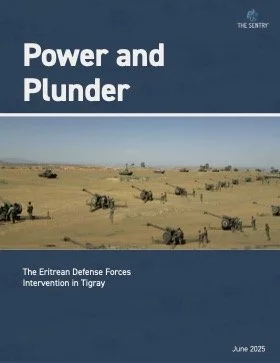
Power and Plunder: The Eritrean Defense Forces Intervention in Tigray

By The Sentry

In November 2018, the United Nations lifted sanctions on Eritrea, including a two-way arms embargo banning both the import and export of arms, after a successful campaign by Eritrea’s longtime rival, Ethiopia. As Eritrean President Isaias Afwerki and Ethiopian Prime Minister Abiy Ahmed Ali began to reestablish ties, having signed a formal peace agreement in September 2018, hope was high that this reset of regional relations would provide long-term security. That hope quickly faded as increasingly secret talks resulted in the military encirclement of Ethiopia’s Tigray region.

In the absence of the UN’s two-way arms embargo, the Eritrean Defense Forces (EDF) reequipped and rearmed, while its senior officers conspired with the newly configured Ethiopian security apparatus to launch the Tigray War in late 2020. The EDF played a prominent and highly problematic role in that conflict, committing atrocities in a campaign of collective punishment against the people of Tigray, at great human cost.

The Tigray War resulted in a humanitarian crisis of immense proportions. War crimes were perpetrated by all parties to the conflict, but the nature of atrocities and war profiteering carried out by the EDF was unmatched in scale and premeditation. The EDF engaged in massacres, widespread sexual violence, and systematic looting, including of Tigrayan factory machinery, medical supplies and equipment, and cultural antiquities.

Since the signing of the 2022 Pretoria Agreement that marked the end of the Tigray War, the EDF has continued to occupy territory within Ethiopia. Eritrean military commanders and their agents within Ethiopia continue to profit from a conflict economy, including through human trafficking, kidnapping, and illicit gold mining.

In the meantime, Eritrean President Isaias Afwerki has emerged as the clear winner of the new status quo, as Ethiopia’s fragile federal coalition continues to struggle with widespread disorder. With Russia emerging as a key military ally in the post-embargo landscape, the EDF now has few constraints on its continued rearmament. For Eritrea’s leadership, the new state of “no war, no peace” is proving advantageous.

Key recommendations

As a matter of urgent conflict prevention, the United States, European Union, United Kingdom, and other like-minded jurisdictions need to send a clear message to the Ethiopian government, the Eritrean government, the Tigrayan People’s Liberation Front (TPLF), and the Tigray Interim Administration (TIA) that they will face an escalated international response and sanctions if there is a resumption of conflict.

The US, the EU, and the UK should consider designating Eritrean Defense Forces Brigadier General Eyob Fessehaye (aka Halibay), Brig. Gen. Simon Oqbu (aka Riesi Mirak), and Maj. Gen. Romadan Osman Awliya for their responsibility for human rights violations in Tigray.

The UN Security Council should determine that Ethiopia-Eritrea border issues—including unimplemented components of the November 2, 2022, Pretoria peace agreement—constitute a threat to international peace and security, and it should thus establish a panel of enquiry with a Chapter VII mandate to monitor and report on the situat

Washington, DC: The Sentry, 2025. 45p.

download