By Karen Muller, Astrid Gonzaga Dionisio, Sanghyun Park
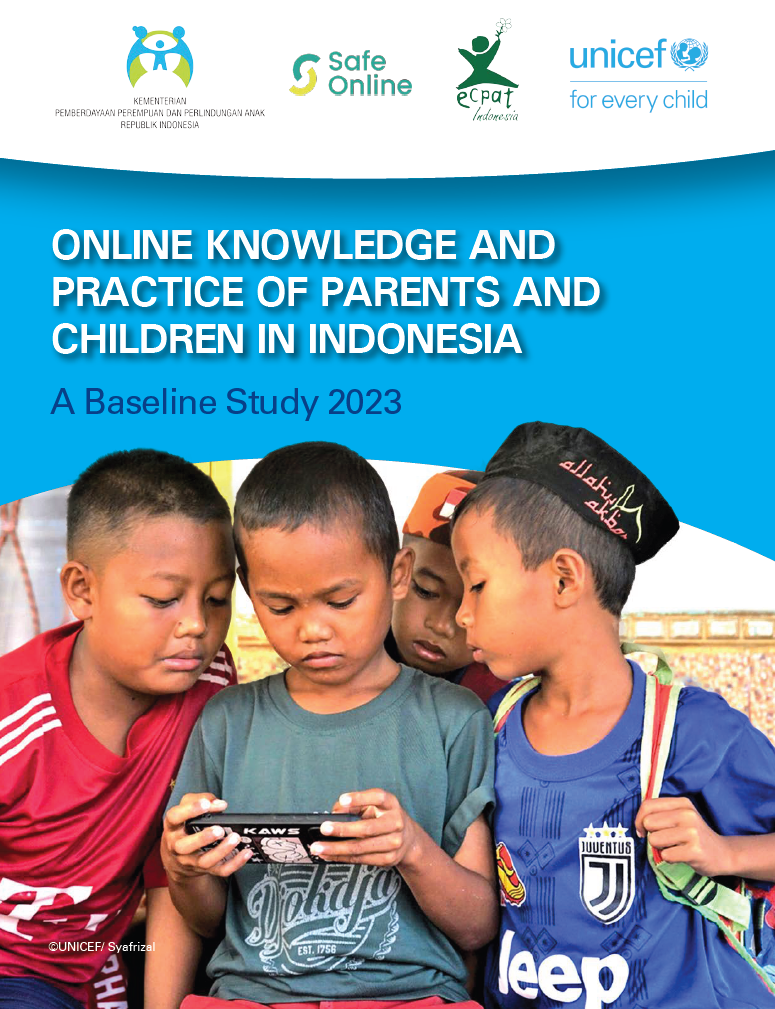
The “Online Knowledge and Practice of Children and Parents in Indonesia: Baseline Study 2023” highlights that most children in Indonesia use the internet daily, primarily for socializing and entertainment. However, they face significant risks, including exposure to inappropriate content, cyberbullying, and online sexual exploitation and abuse. The study reveals that many children and parents lack adequate online safety education, with only 37.5% of children having received information on how to stay safe online. Additionally, 42% of children have felt uncomfortable or scared due to online experiences, and 50.3% have seen sexual images on social media.UNICEF Indonesia is actively addressing these issues by supporting the government in strengthening the legal framework for child online protection and enhancing integrated services for victim support. UNICEF empowers children, parents, and teachers to promote safe online behavior and strengthen law enforcement capabilities to detect, investigate, and prosecute cases of online child exploitation. UNICEF also focuses on generating evidence to inform policies and practices, aiming to create a safer online environment for children in Indonesia. Their efforts include co-creating campaigns with children and youth to raise awareness about online risks and engaging with businesses to promote responsible conduct for the rights and well-being of children, 202