Open Access Publisher and Free Library
HUMAN RIGHTS.jpeg

HUMAN RIGHTS

Human Rights-Migration-Trafficking-Slavery-History-Memoirs-Philosophy

Posts in Migration
Facing New Migration Realities U.S.-Mexico Relations and Shared Interests

By ARIEL G. RUIZ SOTO, DORIS MEISSNER, AND ANDREW SELEE

A new reality has set in across the Western Hemisphere since 2020 as migrant families, unaccompanied children, and adults from an increasingly diverse array of origin countries have embarked on journeys through the region. The United States, in particular, has faced significant challenges in managing its borders, but transit countries along migration routes and other existing and emerging destination countries have similarly faced new migration challenges and a need to fundamentally transform their policy responses. Many governments have responded to this new reality by building a sense of shared responsibility and deepening their collaboration on migration management, albeit at different levels given their uneven institutional capacities and resources. Whether and how the policies and hemispheric cooperation that have emerged will continue are now in the hands of the new administrations of U.S. President Donald Trump and Mexican President Claudia Sheinbaum. Since taking office in January 2025, the Trump administration has been rewriting the U.S. relationship with Mexico, as well as with other partners across the Americas. The Biden administration’s focus on collaboration, which privileged a mixture of jointly negotiated migration controls, legal pathways, and selected returns, has been supplanted by a strategy based on large-scale deportations and tariff threats to compel Mexico to take even greater steps to stop unauthorized migration and drug trafficking. But despite the changed priorities and style, the basic truth remains that both governments fundamentally need each other to accomplish their policy objectives, whether termed border control and migration management or national security. No country has been more critical to U.S. border enforcement efforts than Mexico, which has recorded more migrant encounters in its territory than the U.S. Border Patrol has at the southwest border every month since May 2024. Mexican policies have been central catalysts for sustained reductions in unauthorized migration at the U.S.-Mexico border that began in 2024 and have continued under the countries’ new administrations. Understanding the complexity of shifting migration patterns, institutional capacity in both countries, and other shared challenges is there fore crucial in the longer term to bilateral, and likely hemispheric, negotiations and goals. Drawing on interviews and two roundtables with U.S. and Mexican policy stakeholders, researchers, and leaders of international and civil-society organizations in 2024, this policy brief rounds out prior Migration Policy Institute work on U.S. border enforcement by providing an account of recent shifts in unauthorized migration and humanitarian protection trends, and the role the U.S.-Mexico relationship has played—and will continue to play—in responding to these new migration realities. To overcome future challenges in migration management, it contends that Mexico and the United States need to work together to: 1) establish a transparent infrastructure for border security and protection screening at the Mexico-Guatemala border; 2) break the grip of cross-national migrant smuggling organizations; and 3) strengthen labor pathways between Mexico and the United States. Given their geographic proximity and shared policy interests, the United States and Mexico are inseparable. Long-term management of migration requires working in good faith across both sides of the border and recognizing the successes of bilateral collaboration in recent years, which have illustrated how indispensable Mexican migration enforcement and protection operations are to U.S. policy aims and how vital unwavering U.S. support is for those operations. As the new administrations in Mexico City and Washington, DC set their courses for the period ahead, they would do well to advance their respective national interests by incorporating strategies that address the deeper complexities of irregular movement, consider the lessons from prior hemispheric collaboration and leadership models, and promote migration through channels that are legal, safe, and orderly

Washington, DC: Migration Policy Institute, 2025. 18p.

download
Absent Tech: Data, Violence and (Non)Credibility at the EU Borders

By Lucrezia Canzutti

The digitisation of borders has permeated academic and political debates, the image of ‘digital fortress Europe’ becoming normalised and taken for granted. This ‘taken for grantedness’, however, clashes with the reality on the ground and has important implications for migrants' rights and credibility. This paper seeks to supplement accounts that foreground the assumed omnipresence of digital technologies with an analysis of their concomitant absence. Drawing on fieldwork in Italy, it demonstrates how the discourse around digital borders sustains states' ‘epistemic borderwork’ and erases migrants' knowledge and rights claims. Overall, the paper reflects on which technologies are made absent and present at the EU borders, and how both absence and presence are imbricated in power relations that enable new forms of violence and reactivate legacies of subordination and domination.

International Migration, Volume 63, Issue 4, August 2025, 10p.

download
The Undocumented Population in the United States Increased to 12.2 Million in 2023

By Robert Warren

In 2023, the US undocumented population reached 12.2 million, exceeding the previous high of 12.0 million in 2008. This report provides estimates of the undocumented population in 2023 based on data collected in the Census Bureau’s American Community Survey (ACS). The report focuses on trends in annual population growth from 2013 to 2023 for the total population and for 17 countries or areas of origin. It also describes trends in the undocumented population in the six states with the largest undocumented population in 2023.

The CMS estimates of undocumented residents include immigrants in the Deferred Action for Childhood Arrivals (DACA) and Temporary Protected Status (TPS) programs, and the estimates include most of the people that have entered asylum backlogs or received humanitarian parole status since 2021. The estimates were derived using previous CMS estimation procedures except that higher undercount rates were used to estimate the number of undocumented residents that arrived after 2020.

Adjustment for undercount was increased for post-2020 arrivals to account for the unusually large flow across the US/Mexico border in recent years and because relatively more migrants resided in group quarters1 where enumeration can be difficult. The CMS methodology is summarized after the following section, and information about undercount rates for recent arrivals is shown in the Appendix.

Journal on Migration and Human Security, May 2025, 8p.

download
Demographic Profile of Undocumented Hispanic Immigrants in the United States

By Evin Millet and Jacquelyn Pavilo

Hispanic immigrants make up the largest undocumented immigrant population in the United States. Despite having relatively low levels of education, Hispanic undocumented immigrants have high labor force participation and employment rates, especially in essential occupations. Nevertheless, lack of legal status still serves as a barrier for many, who face wage gaps and are excluded from social safety nets despite their economic contribution. The Center for Migration Studies of New York (CMS) estimates that approximately 21,036,500 immigrants of Hispanic origin live in the United States, of which 7,410,000 are undocumented, based on one-year 2019 American Community Survey (ACS) data (Ruggles et al. 2021). Figure 1 shows the Hispanic undocumented immigrant population compared to the total undocumented immigrant population from 2010 to 2019. The share of the undocumented population that is Hispanic has remained relatively stable over the last decade, ranging between 72-76 percent.

New York: Center for Migration Studies, 2022. 12p.

download
Assessing Access to Legal Representation for Unaccompanied Migrant Children: National, State, and County-Level Analysis of Free- and Low-Cost Attorney Prevalence in Relation to Children’s Locations

By Jill M. Williams https://orcid.org/0000-0002-9957-9520JMWilliams@acaiajustice.org and Honor Brooke Gosch

This study presents the first effort to assess unaccompanied migrant children’s access to free and low-cost attorneys in the United States at the national, state, and county levels. Since 2021, over 544,000 unaccompanied children have entered the United States and been apprehended along the southwest border. The vast majority of these children are transferred to the Office of Refugee Resettlement and released to sponsors across the country while their immigration cases are processed. While unaccompanied children are not guaranteed the right to government appointed counsel, a broad body of research indicates that having legal representation greatly increases the likelihood that a child will identify a form of legal relief and will have a legal outcome that allows them to remain in the country. Access to legal representation additionally connects children with trusted adults and increases opportunities to identify and address instances where children are being abused or exploited. However, a large percentage of unaccompanied children still lack legal representation. To date, little research has explored the factors that support or inhibit unaccompanied children’s access to representation. This study draws on research that shows that geographic proximity to attorneys is one key factor affecting the likelihood that immigrants will obtain counsel and research that demonstrates dramatic unevenness in legal counsel nationally to assess the prevalence of free and low-cost immigration attorneys in relation to where unaccompanied children are released to sponsors. Our findings demonstrate an overall lack of free and low-cost immigration attorneys in relation to the number of unaccompanied children in need of legal representation, with only one attorney for every 137 children nationally. Moreover, in assessing attorney to child ratios at the state-scale, we demonstrate that in 43 states (86 percent of the states in the country) the number of children to attorneys exceeds reasonable caseloads. Importantly, these estimates do not account for the fact that not all free and low-cost immigration attorneys take on children’s cases nor for the overall demand for immigration legal services among the more than three million individuals facing deportation in the United States. In turn, while sobering, our estimates likely significantly over-estimate children’s actual access to representation across the United States. Based on these findings, we offer the following policy recommendations:

Federal, state, local, and philanthropic organizations should strategically invest in workforce development to grow the number of free and low-cost immigration attorneys in general and specifically in areas where the lack is particularly high.

Workforce development programs should both engage new law school graduates and individuals working in private practice who may be looking to enter the public interest sector.

Policy makers, funders, and organizational leaders should invest in and support holistic representation models in order to reduce the burdens experienced by attorneys and foster retention in the field.

Governmental and philanthropic organizations should invest in additional research and program evaluation in order to more fully understand the need for representation among unaccompanied children and barriers to and facilitators of accessing representation. These efforts should go hand-in-hand with improvements in data quality and sharing among governmental and non-governmental stakeholders.

The federal government should immediately reinstate all contracts and programs related to providing legal orientation and representation to unaccompanied migrant children in line with Congressionally appropriated funds allocated for these purposes to both ensure children’s rights under the Trafficking Victims Protection Reauthorization Act (TVPRA) are realized and that the existing (already insufficient) workforce of trained and experienced attorneys equipped to represent unaccompanied children is not eroded.

Journal on Migration and Human Security, Online May 2025, 20p.

download
The Banalisation of ‘Suspicion’: Politics of Prevention, Digitisation of Prediction, Fate of Travellers

By Didier Bigo

This article argues that there is no single form of security that reduces insecurity but rather forms of (in)security that are contradictory and mutually destructive. This is the case between traditional liberal security, based on evidence, the individual and the penal order, and contemporary predictive preventive security, based on ‘reasonable’ suspicion. The digitisation of data has accelerated this trend towards preventive security, which is created through the creation of specific data-organising categories according to algorithms, the sorting out of profiles of ‘persons of concern’ ranked according to their level of danger, and the so-called ability of artificial intelligence to predict the future behaviour of individuals in order to place some of them under surveillance. This applies not only to terrorists or criminals, but also to many international travellers, making their use banal. The databases of the European agency EU-LISA will help to show the functioning of this new ‘dispositif’ of suspicion, which endangers democratic politics.

International Migration, Volume63, Issue4, August 2025, 13p.

download
Nullification And Secession In The United States: A History Of The Six Attempts During The First Century Of The Republic

By Edward Payson Powell. Edited by Colin Heston

In Nullification and Secession in the United States: A History of the Six Attempts During the First Century of the Republic, Edward Payson Powell undertakes an ambitious and far-reaching examination of one of the most fraught and recurring themes in American political development: the idea that individual states possess the legal or moral authority to nullify federal law or withdraw from the Union altogether. Written at the close of the 19th century and first published in 1897, Powell’s work reflects both the urgency of historical clarification in the aftermath of the Civil War and the enduring philosophical contest over the balance between federal power and state sovereignty.

This volume is not merely a chronicle of constitutional crises; it is a sustained meditation on the challenges of national unity in a country designed as a federation of semi-autonomous states. Powell, a journalist, historian, and keen observer of American public life, assembles a carefully documented history of six separate episodes where nullification or secession was proposed, debated, or attempted—beginning with the earliest murmurings under the Articles of Confederation and culminating in the cataclysm of the Confederate rebellion. His purpose is not only to recount these events but to interpret them, to understand the motivations behind them, and to identify the forces—legal, ideological, economic, and sectional—that allowed the American Union to survive repeated assaults on its coherence.

Nullification and Secession in the United States is more than a chronological account of rebellion and reaction; it is a civic education, a warning, and a testament. Edward Payson Powell offers readers both a panoramic view of American political development and a moral argument for the sanctity of national unity. In an age when the bonds of Union had been sorely tested, he reaffirms that the survival of the Republic has depended not only on laws and courts but on the ongoing negotiation between principle and compromise, autonomy and allegiance.

For modern readers—historians, political thinkers, and citizens alike—Powell’s work remains a rich and valuable resource. It shows that the story of America has never been one of perfect consensus, but of persistent debate and, ultimately, a shared determination to hold the states together in common purpose. Few books of its era so skillfully combine historical scholarship with constitutional insight, and few provide as clear a window into the recurring crises that have shaped—and tested—the idea of the United States itself.

Read-Me.Org Inc. Australia, New York & Philadelphia. 2025. 230p.

download free
kindle $1.99 -- Paperback $9.99
Dynamics and challenges for child migration in South America

By Ximena Canal Laiton

This report explores the migration experiences of Latin American and Caribbean children and adolescents on the move through South America. The study is based on 4Mi1 surveys and interviews with caregivers of children on the move, conducted in Peru, Chile, Bolivia, Argentina, and Uruguay between September and December 2024. Responding to the information gap that exists about this population in the region, the report presents findings on the risks that migrant children face en route and at destination, the protection mechanisms implemented by caregivers, the impacts of migration on children’s lives and well-being, and migrant children’s humanitarian needs. This document provides empirical evidence to inform decision makers and humanitarian actors

London/Denmark: Mixed Migration Centre, 2025. 30p.

download
Immigrant Families Express Worry as They Prepare for Policy Changes. 

By Hamutal Bernstein  , Dulce Gonzalez, and Diana Guelespe

To understand the experiences of immigrant families in the wake of the 2024 election, we report December 2024 results from the Urban Institute’s Well-Being and Basic Needs Survey, a nationally representative survey of adults ages 18 to 64. Data were collected prior to the 2025 administration taking office and its initial immigration policy changes and expanded enforcement efforts, which have likely heightened concerns.

Why this matters

The new federal administration has aggressively prioritized immigration enforcement, including recission of guidance limiting enforcement in “sensitive locations” (also known as “protected areas,”), such as schools, places of worship, and health care settings.

Targeting immigrant communities with threats of widespread enforcement will have a variety of impacts for the well-being and safety of immigrant families and the broader communities where they live. Fear of or exposure to immigration enforcement harms adults and children with detrimental psychological impacts, reductions in access to needed health and nutrition services, and adverse health and educational outcomes. Immigration enforcement is likely to have spillover effects on the broader community and contribute to “chilling effects” on participation in public life, whereby immigrant families avoid interactions with health care or social services, police, schools, or other community spaces where they perceive risk of detection and potential exposure to immigration enforcement. Children stand to be particularly affected. As immigration policies continue to shift, it will be crucial to track reactions and impacts on immigrant families’ health and well-being, as well as the spillover effects on their communities, to inform efforts to minimize short- and long-term harms.

What we found

Essential activities. Twenty-nine percent of adults in all immigrant families and 60 percent in mixed-status families worried “a lot” or “some” about participating in essential activities in their communities because they did not want to draw attention to their or a family member’s immigration status.

  • Seventeen percent of adults in all immigrant families with children and 32 percent in mixed-status families with children worried “a lot” or “some” about sending their kids to school or daycare.

  • Thirteen percent of adults in all immigrant families and roughly 30 percent in mixed-status families worried “a lot” or “some” about visiting a doctor’s office or health clinic, or hospital.

  • Eleven percent of adults in all immigrant families and over 22 percent in mixed-status families worried “a lot” or “some” about attending religious services or community events.

  • Nineteen percent of adults in all immigrant families and 44 percent in mixed-status families, worried “a lot” or “some” about driving a car.

  • Sixteen percent of adults in all immigrant families and 38 percent in mixed-status families, worried “a lot” or “some” about going to work.

  • Twenty percent of adults in all immigrant families and 44 percent in mixed-status families worried “a lot” or “some” about talking to the police.

Deportation concerns. Thirty-two percent of adults in all immigrant families worried “a lot” or “some” that they, a family member, or a close friend could be deported. In mixed-status families, this was 58 percent.

Protective actions. Nineteen percent of adults in all immigrant families and 38 percent in mixed-status families reported taking protective steps to prepare for a potential change in their or a family member’s immigration status.

  • Among adults who reported worry about deportation, nearly half (48 percent) had taken one or more protective steps.

  • Ten percent of adults in all immigrant families and 22 percent in mixed-status families reported setting up a plan in case a family member gets detained or deported.

  • Eleven percent of adults in all immigrant families and 27 percent in mixed-status families reported seeking legal advice to prepare for a potential change in immigration status.

  • Twelve percent of adults in all immigrant families and 18 percent in mixed-status families reported renewing their or a family member’s immigration status or applying for another status or citizenship.

How we did it

We used the Urban Institute’s 2024 Well-Being and Basic Needs Survey, a nationally representative survey of adults ages 18 to 64 designed to monitor changes in individual and family well-being as policymakers consider changes to federal safety net programs. We focus on adults in immigrant families in the sample and report on their concern about drawing attention to immigration status when doing essential activities, worry about deportation, and preparation for potential changes to immigration status

Washington, DC: The Urban Institute, 2025. 

Washington, DC: The Urban Institute, 2025. 20p.

download
Child Migrants in Family Immigration Detention in the US: An examination of current pediatric care standards and practices

By Sridhar, S., Digidiki, V., Kunichoff D., Bhabha, J., Sullivan, M., Gartland, MG.,

Between 2017 and 2021, more than 650,000 children were taken into custody at the border, with more than 220,000 of these children being detained for more than 72 hours (Flagg & Preston, 2022). International norms clearly assert that detention is never in the best interest of the child and should be used only as a measure of last resort and for the shortest possible period of time (UN General Assembly, CRC, Article 6, 2005). The rights of children in US immigration enforcement have been affirmed in a series of landmark cases resulting in the Flores Settlement Agreement, which acknowledges the unsuitability of child detention as immigration policy, and states that children should not be detained for more than 20 days (Schrag, 2020). Despite this guidance, the US continued to detain children for lengthy and arbitrary periods of time, placing them in detention facilities unsuitable for child health and safety. Furthermore, reporting and oversight from governmental and nongovernmental agencies have documented devastatingly harmful conditions for children in family immigration detention including separation from parents, the use of prison facilities inappropriate for housing children, and limited access to qualified medical professionals leading to grave physical and mental health consequences (U.S. ICE Advisory Committee, 2016; Allen & McPherson, 2023; Women’s Refugee Commission 2014; Human Rights First, 2022). Medical studies have documented long-term consequences of detention on children in the US and around the world (MacLean, et al, 2019; Zwi, et al 2018; Tosif, et al, 2023; Kronick, Rousseau, Cleveland, 2015); however, to our knowledge there are no systematic studies describing the quality of pediatric health care based on primary medical documentation within the US family immigration detention system. In collaboration with the Refugee and Immigrant Center for Education and Legal Services (RAICES), the Child Health Immigration Research Team based out of the Massachusetts General Hospital (MGH) Asylum Clinic at the MGH Center for Global Health and the FXB Center for Health and Human Rights at Harvard University, analyzed the medical records of 165 children, between 6 months and 18 years old, detained at Karnes County Family Residential Center (KCFRC) between June 2018 and October 2020. Medical records were collected with the permission of parents by the Refugee and Immigrant Center for Education and Legal Services (RAICES) Family Detention Team to investigate the provision of medical care for detained children, and analyzed in a de-identified form by the Child Health Immigration Research Team. Broadly, we found that existing health issues and care needs relating to physical and mental health were under-identified due to poor screening and minimal documentation of medical care, resulting in fragmentated and inadequate medical care. During prolonged detention the children in the study had limited access to basic healthcare, including key screenings and management of acute medical and mental health issues. KEY FINDINGS 1. The median length of detention was 43 days and 88 percent of children remained in detention for longer than 20 days, in violation of the terms of the Flores Settlement Agreement. 2. A total of 12 languages were documented, among them Haitian Creole, K’iche and Romanian. There was minimal documentation of interpreter use. 3. 4.3 percent of children exhibited moderate or severe wasting, 11.7 percent of children were “at risk of malnutrition,” 22.6 percent exhibited stunting, and 5.5 percent severe stunting. Despite this evidence, none of the children’s medical records documented the risk of malnutrition, nor was there any indication that measures were taken to enhance the children’s diet. 4. Although heights and weights of all children were obtained, there was no analysis or identification of nutritional status by the medical providers in the detention center based on the collected data. 5. The screening tool used to identify mental health needs did not follow a validated tool and did not consider the age of the child. Only 1% of the cohort was identified as at risk for a mental health disorder; a gross underestimation based on existing data. 6. There appeared to be a preponderance of providers practicing outside of their scope. There was a lack of pediatric-specific medical knowledge, evident in many medical records and inadequate documentation of medical reasoning. 7. There was inadequate follow up identified in the documentation of children with chronic illness and a poorly outlined referral process for children after leaving detention. 8. Though 100 percent of the children were screened for tuberculosis upon arrival, they were all screened with the use of chest x-ray, contrary to the 2020 ICE’s Family Residential Standards (FRS) and Center for Disease Control (CDC) guidance. Children with chest x-ray findings suggesting latent tuberculosis were not referred for further testing. 9. Vaccination data was often not recorded or was illegible if recorded, making it difficult to assess influenza vaccination. Furthermore, there was little influenza testing identified in children with fevers, which is concerning for underidentification of a highly contagious condition. 10. There was an overall inadequacy of the documentation of clinical reasoning which can lead to inadequate care in a fragmented health system, such as that in a detention facility. Conclusions Our study documents the mental and physical harm experienced by children in immigration detention at Karnes County Family Residential Center during prolonged detention relating to inadequate and inappropriate medical care. Our findings spanned a broad range of areas including the documentation of interpreter use, supervision, documentation, and delivery of acute medical care, assessment of nutritional and vaccination status, screening protocols for mental distress, and the identification of chronic medical conditions. The evidence of this study supports a conclusion that has been asserted by numerous civil society and medical organizations including the American Academy of Pediatrics (Linton, Griffin and Shapiro, 2017): there is no humane way to detain children and no version of family detention that is acceptable. While data in this study are drawn from only one US family immigration detention center and the sample size is limited, this report presents compelling evidence to support calls to end the practice of detaining children and families. Recognizing the decades long history of family detention in the US and the likelihood based on current policy discussion that the detention of children will occur into the foreseeable future, the report includes policy recommendations on the standard of medical care needed to meet the basic human rights of children in detention. These recommendations are anchored in ICE guidelines for medical treatment, the Family Residential Standards, as well as national and global medical organizations, such as the American Academy of Pediatrics, Centers for Disease Control and the World Health Organization. They are also supported by the clinical experience of those caring for child migrants, which are rooted in existing international law and practice. The key actions set out in this report are applicable to all venues for detention or custody of children within the immigration system. It should be noted that these recommendations do not negate the only reasonable conclusion based on our findings, that the detention of migrant children is harmful in any form and must be abolished.

Cambridge, MA: Harvard Global Health Institute, 2024. 64p.

download
Refugees and other forcibly displaced populations

By Sandra V Rozo, Guy Grossman

Forced displacement has reached unprecedented levels, with over 120 million individuals displaced globally as of 2024 due to conflict, violence, climate change, and human rights violations. These crises are increasingly protracted, characterised by low return rates, and increasingly demand a shift from hosting models solely funded through humanitarian aid to financially sustainable, medium- to long-term strategies. This VoxDevLit synthesises quantitative research conducted between 2010 and 2024, focusing on studies that use experimental or quasi-experimental methods to examine (1) the impacts of forced displacement on host communities and (2) the effectiveness of policies designed to support both forcibly displaced populations and their hosts. Key insights from this body of work indicate that forced displacement inflows generally exert neutral effects on native employment and wages, although vulnerable native workers—particularly those in the informal sector—may initially face challenges. Investments in inclusive social protection services that benefit both displaced populations and host communities can alleviate pressures and foster social cohesion. Additionally, cash transfers enhance immediate wellbeing and are most effective in the medium run when paired with initiatives that promote the economic self-reliance of forcibly displaced populations. Granting refugees the right to work has demonstrated transformative impacts on economic and well-being outcomes, while also providing a financially sustainable solution for hosting refugees over the medium to long term. Finally, addressing the mental health challenges faced by forcibly displaced populations is critical to enable them to recover their lives. This review underscores the importance of transitioning from humanitarian aid to self-reliance models, closing policy implementation gaps, and tailoring interventions to local contexts.

VoxDevLit, 14(1), March 2025. 38p.

download
With Fear, Favor, and Flawed Analysis: Decision-making in U.S. Immigration Courts

By Karen Musalo, Anna Law, Annie Daher, and Katharine Donato

Immigration judges (IJs), housed within the Executive Office for Immigration Review within the Department of Justice (DOJ), make decisions in asylum and withholding claims, which are life or death matters. And although their title is “judge,” IJs are DOJ attorneys who lack independence and are particularly susceptible to political pressures. Federal court judges and scholars alike have criticized the quality and fairness of IJ decision-making, and many studies have been carried out to better understand the factors that impact it. The prior studies have relied principally on quantitative data because IJ decisions are not publicly available or searchable in any existing database. The authors of this study had unprecedented access to more than five hundred IJ decisions, allowing for both a quantitative and qualitative analysis. Our findings were consistent with other studies in noting that IJ experience and gender made a difference in case outcomes, with male IJs and IJs with enforcement backgrounds denying protection at higher rates. We were able to identify other significant trends as well, including that the most common reasons why IJs denied protection to credible asylum seekers were their findings that they failed to meet the extremely stringent requirements of two elements of the refugee definition elements which arguably are overly restrictive and inconsistent with international norms. We also observed patterns of incompetence and bias among these decisions.

This Article recommends several policy reforms to address the shortcomings we identify, among them: (1) the creation of Article I immigration courts, (2) improvement of IJ competence through more stringent hiring standards and continuing education, (3) increased diversity of IJs based on employment experience, (4) reduced deference to the Board of Immigration Appeals in reviewing cases, and (5) allocating additional resources to immigration adjudication.

Boston College Law Review [Vol. 65:2743], 2024, 58p.

download
The Road to Slow Deportation

By Elana Fogel, Kate Evans

Traffic stops are the most common form of police-initiated contact with members of the public. The sheer volume of traffic stops combined with their use as a pretext to surveil Black and Latiné communities has generated substantial scholarship and movements for police reform. Yet this commentary assumes that the subjects of traffic stops are U.S. citizens. At the same time, scholarship on the intersection of criminal and immigration law and the convergence of their enforcement methods focuses on traffic stops as the immediate entry point for removal proceedings. This Article addresses the gap in literature by describing the experience of noncitizens who endure frequent traffic stops that result in neither immediate criminal nor immigration proceedings but nonetheless produce significant legal and nonlegal consequences-consequences that are likely to grow under a second Trump administration.

This Article frames the experience of traffic stops for noncitizens as a form of "slow deportation." It describes how the use of traffic stops to police noncitizens extends the system of racialized social control to immigrant communities with the effect of surveilling both race and status. It surveys scholarship across disciplines, racial categories, and citizenship status and uses our clients' stories to map the cumulative, compounding, and subterranean harms of traffic stops that culminate in the emotional, social, and sometimes legal exclusion of noncitizens and families. The Article concludes by proposing new approaches to counseling, policy reform, and coalition building informed by the lens of slow deportation.

Duke Law School Public Law & Legal Theory Series No. 2025-18,

download
Why Legal Immigration Is Nearly Impossible U.S. Legal Immigration Rules Explained

By David J. Bier

America traditionally had few immigration restrictions, but since the 1920s, the law has banned most aspiring immigrants. Today, fewer than 1 percent of people who want to move permanently to the United States can do so legally. Immigrants cannot simply get an exception to immigrate any more than restaurateurs in the 1920s could simply get an exception to sell alcohol. Instead, just as Prohibition granted only a few exemptions for religious, industrial, or medical uses of alcohol, people seeking an exception to immigration prohibition must also fit into preexisting carve-outs for a select few. Many Americans have the false impression that these carve-outs are realistic options for potential immigrants to join American society, but the government’s restrictive criteria render the legal paths available only in the most extreme cases. Even when someone qualifies, annual immigration caps greatly delay and, more frequently, eliminate the immigrant’s only

chance to come to the United States. Legal immigration is less like waiting in line and more like winning the lottery: it happens, but it is so rare that it is irrational to expect it in any individual case. This study provides a uniquely comprehensive, jargon-free explanation of U.S. rules for legal permanent immigration. Some steps are simple and reasonable, but most steps serve only as unjustified obstacles to immigrating legally. For some immigrants, this restrictive system sends them into the black market of illegal immigration. For others, it sends them to other countries, where they contribute to the quality of life in their new homes. And for still others, it requires them to remain in their homeland, often underemployed and sometimes in danger. Whatever the outcome, the system punishes both the prospective immigrants and Americans who would associate, contract, and trade with them. Congress and the administration can do better, and this paper explains how.

Washington, DC: Cato Institute, 2023. 88p.

download
Federal local partnerships on immigration law enforcement: Are the policies effective in reducing violent victimization?

By Eric P. Baumer, Min Xie

Research Summary

Our understanding of how immigration enforcement impacts crime has been informed exclusively by data from police crime statistics. This study complements existing research by using longitudinal multilevel data from the National Crime Victimization Survey for 2005–2014 to simultaneously assess the impact of the three predominant immigration policies that have been implemented in local communities. The results indicate that the activation of Secure Communities and 287(g) task force agreements significantly increased violent victimization risk among Latinos, whereas they showed no evident impact on victimization risk among non-Latino Whites and Blacks. The activation of 287(g) jail enforcement agreements and anti-detainer policies had no significant impact on violent victimization risk during the period.

Policy Implications

Contrary to their stated purpose of enhancing public safety, our results show that the Secure Communities program and 287(g) task force agreements did not reduce crime, but instead eroded security in U.S. communities by increasing the likelihood that Latinos experienced violent victimization. These results support the Federal government's ending of 287(g) task force agreements and its more recent move to end the Secure Communities program. Additionally, the results of our study add to the evidence challenging claims that anti-detainer policies pose a threat to violence risk.

Criminology & Public Policy, 22, 417–455. 2023, 39p.

download
A Deportation Boomerang? Evidence From U.S. Removals to Latin America and the Caribbean

By Christian Ambrosius and David A. Leblang

The forced return of migrants is an important part of migration policy toolkits. An increased risk of deportation, politicians argue, will deter subsequent irregular migration. We explore this argument for the case of forced removals from the United States and find that rather than operating as a deterrent for future migrants, this policy had a boomerang effect. The forced return of migrants with a track record of crime generated negative externalities in the form of higher violence in their countries of origin, counteracting the deterrence effect of higher deportation risk. We apply mediation analysis to a panel of Latin American and Caribbean countries and decompose the effect of deportations on emigration into three coef­fi­cients of interest: a total effect of deportations on later emigration, an effect of deportations on the mediator variable of violence, and an effect of violence on emigration. We address the endogeneity of our key explanatory variables—deportations and violence—using migrants’ exposure to the unequal and staggered implementation of policies intended to facilitate deportations at the level of U.S. states as a source of exogenous variation. We show that migration intentions and asylum requests increase in response to deportation threats. This effect is mediated through increased violence and is strongly driven by dynamics in Central America. Although the total number of apprehensions at the U.S. southern border in response to deportation threats does not show a clear pattern, we observe an increase in the share of unaccompanied minors and the share of entire family units among those apprehended, suggesting a shift in migration strategies and composition.

Demography (2025) 62(2):419–439 DOI 10.1215/00703370-11863789 © 2025

download
Criminalisation of migration and solidarity in the EU 2024 report

By Silvia Carta

In 2024, PICUM’s media monitoring confirmed a growing trend: at least 142 individuals faced criminal or administrative proceedings for acting in solidarity with migrants in the EU. Additionally, our media monitoring found that at least 91 migrants were subjected to criminalisation, mostly under counter-smuggling legislation. But we know that this number is an undercount, as other organisations recorded many more cases1 in their own work. Furthermore, news articles highlighted several forms of non-judicial harassment directed at human rights defenders and civil society organisations within the EU. Due to the significant gap in statistical and official public data2 regarding individuals accused, charged, or convicted for smuggling and related offenses, this briefing relies on a media alert system and desk research, which may not comprehensively capture all relevant incidents reported across EU countries. Consequently, the figures presented likely underestimate the true extent of such occurrences. In addition, it is likely that many cases, particularly regarding people who are migrants, go unreported by the media.3 Beyond the continuously high number of people who have been criminalised in 2024, this report highlights different trends. Under the current legal system, charges of facilitation and smuggling can be used to criminalise migrants or people without regular residence and those acting in solidarity with them. Despite numerous and protracted judicial proceedings, actual convictions remain low. This report also looks at the several cases of people and organisations across Europe that have experienced non-judicial harassment. Moreover, the findings of our media monitoring in 2024 seek to shed light on the criminalisation of people crossing borders irregularly, which has grown of at least 20% in comparison to monitoring in 2023,4 but remains a relatively hidden phenomenon. A comparison between PICUM’s findings and existing research reveals a tendency for the media to underreport the criminalisation of migrants.5 Yet, the majority of cases analysed by PICUM align with research indicating that migrants, including children, often face unfounded accusations, endure harsh legal processes and face years of pre-trial detention for the sole fact of migrating   

Brussels: PICUM, 2025. 29p.

download
The Amateur Emigrant

By R. L. Stevenson. Edited by Colin Heston

The Amateur Emigrant" by Robert Louis Stevenson is a vivid and personal account of his journey from Scotland to America in 1879. The narrative is divided into two parts: "From the Clyde to Sandy Hook" and "Across the Plains."

In the first part, Stevenson describes his experiences aboard the emigrant ship, the S.S. Devonia. He provides a detailed portrayal of the ship's conditions, the diverse group of passengers, and the challenges they face during the voyage. Stevenson's keen observations and empathetic nature shine through as he captures the hardships, camaraderie, and resilience of the emigrants. His writing brings to life the cramped quarters, the monotonous diet, and the various personalities he encounters, offering a poignant glimpse into the lives of those seeking a new beginning in America.

The second part of the narrative, "Across the Plains," recounts Stevenson's overland journey from New York to California. Traveling by train, he continues to document his experiences and the people he meets along the way. Stevenson reflects on the vast landscapes, the cultural differences, and the sense of adventure that permeates the journey. His writing is marked by a blend of humor, insight, and a deep appreciation for the human spirit.

Read-Me.Org Inc. Australia. 2025. 234p.

download free
Kindle $1.99 -- Paperback $9.99
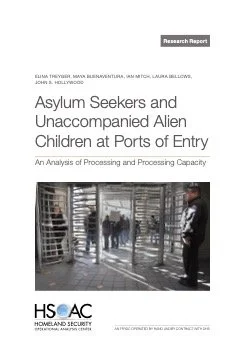
Asylum Seekers and Unaccompanied Alien Children at Ports of Entry: An Analysis of Processing and Processing Capacity

By Elina Treyger, Maya Buenaventura, Ian Mitch, Laura Bellows, John S. Hollywood

Between 2020 and 2024, increasing volumes of aliens sought entry at the southwest U.S. border without valid entry documents. Several policies adopted since 2020 have sought to incentivize aliens — particularly those who have intentions of seeking asylum — to present themselves at ports of entry (POEs) and disincentivize crossing unlawfully between POEs. These trends and policies raise a question of the capacity of U.S. Customs and Border Protection's (CBP's) Office of Field Operations (OFO) to process such aliens and unaccompanied alien children (UACs) through POEs. A congressional request sought an analysis that could shed light on whether and how well OFO would be able to process increased volumes and the resources it would need to do so. This report is the result of that analysis.

Key Findings

There are multiple pathways for processing likely asylum seekers and UACs through POEs. This is a function of several factors, such as whether the alien arrives with a CBP One appointment; whether they are a member of a family unit, a UAC, or a single adult; whether derogatory information is discovered about the alien; and detention facility capacity.

OFO's capacity to process this population varies across time and POEs and is constrained by a mix of individual case characteristics; staffing; infrastructure and equipment; capacity; the capacity of U.S. Immigration and Customs Enforcement, U.S. Department of Health and Human Services, and U.S. Citizenship and Immigration Services; and operational demands.

The authors infer that OFO's effective monthly capacity to process likely asylum seekers and UACs in a safe, humane, and orderly manner at the level of resources present as of May 2023 is around 47,000–48,000 aliens.

Substantially increasing OFO processing capacity such that all or most likely asylum seekers and UACs (based on levels observed between October 2022 and February 2024) are processed at POEs would be extremely challenging at best.

Santa Monica, CA: RAND, 2025, 109p.

Download
Smuggling and migration in South America: Insights from migrants

By Ximena Canal Laiton

This paper explores the use of smugglers by migrants from Latin America and the Caribbean on their journeys through South America. It is based on 1,129 4Mi surveys and 29 interviews with migrants in Peru, Chile, Bolivia, Argentina and Uruguay conducted between July and October 2024, along with 11 key informant interviews. This paper presents findings on the profiles of migrants who hired smugglers along their journey, the motivations for using them, the services sought, and their general perceptions of smugglers. It also provides information on smugglers’ profiles and modes of operation on South American migration routes. This paper offers empirical evidence to inform decision-makers and humanitarian actors. Key findings 1 4Mi is MMC's flagship quantitative data collection project. 4Mi questionnaires cover why people leave their places of origin, the alternatives they explored, destination options, influences on decision-making, and other topics (global data and data on Latin America and the Caribbean can be accessed through 4Mi Interactive dashboards). For more information on MMC terminology, see: Mixed Migration Centre, MMC (2024a) MMC’s understanding and use of the terms Mixed migration and Human smuggling. | The international instrument defining migrant smuggling is the 2000 Protocol against the smuggling of migrants by land, sea and air, supplementing the United Nations Convention against Transnational Organized Crime. • The use of smugglers is not the norm on migration routes through South America, with only one in five survey respondents reporting having used smugglers during their migration process. Low smuggler use is likely the result of freedom of movement under regional agreements, established migrant networks, and familiarity with well-trodden migration routes, and limited financial capacity. • Smuggler use among Venezuelan respondents is higher than among other South American nationalities (23%, compared to 9% of Colombians, 5% of those from the Southern Cone, and just 2% from other Andean countries), likely due to increasing entry restrictions placed upon them. • Smuggler use increases when movements are more restricted, for example crossing into Peru and Chile, where migrants surveyed and interviewed commonly reported relying on smugglers. • The main services provided by smugglers to respondents were assistance with crossing borders (83%), transportation (65%), the provision of food and water (50%), the provision of documents (33%), and dealing with authorities (31%). • Smugglers in South America have diverse profiles and operate via multiple methods. The majority come from local communities or are migrants who live and operate in transit locations. However, a few smugglers operate in countries of origin—primarily Venezuela—offering “all-inclusive packages” from Venezuela to the intended destination. • Most migrants who use smugglers perceive them as service providers. Some see them as a buffer against the dangers along the route, and another small portion as a potential perpetrator of abuse. • Smugglers were the least mentioned possible perpetrator of incidents among surveyed migrants (7%); other actors, such as members of criminal gangs (55%) and host communities (53%), rank considerably higher as possible threats.

Mixed Migration Centre, 2025. 22p

download