Open Access Publisher and Free Library
HUMAN RIGHTS.jpeg

HUMAN RIGHTS

Human Rights-Migration-Trafficking-Slavery-History-Memoirs-Philosophy

Posts in Sociology
Compassionate but Controlled: Reframing Britain’s Post-Brexit Immigration Debate

By David Goodhart  

The Government has steadied the ship in recent weeks after the Liz Truss misadventure. But if there is any chance of winning back some of the 2019 coalition, one condition of being competitive at the next election, the Government will need some visible policy progress in three big areas: NHS performance, levelling up and immigration (including stopping the Channel boats). This paper focuses on that third policy field. Attitudes to immigration have liberalised somewhat since Brexit ended free movement reinforced by the persistent publicity about labour shortages. But anxiety about immigration is likely to rise again sharply following the unprecedented post-Covid surge in legal net migration, with the illegal Channel boats as a backdrop, and the probable revival of the Reform party to highlight Conservative failed pledges on immigration.

  • The net immigration figure of 504,000 in the year to June, easily the largest ever annual increase, creates another headache for the Government but is mainly due to one-off factors—a post-Covid catch up on student migration (277,000) and a surge in mainly legal refugee inflows (276,000) which are unlikely to be repeated, including the large numbers from Ukraine, Hong Kong and Afghanistan. Only about 150,000 of the net migration figure is people coming on work visas (around 20%) but most of them and almost all the students will only be here temporarily. Notwithstanding this unsustainable surge, Britain’s post-Brexit immigration system is broadly striking the right balance. It is already more open than many comparable countries, with greater restrictions on most low paying jobs than in the EU era but with almost two-thirds of jobs subject to a potential work visa. Outside of some very specific areas, such as seasonal agricultural work, there is no case for more liberalisation, especially in the light of the unprecedented half a million number, but this paper makes some suggestions for further reform under three main headings, and concludes with an analysis of the Channel boats problem.  

London: Policy Exchange, 2022. 23p.
download
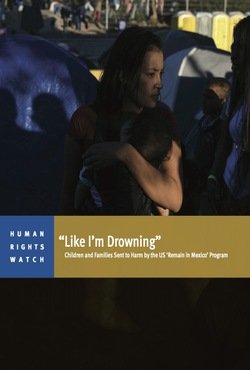
"Like I'm Drowning": Children and Families Sent to Harm by the US 'Remain in Mexico' Program

By Michael Garcia Bochenek

In the two years since the “Remain in Mexico” program began in January 2019, the US Department of Homeland Security (DHS) has sent more than 69,000 people to Mexico while their US asylum claims are pending. This number includes families with children of all ages, some of them with disabilities, including newborns, infants, and toddlers. The program applies to nationals of all Latin American countries, including Brazilians and members of Indigenous communities who do not speak Spanish. Formally known as the “Migration Protection Protocols” (MPP), the program is anything but protective: it has sent people to some of Mexico’s most dangerous cities and needlessly and foreseeably exposed them to considerable risk of serious harm. Those interviewed for this report described being subjected to rape or attempted rape and other sexual assault, abduction for ransom, extortion, armed robbery, and other crimes, in many cases immediately after US authorities sent them to Mexico or as they returned from US immigration court hearings. In some cases, Mexican immigration officers or police committed these crimes. In theory, the MPP has two safeguards against return to harm, but neither is effective in practice. First, US officials are not supposed to send people to Mexico under the program if an asylum officer finds that they are likely to face threats to their lives or freedom or if they would be tortured there. Second, DHS has said that it will not place “vulnerable” people in the MPP. These exemptions are rarely granted, even though Human Rights Watch found many cases that

  • would qualify. MPP hearings were suspended in March 2020 in response to the Covid-19 pandemic and had not resumed by the end of December 2020. Thousands of people are concentrated in dangerous Mexican border towns indefinitely, living lives in limbo, many dependent on the generosity of humanitarian groups and volunteers for accommodation, food, and health care. Many of the people interviewed for this report described changes in their children’s behavior, causing parents increasing feelings of anxiety for their children’s well-being. The Biden administration should immediately terminate the MPP program and allow those placed in the MPP to reenter the United States and remain until their asylum claims are resolved.

New York: Human Rights Watch, 2021. 115p.

download
Dying to Cross: The Worst Immigrant Tragedy in American History

By Jorge Ramos with Kristina Cordero (Translator)

On May 14, 2003, a familiar risk-filled journey, taken by hopeful Mexican immigrants attempting to illegally cross into the United States, took a tragic turn. Inside a sweltering truck abandoned in Texas, authorities found at least 74 people packed into a "human heap of desperation." After months of investigation, a 25-year-old Honduran-born woman named Karla Chavez was found responsible for leading the human trafficking cell that led to this grisly tragedy in which 19 people died. Through interviews with survivors who had the courage to share their stories and conversations with the victims' families, and in examining the political implications of the incident for both U.S. and Mexican immigration policies, Jorge Ramos tells the story of one of the most heartbreaking episodes of our nation's turbulent history of immigration.

New York: Harper Collins, 2006. 208p.

download
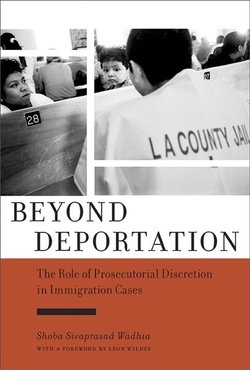
Beyond Deportation: The Role of Prosecutorial Discretion in Immigration Cases

By Shoba Sivaprasad Wadhia

When Beatles star John Lennon faced deportation from the U.S. in the 1970s, his lawyer Leon Wildes made a groundbreaking argument. He argued that Lennon should be granted “nonpriority” status pursuant to INS’s (now DHS’s) policy of prosecutorial discretion. In U.S. immigration law, the agency exercises prosecutorial discretion favorably when it refrains from enforcing the full scope of immigration law. A prosecutorial discretion grant is important to an agency seeking to focus its priorities on the “truly dangerous” in order to conserve resources and to bring compassion into immigration enforcement. The Lennon case marked the first moment that the immigration agency’s prosecutorial discretion policy became public knowledge. Today, the concept of prosecutorial discretion is more widely known in light of the Obama Administration’s Deferred Action for Childhood Arrivals or DACA program, a record number of deportations and a stalemate in Congress to move immigration reform. Beyond Deportation is the first book to comprehensively describe the history, theory, and application of prosecutorial discretion in immigration law. It provides a rich history of the role of prosecutorial discretion in the immigration system and unveils the powerful role it plays in protecting individuals from deportation and saving the government resources. Shoba Sivaprasad Wadhia draws on her years of experience as an immigration attorney, policy leader, and law professor to advocate for a bolder standard on prosecutorial discretion, greater mechanisms for accountability when such standards are

  • ignored, improved transparency about the cases involving prosecutorial discretion, and recognition of “deferred action” in the law as a formal benefit.

New York: New York University Press, 2015.

download
Youth Held at the Border: Immigration, Education, and the Politics of Inclusion

By Lisa (Leigh) Patel

Illegal. Undocumented. Remedial. DREAMers. All of these labels have been applied to immigrant youth. Using a combination of engaging narrative and rigorous analysis, this book<em>explores how immigrant youth are included in, and excluded from, various sectors of American society, including education. Instead of the land of opportunity, immigrant youth often encounter myriad new borders long after their physical journey to the United States is over. With an intimate storytelling style, the author invites readers to rethink assumptions about immigrant youth and what their often liminal positions reveal about the politics of inclusion in America.

New York: Teachers College Press, 2013. 144p.

download
Immigration, Environment, and Security on the U.S.-Mexico Border

By Lisa Meierotto

This book examines the convergence of conservation and security efforts along the U.S.-Mexico border in Arizona. The author presents a unique analysis of the history of Cabeza Prieta National Wildlife Refuge, a federally protected border wilderness area. Beginning in the early 1990s, changes to U.S. immigration policy dramatically altered the political and natural landscape in and around Cabeza Prieta. In particular, the increasing presence of Border Patrol has contributed to environmental degradation in the wilderness. Complicated human rights concerns are also explored in the book. Protecting wildlife in an area with high rates of undocumented border-crossing and smuggling results in complex and sometimes controversial conservation policies. Ultimately, the observations and analysis presented in this book illustrate ways in which the politics of race and nationalism are subtly, but significantly, interwoven into border environmental and security policies.

Cham: Palgrave Macmillan, 2019. 208p.

download
Migration: Between Mexico and the United States

Edited by Agustín Escobar Latapí and Claudia Masferrer

This open access Regional Reader describes how Mexico - United States migration changed substantially during the first decade of the 21st Century. The book provides an in-depth analysis on the changes in the flows into and out of both countries, thus highlighting the issues arising from Mexico - US migration as well as addressing the large numbers of adults and children entering Mexico from the United States. It covers how this tidal change affects the Hispanic population of the U.S. and return migrants' reincorporation in Mexico; their jobs, access to school, health and access to health services, how fear became a dominant aspect of Mexicans’ lives in the U.S., and the role played by crime and social policy in Mexico.

Cham: Springer Nature, 2022. 278p.

download
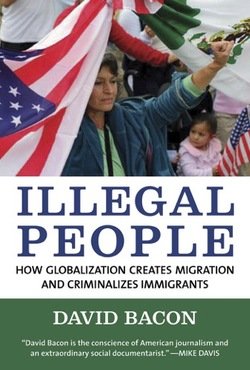
Illegal People: How Globalization Creates Migration and Criminalizes Immigrants

By David Bacon

For two decades veteran photojournalist David Bacon has documented the connections between labor, migration, and the global economy. In Illegal People Bacon explores the human side of globalization, exposing the many ways it uproots people in Latin America and Asia, driving them to migrate. At the same time, U.S. immigration policy makes the labor of those displaced people a crime in the United States. Illegal People explains why our national policy produces even more displacement, more migration, more immigration raids, and a more divided, polarized society.Through interviews and on-the-spot reporting from both impoverished communities abroad and American immigrant workplaces and neighborhoods, Bacon shows how the United States' trade and economic policy abroad, in seeking to create a favorable investment climate for large corporations, creates conditions to displace communities and set migration into motion. Trade policy and immigration are intimately linked, Bacon argues, and are, in fact, elements of a single economic system. In particular, he analyzes NAFTA's corporate tilt as a cause of displacement and migration from Mexico and shows how criminalizing immigrant labor benefits employers. For example, Bacon explains that, pre-NAFTA, Oaxacan corn farmers received subsidies for their crops. State-owned CONASUPO markets turned the corn into tortillas and sold them, along with milk and other basic foodstuffs, at low, subsidized prices in cities. Post-NAFTA, several things happened: the Mexican government was forced to end its

  • subsidies for corn, which meant that farmers couldn't afford to produce it; the CONASUPO system was dissolved; and cheap U.S. corn flooded the Mexican market, driving the price of corn sharply down. Because Oaxacan farming families can't sell enough corn to buy food and supplies, many thousands migrate every year, making the perilous journey over the border into the United States only to be labeled "illegal" and to find that working itself has become, for them, a crime. Bacon powerfully traces the development of illegal status back to slavery and shows the human cost of treating the indispensable labor of millions of migrants-and the migrants themselves-as illegal. Illegal People argues for a sea change in the way we think, debate, and legislate around issues of migration and globalization, making a compelling case for why we need to consider immigration and migration from a globalized human rights perspective.

Boston: Beacon Press, 2009. 272p.

download
Preventing Trafficking in Human Beings: Labour and criminal exploitation

By The European Crime Prevention Network (ECPN)

Trafficking in human beings (THB) is a serious offence against personal and sexual freedom and integrity. It is often associated with legal and illegal migration flows, but this is only partly the case. It is true that irregular migration flows create a market for trafficking and exploitation, often connected to illegal migrant smuggling.1 This is why new migration flows, such as the arrival of many Ukrainian refugees in the EU, create a concern for the living conditions and the potential exploitation of migrants. On the other hand, half of the registered victims and three quarters of child victims of THB in the EU are EU nationals, with one third being registered in their own country.2 These are staggering statistics that indicate that there is a sizeable THB market within the EU that is independent of migration flows from outside the EU. The open internal borders of the Schengen zone have given rise to a specific pattern of regional trafficking that present a unique challenge to Europe.  

Brussels: EUCPN, 2022.  20p. 

download
Unaccompanied Minors at Risk: Preventing Child Trafficking

By Stijn Aerts  

It is estimated that over the past few years, tens of thousands of unaccompanied minors went missing in the European Union. This is a problem on many different levels: fundamental rights, child protection, managing of migration flows and asylum. From the crime prevention perspective, the fact that children are unaccompanied and the fact that they are off the authorities’ radar are major risk factors. Unaccompanied minors run a significantly increased risk of being trafficked for sexual exploitation, labour exploitation, or criminal exploitation. Chapter one of this report describes the phenomena of child trafficking and unaccompanied minors going missing and how they relate to migration and migrant smuggling, without disregarding intra-EU trafficking. The report goes on to outline the most important international conventions, protocols and declarations for the fight against child trafficking in the EU (chapter two) and the most important EU-wide, cross-border actions to prevent child trafficking and to safeguard UAMs from going missing (chapter three). Chapter four offers the reader an overview of existing resources of the past few years, including research reports, handbooks, and recommendations. The fifth and final chapter highlights and explains some of the most pressing recommendations regarding the prevention of child trafficking, covering the following five categories, from determining the child’s best interest and child-friendly approaches, over cross-border and interagency cooperation, right through to addressing the offender and demand side.

Brussels; European Crime Prevention Network, 44p.

download
Climate-induced Migration and Modern Slavery: A toolkit for policy-makers

By Ritu Bharadwai, Danielle Bishop, Somnath Hazra,  Enock Pufaa and James Kofi Annan.

Contemporary forms of slavery are often categorised as slavery, slavery-like practices, bonded labour, debt bondage and forced sexual exploitation. These are all interrelated and constitute a continuum.1 According to the Global Estimate of Modern Slavery,2 40.3 million people are living in slavery worldwide, which disproportionately affects the most marginalised, such as women, children and minorities.3 Climate change and climate-induced migration heightens existing vulnerabilities of slavery. Drivers of vulnerability to modern slavery are complex and impacted by many layers of risk. While several socio-economic, political, cultural and institutional risks shape vulnerability, they are increasingly considered to be made worse by climate change impacts and environmental degradation. Climate-induced displacements are becoming unavoidable. The rise of sea levels, salination and flooding are already forcing entire coastal communities – in countries such as the Solomon Islands, Vanuatu and Sierra Leone – to relocate. And as climate shocks are set to intensify, many more millions will be displaced by climate change in the coming decades. The World Bank estimates that by 2050 climate change will force more than 143 million people in sub-Saharan Africa, South Asia and Latin America from their homes. …

  • Climate change policies increasingly recognise climate-induced migration and displacement as an issue. The Cancún Adaptation Framework (CAF), adopted during COP16 under the United Nations Framework Convention on Climate Change (UNFCCC) in 2010, provides a conceptual framework to navigate the complexities of climate mobility. CAF recognises three modes of mobility due to climate impacts – migration, displacement and planned relocation4 – allowing for specific climate policies aligned with the distinct features, mobility patterns and outcomes of each impact.5 In 2015, the Paris Agreement on climate change was an unprecedented development of action on migration and climate with the formal inclusion of ‘migrants’ in its Preamble.  

London:  Anti-Slavery International and The International Institute for Environment and Development, 2021. 38p.

download
Interlinkages between Trafficking in Persons and Marriage

By United Nations Office on Drugs and Crime (UNODC)

The present issue paper explores the extent and circumstances under which different forms of marriage may fall within the scope of the Protocol to Prevent, Suppress and Punish Trafficking in Persons, Especially Women and Children, supplementing the United Nations Convention against Transnational Organized Crime. It combines research methodology and legal analysis to arrive at policy recommendations for countries to consider. The primary data collection was based on 75 expert interviews, involving almost 150 participants from nine countries.1 The interview tool was constructed in a deliberately broad manner to elicit conversations that would capture the reality of these phenomena, which manifested themselves differently in every country, and not to rush to conclusions about whether the conduct fell within the scope of the Trafficking in Persons Protocol…..

  • Out of the almost 150 people who participated in the interviews, the great majority knew about or had direct experience of cases involving certain types of marriage and trafficking in persons. However, others had not made any connections between marriages and trafficking in persons in their line of work or had not encountered any relevant cases. In the cases presented during the interviews, it became apparent that trafficking in persons was most often linked to cases of marriage that showed signs of force, abuse or exploitation. Thus, these characteristics could be recognized as initial indicators for consideration of trafficking in persons. Experts, including from non-governmental organizations, who had interacted with victims noted that there was a low level of reporting of trafficking cases in general, but also of trafficking cases involving elements of marriage.

Vienna: UNODC, 2020. 116p.

download
Human Trafficking in Medieval Europe: Slavery, Sexual Exploitation, and Prostitution

By Christopher Paolella

Human trafficking has become a global concern over the last twenty years, but its violence has terrorized and traumatized its victims and survivors for millennia. This study examines the deep history of human trafficking from Late Antiquity to the Early Modern Period. It traces the evolution of trafficking patterns: the growth and decline of trafficking routes, the ever-changing relationships between traffickers and authorities, and it examines the underlying causes that lead to vulnerability and thus to exploitation. As the reader will discover, the conditions that lead to human trafficking in the modern world, such as poverty, attitudes of entitlement, corruption, and violence, have a long and storied past. When we understand that past, we can better anticipate human trafficking’s future, and then we are better able to fight it.

Amsterdam: Amsterdam University Press, 2020. 280p.

download
Opportunities to Accelerate Naturebased Solutions: A Roadmap for Climate Progress, Thriving Nature, Equity, & Prosperity. A Report to the National Climate Task Force

By Tallis, Heather M. Olander, Lydia; Laymon, Krystal

From the Executive Summary: "On Day One of his Administration, President Biden joined global leaders in committing to limit global warming through the Paris Climate Agreement [hyperlink]. Nature-based solutions are key to reaching this goal. America's forests absorb carbon dioxide at a rate equal to 10% of U.S. annual greenhouse gas emissions. Some researchers estimate that nature-based solutions can boost progress towards our climate goal by up to 30%. Despite the potential for nature to be an ally in the fight against climate change, nature is in decline. This loss of nature moves us away from climate goals and the other benefits of a healthy natural environment. [...] On Earth Day 2022, the President made nature-based solutions a national priority. In Executive Order 14072 [hyperlink], the President made a broad call for the accelerated deployment of nature-based solutions to tackle climate change and adapt to impacts already underway. The President also called for a report identifying key opportunities for greater use of nature-based solutions across the federal government. The White House's Council on Environmental Quality, Office of Science and Technology Policy, and Office of Domestic Climate Policy, in consultation with federal agencies, have responded. This report marks the first time in history that the federal government has taken a hard look at what is needed to ambitiously scale up nature-based solutions. [...] 'This report provides a roadmap with five strategic recommendations for federal agencies to unlock the potential of nature-based solutions and highlights bold Executive Office of the President actions designed to pave the way.'"

Council On Environmental Quality (U.S.); White House Office Of Domestic Climate Policy (U.S.); United States. Office Of Science And Technology Policy. 2022.

download
Smuggling of Migrants: A Global Review and Annotated Bibliography of Recent Publications

By Daphné Bouteillet-Paquet

Migrant smuggling has been an issue of increasing concern. The negative consequences of this type of transnational crime include the erosion of state sovereignty and the loss of control over who enters and leaves the territory, the potential security implications of clandestine entries and document smuggling, the large profits that accrue to human smugglers and organized criminal groups, the increasingly brutal treatment of migrants by careless smugglers leading to a growing number of deaths by drowning, dehydration, freezing or suffocation, and the high smuggling fees that migrants have to pay for the illegal transfer to destination countries, often leading to high debts for smuggled migrants and making them vulnerable to exploitation and human trafficking. Despite the fact that migrant smuggling has attracted great media and political attention over the last two decades, there has not been any comprehensive analysis of the state of expert knowledge. Great confusion still prevails about what is migrant smuggling within the global context of irregular migration.

  • UNODC is currently developing and implementing a number of new projects to assess and counter the various threats posed by human smuggling. To do so effectively, and to learn from already existing research on migrant smuggling for current and future programme design, it is imperative to gain an overview of the current state of knowledge on the subject by consolidating the existing literature on the subject in one comprehensive and informative background document.

    The Global Review and Annotated Bibliography of Recent Publications on Smuggling of Migrants (Global Review) replies to this need by surveying existing sources and research papers on migrant smuggling, to provide a summary of knowledge and identify gaps based on the most recent and relevant research available on migrant smuggling from a worldwide perspective.

    The Global Review is structured in thematic chapters which also address the issue at a regional level. Conceptual challenges, scope of migrant smuggling, profiles of smuggled migrants and of migrant smugglers, their relationships, the organizational structures of smuggling networks, modus operandi and smuggling fee as well as the human and social cost of migrant smuggling are addressed in this Global Review, based on well-informed journalistic books, reports and academic articles.

Vienna: United Nations Office of Drugs and Crime, 2011. 148p.

download
Public Opinion About the Border, at the Border

By Tom K. Wong

To better understand the attitudes and preferences that border residents have on border policies, the U.S. Immigration Policy Center (USIPC) at UC San Diego surveyed 2,750 voters across the four southwestern border states—Arizona, California, New Mexico, and Texas. The survey was fielded from October 8 to October 22. The margin of error is +/- 2.1%. For more, see methodology section. The data show that the majority of registered voters across the four southwestern border states—Arizona, California, New Mexico, and Texas—disapprove of the way that the president is handling issues at the U.S.-Mexico border. The results also reveal a general lack of trust in the Border Patrol agency, which includes: lack of trust that Border Patrol officials will protect the rights and civil liberties of all people; lack of trust that Border Patrol officials will keep border residents safe; and lack of trust that Border Patrol officials who abuse their authority will be held accountable for their abuses. Moreover, registered voters in the southwestern border states generally prefer policies opposite to those of the current administration.

  • These policies include: alternatives to detention for families seeking refuge in the U.S.; placing unaccompanied minors caught attempting to cross the border illegally into the care of child welfare specialists, not border or immigration enforcement officials; providing aid to migrants in distress (e.g., food and water) rather than criminally prosecuting those who provide aid to migrants in distress; investing more in making ports of entry more efficient rather than spending more on border security; and admitting asylum seekers into the U.S. in order to ensure their safety rather than making asylum seekers wait in Mexico. When it comes to spending, whereas the majority of registered voters across the four southwestern border states oppose additional federal spending on border walls and fencing, the results are mixed when it comes to additional federal spending on hiring more Border Patrol agents. Lastly, the results show that just over 3 out of 10 have been stopped and questioned about their citizenship status at an interior border checkpoint.

La Jolla, CA: U.S. Immigration Policy Center, UC San Diego, 2019. 23p.

download
Fractured Immigration Federalism: How Dissonant Immigration Enforcement Policies Affect Undocumented Immigrants

By Tom K. Wong, Karina Shklyan, Andrea Silva and Josefina Espino

As Congress remains gridlocked on the issue of comprehensive immigration reform, immigration policy debates, particularly with respect to interior immigration enforcement, are increasingly taking place at state and local levels. Scholarship on immigration federalism has thus far focused mostly on the relationship between the federal government and localities. However, states are increasingly passing laws that either tighten cooperation with U.S. Immigration and Customs Enforcement (ICE) or that delimit when and under what conditions local law enforcement officials can do the work of immigration enforcement (i.e., so-called sanctuary policies). Simultaneously, cities within these states are doing just the opposite. In this study, we examine how these ambiguities in interior immigration enforcement policies at state and local levels affect the trust that undocumented immigrants have in the efficacy of sanctuary policies. Moreover, we examine how these ambiguities affect the day-to-day behaviors of undocumented immigrants. Using California as a case, we embedded an experiment in a survey (n = 521) drawn from a probability-based sample of undocumented immigrants. We find that when cities want to opt out of statewide sanctuary laws, this undermines the trust that undocumented immigrants have in the efficacy of sanctuary policies. We also find that “opting out” has negative implications for the day-to-day behaviors of undocumented immigrants that are similar to the chilling effects that result when local law enforcement officials do the work of federal immigration enforcement.

La Jolla, CA: U.S. Immigration Policy Center, UC San Diego, 2019. 29p.

download
How Interior Immigration Enforcement Affects Trust in Law Enforcement

By Tom K. Wong, S. Deborah Kang, Carolina Valdivia, Josefina Espino, Michelle Gonzalez and Elia Peralta

Previous research shows that the day-to-day behaviors of undocumented immigrants are significantly affected when local law enforcement officials do the work of federal immigration enforcement. One such behavior, which has been widely discussed in debates over so-called sanctuary policies, is that undocumented immigrants are less likely to report crimes to the police when local law enforcement officials work with U.S. Immigration and Customs Enforcement (ICE) on federal immigration enforcement. However, the mechanism that explains this relationship, which is decreased trust in law enforcement, has not yet been systematically tested. Do undocumented immigrants become less trusting of police officers and sheriffs when local law enforcement officials work with ICE on federal immigration enforcement? To answer this question, we embedded an experiment that varied the interior immigration enforcement context in a survey (n = 512) drawn from a probability-based sample of undocumented immigrants. When local law enforcement officials work with ICE on federal immigration enforcement, respondents are statistically significantly less likely to say that they trust that police officers and sheriffs will keep them, their families, and their communities safe, protect the confidentiality of witnesses to crimes even if they are undocumented, protect the rights of all people, including undocumented immigrants, equally, and protect undocumented immigrants from abuse or discrimination.

La Jolla, CA: U.S. Immigration Policy Center, University of San Diego, 2019. 21p.

download
The Criminal Alien Program: Immigration Enforcement in Travis County, Texas

By Andrea Guttin

The Criminal Alien Program (CAP) is a program administered by Immigration and Customs Enforcement (ICE) that screens inmates in prisons and jails, identifies deportable non-citizens, and places them into deportation proceedings. In this Special Report, The Criminal Alien Program: Immigration Enforcement in Travis County, Texas, author Andrea Guttin, Esq., provides a brief history and background on the CAP program. Guttin also includes a case study of CAP implementation in Travis County, Texas, which finds that the program has a negative impact on communities because it increases the community’s fear of reporting crime to police, is costly, and may encourage racial profiling.

La Jolla, CA: Immigration Policy Center, 2010. 23p.

download
Ban the Box, Criminal Records, and Statistical Discrimination: A field experiment.

By Amanda Agan and Sonja Starr

“Ban-the-Box” (BTB) policies restrict employers from asking about applicants’ criminal histories on job applications and are often presented as a means of reducing unemployment among black men, who disproportionately have criminal records. However, withholding information about criminal records could risk encouraging statistical discrimination: employers may make assumptions about criminality based on the applicant’s race (or other observable characteristics). To investigate BTB’s effects, we sent approximately 15,000 fictitious online job applications to employers in New Jersey and New York City both before and after the adoption of BTB policies. These applications varied the race and felony conviction status of the applicants. We confirm that criminal records are a major barrier to employment: employers that ask about criminal records were 63% more likely to call back an applicant if he has no record. However, our results support the concern that BTB policies encourage statistical discrimination on the basis of race: we find that the race gap in callbacks grows dramatically at the BTB-affected companies after the policy goes into effect. Before BTB, white applicants to employers with the box received 7% more callbacks than similar black applicants, but BTB increases this gap to 45%.

New Haven, CT: Yale University, 2016. 60p.

download