Open Access Publisher and Free Library
HUMAN RIGHTS.jpeg

HUMAN RIGHTS

Human Rights-Migration-Trafficking-Slavery-History-Memoirs-Philosophy

Posts in Sociology
Not Guilty: Twelve Black Men Speak Out on Law, Justice, and Life

USED BOOK. MAY CONTAIN MARK-UP

Edited by Jabari Asim

FROM THE INTRODUCTION: “In the course of completing this book, I have on more than one occasion fielded well-intentioned queries regarding the progress of "Twelve Angry Men," although I have never burdened this project with such a broad and inaccurate title. I realize that misperceptions of this sort can be seen as illustrating the extent to which Reginald Rose's play has penetrated American imaginations, but they more likely result from people of various ethnicities quickly assuming that any black man's contribution to discussions of justice will inevitably be angry. It's ironic that no matter what subject is being addressed, convenient categorization becomes a trap that we black men must evade if we want to be heard, much less understood. Our fellow citizens' inability (or, in some cases, unwillingness) to recognize our true selves accompanies our struggle across widely disparate contexts. It is as easy to see us as angry as it is to assume that we are criminal-minded. While anger is certainly expressed in these pages, it is merely one of a host of responses, as varied and eloquent as the men who have written them….”

NY. Harper Collins. 2001. 185p.

read
Benevolence and Betrayal: Five Italian Jewish Families Under Fascism

USED BOOK. MAY CONTAIN MARK-UP

By Alexander Stille

FROM THE COVER: “In Turin, Ettore Ovazza founded a Jewish fascist movement and met with Mussolini, while Vitorio Foa joined the antifascist underground and went to prison after being betrayed by someone from his own group. In Rome, the Di Verolis lived outside of time, working as peddlers in a ghetto older than Christ-until the Germans arrived. In Genoa, Massimo Teglio worked hand-in-glove with the Catholic Church to save hundreds of Jews. And the Schönheits of Ferrara helped administer an Italian concentration camp, until being deported to Germany themselves and making their miraculous return.

This extraordinary montage--combining interview, narrative, and the evocation of Italian culture-depicts the lives of five Italian Jewish families whose experiences embody the paradoxical climate of benevolence and betrayal, and resurrects a forgotten and deeply tragic era in the history of two peoples.

"An achievement that deserves to stand next to the most insightful fiction about life and death under fascism." -Herbert Mitgang, The New York Times.

read

London. Penguin 1991. 362p

Polygamy, Bigamy and Human Rights Law

By Samuel Chapman

“Polygamy, Bigamy and Human Rights Law” focusses mainly on UK law, but has been cited in international research on polygamy, and referred to in the British Columbia Supreme Court in the 2010-11 Polygamy Reference Case in Canada, where the book was entered into evidence as an exhibit and relied upon both by those arguing for decriminalisation of polygamy, and those seeking to maintain polygamy as a criminal offence. The book considers the rights of growing ethnic, faith and religious minorities in a multi-cultural society as the law incorporates the European Convention of Human Rights into UK law. This is of international interest due to the important position of English Law in contributing to the development of the law in its former colonies and in Commonwealth countries. While the book focuses primarily on English Law, it is of particular relevance to the United States, Canada and other jurisdictions where leading decisions have been based in part on references to English Law.

Samuel Chapman. Xlibris.2011. 111p.

download
listen (mp3)
Converging universes: 20 years of human rights and drug policy at the United Nations

By Adrià Cots Fernández & Marie Nougier

In recent years, the historical isolation between the United Nations (UN) drug policy and human rights bodies has eroded significantly, and with accelerating speed. The human rights consequences of drug policies have become an unavoidable – if fractious – topic in global drug policy debates, and human rights bodies routinely monitor the impacts of drug responses. The growing convergence between the UN human rights and drug policy regimes is the result of 15 years of progress across the whole UN environment, with contributions from Geneva, Vienna, and New York-based bodies reinforcing and encouraging one another. Civil society has been a constant and necessary presence, broadening the horizon of what is possible, transmitting key information across the UN system, and consistently advocating for change. Despite some reluctance to engage in drug-related discussions up until the 2010s, the Geneva-based human rights system has become gradually more influential in pushing for this alignment. The first call for convergence between the two regimes came from Geneva, in 2008. Since then, a large number of UN human rights bodies have regarded drug policies to be under their mandate, including the Human Rights Council, the Office of the UN High Commissioner for Human Rights (OHCHR), special mandate procedures, and human rights treaty bodies.

London: International Drug Policy Consortium IDPC, 2022. 33p.

download
Slavery and Bondage in Asia, 1550–1850: Towards a Global History of Coerced Labour

Edited by: Kate Ekama , Lisa Hellman and Matthias van Rossum

The study of slavery and coerced labour is increasingly conducted from a global perspective, and yet a dual Eurocentric bias remains: slavery primarily brings to mind the images of Atlantic chattel slavery, and most studies continue to be based – either outright or implicitly – on a model of northern European wage labour. This book constitutes an attempt to re-centre that story to Asia. With studies spanning the western Indian Ocean and the steppes of Central Asia to the islands of South East Asia and Japan, and ranging from the sixteenth to the nineteenth century, this book tracks coercion in diverse forms, tracing both similarities and differences – as well as connections – between systems of coercion, from early sales regulations to post-abolition labour contracts. Deep empirical case studies, as well as comparisons between the chapters, all show that while coercion was entrenched in a number of societies, it was so in different and shifting ways. This book thus not only shows the history of slavery and coercion in Asia as a connected story, but also lays the groundwork for global studies of a phenomenon as varying, manifold and contested as coercion.

Bonn: De Gruyter, 2022. 228p.

download pdf
download epub
Scholarship of education and human rights in diversity: Engaging discourses from the South

Edited by Erika Serfontein, Charl C. Wolhuter and Shantha Naidoo

The objective of this book is to highlight the need and value of imbuing the dynamic intersections between education, human rights and diversity with perspectives from the Global South. The chapters approach key intellectual conundrums of the day from a Global South perspective to reflect a credible scholarly footprint in Africa and in the SADC region. This is deemed timely considering that the field is deeply embedded in western, Eurocentric and overall Global North dominance. This book will provide a Southern perspective on education and human rights in diversity by unpacking each of the following key areas in the intersection between education, human rights and diversity from a Southern perspective: comparative international perspectives, citizenship education, human rights literacies, human rights education pedagogy, learner discipline in schools, aggression and bullying in schools, addressing human trafficking by means of human rights education, social justice, and the decolonisation of human rights and human rights education.

Cape Town, South Africa: AOSIS Books, 2022. 318p.

download
Halfway to the U.S: A Report from Honduras on Migration

By Adam Isacson, Ana Lucia Verduzco, and Maureen Meyer

Over 10 days in late April and early May 2023, a team of researchers from the Washington Office on Latin America (WOLA) visited Honduras to examine the challenges of migration at a historic moment of human mobility in the Americas. We wanted to understand international migration through Honduras, which grew quickly from a trickle to a torrent after migration through Panama’s treacherous Darién Gap region began on a large scale in 2021. WOLA and other groups have examined the migration phenomenon in the U.S.-Mexico and Mexico-Guatemala border regions, and other organizations have looked at the DariÈn Gap. The situation of migrants crossing Honduras, however, has received very little attention….

Washington, DC: Washington Office on Latin America (WOLA), 2023. 29p.

download
Three essays on migration and immigration policy

By Thomas Pearson

This dissertation consists of three chapters concerning migration and immigration policy. The first chapter studies how increased U.S. deportations affect Mexican labor markets using variation in migrant networks and Secure Communities (SC), a policy which expanded local immigration enforcement. I show that in the short run, deportations increase return migration and decrease monthly earnings for local Mexicans with less than a high school degree. Deportations also increase net outflows within Mexico and emigration to the U.S. The negative short run effects are not driven by falls in remittance income or increases in crime as deportations increase both the share of households receiving remittances and the total amount received and they do not affect homicide rates. The results instead point to increased labor market competition as a result of return migration. Lastly, I show that the negative short run effects of this labor supply shock are larger in localities with worse infrastructure and less access to the financial sector. These results help explain the large negative effects on earnings as many migrants return to less developed regions where these frictions are prevalent. The second chapter studies how immigration status affects crime reporting and victimization. I focus on Deferred Action for Early Childhood Arrivals (DACA), a policy that temporarily protects youth from deportation and provides work authorization. For identification, I compare likely undocumented immigrants around the policy's age eligibility cut-off over time. DACA eligibility of the victim increased the likelihood that the crime was reported to the police, which is consistent with DACA reducing fears of deportation. DACA eligibility also decreased victimization rates for women. Overall, the results suggest that immigrant legalization increases engagement with police and reduces the likelihood of victimization. …

Boston: Boston University, 2022. 255p.

download
Small-Boats Emergency: Fixing the UK’s Broken Asylum System

By Rakib Ehsan

This paper argues that the ongoing small-boats emergency on the English south coast involves two injustices – a dysfunctional asylum system which is overburdened as a result of illegal unauthorised migration and increasingly leaves some of the world’s most persecuted peoples by the wayside, along with the unfairness of the UK’s most deprived local authorities disproportionately bearing the load of accommodating such arrivals. The report issues a stark warning over the mounting costs of the small-boats emergency and the risk of it fuelling public resentment – especially in post-industrial areas and left-behind coastal towns. The mid-estimate of hotel accommodation alone – at £2.2bn – exceeds the entirety of the Government funding allocated for Round 2 of the Levelling Up Fund (£2.1 billion) and is three and a half times the £630 million government investment to tackle homelessness in the UK.Recommendations include the introduction of an annual cap on refugees which is democratically determined by the UK Parliament and prioritises women and children in conflict-affected territories and insecure displacement camps. The report also calls for the curbing of the power of judicial interventions – both foreign and domestic – which is thwarting the UK Government’s efforts to tackle the small-boats emergency.

London: Policy Exchange, 2023. 58p.

download


Social media use among Nigerian refugees and migrants: Risk or protection factor?

By The Mixed Migration Centre

This paper set out to explore experiences of abuse or exploitation among Nigerians during their migration journey, and how use of social media relates to a sense of increased risk or protection. In doing so it examines factors of gender, preferred destination and particularly smuggler use.

This paper is based on 423 quantitative interviews carried out with Nigerian refugees and migrants on the move through West and North Africa who had used social media during their migration journey. The quantitative data is complemented by insights from qualitative interviews on the use of social media conducted in Burkina Faso, Mali and Niger in August 2022 with a range of key informants including smugglers and travel facilitators, migrants, and experts from a range of civil society organizations, NGOs and international organizations.

Mixed Migration Centre, 2023. 11p.

download
The Nexus between Statelessness and Human Trafficking in Thailand

By Conny Rijken, Laura van Waas, Martin Gramatikov and Deirdre Brennan

Statelessness and human trafficking are grave and widespread human rights problems which the international community is committed to tackling. The two issues have even been linked, through the common claim that statelessness puts a person at greater risk of becoming a victim of trafficking. However, the causal link has never been decisively demonstrated using empirical data. This research project focused on developing a methodology that would enable the interaction between statelessness and trafficking to be mapped. The methodology uses Subjective Legal Empowerment (SLE) theory as a way to measure the impact of statelessness and to identify vulnerability. This report discusses the research findings of an empirical study of the nexus between statelessness and human trafficking among hill tribe people in the Northern Part of Thailand. The steps taken in the design and development of the research methodology are extensively described in the report A methodology for exploring the interaction between statelessness and human trafficking. The aim of the research was twofold: first, to develop a research methodology to identify the nexus between statelessness and human trafficking, and second, to identify the nexus between statelessness and human trafficking among hill tribe people in the Northern part of Thailand. Answering the central research question on how to measure the impact of statelessness on a women’s vulnerability to human trafficking and piloting the developed research instrument among the hill tribe people in Thailand helps to close the knowledge gap on the link between statelessness and human trafficking. …. For the research in Thailand two field trips were undertaken; the first in January 2013 to conduct key-informant interviews and to set-up the survey, and the second in January and February 2014 to set up and supervise the in-depth interviews and focus groups and to conduct additional interviews with key-informants to verify and discuss some provisional findings of the project. For the data collection, cooperation was sought with the law clinic of Chiang Mai University who also provided advice on how to set up the data collection, helped with establishing contacts in research locations and provided input on the questionnaire and interview protocol.

Oisterwijk; Wolf Legal Publishers The Netherlands :2015. 119p.

download
Algeria's Migration Dilemma: Migration and human smuggling in southern Algeria

By Raoul Farrar

This report details current migration and human-smuggling dynamics in the extreme south of Algeria. The study assesses how Algerian authorities manage migration flows and human smuggling along the borders with Niger and Mali. The report comprises three sections: The first offers a brief history of the evolution of migration from sub-Saharan Africa to Algeria, and migrants’ experiences there. The second details the practicalities of human smuggling (strategies, prices, modus operandi and routes) in Algeria’s borderlands with northern Mali and northern Niger (Bordj Badji Mokhtar, Timiaouine, Tinzaouatine, In Guezzam). The third section assesses how the Algerian authorities address irregular migration, scrutinizing recent policy developments, including the 2015 repatriation deal between Algeria and Niger and its effects. The study concludes with a number of policy recommendations on how Algeria can better cope with irregular migration in the future.

Geneva: Global Initiative against Transnational Organized Crime, 2020. 60p.

download
Trafficking in Persons in Conflict Contexts: what is a realistic response from Africa?

By Tuesday Reitano and Lucia Bird

Counter-trafficking efforts should be part of broader work to enhance community resilience to organised crime. This brief draws on field research conducted on trafficking in persons in four protracted conflicts in Africa – Central African Republic, Libya, Nigeria and Somalia – to explore what constitutes realistic and effective responses to trafficking in persons in conflict contexts. It argues that counter-trafficking efforts should be part of broader work to enhance community resilience to organised crime and to address long-standing needs, while responses which rely on the state, or approach the issue through a criminal lens, should be treated with caution.

Enact Africa, 2019. 16p.

download
Labour-trafficking in ASGM: Assessing risks in the Sahara-Sahel goldfields

By Alice Fereday

This report assesses risks of exploitation and labour trafficking in gold-mining areas in northern Niger and northern Mali. It examines the modalities of recruitment and employment, the risks they pose to workers and the structural factors that contribute to the vulnerability of gold miners. The report also identifies key opportunities for policy makers to address these risks while recognising the crucial role of gold mining for local livelihoods and stability.

OCWAR-T Research Report 3 . Pretoria, South Africa: Institute for Security Studies, 2023. 34p.

download
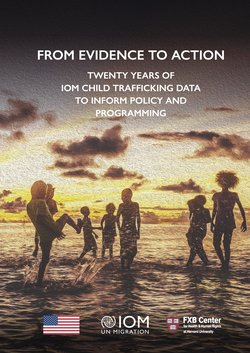
From Evidence to Action: Twenty Years of IOM Child Trafficking Data to Inform Policy and Programming

By International Organization for Migration and the François-Xavier Bagnoud Center for Health and Human Rights at Harvard University.

Despite efforts, large numbers of children continue to fall victim to traffickers worldwide, due to inequitable social, economic, environmental and political factors that engender exploitative and discriminatory practices. A critical component of countering trafficking is reliable and up-to-date data, to empirically ground interventions, though actionable data are limited, and child victims are typically hard to reach. This report, based on analysis of extensive, globally sourced data, is the first of its kind and analyses primary data from more than 69,000 victims of trafficking of 156 nationalities, trafficked in 186 countries, who registered with IOM in its 113 countries of operation, using the IOM Victims of Trafficking Database (VoTD) - the largest available international database of individual victims of trafficking.

International Organization for Migration and the François-Xavier Bagnoud Center for Health and Human Rights at Harvard University. 2023. 88p.

download
Getting Out: A National Framework for Escaping Human Trafficking for Sexual Exploitation in Canada

By Amanda Noble, Isaac Coplan, Jaime Neal, Amanda Suleiman, Susan McIntyre

Exiting sex trafficking can be a long and arduous process, with survivors having many needs that must be addressed before, during and after exiting. Often this process takes many attempts. To date, very little work has been done to document the process survivors must undergo in order to successfully escape from sex trafficking or to document their specific needs while attempting to do so. The following pages detail the findings of a national research project conducted in eight Canadian cities: Vancouver, Winnipeg, Toronto, Niagara Falls, Thunder Bay, Montreal, Halifax, and St. John’s. Through a combination of focus groups and interviews, we spoke with 201 stakeholders from 147 organizations, including service providers, healthcare professionals, police, and most importantly, 50 survivors of sex trafficking. This research project sought to answer five key questions related to exiting the sex industry: What is the process of exiting sexual exploitation? What are the major barriers to escaping sex trafficking? What basic, instrumental, and psychological needs do survivors have when exiting sex trafficking? At what point in the journey are certain needs more pressing?….. This report aims to provide guidance to service providers (including frontline agencies, health care providers, first responders and child protection agencies) so that they can better understand the unique and complex needs of those who have survived sex trafficking.

Toronto: Covenant House & The Hindsight Group. 2020. 84p.

download
From Evidence to Action: Twenty years of IOM child trafficking data to inform policy and programming

By Digidiki, V., J. Bhabha, K. Connors, H. Cook, C. Galez-Davis, C. Hansen, M. Lane, S. Laursen, and L. Wong,  The International Organization for Migration and the François-Xavier Bagnoud Center for Health and Human Rights at Harvard University.

Despite efforts, large numbers of children continue to fall victim to traffickers worldwide, due to inequitable social, economic, environmental and political factors that engender exploitative and discriminatory practices. A critical component of countering trafficking is reliable and up-to-date data, to empirically ground interventions, though actionable data are limited, and child victims are typically hard to reach. This report, based on analysis of extensive, globally sourced data, is the first of its kind and analyses primary data from more than 69,000 victims of trafficking of 156 nationalities, trafficked in 186 countries, who registered with IOM in its 113 countries of operation, using the IOM Victims of Trafficking Database (VoTD) - the largest available international database of individual victims of trafficking.

The report shows that child trafficking is a multifaceted and complex phenomenon that continues to spread and evolve within and across borders. No age range, no gender and no nationality are immune to child trafficking; it is a truly global phenomenon. However, the study provides evidence of important trends and dynamics, linked to factors such as age, gender and geography, that help further our understanding of the phenomenon, with the potential to inform policy and programming.

Geneva: IOM, 2023. 88p.

download
Operations research and analytics to combat human trafficking: A systematic review of academic literature

Geri L. DimasI, Renata A. Konrad2 , Kayse Lee MaassID3 , Andrew C. Trapp

Human trafficking is a widespread and compound social, economic, and human rights issue occurring in every region of the world. While there have been an increasing number of antihuman trafficking studies from the Operations Research and Analytics domains in recent years, no systematic review of this literature currently exists. We fill this gap by providing a systematic literature review that identifies and classifies the body of Operations Research and Analytics research related to the anti-human trafficking domain, thereby illustrating the collective impact of the field to date. We classify 142 studies to identify current trends in methodologies, theoretical approaches, data sources, trafficking contexts, target regions, victim-survivor demographics, and focus within the well-established 4Ps principles. Using these findings, we discuss the extent to which the current literature aligns with the global demographics of human trafficking and identify existing research gaps to propose an agenda for Operations Research and Analytics researchers. 

. PLoS ONE 17(8), 2022: e0273708. 

download
Trafficking in Children and Young Persons in Finland

By Elina Kervinen, Natalia Ollus

  HEUNI and the Assistance system for victims of human trafficking have analysed whether trafficking of children occurs in Finland and what forms of human trafficking may exist in Finland. In addition to trafficking in human beings, the report examines exploitation related to or indicative of the same, as well as risk and vulnerability factors that create conditions for such exploitation. In addition to minors, the report included young people 18–21 years of age, as many adolescents have been exploited as minors but have either only received assistance as an adult or have been victimised after reaching adult age. The report covers exploitation of children and young persons who are members of the majority population or have a foreign background, including children and young persons who are asylum seekers. The report includes both the cases of exploitation that took place in Finland and those that were identified in Finland. This means that the actual exploitation may have occurred in Finland, in a child’s home country or country of origin, or en route to Finland. The report answers the following research questions: 1) Which forms of trafficking of children exists in Finland, 2) What kinds of cases have been reported to authorities, organisations and other actors, 3) How these parties have acted in the cases reported to them, and 4) How trafficking in children can be identified and prevented in Finland. The focus of the report is on understanding and describing the nature of the phenomenon on the basis of individual case examples. The report utilises both quantitative and qualitative information obtained from an online survey directed at professionals and interviews with experts. We have also used statistics of the Assistance system for victims of human trafficking on child victims of human trafficking and case descriptions of the forms of human trafficking experienced by children. Between 2006 and 2018, the Assistance system for victims of human trafficking assisted 55 children under 18 years of age and 141 young persons (aged 18 to 21). These figures show how many children and young persons have been guided into the assistance system, but they do not describe the extent of the phenomenon in Finland, as many cases remain unidentified as human trafficking. On the basis of this report, it appears that the exploitation of children and young people is not always seen through the framework of trafficking in human beings: rather, it is understood as some other form of exploitation. According to the assessment by experts, as obtained from interviews and the survey results, exploitation that took place in Finland was most commonly sexual exploitation, such as forced prostitution, commercial sexual exploitation of a child or sexual exploitation that occurs or begins via the Internet. The report also reveals cases of forced marriage and forced criminal activity in Finland. Sexual exploitation and forced marriages are the most common forms of exploitation experienced by children and young people in their home country or country of origin. En route to Finland, children and young people have experienced many forms of sexual exploitation and labour exploitation. According to this report, sexual exploitation appears to be the most  identifiable form of exploitation related to human trafficking.

Helsinki: European Institute for Crime Prevention and Control, affiliated with the United NationsHEUNI, 2019. 115p.

download
Labour Exploitation and Public Procurement: Guide for risk management in national supply chains

  By Anni Lietonen and Natalia Ollus

  The guide has been prepared in connection with the Action plan for effective public procurement (i.e., the Procurement Finland Strategy), coordinated by the Min - istry of Finance and the Association of Finnish Local and Re - gional Authorities. The project was built on the objectives of the Social Sustainability Group operating as part of the Pro - curement Finland Strategy, which include the promotion of human rights in public procurement and respecting funda - mental rights at work. By combating labour exploitation and human trafficking as part of public procurement procedures, contracting units can contribute to preventing fraudulent ac - tivities and crimes, and to promoting the implementation of human rights and respect for the fundamental principles of working life. The proposed measures, views and interpretations presented in this publication represent the authors' views and do not necessarily reflect the official position of the par - ties involved in the implementation of the Procurement Fin - land strategy. This guide has been prepared for the public procurement context in Finland, and for the application of Finnish laws and instructions. However, public procurers and businesses from other countries can also benefit from the content of the guide. When implementing the recom - mendations in the guide, public contracting entities must ensure that their measures comply with the na - tional procurement and data protection legislations, the Act on the Contractor’s Obligations and Liabili - ty when Work is Contracted Out, including other key obligations.   

Helsinki: European Institute for Crime Prevention and Control, affiliated with the United Nations HEUNI, 2021. 61p.  

download