Open Access Publisher and Free Library
SOCIAL SCIENCES.jpeg

SOCIAL SCIENCES

Social sciences examine human behavior, social structures, and interactions in various settings. Fields such as sociology, psychology, anthropology, and economics study social relationships, cultural norms, and institutions. By using different research methods, social scientists seek to understand community dynamics, the effects of policies, and factors driving social change. This field is important for tackling current issues, guiding public discussions, and developing strategies for social progress and innovation.

Posts in social sciences
The Making Of The English Working Class

By E. P. Thompson

From the introduction: “This book has a clumsy title, but it is.one which meets its purpose. making, because it is a study in an active process, which owes as much to agency as to conditioning. The working class did not rise like the sun at an appointed time. It was present at its own making. Class, rather than classes, for reasons which it is one purpose of this book to examine. There is, of course, a difference. "Work­ ing classes" is a descriptive term, which evades as much as it defines. It ties loosely together a bundle of discrete phenomena. There were tailors here and weavers there, and together they make up the working classes.”

Vintage Books· A Division Of Random House. New York. 1963. 423p. CONTAINS MARK-UP

Read/DOWNLOAD
Madness And Civilization: A History of Insanity in the Age of Reason

By Michel Foucault. Translation by Richard Howard

From Chapter 1: “At the end of the Middle Ages, leprosy disappeared from the Western world. In the margins of the community, at the gates of cities, there stretched wastelands which sickness had ceased to haunt but had left sterile and long uninhabitable. For centuries, these reaches would belong to the non-human. From the fourteenth to the seventeenth century, they would wait, soliciting with strange incanta- tions a new incarnation of disease, another grimace of ter- ror, renewed rites of purification and exclusion.”

Vintage Random House. 1965. 317p.

Read
The Authoritarian Personality

By T. W. Adorno, Else Frenkel-Brunswik, Daniel ]. Levinson and R. Nevitt Sanford.

At this moment in world history anti-Semitism is not manifesting itself with the full and violent destructiveness of which we know it to be capable. Even a social disease has its periods of quiescence during which the social scientists, like the biologist or the physician, can study it in the search for more effective ways to prevent or reduce the virulence of the next outbreak.

Today the world scarcely remembers the mechanized persecution and extermination of millions of human beings only a short span of years away in what was once regarded as the citadel of Western civilization. Yet the con­ science of many men was aroused. How could it be, they asked each other, that in a culture of law, order, and reason, there should have survived the irrational remnants of ancient racial and religious hatreds? (From the Foreword).

American Jewish Committee. Pub. III. 1950. 989p.

Read
Marginal People in Deviant Places: Ethnography, Difference, and the Challenge to Scientific Racism

By Janice M. Irvine

Marginal People in Deviant Places revisits early- to mid-twentieth-century ethnographic studies, arguing that their focus on marginal subcultures—ranging from American hobos, to men who have sex with other men in St. Louis bathrooms, to hippies, to taxi dancers in Chicago, to elderly Jews in Venice, California—helped produce new ways of thinking about social difference more broadly in the United States. Irvine demonstrates how the social scientists who told the stories of these marginalized groups represented an early challenge to then-dominant narratives of scientific racism, prefiguring the academic fields of gender, ethnic, sexuality, and queer studies in key ways. In recounting the social histories of certain American outsiders, Irvine identifies an American paradox by which social differences are both despised and desired, and she describes the rise of an outsider capitalism that integrates difference into American society by marketing it.

Ann Arbor: University of Michigan Press, 2022. 349p.

Learn more
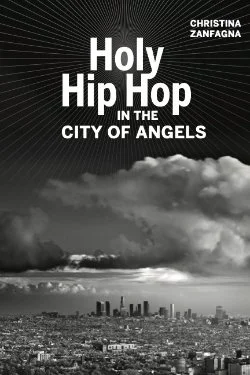
Holy Hip Hop in the City of Angels

By Christina Zanfagna

In the 1990s, Los Angeles was home to numerous radical social and environmental eruptions. In the face of several major earthquakes and floods, riots and economic insecurity, police brutality and mass incarceration, some young black Angelenos turned to holy hip hop—a movement merging Christianity and hip hop culture—to “save” themselves and the city. Converting street corners to open-air churches and gangsta rap beats into anthems of praise, holy hip hoppers used gospel rap to navigate complicated social and spiritual realities and to transform the Southland’s fractured terrains into musical Zions. Armed with beats, rhymes, and bibles, they journeyed through black Lutheran congregations, prison ministries, African churches, reggae dancehalls, hip hop clubs, Nation of Islam meetings, and Black Lives Matter marches. Zanfagna’s fascinating ethnography provides a contemporary and unique view of black LA, offering a much-needed perspective on how music and religion intertwine in people’s everyday experiences.

Oakland, CA: University of California Press, 2017. 220p.

download
Exposed: Living with scandal, rumour, and gossip

By Mia-Marie Hammarlin

This book illuminates the personal experience of being at the centre of a media scandal. The existential level of that experience is highlighted by means of the application of ethnological and phenomenological perspectives to extensive empirical material drawn from a Swedish context. The questions raised and answered in this book include the following: How does the experience of being the protagonist in a media scandal affect a person’s everyday life? What happens to routines, trust, and self-confidence? How does it change the basic settings of his or her lifeworld? The analysis also contributes new perspectives on the fusion between interpersonal communication that takes place face to face, such as gossip and rumours, and traditional news media in the course of a scandal. A scandal derives its momentum from the audiences, whose engagement in the moral story determines its dissemination and duration. The nature of that engagement also affects the protagonist in specific ways. Members of the public participate through traditional oral communication, one vital aspect of which is activity in digital, social forums. The author argues that gossip and rumour must be included in the idea of the media system if we are to be able to understand the formation and power of a media scandal, a contention which entails critiques of earlier research. Oral interpersonal communication does not disappear when new communication possibilities arise. Indeed, it may be invigorated by them. The term news legend is introduced, to capture the entanglement between traditional news-media storytelling and oral narrative

Lund: Lund University Press, 2019. 208p.

download
Enough Already! A Socialist Feminist Response to the Re-emergence of Right-Wing Populism and Fascism in Media

By Faith Agostinone Wilson

This text analyses the rapid rise of global authoritarian populism and fascism and how these movements incorporate misogyny into their ideologies within and beyond social media. Readership: Readership includes those interested in critical, Marxist, and feminist analyses of the role of media in the rise of authoritarian populism and fascism, within the context of recent political events.

Leiden; Boston: Brill, 2020. 230p.

download
Creating Chaos Online: Disinformation and Subverted Post-Publics

By Asta Zelenkauskaitė

With the prevalence of disinformation geared to instill doubt rather than clarity, Creating Chaos Online unmasks disinformation when it attempts to pass as deliberation in the public sphere and distorts the democratic processes. Asta Zelenkauskaitė finds that repeated tropes justifying Russian trolling were found to circulate across not only all analyzed media platforms’ comments but also across two analyzed sociopolitical contexts suggesting the orchestrated efforts behind messaging. Through a dystopian vision of publics that are expected to navigate in the sea of uncertain both authentic and orchestrated content, pushed by human and nonhuman actors, Creating Chaos Online offers a concept of post-publics. The idea of post-publics is reflected within the continuum of treatment of public, counter public, and anti-public. This book argues that affect-instilled arguments used in public deliberation in times of uncertainty, along with whataboutism constitute a playbook for chaos online.

Ann Arbor: University of Michigan Press, 2022. 318p.

download
The Complexity of Evil: Perpetration and Genocide By Timothy Williams

By Timothy Williams

Why do people participate in genocide? The Complexity of Evil responds to this fundamental question by drawing on political science, sociology, criminology, anthropology, social psychology, and history to develop a model which can explain perpetration across various different cases. Focusing in particular on the Holocaust, the 1994 genocide against the Tutsi in Rwanda, and the Khmer Rouge genocide in Cambodia, The Complexity of Evil model draws on, systematically sorts, and causally orders a wealth of scholarly literature and supplements it with original field research data from interviews with former members of the Khmer Rouge. The model is systematic and abstract, as well as empirically grounded, providing a tool for understanding the micro-foundations of various cases of genocide. Ultimately this model highlights that the motivations for perpetrating genocide are both complex in their diversity and banal in their ordinariness and mundanity.

New Brunswick, NJ: Rutgers University Press, 2020. 281p.

download
The Bastille Effect: Transforming Sites of Political Imprisonment

By Michael Welch

The “Bastille Effect” refers to the unique ways that former sites of political imprisonment are transformed, physically and culturally. In their afterlives, these sites represent sustained efforts to hold perpetrators accountable for state violence. For that narrative to surface, the sites must be cleansed of their profane past. In some cases, clergy are even enlisted to perform purifying rituals that grant the sites a new identity as memorials. Around the globe, carceral sites have been dramatically repurposed into places of enlightenment that offer inspiring allegories of human rights. Interpreting the complexities of those common threads, this book weaves together a broad range of cultural, interdisciplinary, and critical thought to offer new insights into the study of political imprisonment, collective memory, and post-conflict societies.

Oakland, CA: University of California Press, 2022. 239p.

download
The Women of January 6th: A Gendered Analysis of the 21st Century American Far-Right

By Hilary Matfess and Devorah Margolin

This report contextualizes women’s participation in the events of the January 6th Capitol Hill Siege within the broader history of women’s participation in American far-right extremism. This report underscores that women have played, and continue to play, active and important roles in American far-right extremist groups. In this movement, women are often incorporated in complementary, rather than egalitarian, roles. Because they are rarely on the ‘frontlines’ of far-right extremist groups’ activities, women’s contributions have often been marginalized or underplayed. However, women’s participation in support roles and their place in right-wing extremist propaganda have been important contributions to extremist groups’ activities and capabilities. In examining women’s participation in the events of January 6th, this report probes how far-right extremist movements in the United States operationalize gender norms and identifies aspects of commonality and difference between groups.

Washington, DC: Program on Extremism, The George Washington University, 2022. 58p.

download
Paving the Way Home: An Evaluation of the Returning Citizens Stimulus Program

By Ivonne Garcia, Margaret Hennessy, Erin Jacobs Valentine, Jedediah Teres and Rachel Sander

Each year in the United States, about 600,000 people are released from state and federal prisons, and millions more are released from local jails. These men and women—known as “returning citizens”—face a tough transition to the community. Often with few financial resources, they must address their day-to-day needs of food, clothing, and housing; obtain identification and access to medical care; and endeavor to find employment and reconnect with family. For those released in 2020 and early 2021, the COVID-19 pandemic made the transition even more difficult. Yet federal emergency relief funds may have done little to help them, since they may not have had access to the funds if they lacked recent work histories or tax returns.

In April 2020, the Center for Employment Opportunities (CEO—a nonprofit organization that provides services to returning citizens, also known as “reentry services”) launched the Returning Citizens Stimulus program (RCS) in an effort to fill this gap. RCS was a cash transfer program that offered financial support to returning citizens during the critical period just after their release. Participants were eligible for three monthly payments totaling up to $2,750 if they reached milestones such as preparing résumés.

New York: MDRC, 2021. 68p.

download
Managing White Supremacy: Race, Politics, and Citizenship in Jim Crow Virginia

By Douglas Smith

Tracing the erosion of white elite paternalism in Jim Crow Virginia, Douglas Smith reveals a surprising fluidity in southern racial politics in the decades between World War I and the Supreme Court's 1954 Brown v. Board of Education decision. Smith draws on official records, private correspondence, and letters to newspapers from otherwise anonymous Virginians to capture a wide and varied range of black and white voices. African Americans emerge as central characters in the narrative, as Smith chronicles their efforts to obtain access to public schools and libraries, protection under the law, and the equitable distribution of municipal resources. This acceleration of black resistance to white supremacy in the years before World War II precipitated a crisis of confidence among white Virginians, who, despite their overwhelming electoral dominance, felt increasingly insecure about their ability to manage the color line on their own terms. Exploring the everyday power struggles that accompanied the erosion of white authority in the political, economic, and educational arenas, Smith uncovers the seeds of white Virginians' resistance to civil rights activism in the second half of the twentieth century.

Chapel Hill, NC:The University of North Carolina Press, 2002. 466p.

Learn more
The Rural Face of White Supremacy: Beyond Jim Crow

By Mark Schultz

Mark Schultz entered rural Hancock County expecting to confirm the standard expectations about race relations in the South, an area characterized by frequent lynchings, systematic segregation, and universal black poverty. What he found undermined and confounded his sweeping assumptions about the ostensibly "solid" South. The Rural Face of White Supremacy is a detailed study of the daily experiences of ordinary people in rural Hancock County, Georgia. Drawing on his own interviews with over two hundred black and white residents, Schultz depicts the rhythms of work, social interaction, violence, power, and paternalism in a setting much different from the more widely studied postbellum urban South.By acting on the basis of personal rather than institutional relationships, Schultz argues, Hancock County residents experienced more fluid interactions and more freedom than their urban counterparts had. This freedom created a space for interracial relationships that included mixed housing, midwifery, church services, meals, and even common-law marriages.

Urbana, IL: University of Illinois Press, 2007. 337p.

download
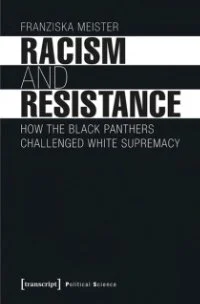
Racism and Resistance: How the Black Panthers Challenged White Supremacy

By Franziska Meister

Even a cursory look at American society today reveals that protests against racial discrimination are by no means a thing of the past. What can we learn from past movements in order to understand the workings of racism and resistance? In this book, Franziska Meister revisits the Black Panther Party and offers a new perspective on the party as a whole and its struggle for racial social justice. She shows how the Panthers were engaged in exposing structural racism in the U.S. and depicts them as uniquely resourceful, imaginative, and subversive in the ways they challenged white supremacy while at the same time revolutionizing both the self-conception and the public image of black people. Meister thus highlights an often marginalized aspect of the Panthers: how they sought to reach a world beyond race—by going through race. Theirs, she argues, is a message well worth considering in an age of "color blindness."

Bielefeld: Transcript Verlag, 2017. 243p.

downloas
Two Sides of a Barricade: (Dis)order and Summit Protest in Europe

By Christian Scholl

Investigates how activists confront global powers with their street-level dissent.Two Sides of a Barricade argues that to construct global democracy, conflict and dissent must be taken seriously. Christian Scholl explores the political significance of the confrontations within four sites of interaction: bodies, space, communication, and law. Each site of struggle provides a different entry point to understand the influence of protester and police tactics on each other. At the same time, the four sites of struggle allow a comprehensive analysis of how the contestation of global hegemonic forces during summit protests trigger a preemptive shift in social control through increased deployment of biopolitical forms of power.

Albany: State University of New York Press, 2013. 439p.

downloas
Name, Shame and Blame: Criminalising Consensual Sex in Papua New Guinea

By Christine Stewart

Papua New Guinea is one of the many former British Commonwealth colonies which maintain the criminalisation of the sexual activities of two groups, despite the fact that the sex takes place between consenting adults in private: sellers of sex and males who have sex with males. The English common law system was imposed on the colonies with little regard for the social regulation and belief systems of the colonised, and in most instances, was retained and developed post-Independence, regardless of the infringements of human rights involved.

Now the HIV pandemic has thrown a spotlight, not altogether welcome, on the sexual activities of these two groups. In Papua New Guinea, a growing body of behavioural research has focused on such matters as individual sexual partnering, condom use and awareness of HIV. My work, however, has a different purpose. I chose the terms in the title to highlight a nexus which I believe exists between the criminal law and negative attitudes of society. At an international level, the argument has been put that decriminalising sex work and sodomy will facilitate HIV epidemic management, reducing the stigma and discrimination these groups encounter and making them easier to reach. I undertook my research therefore with the aim of gaining deeper understanding of the effects the current situation of criminalisation might have on the social lives of these criminalised people today, in the country generally and in Port Moresby the capital in particular, and whether these effects might provide evidence to support the argument for law reform.

Canberra: ANU Press, 2014. 394p.

download
Selling Sex in the City: A Global History of Prostitution, 1600s-2000s

Edited by Magaly Rodríguez García, Lex Heerma van Voss, and Elise van Nederveen Meerkerk

Selling Sex in the City offers a worldwide analysis of prostitution that takes a long historical approach which covers a time period from 1600 to the 2000s. The overviews in this volume examine sex work in more than twenty notorious “sin cities” around the world, ranging from Sydney to Singapore and from Casablanca to Chicago. Situated within a comparative framework of local developments, the book takes up themes such as labour relations, coercion, agency, gender, and living and working conditions. Selling Sex in the City thus reveals how prostitution and societal reactions to the trade have been influenced by colonization, industrialization, urbanization, the rise of nation states, imperialism, and war, as well as by revolutions in politics, transport, and communication.

Leiden; Boston: Brill, 2017. 909p.

download
Beerhouses, Brothels and Bobbies: Policing by consent in Huddersfield and the Huddersfield district in the mid-Nineteenth century

By David Taylor

Professor David Taylor has established a fine reputation for his books and articles on the history of policing in England. This new book on Huddersfield policing looks at the mid-nineteenth century and issues facing the local area in relation to policing a centre of West Riding textile production.

Huddersfield, UK: University of Huddersfield Press, 2016. 301p.

download
Warez:The Infrastructure and Aesthetics of Piracy

By Martin Paul Eve

When most people think of piracy, they think of Bittorrent and The Pirate Bay. These public manifestations of piracy, though, conceal an elite worldwide, underground, organized network of pirate groups who specialize in obtaining media – music, videos, games, and software – before their official sale date and then racing against one another to release the material for free. Warez: The Infrastructure and Aesthetics of Piracy is the first scholarly research book about this underground subculture, which began life in the pre-internet era Bulletin Board Systems and moved to internet File Transfer Protocol servers (“topsites”) in the mid- to late-1990s. The “Scene,” as it is known, is highly illegal in almost every aspect of its operations. The term “Warez” itself refers to pirated media, a derivative of “software.” Taking a deep dive in the documentary evidence produced by the Scene itself, Warez describes the operations and infrastructures an underground culture with its own norms and rules of participation, its own forms of sociality, and its own artistic forms. Even though forms of digital piracy are often framed within ideological terms of equal access to knowledge and culture, Eve uncovers in the Warez Scene a culture of competitive ranking and one-upmanship that is at odds with the often communalist interpretations of piracy. Broad in scope and novel in its approach, Warez is indispensible reading for anyone interested in recent developments in digital culture, access to knowledge and culture, and the infrastructures that support our digital age.

Santa Barbara, CA: Punctum Books, 221. 445p.

download