Open Access Publisher and Free Library
CRIME+CRIMINOLOGY.jpeg

CRIME

Violent-Non-Violent-Cyber-Global-Organized-Environmental-Policing-Crime Prevention-Victimization

Posts in Social Sciences
Impacts of Successive Drug Legislation Shifts: Qualitative Observations from Oregon Law Enforcement [Interim Report: Year One]

By Kelsey S. Henderson, Christopher M. Campbell,  Brian Renauer

 This report provides the initial findings of Year 1 of a multi-year project to understand the effects of successive drug policy efforts in Oregon, with special focus given to Ballot Measure 110 (M110). In 2021, M110 decriminalized possession of controlled substance (PCS), and effectively downgraded certain quantities of PCS from a misdemeanor to a E-violation (i.e., a citation), resulting in a maximum $100 fine or a completed health assessment. In addition, M110 also earmarked roughly $300 million for local-level treatment and recovery systems. Prior to M110 other statewide changes in policy (e.g., Justice Reinvestment in 2014), law (de-felonization of PCS in 2017), and the COVID-19 lockdown also likely had important impacts on PCS enforcement, prosecution/sentencing, and public safety outcomes. Ultimately, this study will attempt to parse out the individual impacts of these unique events. In Year 1 we set out to gather officer perceptions regarding M110 and other recent policies that may impact law enforcement practices. We report on the general findings from 23 interviews/focus groups representing ten agencies (two state agencies; four Sheriff’s Departments; and four Police Departments), and six different counties (three categorized as “urban” and three categorized as “rural”). The interview data presented here represent officers’ perceptions and decision-making related to drug crimes, among other public safety issues in the state of Oregon. In addition, we include quantitative data trends to compare to officer perceptions of what’s occurring in Oregon. These data include an early examination of statewide trends in law enforcement arrests for PCS; law enforcement stops, searches, and search outcomes; and drug-related deaths. Analyzing the interviews revealed 25 codes of officer perceptions ranging from characteristics of M110 implementation and impacts to community safety and wellbeing.

Portland: Portland State University, 2023. 47p.

The End of the War on Drugs, the Peace Dividend and the Renewed Fourth Amendment?

By Michael Vitiello   

The War on Drugs profoundly eroded the Fourth Amendment.1 D.C. Circuit Court of Appeals Judge Harry T. Edwards summed it up in the midst of the War when he expressed his “growing concern about the degree to which individual rights and liberties appear to be falling victim to the Government’s ‘War on Drugs.’”2 Scholars have identified many areas where the Supreme Court cut back Fourth Amendment protections as part of the War on Drugs. For instance, the Court has treated the drug-detection dog sniff as “sui generis” and correspondingly refused to recognize such a sniff as a search at all, despite its clear purpose to detect evidence of criminal activity.3 Additionally, the Court has found that police do not engage in Fourth Amendment activity when they fly over a suspect’s property, even when that overflight allows officers to peer into areas within a home’s curtilage that the homeownersought to exclude from the public’s view.4 The Court has also upheld consent searches under circumstances that defy credibility, for example, where a defendant would be able to drive away without more than a traffic ticket, but consents to a search leading to evidence that puts him away for years in prison.5 At the height of the War on Drugs, the Court extended the scope of a vehicle search-incident-to-a-lawful arrest to the entire passenger compartment, including closed containers within the vehicle.6 While, for a time, the Court seemed ready to declare some traffic offenses so trivial that the Fourth Amendment prohibited a custodial arrest,7 the Court rejected such a rule.8 Oddly enough, the Court has held that the Fourth Amendment does not outlaw a custodial arrest even when an officer erroneously believes that he has authority to make that arrest.9 The Court’s unwillingness to allow a defendant to inquire into whether a traffic stop was pretextual at a suppression hearing also contributes to the erosion of Fourth Amendment protections.

73 OKLA. L. REV. 285 (2021)  

Alabama's War on Marijuana: Assessing the Fiscal and Human Toll of Criminalization

By Alabama Appleseed

Report Highlights: Police in Alabama made 2,351 arrests for marijuana possession in 2016. This study analyzed demographic data about the people arrested, along with arrest locations, in addition to examining broader impacts. The report also includes an economic analysis of the cost of marijuana prohibition, conducted by two economists at Western Carolina University. The study found that: • Alabama and its municipalities spent an estimated $22 million to enforce the prohibition against marijuana possession in 2016. • Despite studies showing black and white people use marijuana at the same rates, black people were approximately four times as likely to be arrested for either misdemeanor or felony marijuana possession. • The enforcement of marijuana possession laws has created a crippling backlog at the state agency tasked with analyzing forensic evidence in all criminal cases, including violent crimes.  

Montgomery: Alabama Appleseed & Southern Poverty Law Center, 2018,   

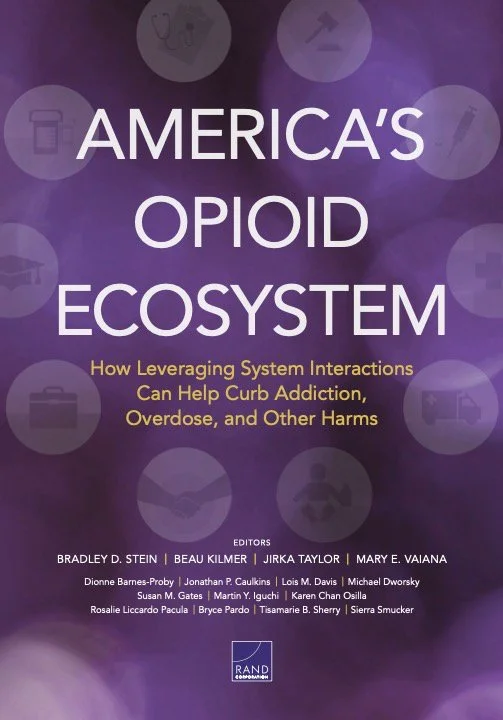
America's Opioid Ecosystem How Leveraging System Interactions Can Help Curb Addiction, Overdose, and Other Harms

Edited by Bradley D. SteinBeau KilmerJirka TaylorMary E. Vaiana

Opioids play an outsized role in America's drug problems, but they also play a critically important role in medicine. Thus, they deserve special attention. Illegally manufactured opioids (such as fentanyl) are involved in a majority of U.S. drug overdoses, but the problems are broader and deeper than drug fatalities. Depending on the drugs involved, there can be myriad physical and mental health consequences associated with having a substance use disorder. And it is not just those using drugs who suffer. Substance use and related behaviors can significantly affect individuals' families, friends, employers, and wider communities. Efforts to address problems related to opioids are insufficient and sometimes contradictory. In this 600-page report, researchers provide a nuanced assessment of America's opioid ecosystem, highlighting how leveraging system interactions can reduce addiction, overdose, suffering, and other harms. At the core of the opioid ecosystem are the individuals who use opioids and their families. Researchers also include chapters on ten major components of the opioid ecosystem: substance use disorder treatment, harm reduction, medical care, the criminal legal system, illegal supply and supply control, first responders, the child welfare system, income support and homeless services, employment, and education.

Santa Monica, CA: RAND, 2023. 618p.

Opioid Use Disorder Screening and Treatment in Local Jails, 2019.

By Laura M. Maruschak, Todd D. Minton, and Zhen Zeng

This report provides data on the screening and treatment practices of local jail jurisdictions for opioid use disorder. It presents the prevalence of screenings among jail admissions and rates of positive screenings. It describes the prevalence of jail admissions receiving medication for opioid withdrawal and of the confined population receiving medication-assisted treatment for opioid use disorder. The report also details differences by jail characteristics and state rates of opioid overdose deaths.

  Washington, DC: U.S. Department of Justice, Office of Justice Programs, Bureau of Justice Statistics, 2023. 25p.  

A Synthetic Age: The Evolution of Methamphetamine Markets in Eastern and Southern Africa

By Jason Eligh

The report provides an analytical summary of meth markets that is grounded in data collected in 10 countries across the region with details of specific retail price points, commentary on domestic meth distribution systems and structures, and discussion of common structural characteristics across the region that enable and sustain these markets. Furthermore, the data generated from research undertaken for this report is intended to contribute to the broader regional objective of constructing an open-source database of time-series, country-specific illicit commodity price data, where applicable and practicable.

Geneva: Global Initiative Against Transnational Organized Crime, 2021. 104p,

The Flow of Precursor Chemicals for Synthetic Drug Production in Mexico

By Steven Dudley, Victoria Dittmar, Sara García, Jaime López-Aranda, Annie Pforzheimer, and Ben Westhoff 

 Precursors are transported to Mexico via cargo ships or air cargo, traveling direct or via circuitous routes. Cargo is often mislabeled, camouflaging the contents, purpose, or amount of their shipment. In Mexico, brokers and independent buyers facilitate this trade, filing paperwork, creating fictitious companies, or bribing officials. The chemicals then make their way to small producers. Often referred to as “cooks,” these producers synthesize the precursors into illicit synthetic drugs that are then sold to large buyers and transport specialists. Two large criminal networks buy and move synthetic drugs in bulk: the Sinaloa Cartel and Jalisco Cartel New Generation (Cartel de Jalisco Nueva Generación - CJNG). These networks are responsible for bringing this product across the most difficult part of its journey and thus charge a premium for their services. After they sell the drugs wholesale, they are largely absent, leaving the distribution and retail sales to other local criminal networks.

The precursor industry -- and the synthetic drug industry writ large -- is so challenging to disrupt precisely because it works across legal and illegal spheres, involves many layers and different criminal networks, and has many means to obtain its final objective: the sale of synthetic drugs to an increasing number of consumers. Those consumers are not just in the United States where synthetic drugs -- in particular fentanyl -- are responsible for tens of thousands of drug overdoses per year. Places like Mexico are experiencing a dramatic uptick in synthetic drug consumption, mostly methamphetamine but also fentanyl. The synthetic drug industry is also having ill effects on the environment in Mexico and is behind a surge in violence in the corridors where it is trafficked and sold on the local markets.

The problem requires governments to rethink their traditional strategies for fighting illicit drugs. In addition to developing regional and global coalitions to monitor and regulate the chemicals, governments must enlist private industry to play a much more active role in mitigating the trade and limiting the spread of these destructive substances.

Washington DC: InSight Crime, 2023. 147p.

The Correspondence of Jeremy Bentham, 5 Volumes

The first five volumes of the Correspondence of Jeremy Bentham contain over 1,300 letters written both to and from Bentham over a 50-year period, beginning in 1752 (aged three) with his earliest surviving letter to his grandmother, and ending in 1797 with correspondence concerning his attempts to set up a national scheme for the provision of poor relief. Against the background of the debates on the American Revolution of 1776 and the French Revolution of 1789, to which he made significant contributions, Bentham worked first on producing a complete penal code, which involved him in detailed explorations of fundamental legal ideas, and then on his panopticon prison scheme. Despite developing a host of original and ground-breaking ideas, contained in a mass of manuscripts, he published little during these years, and remained, at the close of this period, a relatively obscure individual. Nevertheless, these volumes reveal how the foundations were laid for the remarkable rise of Benthamite utilitarianism in the early nineteenth century.


Volume 1 . 1752-76. Edited by Timothy  L.S. Spriggs
London: UCL Press, 2017. 432p.


Volume 2:  1 7 7 7 – 8 0 Edited by Timothy L.S. Spriggs
London: UCL Press, 2017. 560p.


Volume 3:  January 1781 to October 1788. Edited by Ian R. Christie.
London: UCL Press, 2017. 656p.


Volume 4: October 1788 to December 1793. Edited by Alexander Taylor Milne
London: UCL Press, 2017. 554p.


Volume 5:  January 1794 to December 1797 . Edited by  Alexander Taylor Milne 
London: UCL Press, 2017. 428p.


The Enemy Within: Homicide and Control in Eastern Finland in the Final Years of Swedish Rule 1748-1808

By Anu Koskivirta

"This work explores the quantitative and qualitative development of homicide in eastern Finland in the second half of the eighteenth century and the early years of the nineteenth. The area studied comprised northern Savo and northern Karelia in eastern Finland. At that time, these were completely agricultural regions on the periphery of the kingdom of Sweden. Indeed the majority of the population still got their living from burn-beating agriculture. The analysis of homicide there reveals characteristics that were exceptional by Western European standards: the large proportion of premeditated homicides (murders) and those within the family is more reminiscent of modern cities in the West than of a pre-modern rural society. However, there also existed some archaic forms of Western crime there. Most of the homicides within the family were killings of brothers or brothers-in law, connected with the family structure (the extended family) that prevailed in the region. This study uses case analysis to explore the causes for the increase in both familial homicide and murder in the area. One of the explanatory factors that is dealt with is the interaction between the faltering penal practice that then existed and the increase in certain types of homicide."

Helsinki: Finnish Literature Society / SKS, 2003. 217p.

Catch Me If You Can: Illicit Flows Through Balkan Airports

By  Ruggero Scaturro

This report applies the ‘hotspots’ approach that has been used by the Global Initiative Against Transnational Organized Crime’s (GI-TOC) Observatory of Illicit Economies in South Eastern Europe to analyze organized crime in the Western Balkans as well as the activities of criminal groups from the region in other parts of the world, as exposed in the earlier ‘Transnational tentacles’ report.

As in the context of the risk assessment conducted on Western Balkan ports last year, this approach examines places that are associated with organized crime (hotspots), rather than people or markets. The objective is to focus on the factors that make these locations vulnerable or attractive to organized crime; assess the internal dynamics and players; plot the locations on a map and connect the dots between them to get a clearer overview of the geography of crime in the region.

When researching hotspots of criminal activity in the Western Balkans and the activities of Balkan criminal groups abroad, it became evident that there were a growing number of police and customs operations in major international airports, particularly in Tirana (Albania), Skopje (North Macedonia) and Belgrade (Serbia). These operations merited a closer look, so it was decided that an organized crime-based security threat assessment of airports in the Western Balkans should be undertaken. Although illicit activities are also being conducted using private jets that land at minor airports and airstrips, it was beyond the scope of this study to analyze every aviation site in the Western Balkans. Rather, the focus is limited to two major airports, which are presented as case studies: Belgrade and Skopje’s international airports. These seem to be the hubs for illicit activities related to human trafficking, smuggling of migrants and goods, as well as main entry points for shipments of drugs and precursors.

Using a similar model to the research conducted for the report ‘Portholes: Exploring the maritime Balkan routes’, we developed a methodology for carrying out a risk assessment, together with airport security experts. Among the issues covered by this methodology are airport ownership; trade and passenger volumes; security measures; major illicit markets; criminal actors involved; law enforcement operations; and enabling factors of illicit activity, such as infrastructure, governance and corruption. These assessments were done at the airports of Belgrade and Skopje between November 2022 and January 2023, and involved semi-structured interviews with more than 20 airport experts, including security providers (i.e. representatives of customs, border police, state police, prosecutors’ offices and private security companies), representatives of logistics companies operating in the Western Balkans, international experts on aviation security, academics, and journalists reporting on illicit trade through airports. The findings, outlined in the two case studies, are set out in the report.

The report also provides an analytical overview of security at airports, factors of vulnerability in aviation departing from and arriving in the Western Balkans, and how these vulnerabilities are exploited for criminal purposes. In addition, the report considers how airports are part of a wider regional infrastructure that feeds into a network of trade and travel corridors, and particularly how they serve as nodes connecting Western Europe and Asia. Recommendations to help mitigate the risk of illicit flows through these aviation hotspots are given in the final section of the report.


Geneva.
Global Initiative Against Transnational Organized Crime. 2023 . 47p.

Mind the Gap: Analysis of Research on Illicit Economies in the Western Balkans

By Saša Đorđević

  Organized crime and corruption in the Western Balkans have been on the rise since the 1990s, following the war in former Yugoslavia in 1995 and the political-economic crisis triggered by the collapse of pyramid schemes in Albania in 1997. Accordingly, popular, journalistic and academic research on organized crime in these states – namely, Albania, Bosnia and Herzegovina, Kosovo, Montenegro, North Macedonia and Serbia – has also increased. In 1996, for example, the head of Belgrade’s criminal police, Marko Nicović, published the book Droga: Carstvo zla (Drugs: Evil Empire) about the history of organized drug trade and the current fight to curtail it. In 2001, the Serbian Interior Ministry mapped and systematically identified 118 organized criminal groups for the first time in the White Book.  In 2002, journalist Jelena Bjelica wrote a study on human trafficking in Europe and the Balkans. In 2005, journalist Miloš Vasić published an in-depth profile of the Zemun Clan, which he described as one of the most powerful criminal organizations in the Balkans during their heyday between 1999 and 2003. One of the first regional projects on the impact of organized crime on peace-building in the region was launched in 2006. Organized crime in the region also sparked interest among international scholars, such as Misha Glenny, who, in 2018, published McMafia, about the global rise in organized crime since the 1980s. Despite the surge in research on organized crime in the Western Balkans, the findings are still insufficient and lacking in certain respects. These works reflect three main trends of illicit economies in the Western Balkans. First, the geography of organized crime has advanced from heroin smuggling through the Balkan route to cocaine trafficking from Latin America to Western Europe, and to the region being a source of particular illicit goods such as weapons and cannabis.6 Second, the politics of illicit economies in the region has evolved from being an ecosystem of political protection for crime facilitators to organized corruption that enriches and shields those with power. Third, following the end of communism and regional wars, the lack of institutional capacity to provide tangible societal improvements resulted in only partial reforms in criminal justice systems across the region. This is despite the 1999 reforms in justice and home affairs fostered by the EU through the Stabilization and Association Process. The objective of this study prepared by the Global Initiative Against Transnational Organized Crime (GI-TOC) is to systematically and strategically identify gaps in the current understanding of organized crime in the Western Balkans, and to suggest future areas of work that could help close these gaps and better understand illicit practices. This gap analysis maps existing knowledge, identifies  trends and emerging issues, and reveals the under-researched aspects of illicit economies in the region. With this approach, this study aims to better understand areas of uncertainty and initiate new studies more quickly. Identifying blind spots in the existing literature is a necessary step for creating a new research agenda, establishing strategic and funding priorities and designing research projects that can build the knowledge base, enhance analysis and contribute to evidence-based policymaking.10 Ultimately, this research agenda should aid in the prevention and disruption of organized crime both in the Western Balkans or perpetrated by criminals from the region. After first describing the methodology and data collection techniques of the gap analysis, the paper explains the scale, scope and impact of organized crime and corruption research in the Western Balkans. It then examines the main thematic focus of research on organized crime in the region – namely, criminal markets, criminal actors, and the resilience of state and non-state actors to organized crime and corruption. The third part lays out recommendations and further steps to better understand and increase knowledge of the illicit economies in the Western Balkans.   

 Geneva:  The Global Initiative Against Transnational Organized Crime. 2023. 38p. 

The Dark Side of Competition: Organized Crime and Violence in Brazil

By Stephanie G. Stahlberg

Brazilian prison gangs have spilled out to the outside world and become criminal enterprises. The expansion of São Paulo’s Primeiro Comando da Capital (PCC) and Rio de Janeiro’s Comando Vermelho into all regions and most states in Brazil signifies a major security concern for the country. A third player, Família do Norte (FDN), poses a challenge to the other organized criminal groups (OCGs), especially in the North region, where the FDN fights to retain control of the lucrative drug trading route through the Amazon. Although organized crime is believed to play a significant role in the violence level in Brazil, no study has been able to measure their presence and activity levels beyond one city or state. This dissertation develops a novel methodology for tracking criminal groups, by using the number of Google searches about each OCG in a given state and year. This method creates a proxy for the OCGs' presence and activity level, which is also used to generate a competition index. The analysis shows that OCG presence by itself does not explain homicide rates well; in fact, some states with high levels of OCG activity have relatively low homicide rates. However, in combination with a highly competitive scenario, the strong presence of these groups can translate into high levels of violence. When all three OCGs are present, the homicide rate is on average five points higher than when there are fewer OCGs present. In places where there is dominance of a single OCG, violence levels are lower. Findings from the data analysis and expert interviews reveal that the homicide reduction occurs because of higher levels of criminal market monopolization and criminal governance. Powerful OCGs replace the state and regulate violence in these communities, and are strong and threatening enough to prevent the state from challenging them directly. This study shows that a decrease in the homicide rate in the presence of OCGs should not be seen as a clear success, but rather as a warning sign that criminality may be more united and stronger.

Baltimore: Johns Hopkins University, 2021. 176p.

Comparative Criminology

By Hermann Mannheim

From the preface: “It happened perhaps eleven years ago, not long before my retirement from the teaching of criminology in the University of London. One day, after I had just completedmy first lecture of the new session and distributed copies of my, notoriously rather lengthy, reading listfor the course, Iwas approached by ayoung girl student who, holding her copy ni her hand, said ni avoice which sounded polite butalsorather determined: Sir, I am quite willing to read a bookon criminology, but itm u s t be only one, in which I can find everything required. Can you recommend such a book?' After some hesitation and with a strong feeling of guilt I replied that I could not comply with her request as there was no such book and she would probably have to read several of the items on my list, whereupon she silently and rather despondently withdrew.”

Boston. Houghton Mifflin Co. 1965. 772p. CONTAINS MARK-UP.

The Arsonist

By Chloe Hooper

London. Hamish Hamilton. 2018. 254p.

On the scorching February day in 2009, a man lit two fires in the Australian state of Victoria, then sat on the roof of his house to watch the inferno. What came to be known as the Black Saturday bushfires killed 173 people and injured hundreds more, making them among the deadliest and most destructive wildfires in Australian history. As communities reeling from unspeakable loss demanded answers, detectives scrambled to piece together what really happened. They soon began to suspect the fires had been deliverately set by an arsonist.

The Arsonist takes readers on the hunt for this man, and inside the puzzle of his mind. But this book is also the story of fire in the Anthropocene. The command of fire has defined and sustained us as a species, and now, as climate change normalizes devastating wildfires worldwide, we must contend with the forces of inequality, and desperate yearning for power, that can lead to such destruction.

Written with Chloe Hooper’s trademark lyric detail and nuance, The Arsonist is a reminder that in the age of fire, all of us are gatekeepers.

Little Black Book of Organized Crime Groups in Western Balkans

By Dušan Stanković

This research focuses on the six European Union (EU) accession candidates from the Western Balkans (WB6): Albania, Bosnia and Herzegovina, Kosovo, Montenegro, North Macedonia and Serbia. Its objectives are to map the phenomenon and main characteristics of organized crime groups (OCGs) in the region. The analysis is based on the research of both primary and secondary data, using expert interviews, police announcements, official statistics, national SOCTA documents, etc. The study finds that OCGs from some countries such as Albania, Montenegro and Serbia developed largely international networks with 30 and more members. These OCGs represent the main actors and leaders of organized crime (OC) in the region. Other OCGs which have fewer members (from 3-4 to around 15), perform mainly on a national level or as facilitators of bigger OCGs. Male gender is the most common (in about 90% of the cases). Women are engaged in logistic activities, although there are individual cases where they are higher in the criminal group hierarchy. The age of the members can vary between 20 and 50 years old, depending on the activity and territory. The estimated average is around 35, but there are cases of members aged 65 and over. The nationalities and ethnicities of the OCGs follow the patterns of their regions, having solid bonds with their families and traditions. However, differences in background do not stop OCGs to cooperate and make criminal networks. The main criminal activities performed by the OCGs in WB6 are the illicit drug trafficking and migrant smuggling. At the same time, illegal firearms and explosives trafficking and money laundering serve as facilitators of the major activities. Less frequent crime types are organized property crimes, where smuggling of goods is the most prominent activity. Trafficking in human beings has recently been much-evoked in public, mainly by large migration going through the Balkans and creating opportunities for illegal migration and human trafficking. Still, it seems like the authorities currently do not identify big OCGs in the trafficking of human beings. In addition, cybercrime represents an incremental trend, but there also seem to be no prominent OCGs which perform it as a core activity.  

Belgrade, Serbia:  Belgrade Centre for Security Policy (BCSP), 2022. 48p.

Structural Resilience and Recovery of a Criminal Network After Disruption: A simulation study

By Tomáš Diviák 

Objectives: Criminal networks tend to recover after a disruption, and this recovery may trigger negative unintended consequences by strengthening network cohesion. This study uses a real-world street gang network as a basis for simulating the effect of disruption and subsequent recovery on network structure.

Methods: This study utilises cohesion and centrality measures to describe the network and to simulate nine network disruptions. Stationary stochastic actor-oriented models are used to identify relational mechanisms in this network and subsequently to simulate network recovery in five scenarios.

Results: Removing the most central and the highest-ranking actors have the largest immediate impact on the network. In the long-term recovery simulation, networks become more compact (substantially so when increasing triadic closure), while the structure disintegrates when preferential attachment decreases.

Conclusion: These results indicate that the mechanisms driving network recovery are more important than the immediate impact of disruption due to network recovery.

Journal of Experimental Criminology (2023)

Organised Oil Crime in Nigeria: The Delta paradox -- organised criminals or community saviours?

By Robin Cartwright and Nicholas Atampugre

The Niger Delta is a global focal point for oil crime that has devastated Nigeria's environment, land, air and water.

Niger Delta oil crime is one of the most serious natural resource crimes globally, with the systematic theft, sale and illegal refining of up to 20% of Nigeria’s oil output. Illegal bunkering and artisanal refining have increased exponentially over the past decade. This paper draws on qualitative interviews with Niger Deltan citizens, and government and community experts, to examine the impact on society. While state security forces continue to treat the crime with ‘extreme prejudice’ – destroying illegal camps and transportation – Niger Deltan citizens have normalised it, justifying it as an economic, energy and employment necessity despite its health and environmental toll.

Enact Africa, 2020. 28p.

Democracy Dies Under Mano Dura Anti-crime Strategies in the Northern Triangle

By Christopher Hernandez-Roy and Rubi Bledsoe

A journalist recently made an apt joke about living under President Daniel Ortega’s dictatorship: “Hi, I am from Nicaragua, and I represent your future. I am living what you will be experiencing soon enough: harassment, persecution, and threats to your lives and imprisonment,” he said to a group of Northern Triangle colleagues by way of introduction. This anecdote recalls Charles Dickens’ Ghost of Christmas Yet to Come in his 1843 novella A Christmas Tale, where the ghost portends the demise of Ebenezer Scrooge. In this context, it portends the death of democracy in the Northern Triangle, and the dire effects of democratic backsliding. Up until very recently, the conditions in Nicaragua were starkly different from its neighbors. The Ortega regime is a dictatorship that persecutes and detains opponents at will and with complete impunity. Nicaragua’s Northern Triangle neighbors have been democracies, even if imperfect ones. However, in 2019, the election of Nayib Bukele as president of El Salvador marked the beginning of a stark shift in the anti-crime strategy of the country and a turn toward authoritarian tendencies. The new leader opted to suspend constitutional guarantees and engage in mass incarceration in order to fight crime and gang violence, setting off alarm bells across the region, as concerns grew over democratic backsliding. The self-identified “coolest dictator in the world,” used his background in marketing and social media branding to propel an extreme version of mano dura, or “zero tolerance,” to fight crime. Three years later, Honduras and other countries have taken notice of the appeal of these tactics and are now replicating it, or considering it, in whole or in part. This is a slippery slope for the region and a precedent that poses a great danger to the hemisphere’s democracies.   

Washington, DC: Center for Strategic and International Studies, 2023. 12p.

Narconomics: How To Run A Drug Cartel

By Tom Wainwright

How does a budding cartel boss succeed (and survive) in the $300 billion illegal drug business? By learning from the best, of course. From creating brand value to fine-tuning customer service, the folks running cartels have been attentive students of the strategy and tactics used by corporations such as Walmart, McDonald’s, and Coca-Cola.

And what can government learn to combat this scourge? By analyzing the cartels as companies, law enforcers might better understand how they work—and stop throwing away $100 billion a year in a futile effort to win the “war” against this global, highly organized business.

Your intrepid guide to the most exotic and brutal industry on earth is Tom Wainwright. Picking his way through Andean cocaine fields, Central American prisons, Colorado pot shops, and the online drug dens of the Dark Web, Wainwright provides a fresh, innovative look into the drug trade and its 250 million customers.

The cast of characters includes “Bin Laden,” the Bolivian coca guide; “Old Lin,” the Salvadoran gang leader; “Starboy,” the millionaire New Zealand pill maker; and a cozy Mexican grandmother who cooks blueberry pancakes while plotting murder. Along with presidents, cops, and teenage hitmen, they explain such matters as the business purpose for head-to-toe tattoos, how gangs decide whether to compete or collude, and why cartels care a surprising amount about corporate social responsibility.

More than just an investigation of how drug cartels do business, Narconomics is also a blueprint for how to defeat them

NY. Public Affairs. 2016. 288p.

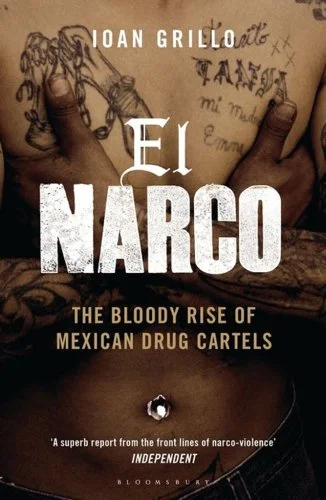
El Narco: The Bloody Rise Of Mexican Drug Cartels

By Ioan Grillo

The world has watched stunned at the bloodshed in Mexico. Thirty thousand murdered since 2006; police chiefs shot within hours of taking office; mass graves comparable to those of civil wars; car bombs shattering storefronts; headless corpses heaped in town squares. The United States throws Black Hawk helicopters and drug agents at the problem. But in secret, Washington is confused and divided about what to do. "Who are these mysterious figures tearing Mexico apart?" they wonder.

London: Bloomsbury, 2017. 250p.