Open Access Free Library
CRIME+CRIMINOLOGY.jpeg

CRIME

Violent-Non-Violent-Cyber-Global-Organized-Environmental-Policing-Crime Prevention-Victimization

Violence at School

By Losefa Aguirre, Fernanda Ramírez-Espinoza, Roman Andres Zarate

This paper estimates the impact of violence perpetrated by peers and school staff on student victims. Leveraging unique administrative data from Chile that links reports of school violence to individual educational records, we address longstanding data limitations that have constrained empirical research on this issue. Using a matched difference-in-differences design, we find that exposure to school violence has persistent negative effects: absenteeism increases by 46–64%, grade retention rates double, and both grades and test scores decline significantly, with impacts lasting up to four years. In the longer term, victims are substantially less likely to graduate from high school or enroll in university, with violence perpetrated by adults having more severe consequences than peer violence. Complementary survey evidence reveals that reported incidents are associated with increased perceptions of violence and discrimination, as well as decreases in school belonging and teacher expectations. While these psychological and perceptual effects tend to fade after one year, the adverse educational consequences persist, underscoring how brief traumatic experiences can lead to long-lasting educational disadvantages.

IZA DP No. 18126 Bonn: IZA – Institute of Labor Economics, 2025. 87p.

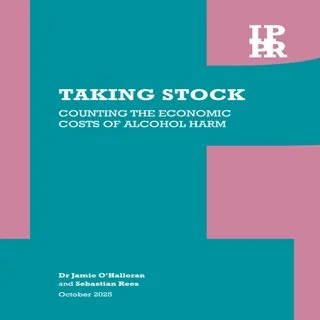
Taking Stock: Counting the Economic Costs of Alcohol Harm

By Jamie O’Halloran and Sebastian Rees

Most people are aware of the health risks of drinking alcohol. Alcohol is known to cause at least seven types of cancer and to be a primary risk factor for more than 30 health conditions. The more alcohol someone drinks, the greater the risk. Despite this, alcohol consumption across the UK remains worryingly high.

The most important fact in this report is that after some years when alcohol consumption was going down in the UK, the trend is now heading in the wrong direction and the health risks are clear. Increased rates of alcohol consumption can already be detected in the rise in both alcohol-related and alcohol-specific mortality since 2019. For example, in 2023, 10,473 people died from alcohol-specific causes in the UK, the highest number on record.

Inequalities

As well as having a deleterious effect on the nation’s health as a whole, harmful levels of alcohol consumption are also a key driver of health inequalities. The health burden of alcohol harm is not spread equally across the UK – people living in Scotland, Northern Ireland and Wales are more likely to die of alcohol-specific causes than those living in England. 

Impact on the workforce

Leaving aside, for the moment, the impact of people developing onset of chronic health conditions such as cancer, cardiovascular disease and anxiety and depression, which often lead to people leaving the labour market, alcohol consumption also has significant effects on the productivity of those in work. It can increase both:

  • absenteeism, where people take time off due to illness and

  • presenteeism, where people are at work but their capacity is reduced.

Previous analysis by the Institute of Alcohol Studies estimates that alcohol consumption costs the economy £5.06 billion a year – with 44 per cent of the cost being due to presenteeism.

The current report builds on existing analysis and takes a closer look at the relationship between alcohol consumption and workforce productivity by using data from Understanding Society – a large longitudinal panel survey of UK households – and findings from a specially commissioned survey, the authors examine alcohol’s economic impact more deeply, including its varied impacts on different sectors of the economy and job roles.

Key findings

  • A quarter of employees feel pressure to drink at workplace events, rising to 38 per cent of 18 to 24 year olds

  • Workplace drinking culture driving absences as 31 per cent of workers call in sick in past year after work events

  • IPPR calls for minimum unit pricing, reintroducing the alcohol duty escalator, and stronger action from employers

The authors say that pressure to drink at work events is contributing to widespread alcohol-related absences and reduced productivity across all sectors.  

From after-work drinks to subsidised bar tabs at company events, alcohol is often embedded in professional life. A quarter (24 per cent) of workers said they sometimes felt pressured to drink when they didn’t want to, rising to 38 per cent among younger employees (aged 18-24). Over a third said drinking at work events excluded non-drinkers or created cliques.

This culture is driving real consequences. One in three UK workers (31 per cent) have called in sick in the past year after drinking at work-related events, while 22 per cent reported working while hungover, and 29 per cent observed colleagues being tired or sluggish after drinking.

Interestingly, young workers and senior executives are among the most affected groups.

London: IPPR, the Institute for Public Policy Research, i2025. 30p.

After the Bloodbath: Is Healing Possible in the Wake of Rampage Shootings?

By James D. Diamond

As violence in the United States seems to become increasingly more commonplace, the question of how communities reset after unprecedented violence also grows in significance. After the Bloodbath examines this quandary, producing insights linking rampage shootings and communal responses in the United States. Diamond, who was a leading attorney in the community where the Sandy Hook Elementary School tragedy occurred, focuses on three well-known shootings and a fourth shooting that occurred on the Red Lake Indian Reservation in Minnesota. The book looks to the roots of Indigenous approaches to crime, identifying an institutional weakness in the Anglo judicial model, and explores adapting Indigenous practices that contribute to healing following heinous criminal behavior. Emerging from the history of Indigenous dispute resolution is a spotlight turned on to restorative justice, a subject no author has discussed to date in the context of mass shootings. Diamond ultimately leads the reader to a positive road forward focusing on insightful steps people can take after a rampage shooting to help their wounded communities heal.

East Lansing: Michigan State University Press. 2019.

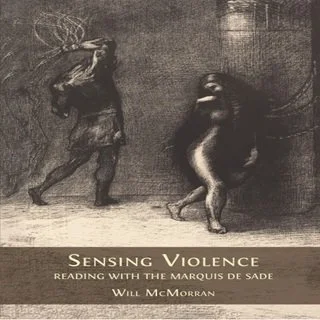
Sensing Violence: Reading with the Marquis de Sade

By Will McMorran

What does reading fictional violence do to us as readers? To find out, this provocative and original book turns to the works of an author synonymous with sexual violence: the Marquis de Sade. Drawing on psychology, cognitive literary studies, and empirical research, it argues that reading is a fundamentally embodied act – and one that implicates us far more than we might like to think in fictional depictions of violence.

This book turns not just to Sade for answers, but to his readers. Where previous studies have focussed either on Sade’s language or his philosophy, this one places the lived experience of actual readers at the heart of its investigations. Taking particular scenes from Sade’s fiction, from a young girl posing as a statue in ‘Eugénie de Franval’ to the brutal rape of the heroine of Justine, this book explores what happens not just on the page but in the minds and bodies of readers as they bring these scenes to life.

Drawing on questionnaires completed by readers of those scenes, and on his own experience as a reader, teacher and translator of Sade, the author challenges the disembodied approach that has dominated Sade studies and literary criticism more broadly over recent decades. This is not just a book about Sade—it’s a radical exploration of what happens to us when we are confronted with scenes of violence. Urgent, accessible, and personal, it offers a new model for understanding reading as a matter of making sensations as well as making sense.

Cambridge, UK: Open Book Publishers, 2025. 368p.

Characteristics of Image-Based Sexual Abuse Recorded by Police

By Tom Sullivan and Merran McAlister

Image-based sexual abuse (IBSA) is the threatened or actual capturing or sharing of an intimate image of a person without their consent. This bulletin describes the findings of an analysis of 771 individuals proceeded against by police for IBSA offences in four jurisdictions in 2022–23. Most alleged offenders were males perpetrating IBSA against females, and offenders were most commonly aged 25–34 years. The analysis also identified differences between IBSA subtypes. Alleged offenders were most likely to have distribution offences, and many also had other non-IBSA offences. The bulletin discusses implications for prevention and detection of IBSA offending.

Statistical Bulletin no. 49. Canberra: Australian Institute of Criminology. 2025. 21p.

The Impacts of CCTV on the impacts of CCTV on Victim-Survivors of Domestic and Family Violence

By Diarmaid Harkin, Mary Iliadis, Jessica Woolley, Marilyn McMahon and Karen Bentley  

Victim-survivors of domestic and family violence (DFV) are increasingly using closed-circuit television (CCTV) systems. To date, the impacts of CCTV systems on victim survivors have been unclear. This paper presents the findings from a world-first study into how victim survivors of DFV experience the use of CCTV systems. It draws on a national survey of 125 DFV support practitioners and 28 in-depth interviews (including with 9 victim-survivors). The findings demonstrate that CCTV can have beneficial impacts on the wellbeing of victim-survivors by providing a sense of safety and security but also carries risks, including that victim-survivors will become hypervigilant.

Trends & issues in crime and criminal justice no. 713. Canberra: Australian Institute of Criminology, 2025. 17p.

Parricide in Australia: findings from the National Homicide Monitoring Program

By Samantha Bricknell and Hannah Miles

This study examines the characteristics of parricide in Australia using 35 years of data from the National Homicide Monitoring Program. Findings illustrate the distinctiveness of parricide and the greater need to consider this form of lethal violence in responses to family violence.Key findingsParricide, or the homicide of a parent by their child, comprises 5% of homicides each year.Almost all parricides were of a single parent, although the homicide of both parents was more common in Australia than in other countries where estimates exist.Offenders were predominantly male but victimisation was more even.Parricide was largely gendered, with sons more likely to kill their fathers and daughters to kill their mothers.Offenders aged 10–17 years committed parricide at higher rates than older homicide offenders and almost a fifth of parricide offenders were delusional at the time of the homicide.

Statistical Bulletin 48. Canberra, Australian Institute of Criminology, 2025. 20p.

Incarceration and Crime Trends: Assessing the Impact of Crime on the Use of Imprisonment

By Tapio Lappi-Seppälä

Over the last 15 years imprisonment rates have declined in Europe on average by 15 percent and in the United States by 30 percent. Does this imply that, after decades long prison growth, we are facing a period of penal moderation? Since crime has also decreased, any assessments of a “moderate turn” are premature without considering how much of this decline is just a consequence of declining crime. This article begins to answer these questions first by examining previous attempts to measure the impact of crime on prison populations. To obtain a more precise view of the causal mechanisms, and to overcome some of the controversies in earlier research, a distinction between volume effects and policy effects is introduced. Empirical analyses are reported using two samples. The long-term sample from the 1960s onwards exemplifies the diversity of penal responses and differing prison trends during the times of increased crime in nine Western countries. Comparisons with 35 European countries from 2008 to 2024 show that prison populations followed declining crime quite closely. The answer to the initial question remains negative: There are ever more prisoners relative to recorded crime and convictions, suggesting a lower custody threshold than before. The number of admissions has declined, but the average length of prison terms has grown in almost all European countries. Despite the nominal decline of prison populations there is no indication that European penal policy is shifting toward leniency.

Crim Law Forum 36, 269–305 (2025).

Stigma, Labelling, and “Corporate Psychopaths”: A Legal Perspective

By Luke Danagher

This paper presents a novel argument proposing greater recognition of the stigmatic nature of the ‘psychopath’ label in the corporate crime context, particularly in relation to its use within academic research and in criminal judgments. Labelling theory and a communicative account of criminal law and punishment are applied to the issue. The stigmatic nature of the label, as well as its potential to over-stigmatise corporate offenders is assessed. Recommendations are forwarded, primarily in relation to the need for greater judicial engagement with the topic of psychopathy and corporate crime, and greater recognition of the stigmatic nature of the psychopathy label. Alternative labels are forwarded.

Crim Law Forum (2025).

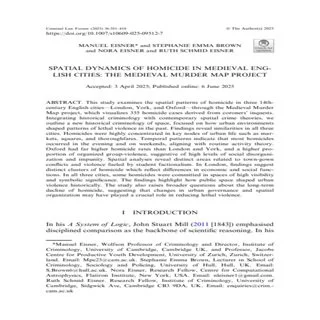
Spatial Dynamics of Homicide in Medieval English Cities: The Medieval Murder Map Project

By Manuel Eisner,  Stephanie Emma Brown,  Nora Eisner &  Ruth Schmid Eisner 

This study examines the spatial patterns of homicide in three 14th-century English cities—London, York, and Oxford—through the Medieval Murder Map project, which visualizes 355 homicide cases derived from coroners’ inquests. Integrating historical criminology with contemporary spatial crime theories, we outline a new historical criminology of space, focused on how urban environments shaped patterns of lethal violence in the past. Findings reveal similarities in all three cities. Homicides were highly concentrated in key nodes of urban life such as markets, squares, and thoroughfares. Temporal patterns indicate that most homicides occurred in the evening and on weekends, aligning with routine activity theory. Oxford had far higher homicide rates than London and York, and a higher proportion of organized group-violence, suggestive of high levels of social disorganization and impunity. Spatial analyses reveal distinct areas related to town-gown conflicts and violence fueled by student factionalism. In London, findings suggest distinct clusters of homicide which reflect differences in economic and social functions. In all three cities, some homicides were committed in spaces of high visibility and symbolic significance. The findings highlight how public space shaped urban violence historically. The study also raises broader questions about the long-term decline of homicide, suggesting that changes in urban governance and spatial organization may have played a crucial role in reducing lethal violence.

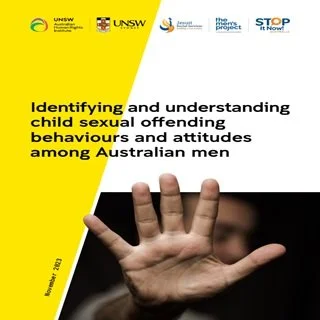
Identifying and Understanding Child Sexual Offending Behaviours and Attitudes Among Australian Men.

By M Salter, D Woodlock, T Whitten, M Tyler, G Naldrett, J Breckenridge, J Nolan, N Peleg

This project aimed to inform efforts to better detect and prevent child sexual abuse through a rigorous analysis of the prevalence and attitudinal, behavioural and demographic correlates of sexual feelings and/or offending against children amongst Australian men. The research measured the prevalence of offending and risk behaviours and attitudes amongst of a weighted sample of 1,945 Australian men over 18 years of age. Key findings of the project Around one in six (15.1%) Australian men reports sexual feelings towards children. Approximately one third of this group reports sexually offending against children. Around one in ten (9.4%) Australian men has sexually offended against children. Approximately half of this group (4.9%) reports sexual feelings towards children. In total, almost one in five (19.6%) Australian men in the study have sexual feelings for children and/or have sexually offended against children. The 4.9% of men with sexual feelings who have sexually offended against children differed from men with no sexual feelings or offending against children on a number of measures: Relationships Ź They were more likely to be married and reported higher levels of social support. Employment and wealth Ź They were almost three times more likely to be working with children. Ź They were more likely to earn a higher income. Health and wellbeing Ź They were more likely to report mild, moderate or severe anxiety and depression. Ź They were over four times more likely to report weekly binge drinking. Childhood abuse and neglect Ź They reported approximately twice the rate of adverse childhood experiences. Ź They were over six times more likely to report being sexually abused as children. Attitudes to child sexual abuse Ź They were more than 25 times more likely to hold attitudes conducive to online child sex offending. Online behaviour Ź They were more likely to use the internet more frequently and intensively. Ź They were much more active on social media. Ź They were significantly more likely to use encrypted apps and privacy services. Ź They were twice as likely to own cryptocurrency and over five times more likely to use cryptocurrency for online purchasing. Pornography consumption Ź They were over eleven times more likely to watch violent pornography and over twenty six times more likely to watch bestiality pornography. Ź They were over sixteen times more likely to purchase sexual content online. 29.6% of those with sexual feelings towards children want help; this is 4.5% of Australian men. These men were more likely to have sexually offended against children online and offline than men with sexual feelings who did not want help. 

Sydney: Australian Human Rights Institute, 2023. 56p.

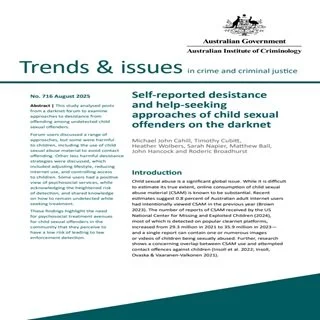
Self-Reported Desistance and Help-Seeking Approaches of Child Sexual Offenders on the Darknet

By  Michael John Cahill, Timothy Cubitt, Heather Wolbers, Sarah Napier, Matthew Ball, John Hancock and Roderic Broadhurst 

This study analysed posts from a darknet forum to examine approaches to desistance from offending among undetected child sexual offenders. Forum users discussed a range of approaches, but some were harmful to children, including the use of child sexual abuse material to avoid contact offending. Other less harmful desistance strategies were discussed, which included adjusting lifestyle, reducing internet use, and controlling access to children. Some users had a positive view of psychosocial services, while acknowledging the heightened risk of detection, and shared knowledge on how to remain undetected while seeking treatment. These findings highlight the need for psychosocial treatment avenues for child sexual offenders in the community that they perceive to have a low risk of leading to law enforcement detection.   

Trends & issues in crime and criminal justice no. 716. Canberra: Australian Institute of Criminology, 2025. . 14p.

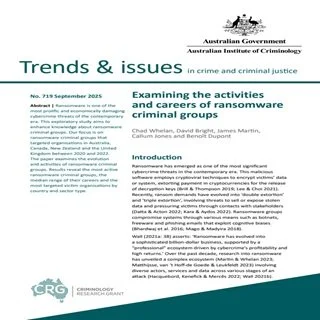
Examining the Activities and Careers of Ransomware Criminal Groups

By Chad Whelan, David Bright, James Martin, Callum Jones and Benoît Dupont

Ransomware is one of the most prolific and economically damaging cybercrime threats of the contemporary era. This exploratory study aims to enhance knowledge about ransomware criminal groups. Our focus is on ransomware criminal groups that targeted organisations in Australia, Canada, New Zealand and the United Kingdom between 2020 and 2022. The paper examines the evolution and activities of ransomware criminal groups. Results reveal the most active ransomware criminal groups, the median range of their careers and the most targeted victim organisations by country and sector type. 

Trends & issues in crime and criminal justice no. 719. Canberra: Australian Institute of Criminology, 2025. 2op.

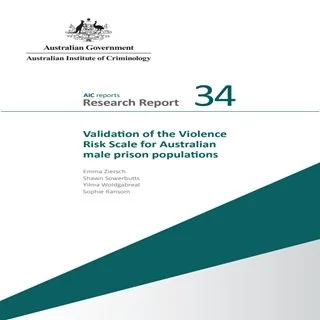
Validation of the Violence Risk Scale for Australian M ale prison populations

By Emma Ziersch, Shawn Sowerbutts, Yilma Woldgabreal, Sophie Ransom

The Violence Risk Scale (VRS) is a tool designed to assess and predict risk of future offending, inform decisions around therapeutic intervention and measure changes in violence risk as a result of treatment. This study investigated the discriminative and predictive validity of the VRS for Australian Aboriginal and non-Indigenous males convicted of violent offending in multiple jurisdictions.

The Violence Risk Scale (VRS) is a risk assessment tool designed to assess and predict risk of future offending, inform decisions around therapeutic intervention and measure changes in violence risk as a result of treatment. While the tool has been used extensively both internationally and in Australia, its applicability to our Australian population is unclear.

This study investigated the discriminative and predictive validity of the VRS for Australian Aboriginal and non-Indigenous males convicted of violent offending in multiple jurisdictions. The VRS total score had moderate discriminative accuracy for violent reoffending at five-year follow-up. However, Aboriginal males were significantly more likely to be categorized as high risk, and additional discrimination measures revealed variation in performance between Aboriginal and non-Indigenous males. Implications of the findings for correctional practice and recommendations to reduce bias in the assessment of Aboriginal offenders are discussed.

 Research Report no. 34. Canberra: Australian Institute of Criminology. 2025. 66p

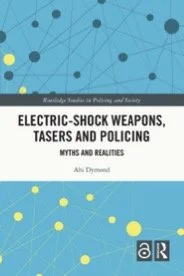
Electric-Shock Weapons, Tasers and Policing: Myths and Realities

By Abi Dymond

Building on five years of research, and drawing on criminology, science and technology studies (STS), socio-legal studies and social psychology, this book is the first non-medical book written on electric-shock weapons, of which the best well known is the TASER brand. The police’s ability to use force is one of their most crucial powers, yet one that has been relatively neglected by criminology. This book challenges some of the myths surrounding the use of these weapons and considers their human rights implications and impact on members of the public and officers alike. Drawing on STS, it also considers the role and impact of electric-shock technologies, examines the extent to which technologies and non-human agency may also play a role in shaping officer decision making and discretion, and contributes to long standing debates about police accountability. This is essential reading for policing scholars around the world, particularly those engaged with use of force, culture and accountability, as well as those engaged with Science and Technology studies.

London; New York: Routledge, 2022. 202p.

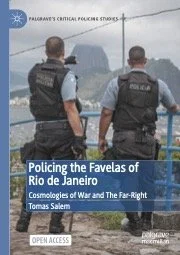
Policing the Favelas of Rio de Janeiro: Cosmologies of War and The Far-Right

By Tomas Salem

This book offers a unique look into the world of policing and the frontline of Brazil’s war on drugs. It analyzes the tensions produced by attempts to modernize Rio de Janeiro’s public security policies. Since the return of democracy in 1985, Rio's police forces have waged war against armed drug gangs based in the city’s favelas, casting the people who live in these communities as internal enemies. In preparation for the Olympics in 2016, the police sought to ‘pacify’ the favelas and their populations through the establishment of Pacifying Police Units (UPPs) in many of the city’s favela communities. Drawing on eight months of ethnographic fieldwork with the police, this book follows officers across the institutional hierarchy in their daily activities, on patrol, and during training. Tracing the genealogies of contemporary forms of policing-as-warfare through the notion of ‘colonial war’ and ‘cultural war’, it highlights the material and ideational dimensions of war as a cosmological force that shapes Brazilian social relations, subjectivities, landscapes, economies, and politics. It draws on the Deleuzian notion of ‘war machine and state dynamics’ to show how practices of elimination co-exist with attempts to transform favela territories and their people and analyzes the link between the moral universe of policing and right-wing populism in Brazil. Through rich and nuanced ethnography, it offers a critical perspective on militarized policing and 21st century forms of authoritarianism.

Cham: Palgrave Macmillan, 2024. 330p.

Creating a Policed Society? The Police and The Public in the Victorian West Riding, c.1840–1900

By David Taylor

Creating a Policed Society? Provides an analysis of the evolution of policing and its impact on society in the West Riding of Yorkshire during the Victorian era. Unlike many previous police histories, which have focussed on specific (mainly urban) forces, it looks at developments across a region and brings out the complex and ongoing debates about policing, the diversity of police provision and the varied impact and responses that took place. As well as drawing on earlier works devoted to specific towns, the book offers a wide-ranging approach that utilises a range of hitherto underused sources that provide important insights into the details of police experience, both individual and collective. The book is structured around three major problem areas that have a relevance beyond the bounds of the West Riding. They are: (1) the extent to which the various police forces can be seen to be efficient; (2) the extent to which the Victorian West Riding can be seen as a policed society; and (3) the extent to which the policing in the county can be described as consensual. The author argues, firstly, that, despite ongoing problems retention, discipline and ill-health, most late-Victorian forces in the West Riding satisfied their local and national masters of their efficiency and were significantly less inefficient than their mid-century counterparts. Secondly, it is argued that notwithstanding the limitations to police powers, the Victorian West Riding was recognisably a policed society (or more accurately, a collection of policed societies), not least in the eyes of the majority of the local community. Finally, despite clear demonstrations of popular hostility to the police, in towns and country, in the third quarter of the nineteenth century and the persistence of anti-police sentiments, particularly in certain districts and among certain social groups, it is argued that, by a realistic and dynamic (rather than absolutist) definition of policing by consent, the Victorian West Riding was policed more by consensus than coercion.

Huddersfield, UK: University of Huddersfield Press, 2024. 429p.

On Descriptive and Predictive Models for Serial Crime Analysis

By Anton Borg

Law enforcement agencies regularly collect crime scene information. There exists, however, no detailed, systematic procedure for this. The data collected is affected by the experience or current condition of law enforcement officers. Consequently, the data collected might differ vastly between crime scenes. This is especially problematic when investigating volume crimes. Law enforcement officers regularly do manual comparison on crimes based on the collected data. This is a time-consuming process; especially as the collected crime scene information might not always be comparable. The structuring of data and introduction of automatic comparison systems could benefit the investigation process. This thesis investigates descriptive and predictive models for automatic comparison of crime scene data with the purpose of aiding law enforcement investigations. The thesis first investigates predictive and descriptive methods, with a focus on data structuring, comparison, and evaluation of methods. The knowledge is then applied to the domain of crime scene analysis, with a focus on detecting serial residential burglaries. This thesis introduces a procedure for systematic collection of crime scene information. The thesis also investigates impact and relationship between crime scene characteristics and how to evaluate the descriptive model results. The results suggest that the use of descriptive and predictive models can provide feedback for crime scene analysis that allows a more effective use of law enforcement resources. Using descriptive models based on crime characteristics, including Modus Operandi, allows law enforcement agents to filter cases intelligently. Further, by estimating the link probability between cases, law enforcement agents can focus on cases with higher link likelihood. This would allow a more effective use of law enforcement resources, potentially allowing an increase in clear-up rates.

Department of Computer Science and Engineering Publisher: Blekinge Institute of Technology, SE-371 79 Karlskrona, Sweden Blekinge Institute of Technology Doctoral Dissertation Series No. 2014:12 Department of Computer Science and Engineering 221p.

Cybersecurity in Latvia: Forging Resilience amidst Emerging Threats

Edited by Mihails Potapovs and Kate E. Kanasta

Drawing on expertise from professionals, government officials, and academics, this book uncovers the proactive measures taken by Latvia to build resilient cybersecurity capabilities. The work offers a comprehensive exploration of Latvia’s cyber domain, structured around three overarching themes: the ecosystem, its processes, and future perspectives. In doing so, it takes readers through the intricacies of Latvia’s cybersecurity landscape and provides a nuanced understanding of its strengths, challenges, strategic considerations, and broader implications. One of the key contributions of the work lies in its exploration of Latvia’s cybersecurity strategies and resilience. By delving into the nation’s policies, collaborations, and technological advancements, this book uncovers how Latvia has proactively addressed cyber threats, emphasising the importance of tailored approaches for smaller countries in building robust cybersecurity defences. Highlighting the importance of studying cybersecurity in smaller nations, this book stresses Latvia’s contributions to global cybersecurity efforts as an EU and NATO member. The volume advocates for innovation and collaboration, emphasising their crucial role in securing a digital future for nations worldwide. This book will be of much interest to student of cybersecurity, Baltic politics, EU politics, global governance, and International Relations. The Open Access version of this book, available at http://www.taylorfrancis.com, has been made available under a Creative Commons Attribution-Non Commercial-Share Alike (CC-BY-NC-SA) 4.0 license.

London; New York: Routledge, 2025. 305p.

Victim/Survivors’ Views About the Causes of Sexual Offending: An Exploratory Mixed Methods Inquiry

By Kelly Richards and Michael Chataway

While much research has been undertaken on the public’s, professionals’ and perpetrators’ views about the causes of sexual offending, far less has been documented about victim/survivors’ understanding of this topic. However, victim/survivors may possess unique knowledge about the perpetration of sexual violence – including its causes – which has previously been overlooked. To address this gap, this exploratory research examined victim/survivor views via a mixed methods investigation (an online survey and semi-structured interviews with victim/survivors). It represents an advance over prior research as it differentiates victim/survivors’ views about the causes of sexual offending against children and adults. The study’s findings will be relevant to a wide range of policymakers and practitioners in the criminal justice arena. As government policies designed to prevent and respond to sexual violence are often implemented on behalf of victim/survivors, it is vital for criminal justice professionals to understand victim/survivors’ policy preferences as well as what informs these. This study makes a modest but important contribution toward this aim.