Open Access Publisher and Free Library
Fiction+Mediajpg.jpg

FICTION and MEDIA

CRIME AND MEDIA — TWO PEAS IN A POD

Posts in saga
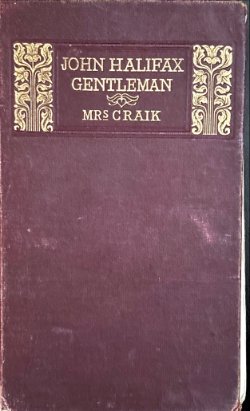
John Halifax, Gentleman

By Mrs. Craik.

The action is centred on the town of Tewkesbury, scarcely disguised by the fictional name Norton Bury, in Gloucestershire. The story is narrated by Phineas, a friend of the central character. John Halifax is an orphan, determined to make his way in the world through honest hard work. He is taken in by a tanner, Abel Fletcher, who is a Quaker, and thus meets Phineas, who is Abel's son. John eventually achieves success in business and love, and becomes a wealthy man. (Wikipedia)

London: Ward, Lock and Co. 1856. 449p.
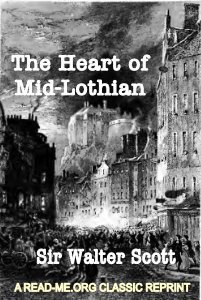
The Heart of Mid-Lothian

By Sir Walter Scott.

“Edinburgh, 1736: an indignant crowd has gathered in the Grassmarket to watch the execution of a smuggler...” Opening with the start of the Porteous Riots, The Heart of Midlothian is one of Walter Scott's most famous historical novels, featuring murder, madness and seduction. Following his brutal suppression of the spectators, John Porteous, Captain of the Guard, is charged with murder and locked up in Edinburgh's Tolbooth prison, also known as the Heart of Midlothian. When news comes that he has been pardoned, an angry mob breaks into the jail, liberating its inmates and bringing Porteous to its own form of justice. But one prisoner who fails to take this opportunity to flee is Effie Deans, who, wrongly convicted of infanticide, has been sentenced to death. Jeanie, her older sister, sets off to London on foot to beg for her pardon from the queen.

Boston: Dana Estes & Co., 1893.

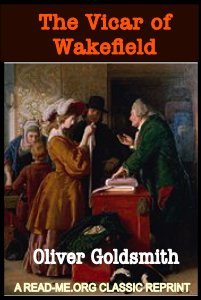
The Vicar of Wakefield

By Oliver Goldsmith.

“When Dr Primrose loses his fortune in a disastrous investment, his idyllic life in the country is shattered and he is forced to move with his wife and six children to an impoverished living on the estate of Squire Thornhill. Taking to the road in pursuit of his daughter, who has been seduced by the rakish Squire, the beleaguered Primrose becomes embroiled in a series of misadventures–encountering his long-lost son in a travelling theatre company and even spending time in a debtor’s prison. Yet Primrose, though hampered by his unworldliness and pride, is sustained by his unwavering religious faith. In The Vicar of Wakefield, Goldsmith gently mocks many of the literary conventions of his day–from pastoral and romance to the picaresque – infusing his story of a hapless clergyman with warm humour and amiable social satire.”

J.C. Krieger and Company, 1828 300p.

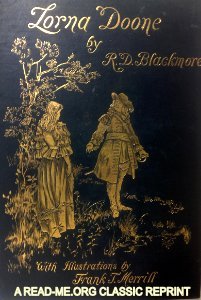
Lorna Doone: a romance of Exmoor

By R.D. Blackmore.

“This work is called a 'romance,' because the incidents, characters, time, and scenery, are alike romantic. And in shaping this old tale, the Writer neither dares, nor desires, to claim for it the dignity or cumber it with the difficulty of an historic novel….Every woman clutched her child, and every man turned pale at the very name of "Doone" ….John Ridd, an unsophisticated farmer, falls in love with the beautiful and aristocratic Lorna Doone, kidnapped as a child by the outlaw Doones on Exmoor. Ridd's rivalry with the villainous Carver Doone reaches a dramatic climax that will determine Lorna's future happiness.”

New York: Harper & Brothers, 1878. 280p.

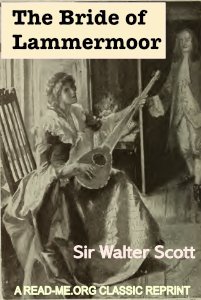
The Bride of Lammermoor

By Sir Walter Scott.

“The Author, on a former occasion, declined giving the real source from which he drew the tragic subject of this history, because, though occurring at a distant period, it might possibly be unpleasing to the feelings of the descendants of the parties. But as he finds an account of the circumstances given in the Notes to Law's Memorials by his ingenious friend Charles Kirkpatrick Sharpe, Esq., and also indicated in his reprint of the Rev. Mr. Symson's poems, appended to the Description of Galloway as the original of the Bride of Lammermoor, the Author feels himself now at liberty to tell the tale as he had it from connections of his own, who lived very near the period, and were closely related to the family of the Bride.

London: Collins Clear -Type Press, 1900. 416p.

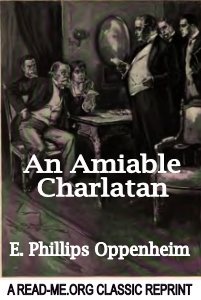
An Amiable Charlatan

By E. Phillips Oppenheim.

“An Englishman is enjoying his dinner at Stephano's, at which he is a regular diner. A man enters quickly, sits at his table, starts eating his food, and hands him a packet underneath the table! So begins Paul Walmsley's acquaintance - and adventures - with American adventurer Joseph H. Parker and his lovely daughter, Eve.”

Boston: Little, Brown and Co., 1916.341p.

Moll Flanders

By Daniel Defoe.

Moll Flanders follows the life of its eponymous heroine through its many vicissitudes, which include her early seduction, careers in crime and prostitution, conviction for theft and transportation to the plantations of Virginia, and her ultimate redemption and prosperity in the new World. “When a woman debauched from her youth, nay, even being the offspring of debauchery and vice, comes to give an account of all her vicious practices, and even to descend to the particular occasions and circumstances by which she ran through in threescore years, an author must be hard put to it wrap it up so clean as not to give room, especially for vicious readers, to turn it to his disadvantage.”

NY. Harrow and Heston Classic Reprint. (1772) 502 pages.

The Bride of the Sun

By Gaston Leroux.

Young engineer Raymond Ozoux, accompanied by his uncle, arrives in Peru to meet his fiancée, Marie-Thérèse. Meanwhile, descendents of the Incas are preparing a great feast during which a virgin will be sacrificed to the Sun, walled up alive in a secret temple. At the same time, a mysterious Inca bracelet is sent to Marie-Thérèse purporting to be a gift of the Sun to his future bride.. The young girl is then kidnapped by the Incas and Raymond, his uncle and Marie-Thérèse's father set out on a trek across Peru to free her while a revolution shakes the country.

NY. Harrow and Heston Classic Reprint. (1912) 177 pages.

Great Expectations

By Charles Dickens.

This was Charles Dickens' thirteenth novel published in Dickens' weekly journal All the Year Round without illustrations. An American edition was also published in Harper's Weekly. The novel contains a strong autobiographical element, though not as openly as in David Copperfield. Dickens reread Copperfield before beginning Great Expectations to avoid unintentional repetition. It is generally acclaimed as his best work.

NY. Harrow and Heston Classic Reprint. (186-1861) 521 pages.